Elsevier Global Energy Policy and Economics Series – Serie
European Electricity Systems in Transition
A comparative analysis of policy and regulation in Western Europe
1 479 kr
Skickas inom 7-10 vardagar
Written by renowned experts in the field of energy policy and economics, the book includes detailed case studies of national electricity regulation from around Europe, and a timely overview of European Union electricity policy on liberalisation and deregulation.Given that the changes to the European electricity industries will provide valuable pointers to change in other areas, this book is essential reading for industry analysts, policy makers, utility companies and others with an interest in the future of energy generation and transmission worldwide.
1 322 kr
Skickas inom 5-8 vardagar
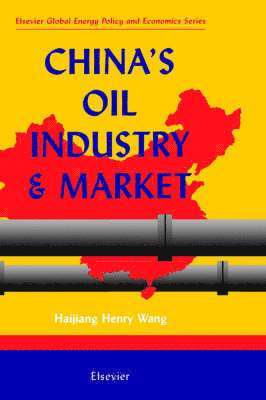
The author analyzes the Chinese oil market and the rising pressure on Beijing to reform policies which constrain China's ability to meet soaring demand and to pay for crucial imports at a time of growing political and economic uncertainties. Dr Wang acknowledges the importance of China meeting its growing domestic oil demand, if at all possible, through national production. The sheer weight of China's population, and its burgeoning requirements as industrialization spreads into most regions, dwarfs the needs of others and places unprecedented strain on international oil trades.
The author stresses the fact that the outcome is hard to define, yet the time required to tackle the nation's energy needs is not limitless. Moreover, he reminds the reader of the perennial difficulty in meeting widely disparate economic and energy needs in different regions of the vast country.
1 166 kr
Skickas inom 7-10 vardagar
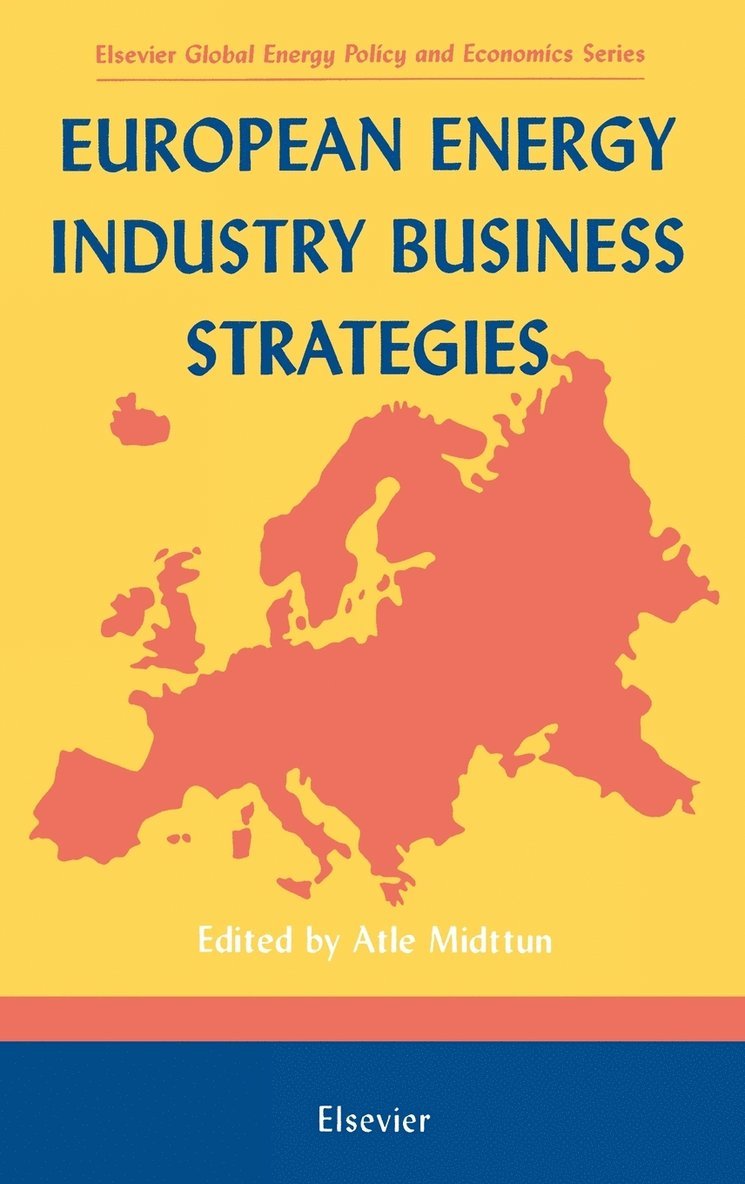
This book highlights the strategic and regulatory challenges of European deregulation, with its main focus being on the business strategies within the emerging de-regulated electricity markets; various regulatory implications which are being raised in this new climate are discussed. Some of the central strategic issues facing the electricity industry in its new competitive context are explored and reviewed, with classical themes debated as a prelude to the following empirical investigation of actual business strategies pursued by the electricity and energy industries.
The main section of this work consists of 7 national case studies of business strategies which also include one North and one South American case. These were considered important inclusions as the North American companies are large investors in the European market, whilst the European companies invest in the South American market. The final chapter is a comparison and summary of the national patterns of market structures, business strategies and regulatory styles with a brief look at some challenges to be faced in future.
1 809 kr
Skickas inom 5-8 vardagar
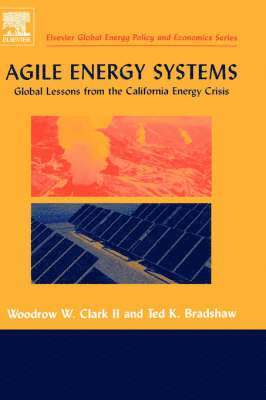
Due to the recent catastrophic energy system failures in California along with those in the North-Eastern US and Southern Canada, London, and Italy, the time has come to proclaim the failure of deregulation, privatization or liberalization and propose a new energy system. Agile Energy Systems shows in the first section, how five precipitating forces led to the deregulation debacle in California: (1) major technological changes and commercialization, (2) regulatory needs mismatched to societal adjustments, (3) inadequate and flawed economic models, (4) lack of vision, goals, and planning leading to energy failures, and (5) failure and lack of economic regional development.
The second half of the book examines how "civic market", new economic models, and planning for a sustainable economic environment counteracted these five forces to create an "agile energy system". This system is based on renewable energy generation, hybrid or combined and distributed generation technologies. Such an agile system can be a new paradigm for both energy efficiency and reliability for any region or country, in contrast to the brittle centralized energy grid systems created by deregulation. Furthermore, the book overviews how the future of energy systems rests in the emerging "clean" hydrogen economy.
Empowering decision makers by setting the vision for a new approach to energy systems and providing the tools and plans to achieve these objectives Provides specific and actionable public policy and program tools Helping to solve energy issues worldwide by illustrating how the lessons learned from the California energy crisis can be used to create an "agile energy system" for any region or country2 367 kr
Skickas inom 5-8 vardagar
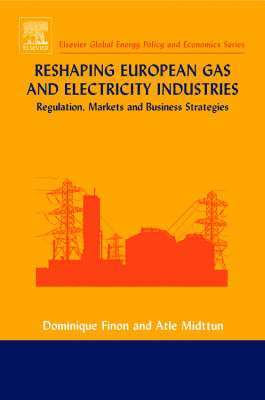
A unique and thorough investigation of the shift towards Europe-wide energy regulation, markets and business strategies, and the extent to which energy systems have become more liberalised over this period.
Reshaping of European Gas and Electricity Industries analyses the key issues facing the European energy industry, from a regulatory, market, and business perspective. Current challenges within the field are also reviewed, including competitive and environmental issues.
Liberalization: Delivers timely insights into the changes facing the European energy industry in the face of deregulation Competition: A direct look at business and marketing strategies in response to the influx of competition from across the globe Environment: Provides powerful [insights] into the way environmentally-based legislation has now become a key driver of the energy industry in Europe2 055 kr
Skickas inom 7-10 vardagar
Since the late 1980s, policy makers and regulators in a number of countries have liberalized, restructured or "deregulated� their electric power sector, typically by introducing competition at the generation and retail level. These experiments have resulted in vastly different outcomes - some highly encouraging, others utterly disastrous. However, many countries continue along the same path for a variety of reasons.
Electricity Market Reform examines the most important competitive electricity markets around the world and provides definitive answers as to why some markets have performed admirably, while others have utterly failed, often with dire financial and cost consequences.
The lessons contained within are direct relevance to regulators, policy makers, the investment community, industry, academics and graduate students of electricity markets worldwide.
Covers electicity market liberalization and deregulation on a worldwide scale Features expert contributions from key people within the electricity sectorAnalytical Methods for Energy Diversity and Security
Portfolio Optimization in the Energy Sector: A Tribute to the work of Dr. Shimon Awerbuch
1 829 kr
Skickas inom 7-10 vardagar
Analytical Methods for Energy Diversity and Security is an ideal volume for professionals in academia, industry and government interested in the rapidly evolving area at the nexus between energy and climate change policy. The cutting-edge international contributions allow for a wide coverage of the topic.
Analytical Methods for Energy Diversity and Security focuses on the consideration of financial risk in the energy sector. It describes how tools borrowed from financial economic theory, in particular mean-variance portfolio theory, can provide insights on the costs and benefits of diversity, and thus inform investment decision making in conditions of uncertainty. It gives the reader an in-depth understanding of how to manage risk at a time when the world's focus is on this area. The book provides insights from leading authorities in the area of energy security. It gives readers abundant, rigorous analysis and guidance at a critical time in facing the twin challenges of energy security and climate change. The book also highlights the role of clean energy technology in moving towards future diverse and intelligent electricity systems. It will be a trusted, first point of reference for decision-makers in the field of energy policy.
The book includes a foreword by the 2007 Nobel Peace Prize winner. All royalties from sale of this book will be donated to charities working in the energy sector in the developing world.
Theoretical underpinning and applied use of Portfolio theory in the energy sector In-depth consideration of risk Contributions from leading international energy economists Innovative methodologies for thinking about energy security and diversity