Environmental Hazards – serie
Visar alla böcker i serien Environmental Hazards. Handla med fri frakt och snabb leverans.
13 produkter
13 produkter
Inbunden, Engelska, 2019
1 500 kr
Skickas inom 10-15 vardagar
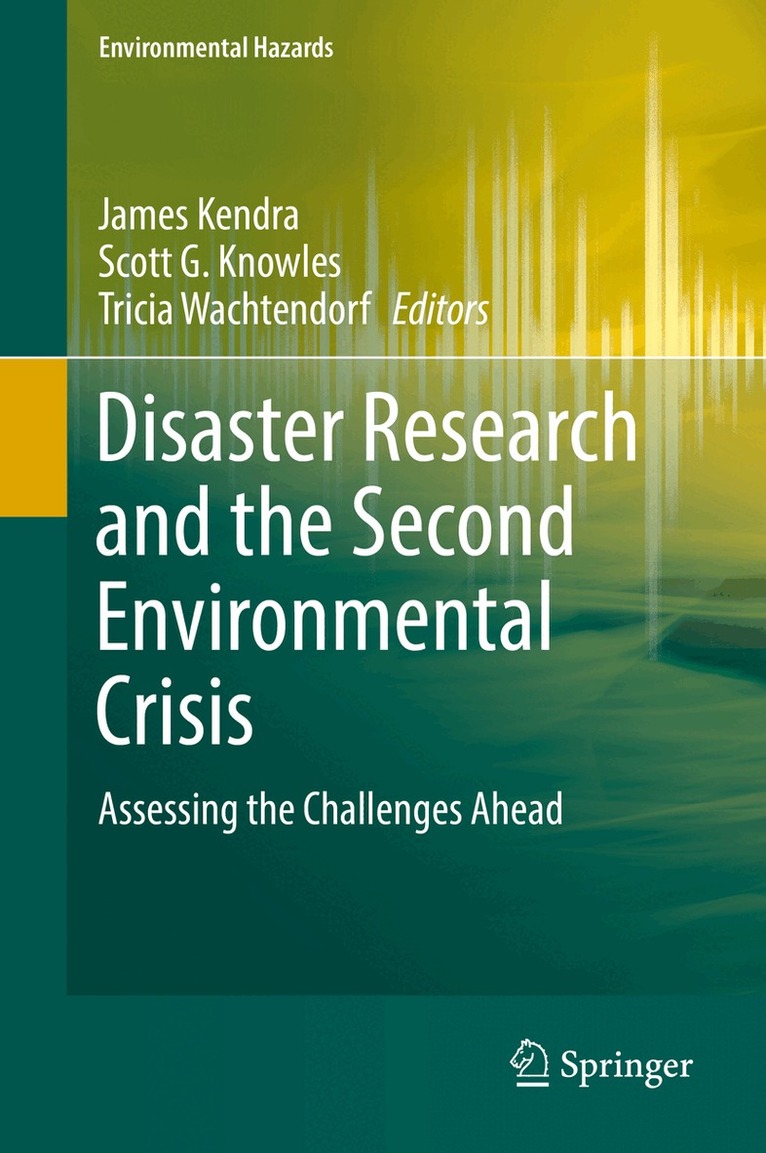
The 50th anniversary of the Disaster Research Center of the University of Delaware provoked a discussion of the field’s background, its accomplishments, and its future directions. Participants representing many disciplines brought new methods to bear on perennial problems relevant to effective disaster management and policy formation. However, new concerns were raised, stemming from the fact that we live today in a globally unfolding environmental crisis every bit as pressing and worrisome as that of the 1960s when the Disaster Research center was founded. This volume brings together ideas of participants from that workshop as well as other contributors. Topics include: the history and evolution of disaster research, innovations in disaster management, disaster policy, and ethical considerations of disaster research. Readers interested in science and technology, public policy, community action, and the evolution of the social sciences will find much of interest in this collection.
Inbunden, Engelska, 2014
1 606 kr
Skickas inom 10-15 vardagar
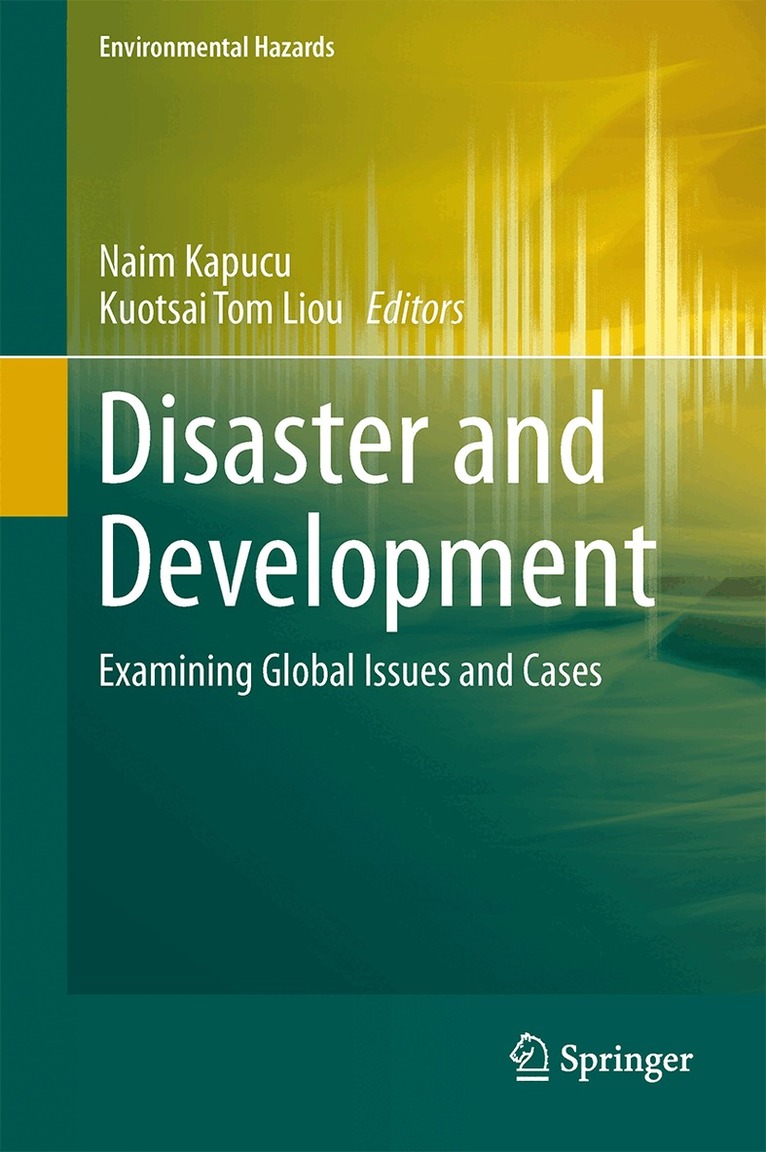
This book offers a systematic, empirical examination of the concepts of disasters and sustainable economic development applied to many cases around the world.
Inbunden, Engelska, 2015
1 073 kr
Skickas inom 10-15 vardagar
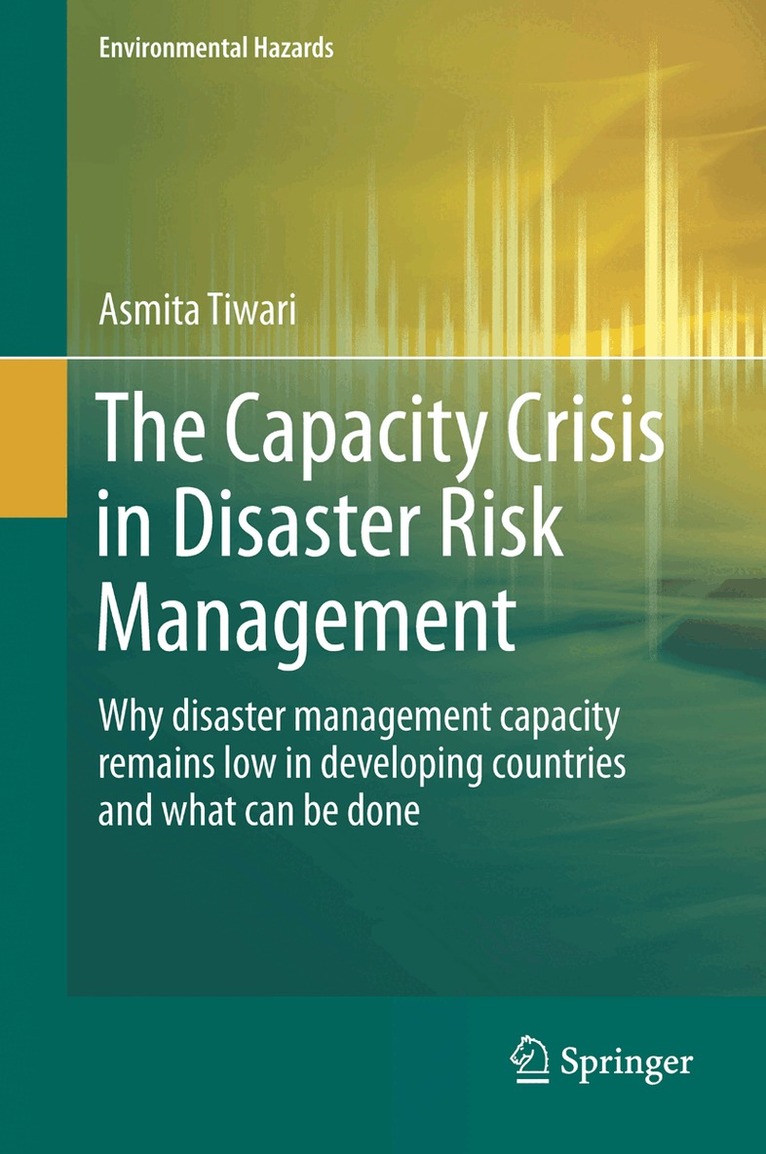
How can a place be built and managed so that it is safe for people to live? Ironically, many governments and citizens keep on asking the same question after every new disaster. Why, even with high levels of investment in increasing government’s capacity to manage disasters, do the impacts of disasters continue to increase? What can the governments do differently? What is the role of local communities? Where should aid agencies invest? This book looks into these critical questions and highlights how current capacity development efforts might be resulting in the opposite—capacity crisis or capability trap. The book provides a new approach for the understanding and the developing of effective local capacity to reduce and manage future disaster impacts.
Inbunden, Engelska, 2015
1 073 kr
Skickas inom 10-15 vardagar
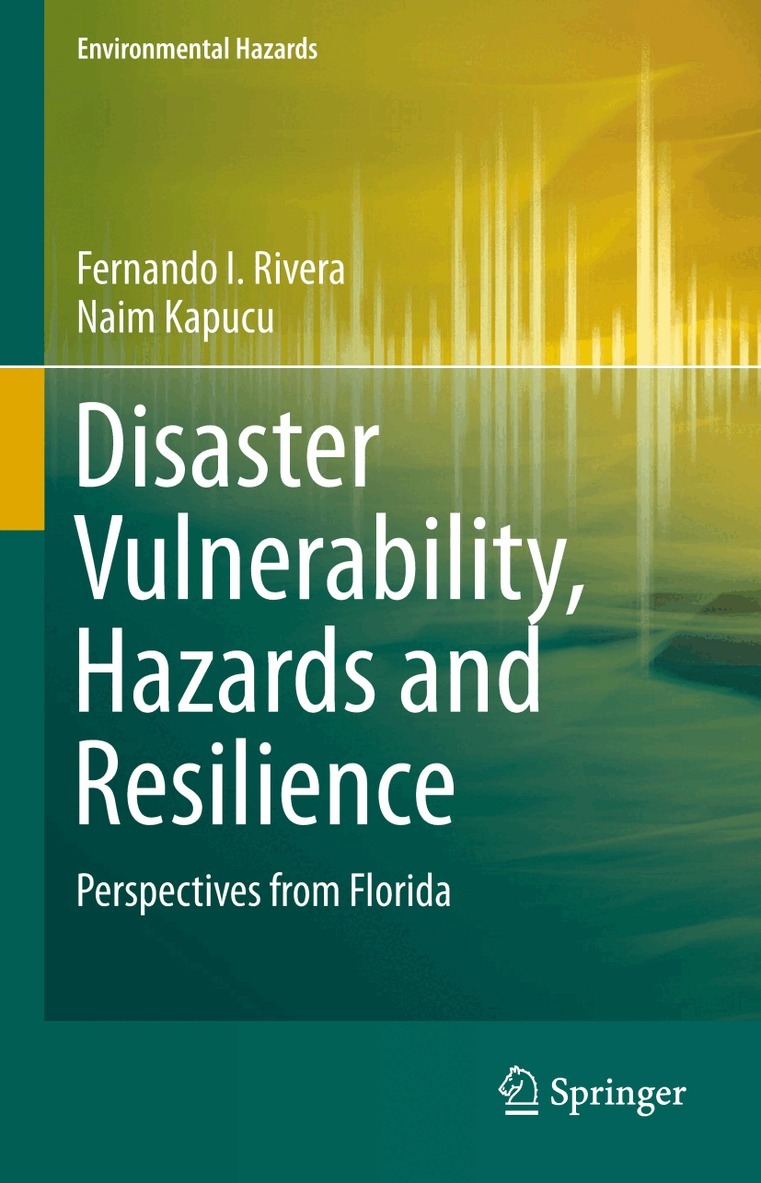
This monograph provides valuable lessons in building disaster resilience for rural communities and beyond. With a focus on Florida, the authors present a comprehensive review of the current debates surrounding the study of resilience, from federal frameworks, state plans and local initiatives. They also review evaluation tools and feature first-hand accounts of county emergency managers as well as non-profit and community groups on key issues, including perspectives on vulnerable groups such as the elderly, children and farm workers.Readers will find insightful answers to such questions as: How can the concept of resilience be used as a framework to investigate the conditions that lead to stronger, more sustainable communities? What factors account for the variation across jurisdictions and geographic units in the ability to respond to and recover from a disaster? How does the recovery process impact the social, political and economic institutions of the stricken communities? How do communities, especially rural ones, collaborate with multiple stakeholders (local, regional, state, national) during the transition from recovery to resilience? Can the collaborative nature of disaster recovery help build resilient communities?.The primary audiences of this book are scholars in emergency and crisis management, planning and policy, disaster response and recovery, disaster sociology and environmental management and policy. This book can also be used as a textbook in graduate and advanced undergraduate programs / courses on disaster management, disaster studies, emergency and crisis management, environmental policy and management and public policy and administration.
Häftad, Engelska, 2016
1 073 kr
Skickas inom 10-15 vardagar
How can a place be built and managed so that it is safe for people to live? Ironically, many governments and citizens keep on asking the same question after every new disaster. Why, even with high levels of investment in increasing government’s capacity to manage disasters, do the impacts of disasters continue to increase? What can the governments do differently? What is the role of local communities? Where should aid agencies invest? This book looks into these critical questions and highlights how current capacity development efforts might be resulting in the opposite—capacity crisis or capability trap. The book provides a new approach for the understanding and the developing of effective local capacity to reduce and manage future disaster impacts.
Häftad, Engelska, 2016
1 606 kr
Skickas inom 10-15 vardagar
This book offers a systematic, empirical examination of the concepts of disasters and sustainable economic development applied to many cases around the world. It presents comprehensive coverage of the complex and dynamic relationship between disaster and development, making a vital contribution to the literature on disaster management, disaster resilience and sustainable development. The book collects twenty-three chapters, examining theoretical issues and investigating practical cases on policy, governance, and lessons learned in dealing with different types of disasters (e.g., earthquakes, floods and hurricanes) in twenty countries and communities around the world.
Häftad, Engelska, 2016
1 073 kr
Skickas inom 10-15 vardagar
This monograph provides valuable lessons in building disaster resilience for rural communities and beyond. With a focus on Florida, the authors present a comprehensive review of the current debates surrounding the study of resilience, from federal frameworks, state plans and local initiatives. They also review evaluation tools and feature first-hand accounts of county emergency managers as well as non-profit and community groups on key issues, including perspectives on vulnerable groups such as the elderly, children and farm workers.Readers will find insightful answers to such questions as: How can the concept of resilience be used as a framework to investigate the conditions that lead to stronger, more sustainable communities? What factors account for the variation across jurisdictions and geographic units in the ability to respond to and recover from a disaster? How does the recovery process impact the social, political and economic institutions of the stricken communities? How do communities, especially rural ones, collaborate with multiple stakeholders (local, regional, state, national) during the transition from recovery to resilience? Can the collaborative nature of disaster recovery help build resilient communities?.The primary audiences of this book are scholars in emergency and crisis management, planning and policy, disaster response and recovery, disaster sociology and environmental management and policy. This book can also be used as a textbook in graduate and advanced undergraduate programs / courses on disaster management, disaster studies, emergency and crisis management, environmental policy and management and public policy and administration.
Inbunden, Engelska, 2011
1 105 kr
Skickas inom 10-15 vardagar
The negative consequences of natural hazard events are staggering and growing. Governments are acting to increase community resilience, reduce losses, and facilitate recovery, but these actions do not always yield anticipated consequences. This book is a compelling interdisciplinary analysis of California’s efforts to ensure that acute care hospitals survive earthquakes and continue to function in the aftermath. The book weaves together several threads essential to understanding the effectiveness of public policies intended to reduce the consequences of natural hazard events: public policy design and administration, the hazard mitigation investment decision made by targeted organizations, and contextual dynamics. "A terrific study of shortfalls in the implementation of risk-reduction policy -- highly readable, full of insights, and very policy relevant." Peter J. May, Donald R. Matthews Distinguished Professor of American Politics, University of Washington, Seattle USA "This is an exceptional book by three of the leading hazard mitigation researchers and must reading for both scholars and practitioners in the field." William A. Anderson, National Research Council, National Academy of Sciences.
Häftad, Engelska, 2013
1 105 kr
Skickas inom 10-15 vardagar
The negative consequences of natural hazard events are staggering and growing. Governments are acting to increase community resilience, reduce losses, and facilitate recovery, but these actions do not always yield anticipated consequences. This book is a compelling interdisciplinary analysis of California’s efforts to ensure that acute care hospitals survive earthquakes and continue to function in the aftermath. The book weaves together several threads essential to understanding the effectiveness of public policies intended to reduce the consequences of natural hazard events: public policy design and administration, the hazard mitigation investment decision made by targeted organizations, and contextual dynamics. "A terrific study of shortfalls in the implementation of risk-reduction policy -- highly readable, full of insights, and very policy relevant." Peter J. May, Donald R. Matthews Distinguished Professor of American Politics, University of Washington, Seattle USA "This is an exceptional book by three of the leading hazard mitigation researchers and must reading for both scholars and practitioners in the field." William A. Anderson, National Research Council, National Academy of Sciences.
Inbunden, Engelska, 2014
1 073 kr
Skickas inom 10-15 vardagar
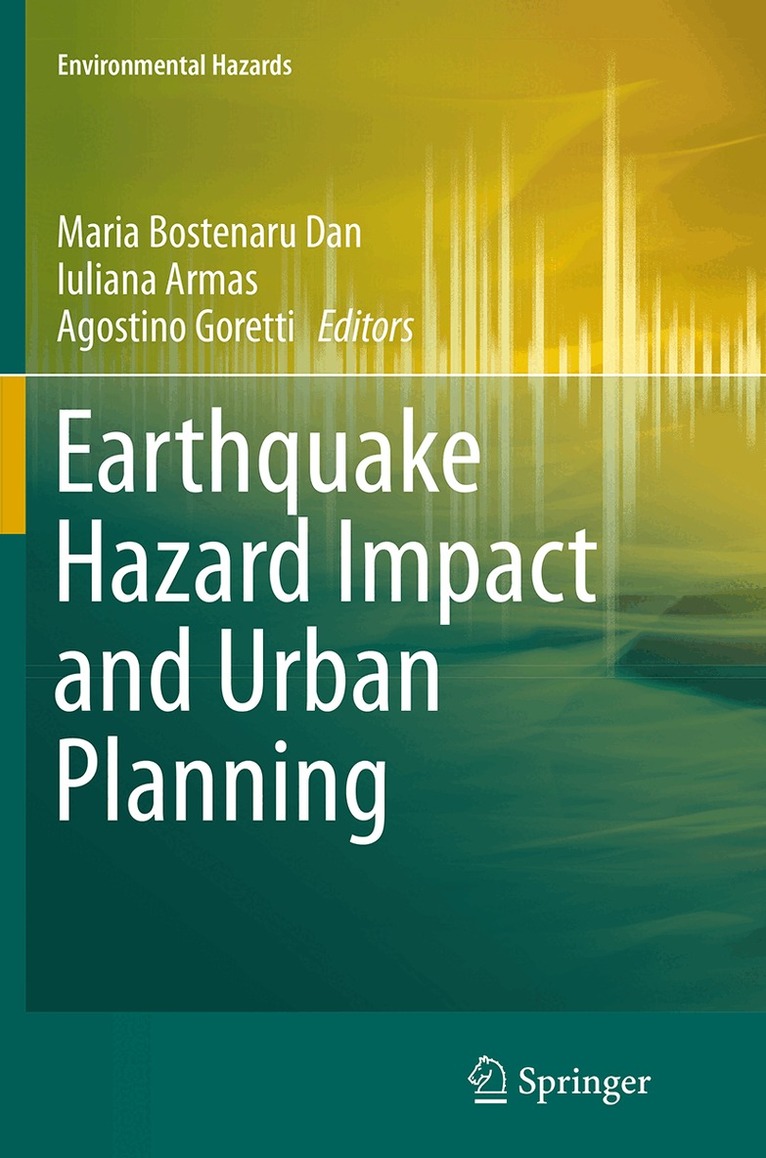
?The classical field dealing with earthquakes is called “earthquake engineering” and considered to be a branch of structural engineering. This work deals with the impact of earthquakes, including also a broader view on multihazards in urban areas.
Inbunden, Engelska, 2014
1 606 kr
Skickas inom 10-15 vardagar
This book identifies lessons learned from natural hazard experiences to help communities plan for and adapt to climate change. Written by leading experts, the case studies examine diverse experiences, from severe storms to sea-level related hazards, droughts, heat waves, wildfires, floods, earthquakes and tsunami, in North America, Europe, Australasia, Asia, Africa and Small Island Developing States. The lessons are grouped according to four imperatives: (i) Develop collaborative governance networks; (ii) build adaptive capabilities; (iii) invest in pre-event planning; and (iv) the moral imperative to undertake adaptive actions that advance resilience and sustainability."A theoretically rich and empirically grounded analysis of the interface between disaster risk management and climate change adaptation, comprehensive yet accessible, and very timely." Mark Pelling, Department of Geography, King’s College London, UK. "This book represents a major contribution to the understanding of natural hazards planning as an urgent first step for reducing disaster risk and adapting to climate change to ensure sustainable and equitable development." Sálvano Briceño, Vice-Chair, Science Committee, Integrated Research on Disaster Risk IRDR, an ICSU/ISSC/ISDR programme. Former Director International Strategy for Disaster Reduction, UNISDR.“What a welcome addition to the young literature on climate adaptation and hazard mitigation! Bruce Glavovic and Gavin Smith each bring to the editing task a rare blend of solid scholarly attainment and on-the-ground experience that shines through in this extensively-documented synthesis of theoretical ideas from the realms of climate and hazards and their validation in a rich set of diverse case studies pulled in from around the world. This book should remain a classic for many years.” William H. Hooke, American Meteorological Society.
Häftad, Engelska, 2016
1 606 kr
Skickas inom 10-15 vardagar
This book identifies lessons learned from natural hazard experiences to help communities plan for and adapt to climate change. Written by leading experts, the case studies examine diverse experiences, from severe storms to sea-level related hazards, droughts, heat waves, wildfires, floods, earthquakes and tsunami, in North America, Europe, Australasia, Asia, Africa and Small Island Developing States. The lessons are grouped according to four imperatives: (i) Develop collaborative governance networks; (ii) build adaptive capabilities; (iii) invest in pre-event planning; and (iv) the moral imperative to undertake adaptive actions that advance resilience and sustainability."A theoretically rich and empirically grounded analysis of the interface between disaster risk management and climate change adaptation, comprehensive yet accessible, and very timely." Mark Pelling, Department of Geography, King’s College London, UK. "This book represents a major contribution to the understanding of natural hazards planning as an urgent first step for reducing disaster risk and adapting to climate change to ensure sustainable and equitable development." Sálvano Briceño, Vice-Chair, Science Committee, Integrated Research on Disaster Risk IRDR, an ICSU/ISSC/ISDR programme. Former Director International Strategy for Disaster Reduction, UNISDR.“What a welcome addition to the young literature on climate adaptation and hazard mitigation! Bruce Glavovic and Gavin Smith each bring to the editing task a rare blend of solid scholarly attainment and on-the-ground experience that shines through in this extensively-documented synthesis of theoretical ideas from the realms of climate and hazards and their validation in a rich set of diverse case studies pulled in from around the world. This book should remain a classic for many years.” William H. Hooke, American Meteorological Society.
Häftad, Engelska, 2016
1 073 kr
Skickas inom 10-15 vardagar
The classical field dealing with earthquakes is called “earthquake engineering” and considered to be a branch of structural engineering. In projects dealing with strategies for earthquake risk mitigation, urban planning approaches are often neglected. Today interventions are needed on a city, rather than a building, scale. This work deals with the impact of earthquakes, including also a broader view on multihazards in urban areas. Uniquely among other works in the field, particular importance is given to urban planning issues, in conservation of heritage and emergency management. Multicriteria decision making and broad participation of those affected by disasters are included.