Europa Introduction to... – Serie
Visar alla böcker i serien Europa Introduction to.... Handla med fri frakt och snabb leverans.
9 produkter
9 produkter
China’s Belt and Road Initiative at Ten
Country Experiences in the Americas, Oceania and Asia
Inbunden, Engelska, 2022
659 kr
Skickas inom 10-15 vardagar
This volume assesses China’s Belt and Road Initiative (BRI) as it approaches its tenth year in operation. The programme has gone through a difficult transition since its inception in 2013, with an environment developing in a way utterly unanticipated by Chinese decision-makers. Despite pragmatic adjustments to the BRI, the lack of a firm empirical base has impeded the BRI and led to its demise in many countries. With the accumulation of nearly ten years of project and economic data, it is possible to make an in-depth assessment of the BRI. For this purpose, the study examines the infrastructure component of the BRI in 39 countries, stretching from the Americas to Oceania and, finally, South Asia. The study finds a strong relationship between a country’s progress in improved governance and the quality of its infrastructure. Countries that have benefited from the BRI have simultaneously achieved progress in governance areas, such as the rule of law and control of corruption. By not emphasizing improved governance structures, China condemns many of its partners to failure.Researchers, students, and economic development specialists from Latin America to South Asia and Oceania will find this study a useful departure from the volumes of anecdotal BRI assessments.
754 kr
Skickas inom 10-15 vardagar
In early 2020 Italy was a country whose political parties stood as significant obstacles in the way of resolution of its social and economic problems. The purpose of this book is to help the reader to understand how Italian politics had reached this point. It does this by tracing the most significant processes of political, economic and social change to have marked Italian history in recent years back to their roots in the Italian political system as it emerged at the end of the Second World War. Starting with the restoration of democracy, the volume discusses the post-war party system and how it came under increasing pressure from the mid-1970s. From there it discusses the political upheavals of the early 1990s and the transformations they led to, the rise and fall of Silvio Berlusconi, and the watershed election of 2018. In short, the book provides a narrative. Narratives tell us who we are, where we have come from, where we are now and where we are going. Without them, we cannot make sense of the world. At the end of this narrative, if it has done its job properly, Italian politics and current affairs should ‘make sense’ if before they seemed confusing.
655 kr
Sub-Saharan Africa is vastly diverse, and the 49 countries of the region range significantly in terms of population, size and economic scale. The region also differs in topography, climate, history, culture, languages and political systems. Given this vast diversity, it is, accordingly, difficult to draw general conclusions about the continent’s economic performance as a whole. Additionally, the lack of current statistics for several countries makes it difficult to make accurate assessments of economic conditions. Nevertheless, some broad comparisons can be made: of the world’s developing areas, sub-Saharan Africa has the worst record in virtually all of the most important social and economic indicators: the region has the lowest gross national income per head, the lowest life expectancy at birth, the lowest youth literacy rate, the highest rate of adult HIV infection and the highest number of children not living past five years of age. This volume begins by examining recent economic developments and trends. It then looks at the major economic constraints the region has faced in recent years, breaking down those constraints as either ‘external’ (e.g. terms of trade) over which the individual countries have but limited control, or ‘internal’ (e.g. governance and economic policy), over which there is more control. The book concludes by arguing that, despite the notable challenges cited above, sub-Saharan Africa is poised for a transformation, based on closer regional economic co-operation, a growing middle class, increased demand for locally produced goods and services, and a young population.
265 kr
Skickas inom 10-15 vardagar
Sub-Saharan Africa is vastly diverse, and the 49 countries of the region range significantly in terms of population, size and economic scale. The region also differs in topography, climate, history, culture, languages and political systems. Given this vast diversity, it is, accordingly, difficult to draw general conclusions about the continent’s economic performance as a whole. Additionally, the lack of current statistics for several countries makes it difficult to make accurate assessments of economic conditions. Nevertheless, some broad comparisons can be made: of the world’s developing areas, sub-Saharan Africa has the worst record in virtually all of the most important social and economic indicators: the region has the lowest gross national income per head, the lowest life expectancy at birth, the lowest youth literacy rate, the highest rate of adult HIV infection and the highest number of children not living past five years of age. This volume begins by examining recent economic developments and trends. It then looks at the major economic constraints the region has faced in recent years, breaking down those constraints as either ‘external’ (e.g. terms of trade) over which the individual countries have but limited control, or ‘internal’ (e.g. governance and economic policy), over which there is more control. The book concludes by arguing that, despite the notable challenges cited above, sub-Saharan Africa is poised for a transformation, based on closer regional economic co-operation, a growing middle class, increased demand for locally produced goods and services, and a young population.
Southern Africa's Blue Economy
Regional Cooperation for Sustained Development
Inbunden, Engelska, 2023
795 kr
Skickas inom 10-15 vardagar
Southern Africa’s maritime interests are considerable: its oceans and ports are essential to the wealth of the region, are crucial for trade and are an important source of employment, food and energy. However, regional governments do not place sufficient attention on the Blue Economy and its potential to stimulate economic growth. Of the 17 UN Sustainable Development Goals, goal Number 14 (Life Below Water) is the least funded. Less than 1% of Official Development Assistance goes toward this goal, and even private investment and funding from philanthropic organizations is grossly inadequate to meet Africa’s blue economy needs. It is vital for the international community to face up to the challenges of Africa’s Blue Economy and start working on solutions and for southern Africa’s Blue Economy policies and goals to be expanded. Just as sustainable development green initiatives show promise, so too could Blue Economy projects and activities. Southern Africa’s rich coastal and marine resources need to be managed on both a national and regional level if they are to be used in a long-term, sustainable way. This book provides, for the first time, a concise study of the constraints and opportunities that the Blue Economy offers for southern Africa and the role that the Southern African Development Community (SADC) could play in fostering a sustainable use of its ocean and coastal resources.
292 kr
Skickas inom 10-15 vardagar
Southern Africa’s maritime interests are considerable: its oceans and ports are essential to the wealth of the region, are crucial for trade and are an important source of employment, food and energy. However, regional governments do not place sufficient attention on the Blue Economy and its potential to stimulate economic growth. Of the 17 UN Sustainable Development Goals, goal Number 14 (Life Below Water) is the least funded. Less than 1% of Official Development Assistance goes toward this goal, and even private investment and funding from philanthropic organizations is grossly inadequate to meet Africa’s blue economy needs. It is vital for the international community to face up to the challenges of Africa’s Blue Economy and start working on solutions and for southern Africa’s Blue Economy policies and goals to be expanded. Just as sustainable development green initiatives show promise, so too could Blue Economy projects and activities. Southern Africa’s rich coastal and marine resources need to be managed on both a national and regional level if they are to be used in a long-term, sustainable way. This book provides, for the first time, a concise study of the constraints and opportunities that the Blue Economy offers for southern Africa and the role that the Southern African Development Community (SADC) could play in fostering a sustainable use of its ocean and coastal resources.
China’s Belt and Road Initiative at Ten
Country Experiences in the Americas, Oceania and Asia
Häftad, Engelska, 2024
301 kr
Skickas inom 10-15 vardagar
This volume assesses China’s Belt and Road Initiative (BRI) as it approaches its tenth year in operation. The programme has gone through a difficult transition since its inception in 2013, with an environment developing in a way utterly unanticipated by Chinese decision-makers. Despite pragmatic adjustments to the BRI, the lack of a firm empirical base has impeded the BRI and led to its demise in many countries. With the accumulation of nearly ten years of project and economic data, it is possible to make an in-depth assessment of the BRI. For this purpose, the study examines the infrastructure component of the BRI in 39 countries, stretching from the Americas to Oceania and, finally, South Asia. The study finds a strong relationship between a country’s progress in improved governance and the quality of its infrastructure. Countries that have benefited from the BRI have simultaneously achieved progress in governance areas, such as the rule of law and control of corruption. By not emphasizing improved governance structures, China condemns many of its partners to failure.Researchers, students, and economic development specialists from Latin America to South Asia and Oceania will find this study a useful departure from the volumes of anecdotal BRI assessments.
292 kr
Skickas inom 10-15 vardagar
In early 2020 Italy was a country whose political parties stood as significant obstacles in the way of resolution of its social and economic problems. The purpose of this book is to help the reader to understand how Italian politics had reached this point. It does this by tracing the most significant processes of political, economic and social change to have marked Italian history in recent years back to their roots in the Italian political system as it emerged at the end of the Second World War. Starting with the restoration of democracy, the volume discusses the post-war party system and how it came under increasing pressure from the mid-1970s. From there it discusses the political upheavals of the early 1990s and the transformations they led to, the rise and fall of Silvio Berlusconi, and the watershed election of 2018. In short, the book provides a narrative. Narratives tell us who we are, where we have come from, where we are now and where we are going. Without them, we cannot make sense of the world. At the end of this narrative, if it has done its job properly, Italian politics and current affairs should ‘make sense’ if before they seemed confusing.
2 113 kr
Skickas inom 10-15 vardagar
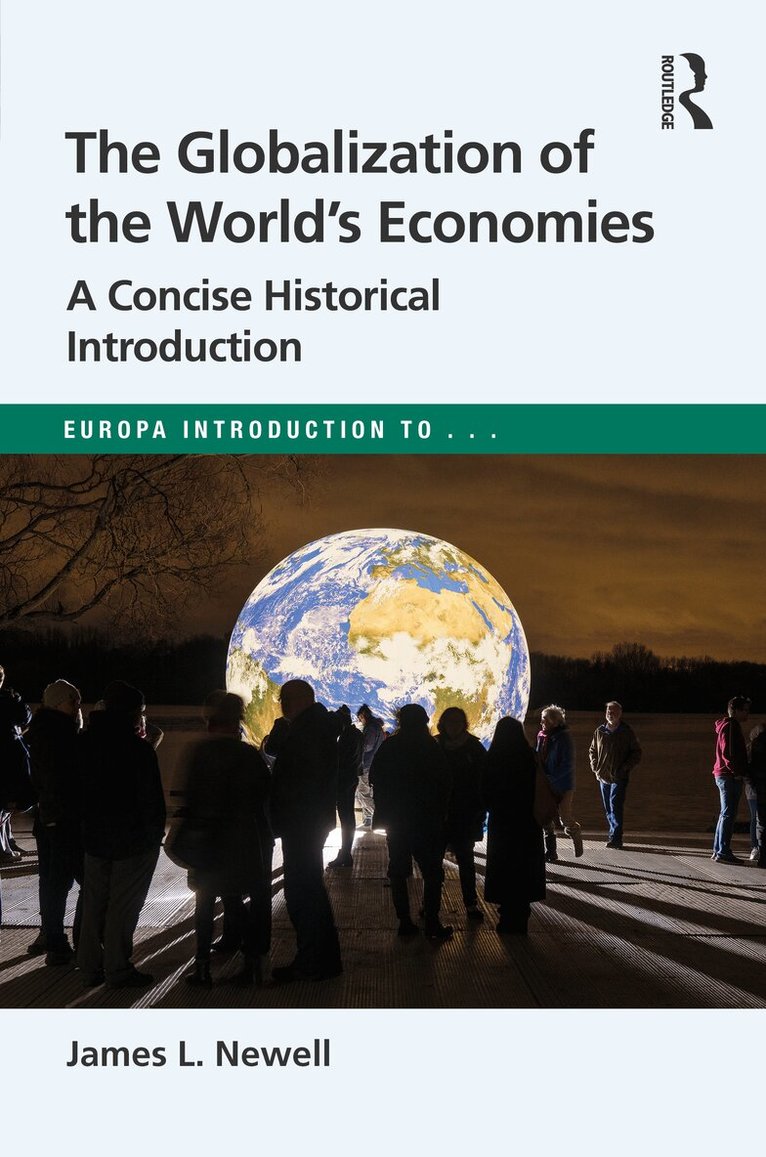
The world is standing at a crossroads. On the one hand, economic globalization has brought unprecedented levels of prosperity. It has lifted millions out of poverty; it has massively enhanced education and skills development; and it has increased the potential for the exercise of power from below, for the complexity of global supply chains renders them highly vulnerable to disruption by the protests of small groups of people in far-flung places. On the other hand, neoliberal globalization has brought rising inequality; the emergence, in the developed world, of the so-called left behind; refugee crises; and increasingly problems related to health and the climate, which the institutions of global governance have struggled to deal with, thus undermining their authority and fuelling the growth of populist nationalism.In order to get a sense of whether economic globalization will in future take a positive or a negative path, it is essential to look at the past. It is only through gaining an understanding of how we have come to be where we are that we will be better placed to see where we are going and, most importantly, to take the action needed to enable us to face the future with optimism rather than with fear.This volume provides a comprehensive overview in historical perspective of the development and current state of globalization, offering a wealth of information to students, professionals and researchers alike.