Feminist Criminology – serie
Visar alla böcker i serien Feminist Criminology. Handla med fri frakt och snabb leverans.
10 produkter
10 produkter
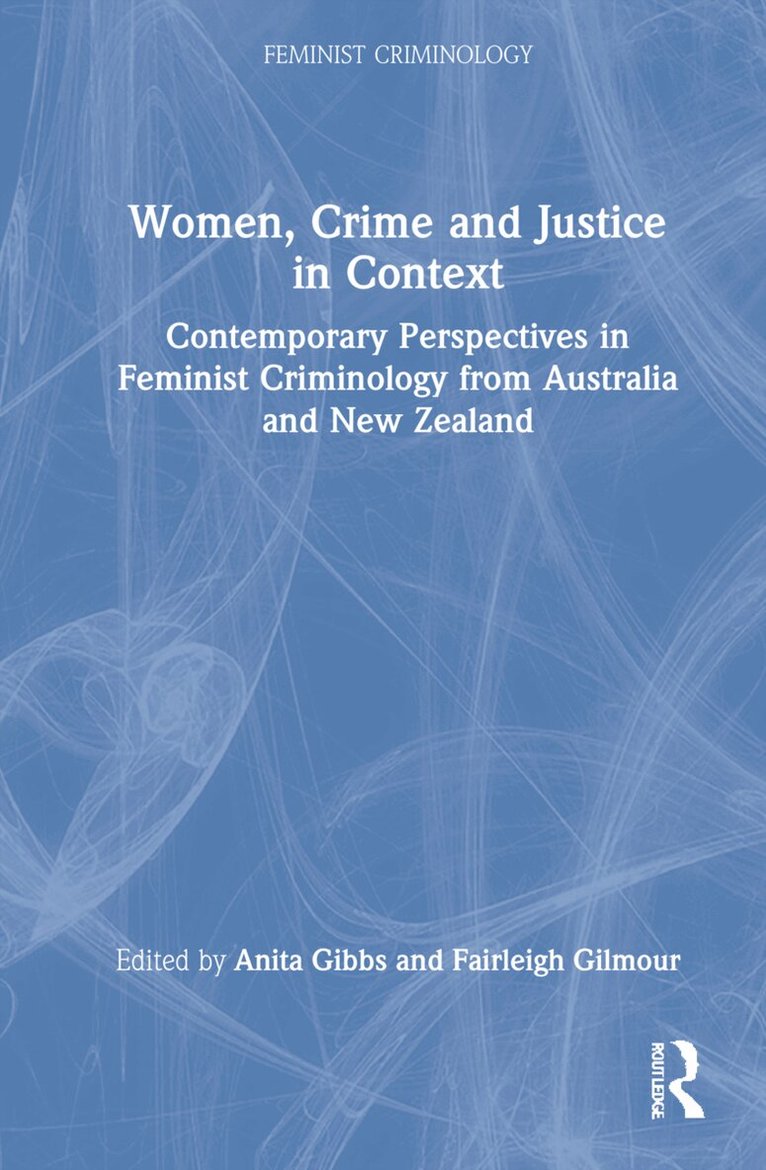
Women, Crime and Justice in Context
Contemporary Perspectives in Feminist Criminology from Australia and New Zealand
Inbunden, Engelska, 2022
1 756 kr
Skickas inom 10-15 vardagar
Women, Crime and Justice in Context presents contemporary feminist approaches to key issues in criminal justice. It draws together key researchers from Australia and New Zealand to offer a context-specific textbook that covers all of the major debates in the discipline in an accessible way. This book examines both the foundational texts and cutting-edge contributions to the topic and acknowledges the unique challenges and debates in the local Australian and New Zealand context. Written as an entry-level text, it introduces undergraduate students to key theories and debates on the topics of offending, victimization and the criminal justice system. It explores key topics in feminist criminology with chapters exploring sex work, prison abolitionism, community punishment, media representations of crime and victims, and the impacts of digital technology on gendered violence. Centring on an intersectional approach, the book includes chapters that focus on disability, queer criminology, indigenous perspectives, migration and service-user perspectives. The book concludes by exploring future directions in feminist approaches to crime and justice. This book will be essential reading for undergraduates studying feminist criminology, gender and crime, queer criminology, socio-legal studies, intersectionality, sociology and criminal justice.
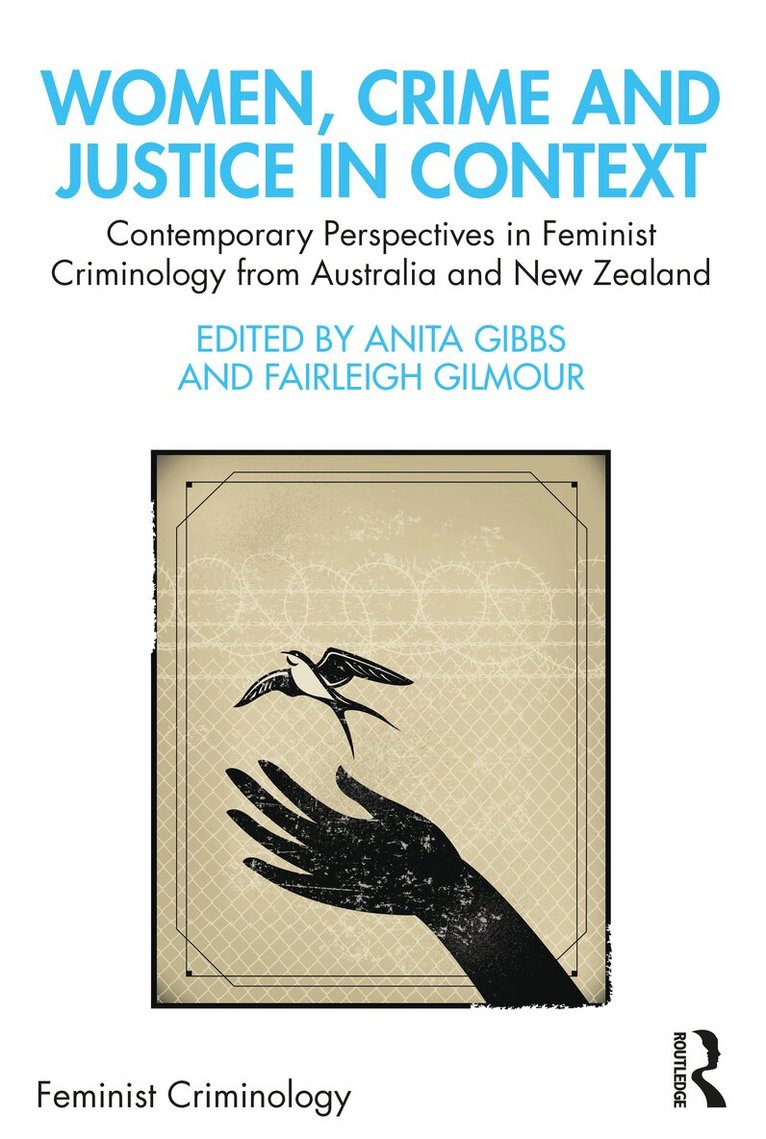
Women, Crime and Justice in Context
Contemporary Perspectives in Feminist Criminology from Australia and New Zealand
Häftad, Engelska, 2022
519 kr
Skickas inom 10-15 vardagar
Women, Crime and Justice in Context presents contemporary feminist approaches to key issues in criminal justice. It draws together key researchers from Australia and New Zealand to offer a context-specific textbook that covers all of the major debates in the discipline in an accessible way. This book examines both the foundational texts and cutting-edge contributions to the topic and acknowledges the unique challenges and debates in the local Australian and New Zealand context. Written as an entry-level text, it introduces undergraduate students to key theories and debates on the topics of offending, victimization and the criminal justice system. It explores key topics in feminist criminology with chapters exploring sex work, prison abolitionism, community punishment, media representations of crime and victims, and the impacts of digital technology on gendered violence. Centring on an intersectional approach, the book includes chapters that focus on disability, queer criminology, indigenous perspectives, migration and service-user perspectives. The book concludes by exploring future directions in feminist approaches to crime and justice. This book will be essential reading for undergraduates studying feminist criminology, gender and crime, queer criminology, socio-legal studies, intersectionality, sociology and criminal justice.
2 113 kr
Skickas inom 10-15 vardagar
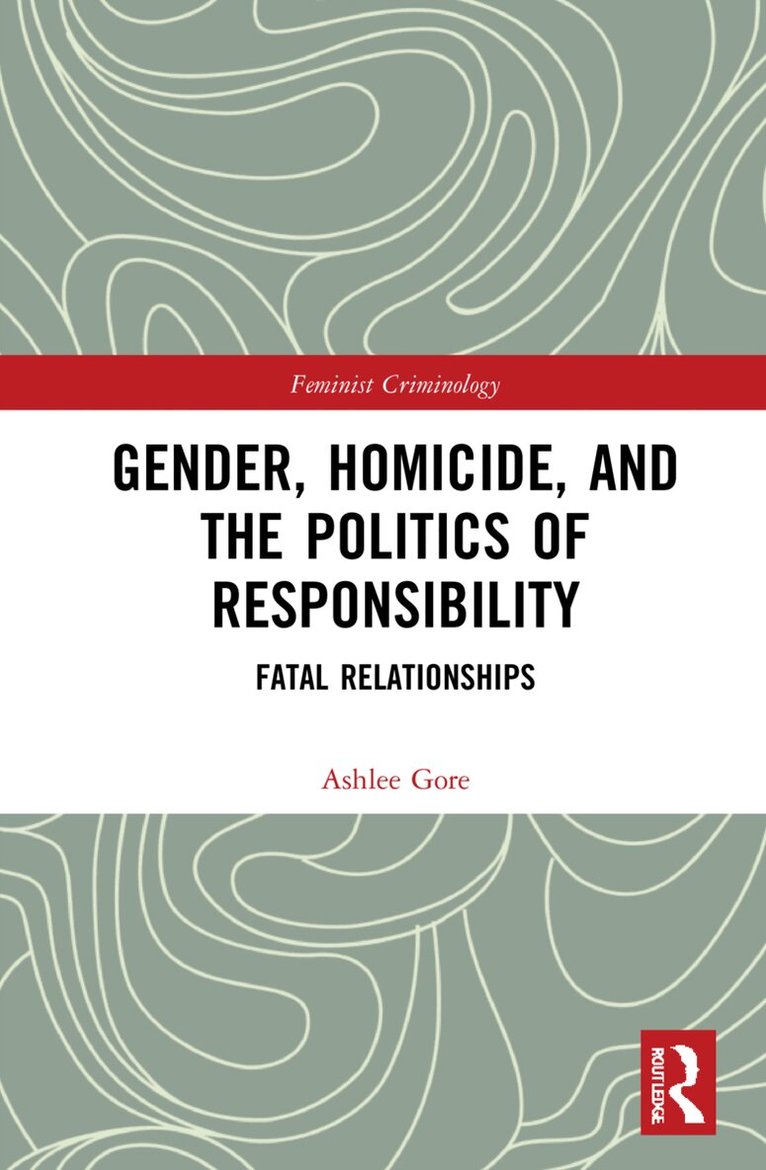
Gender, Homicide, and the Politics of Responsibility explores the competing and contradictory understandings of violence against women and men’s responsibility. It situates these within the personal and political intersections of neoliberal and ‘postfeminist’ imperatives of individualisation, choice, and empowerment.As violence against women has become a national and international policy priority, feminist concerns about violence against women, and men’s responsibility, have entered the mainstream only to be articulated in politically contradictory ways. This book explores themes of responsibility for violence, and the social and legal consequences that men and women uniquely or differently encounter. By drawing on high-profile cases of homicide, an extensive literature on feminist perspectives on violence, and compelling focus group discussions, the book examines the politicised claims regarding the ‘responsibility’ of men and women as both victims and offenders in intimate relationships. Deploying a range of interdisciplinary approaches, it utilises a blend of cultural theory and psychosocial analysis to offer an account of the infiltration of postfeminist and neoliberal sensibilities of individualism and responsibilisation in the social, legal, and interpersonal imaginary. The book makes contributions to several fields, such as the current public policy initiatives to hold men accountable for violence against women; understanding public attitudes to violence against women; and contextualising the challenges faced by a number of feminist reforms that seek to address these issues. An accessible and compelling read, Gender, Homicide, and the Politics of Responsibility will appeal to students and scholars of criminology, sociology, gender studies and those interested in understanding the debates surrounding violence against women, violence by women, and the social construction of responsibility and responsibilisation.
618 kr
Skickas inom 10-15 vardagar
Gender, Homicide, and the Politics of Responsibility explores the competing and contradictory understandings of violence against women and men’s responsibility. It situates these within the personal and political intersections of neoliberal and ‘postfeminist’ imperatives of individualisation, choice, and empowerment.As violence against women has become a national and international policy priority, feminist concerns about violence against women, and men’s responsibility, have entered the mainstream only to be articulated in politically contradictory ways. This book explores themes of responsibility for violence, and the social and legal consequences that men and women uniquely or differently encounter. By drawing on high-profile cases of homicide, an extensive literature on feminist perspectives on violence, and compelling focus group discussions, the book examines the politicised claims regarding the ‘responsibility’ of men and women as both victims and offenders in intimate relationships. Deploying a range of interdisciplinary approaches, it utilises a blend of cultural theory and psychosocial analysis to offer an account of the infiltration of postfeminist and neoliberal sensibilities of individualism and responsibilisation in the social, legal, and interpersonal imaginary. The book makes contributions to several fields, such as the current public policy initiatives to hold men accountable for violence against women; understanding public attitudes to violence against women; and contextualising the challenges faced by a number of feminist reforms that seek to address these issues. An accessible and compelling read, Gender, Homicide, and the Politics of Responsibility will appeal to students and scholars of criminology, sociology, gender studies and those interested in understanding the debates surrounding violence against women, violence by women, and the social construction of responsibility and responsibilisation.
2 176 kr
Skickas inom 10-15 vardagar
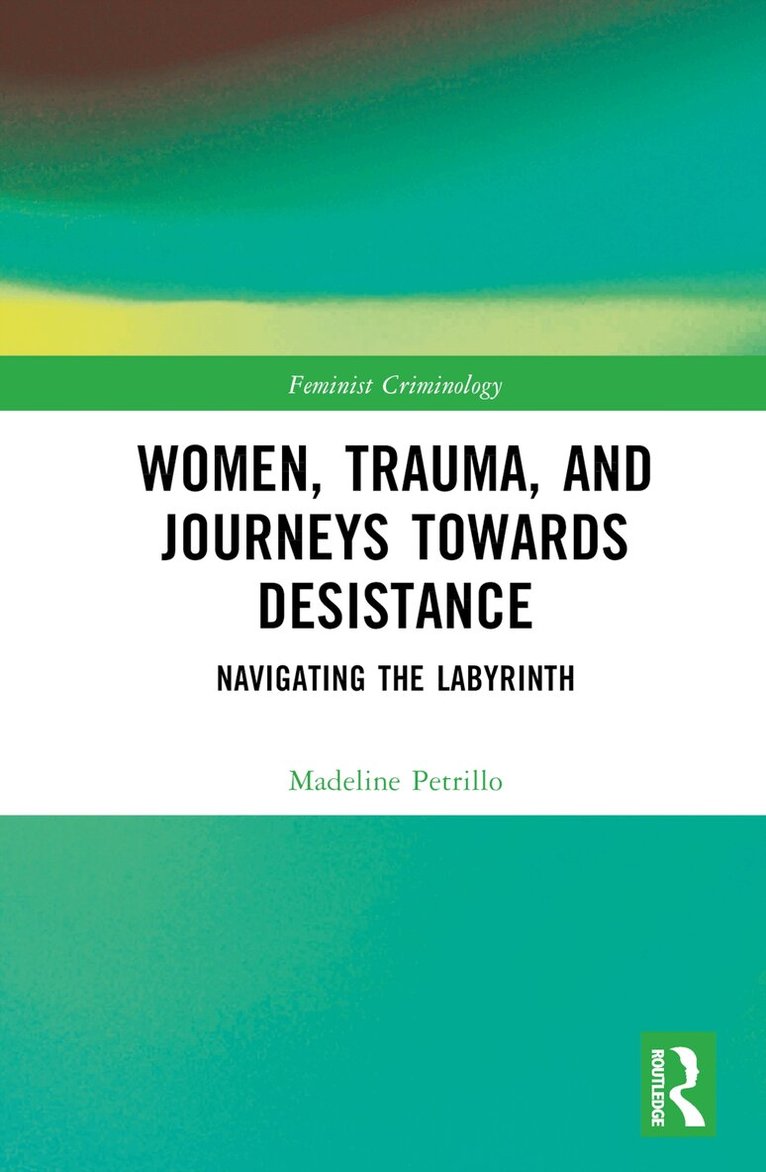
Women, Trauma, and Journeys towards Desistance: Navigating the Labyrinth provides an examination of women’s desistance from crime from a gender-responsive, trauma-informed perspective. The book is based on the reflections of fifty-six women over a three-year period as they transition from custody to the community. With the women, the author examines how experiences of trauma, victimisation, and intersectional oppression constrain access to traditional desistance supporting processes, including supportive relationships, identity construction, the exercise of agency, and engagement with treatment and interventions, reframing these processes from trauma-informed perspective. The book joins together the women’s insights and experiences with principles of gender-responsive, trauma-informed principles in a framework through which criminal justice practitioners can support women in their efforts to leave crime behind. The framework for practice is a fusion of concepts from desistance theory, principles of gender-responsivity, and trauma-informed practice designed to help women understand the root causes of the problems they face in the present whilst building on their resilience and strengths to achieve their goals for their futures. This book is ideal reading for scholars and students of criminology and criminal justice, particularly rehabilitation, gender and crime, and feminist criminology. It will also be of interest to academics and practitioners of forensic psychology and social work, as well as probation officers, social workers and prison officers.
531 kr
Skickas inom 10-15 vardagar
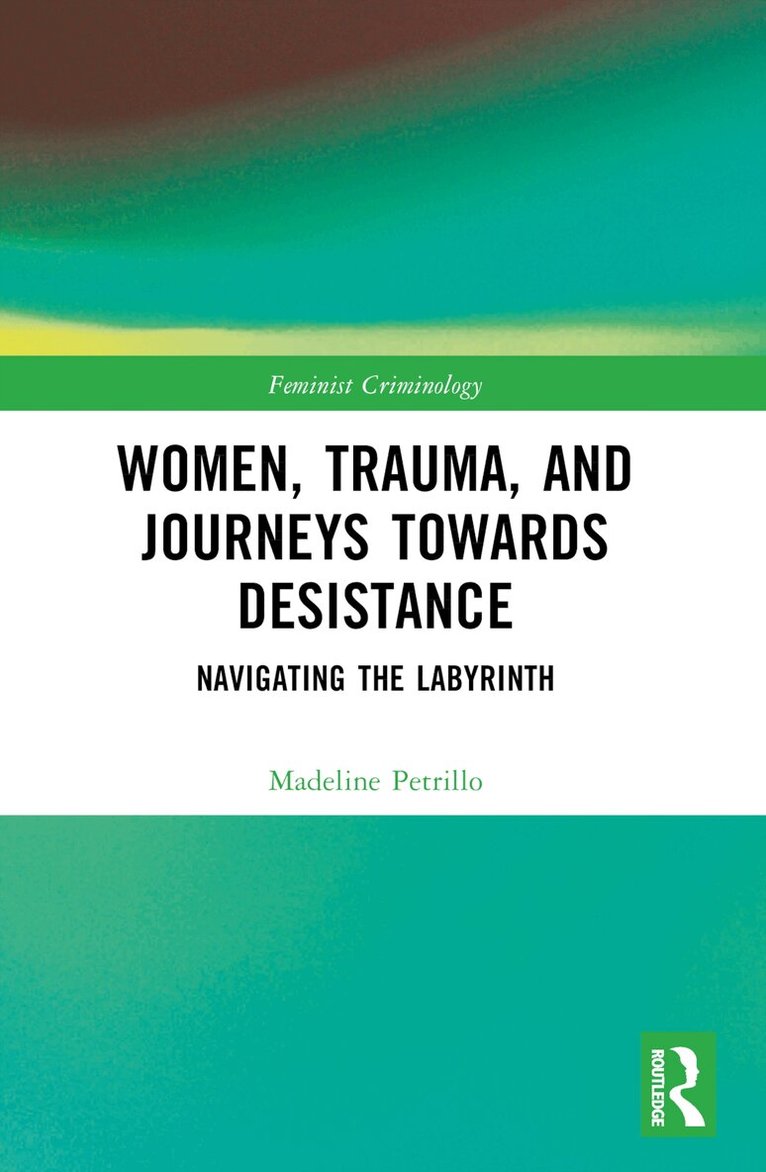
Women, Trauma, and Journeys towards Desistance: Navigating the Labyrinth provides an examination of women’s desistance from crime from a gender-responsive, trauma-informed perspective. The book is based on the reflections of fifty-six women over a three-year period as they transition from custody to the community. With the women, the author examines how experiences of trauma, victimisation, and intersectional oppression constrain access to traditional desistance supporting processes, including supportive relationships, identity construction, the exercise of agency, and engagement with treatment and interventions, reframing these processes from trauma-informed perspective. The book joins together the women’s insights and experiences with principles of gender-responsive, trauma-informed principles in a framework through which criminal justice practitioners can support women in their efforts to leave crime behind. The framework for practice is a fusion of concepts from desistance theory, principles of gender-responsivity, and trauma-informed practice designed to help women understand the root causes of the problems they face in the present whilst building on their resilience and strengths to achieve their goals for their futures. This book is ideal reading for scholars and students of criminology and criminal justice, particularly rehabilitation, gender and crime, and feminist criminology. It will also be of interest to academics and practitioners of forensic psychology and social work, as well as probation officers, social workers and prison officers.
721 kr
Skickas inom 10-15 vardagar
Drawing from an interdisciplinary body of research and data, Women of Piracy employs a criminological lens to explore how women have been involved in, and impacted by, maritime piracy operations from the 16th century to present day piracy off the coast of Somalia.The book challenges and resists popular understandings of women as peripheral to the criminal enterprise of piracy by presenting and analyzing their roles and experiences as victims, perpetrators, and criminal justice actors, showing that women have been, and continue to be, central figures in maritime piracy. Unfolding in three parts, part one sets the context by providing readers with a history of the masculinization of the sea. Part two focuses on the gendered division of labor in piracy operations, discussing how and why the roles and responsibilities associated with this gendered labor have emerged, persisted, evolved, and/or ceased over time, as well as considering which roles and responsibilities appear to be context-specific and which seem to transgress geographical locations. Part three explores how women have (or have not) been brought to justice for their participation in crimes of piracy as well as the roles of women in efforts to combat piracy. The overarching objective is to ignite a broader discussion about the various cultural, social, historical, and economic forces that create opportunities for women to participate in maritime piracy and counter-piracy, why women continue to be invisible figures of piracy, and what implications this has for how we study, police, and bring pirates to justice.The first criminologically-grounded, global study exploring the continuity and evolution of women in maritime piracy, this book will be of great interest to students and scholars of criminology, gender, feminist studies, international relations, anthropology, history, and political geography. It will also be useful to maritime and law enforcement professionals.
Social Exclusion of Incarcerated Women with Cognitive Disabilities
Shut Out, Shut In
Inbunden, Engelska, 2021
2 113 kr
Skickas inom 10-15 vardagar
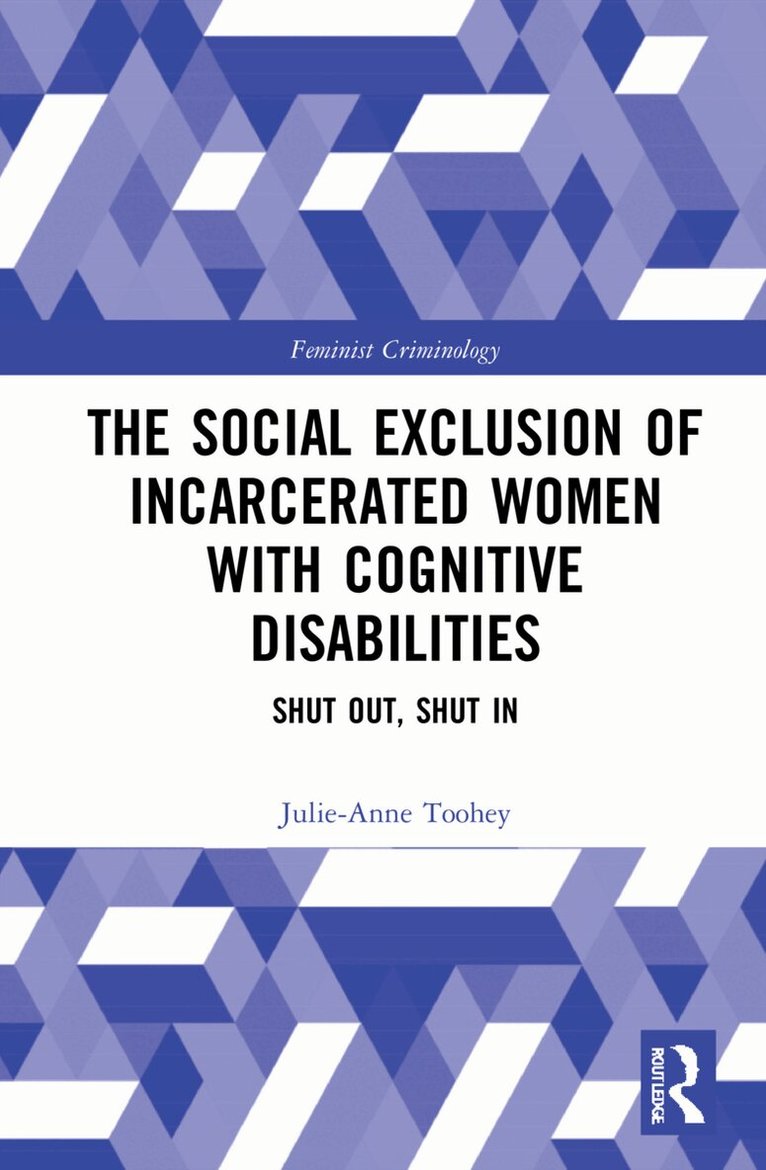
The Social Exclusion of Incarcerated Women with Cognitive Disabilities explores the lived experience of cognitively disabled women incarcerated in Australia. It draws upon in-depth interviews with Indigenous and non-Indigenous women, as well as interviews conducted with prison practitioners – psychologists, counsellors, and Aboriginal Liaison Officers. Using a theoretical framework of social exclusion, the book charts the complex intersection between cognitively disabled women and the Criminal Justice System, and how this connection works to foster and maintain a state of social exclusion prior to incarceration, and equally, within the prison setting. The book also provides a practical template for other researchers to use when investigating the aligned fields of the Criminal Justice System and incarceration, women offenders, cognitive disability, and social exclusion. By placing the voices of the incarcerated women with cognitive disabilities ‘front and centre’, a new and innovative approach to social exclusion emerges. The book moves beyond the 'telling of sad stories' to examine the social and political climate that permits disadvantage, inequality, and injustice to flourish. This book will be of great interest to academics and students in criminology, criminal justice, disability studies, women’s and gender studies, and penology. In exploring theory in a practical way, it will also be of use to those involved in the health sector, community services, disability support agencies, disability advocates, prisoner advocacy, women’s studies and women’s advocacy, and human rights activism.
301 kr
Skickas inom 10-15 vardagar
Drawing from an interdisciplinary body of research and data, Women of Piracy employs a criminological lens to explore how women have been involved in, and impacted by, maritime piracy operations from the 16th century to present day piracy off the coast of Somalia.The book challenges and resists popular understandings of women as peripheral to the criminal enterprise of piracy by presenting and analyzing their roles and experiences as victims, perpetrators, and criminal justice actors, showing that women have been, and continue to be, central figures in maritime piracy. Unfolding in three parts, part one sets the context by providing readers with a history of the masculinization of the sea. Part two focuses on the gendered division of labor in piracy operations, discussing how and why the roles and responsibilities associated with this gendered labor have emerged, persisted, evolved, and/or ceased over time, as well as considering which roles and responsibilities appear to be context-specific and which seem to transgress geographical locations. Part three explores how women have (or have not) been brought to justice for their participation in crimes of piracy as well as the roles of women in efforts to combat piracy. The overarching objective is to ignite a broader discussion about the various cultural, social, historical, and economic forces that create opportunities for women to participate in maritime piracy and counter-piracy, why women continue to be invisible figures of piracy, and what implications this has for how we study, police, and bring pirates to justice.The first criminologically-grounded, global study exploring the continuity and evolution of women in maritime piracy, this book will be of great interest to students and scholars of criminology, gender, feminist studies, international relations, anthropology, history, and political geography. It will also be useful to maritime and law enforcement professionals.
Social Exclusion of Incarcerated Women with Cognitive Disabilities
Shut Out, Shut In
Häftad, Engelska, 2023
601 kr
Skickas inom 10-15 vardagar
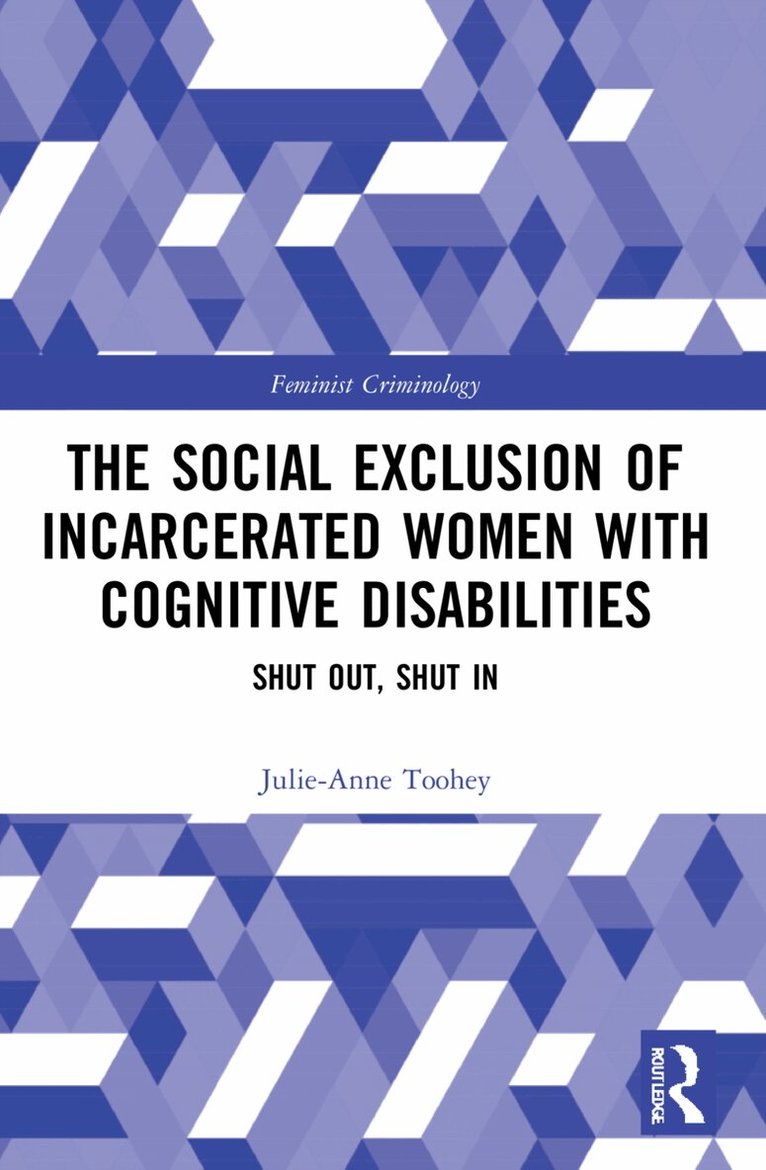
The Social Exclusion of Incarcerated Women with Cognitive Disabilities explores the lived experience of cognitively disabled women incarcerated in Australia. It draws upon in-depth interviews with Indigenous and non-Indigenous women, as well as interviews conducted with prison practitioners – psychologists, counsellors, and Aboriginal Liaison Officers. Using a theoretical framework of social exclusion, the book charts the complex intersection between cognitively disabled women and the Criminal Justice System, and how this connection works to foster and maintain a state of social exclusion prior to incarceration, and equally, within the prison setting. The book also provides a practical template for other researchers to use when investigating the aligned fields of the Criminal Justice System and incarceration, women offenders, cognitive disability, and social exclusion. By placing the voices of the incarcerated women with cognitive disabilities ‘front and centre’, a new and innovative approach to social exclusion emerges. The book moves beyond the 'telling of sad stories' to examine the social and political climate that permits disadvantage, inequality, and injustice to flourish. This book will be of great interest to academics and students in criminology, criminal justice, disability studies, women’s and gender studies, and penology. In exploring theory in a practical way, it will also be of use to those involved in the health sector, community services, disability support agencies, disability advocates, prisoner advocacy, women’s studies and women’s advocacy, and human rights activism.