Financial Markets and Investments – Serie
Visar alla böcker i serien Financial Markets and Investments. Handla med fri frakt och snabb leverans.
9 produkter
9 produkter
1 648 kr
Skickas inom 5-8 vardagar
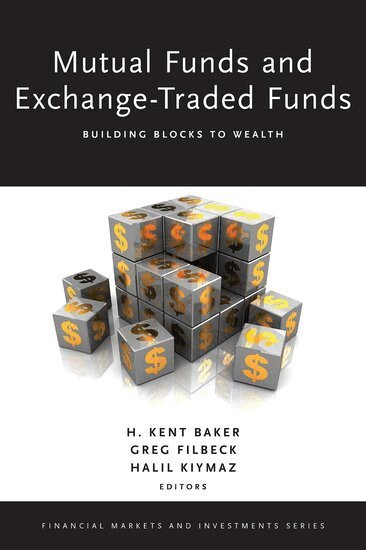
Mutual Funds and Exchange-Traded Funds: Building Blocks to Wealth offers a synthesis of the theoretical and empirical literature primarily on mutual funds but also discusses related investment vehicles, especially ETFs. In this edited volume, noted scholars and practitioners write chapters in their areas of expertise. It interweaves the contributions of multiple authors into an authoritative overview of important but selective topics. Readers will gain an in-depth understanding of mutual funds and ETFs from experts from around the world. Based on research-based evidence, this is not intended to be a "how to " book; instead, it is a scholarly and in-depth approach to important investment subjects. Although the book places greater attention on these different types of investments in the United States, it also examines them in a global context.In today's financial environment, mutual funds and ETFs are dynamic areas that continue to evolve at a rapid pace. Because the flow of materials on the subject is voluminous, this book, by necessity, must be selective because it cannot cover every aspect of this field. However, readers can gain important insights about each investment vehicle including its structure and uses, performance and measurement. Beyond these core topics and issues, the book also examines the latest trends, cutting-edge developments, and real-world situations. Given its broad scope, this practical and comprehensive book should appeal to investors, investment professionals, academics, and others interested in mutual funds and ETFs. In particular, this book should help investors make key asset allocation decisions while capturing the benefits of a highly diversified, well-constructed, lower-cost portfolio of complementary strategies that enhance financial wealth.
1 576 kr
Skickas inom 5-8 vardagar
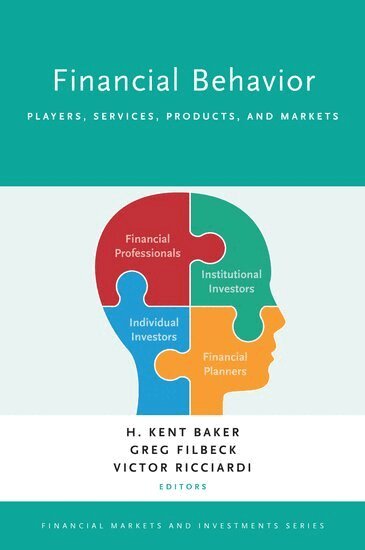
Financial Behavior: Players, Services, Products, and Markets provides a synthesis of the theoretical and empirical literature on the financial behavior of major stakeholders, financial services, investment products, and financial markets. The book offers a different way of looking at financial and emotional well-being and processing beliefs, emotions, and behaviors related to money. The book provides important insights about cognitive and emotional biases that influence various financial decision-makers, services, products, and markets. With diverse concepts and topics, the book brings together noted scholars and practitioners so readers can gain an in-depth understanding about this topic from experts from around the world.In today's financial setting, the discipline of behavioral finance is an ever-changing area that continues to evolve at a rapid pace. This book takes readers through the core topics and issues as well as the latest trends, cutting-edge research developments, and real-world situations. Additionally, discussion of research on various cognitive and emotional issues is covered throughout the book. Thus, this volume covers a breadth of content from theoretical to practical, while attempting to offer a useful balance of detailed and user-friendly coverage. Those interested in a broad survey will benefit as will those searching for more in-depth presentations of specific areas within this field of study. As the seventh book in the Financial Markets and Investment Series, Financial Behavior: Players, Services, Products, and Markets offers a fresh looks at the fascinating area of financial behavior.
1 576 kr
Skickas inom 5-8 vardagar
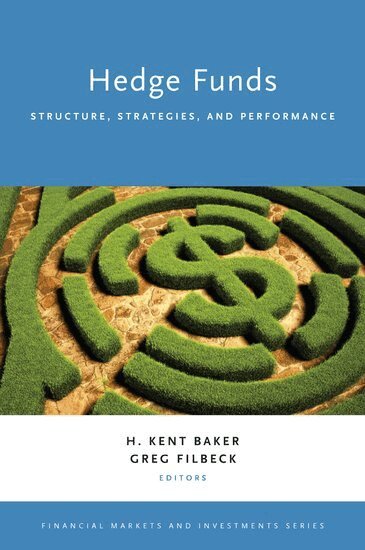
Hedge Funds: Structure, Strategies, and Performance provides a synthesis of the theoretical and empirical literature on this intriguing, complex, and frequently misunderstood topic. The book dispels some common misconceptions of hedge funds, showing that they are not a monolithic asset class but pursue highly diverse strategies. Furthermore, not all hedge funds are unusually risky, excessively leveraged, invest only in illiquid asses, attempt to profit from short-term market movements, or only benefit hedge fund managers due to their high fees. Among the core issues addressed are how hedge funds are structured and how they work, hedge fund strategies, leading issues in this investment, and the latest trends and developments. The authors examine hedge funds from a range of perspectives, and from the theoretical to the practical. The book explores the background, organization, and economics of hedge funds, as well as their structure. A key part is the diverse investment strategies hedge funds follow, for example some are activists, others focusing on relative value, and all have views on managing risk. The book examines various ways to evaluate hedge fund performance, and enhances understanding of their regulatory environment. The extensive and engaging examination of these issues help the reader understands the important issues and trends facing hedge funds, as well as their future prospects.
2 483 kr
Skickas inom 5-8 vardagar
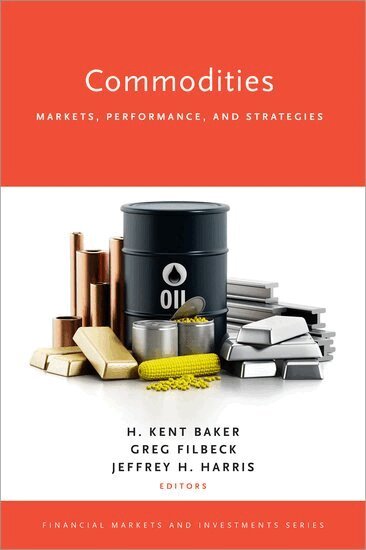
Commodities: Markets, Performance, and Strategies provides a comprehensive view of commodity markets by describing and analyzing historical commodity performance, vehicles for investing in commodities, portfolio strategies, and current topics. It begins with the basics of commodity markets and various investment vehicles. The book then highlights the unique risk and return profiles of commodity investments, along with the dangers from mismanaged risk practices. The book also provides important insights into recent developments, including high frequency trading, financialization, and the emergence of virtual currencies as commodities. Readers of Commodities: Markets, Performance, and Strategies can gain an in-depth understanding about the multiple dimensions of commodity investing from experts from around the world. Commodity markets can be accessed with products that create unique risk and return dynamics for investors worldwide. The authors provide insights in a range of areas, from the economics of supply and demand for individual physical commodities through the financial products used to gain exposure to commodities. The book balances useful practical advice on commodity exposure while exposing the reader to various pitfalls inherent in these markets. Readers interested in a basic understanding will benefit as will those looking for more in-depth presentations of specific areas within commodity markets. Overall, Commodities: Markets, Performance, and Strategies provides a fresh look at the myriad dimensions of investing in these globally important markets.
1 756 kr
Skickas inom 5-8 vardagar
Debt Markets and Investments provides an overview of the dynamic world of markets, products, valuation, and analysis of fixed income and related securities. Experts in the field, practitioners and academics, offer both diverse and in-depth insights into basic concepts and their application to increasingly intricate and real-world situations. This volume spans the entire spectrum from theoretical to practical, while attempting to offer a useful balance of detailed and user-friendly coverage. The volume begins with the basics of debt markets and investments, including basic bond terminology and market sectors. Among the topics covered are the relationship between fixed income and other asset classes as well as the differences in fundamental risk. Particular emphasis is given to interest rate risk as well as credit risks as well as those associated with inflation, liquidity, reinvestment, and ESG. Authors then turn to market sectors, including government debt, municipal bonds, the markets for corporate bonds, and developments in securitized debt markets along with derivatives and private debt markets. The third section focuses on models of yield curves, interest rates, and swaps, including opportunities for arbitrage. The next two sections focus on bond and securitized products, from sovereign debt and mutual funds focused on bonds to how securitization has increased liquidity through such innovations as mortgaged-and asset- backed securities, as well as collateralized debt-, bond-, and loan obligations. Authors next discuss various methods of valuation of bonds and securities, including the use of options and derivatives. The volume concludes with discussions of how debt can play a role in financial strategies and portfolio creation.Readers interested in a broad survey will benefit as will those looking for more in-depth presentations of specific areas within this field of study. In summary, the book provides a fresh look at this intriguing and dynamic but often complex subject.
1 855 kr
Skickas inom 5-8 vardagar
All investments carry with them some degree of risk. In the financial world, individuals, professional money managers, financial institutions, and many others encounter and must deal with risk. Risk management is a process of determining what risks exist in an investment and then handling those risks in the best-suited way. This is important because it can reduce or augment risk depending on the goals of investors and portfolio managers. The main purpose of Investment Risk Management is to provide an overview of developments in risk management and a synthesis of research involving these developments. The book examines ways to alter exposures through measuring and managing those exposures and provides an understanding of the latest strategies and trends within risk management. The scope of the coverage is broad and encompasses the most important aspects of investment risk management. Its 30 chapters are organized into six sections: (1) foundations of risk management, (2) types of risk, (3) quantitative assessment of risk, (4) risk and risk classes, (5) hedging risk and (6) going forward. The book should be of particular interest to sophisticated practitioners, investors, academics, and graduate finance students. Investment Risk Management provides a fresh look at this intriguing but complex subject.
1 937 kr
Skickas inom 5-8 vardagar
During the past few decades, private equity (PE) has attracted considerable attention from investors, practitioners, and academicians. In fact, a substantial literature on PE has emerged. PE offers benefits for institutional and private wealth management clients including diversification and enhancement of risk-adjusted returns. However, the lack of transparency, regulatory restrictions, and liquidity concerns that exist for some PE options limit their attractiveness for some investors.Private Equity: Opportunities and Risks offers a synthesis of the theoretical and empirical literature on PE in both emerging and developed markets. The book examines PE and provides important insights about topics such as major types of PE (venture capital, leveraged, buyouts, mezzanine capital, and distressed debt investments), how PE works, performance and measurement, uses and structure, and trends. Readers can gain an in-depth understanding about PE from academics and practitioners from around the world. Private Equity: Opportunities and Risks provides a fresh look at the intriguing yet complex subject of PE. A group of renowned experts take readers through the core topics and issues of PE, and also examine the latest trends and cutting-edge developments in the field. Additionally, discussion of research on PE permeates the book. The coverage extends from discussing basic concepts and their application to increasingly complex and real-world situations. Thus, this volume spans the gamut from theoretical to practical, while offering a useful balance of detailed and user-friendly coverage. This fresh and intriguing examination of PE is essential reading for anyone hoping to gain a better understanding of PE, from seasoned professionals to those aspiring to enter the demanding world of finance.
1 307 kr
Skickas inom 5-8 vardagar
This book provides an overview of private real estate markets and investments. The 14 chapters are divided into three sections for conventional and alternative real estate investments and regulatory issues. Conventional investable real assets examined are retail spaces, apartments, offices, and industrial facilities owned by corporate entities. Alternative real estate assets are uniquely and extensively addressed. These include healthcare, both for facilities and the pricing to make it an investable asset; infrastructure contains roads, bridges, and public utilities; and resources are in land, agriculture, oil, and gas. The regulatory section includes appraisal and valuation, brokerage and transaction costs, sustainability, and green buildings. Readers should gain a greater appreciation of what is needed to be successful when investing in private real estate markets.The share of real estate in institutional portfolios has risen above a previous 5% target, as investors avoid the risks of low interest rates. The world's wealth is shifting to emerging markets where real estate is already a dominant asset class and public securities markets are limited. Institutions with long horizons avoid publicly traded markets because they want to capture any premium from illiquidity. Real estate involves local and cultural restrictions on land usage, sustainability and on the regulation of the illiquidity. For information about public real estate, read Public Real Estate Markets and Investments.
1 379 kr
Skickas inom 5-8 vardagar
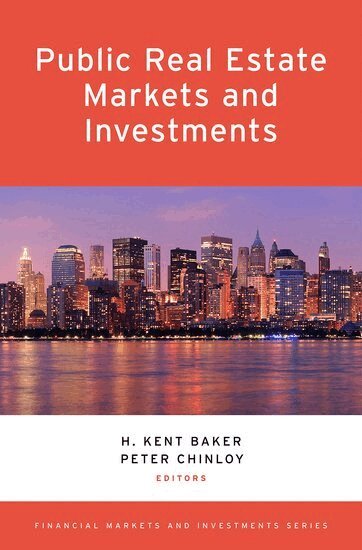
Real estate is typically classified as an alternative to more traditional investments such as stocks and bonds. Real estate investing involves the purchase, ownership, management, rental, or sale of real estate for profit. Real estate investments can be both income producing and non-income producing. Although real estate can produce income like a bond and appreciate like a stock, this tangible asset has several unique characteristics as well as advantages and disadvantages relative to other investment alternatives. Benefits of including real estate in a portfolio include diversification, yield enhancement, risk reduction, tax management, and inflation hedging. Unlike traditional investments, investors in real estate have the ability to influence performance. Real estate has drawbacks in that it requires management, is costly and difficult to buy, sell, and operate, and sometimes has lower liquidity. Additionally, measuring the relative performance of real estate can be challenging. The purpose of this 14-chapter book is to provide an overview and synthesis of public real estate markets and investments in a global context. The book discusses the major types and the latest trends within public real estate markets and presents the results of research studies in a straightforward manner. It has three sections: (1) foundations of public real estate, (2) public debt markets and investments, and (3) public equity markets and investments. The book should be interest to various groups including academics, practitioners, investors, and students. Readers should gain a greater appreciation of what is needed for success when investing in public real estate markets. For more information about private real estate, read Private Real Estate Markets and Investments.