Friction Stir Welding and Processing - Böcker
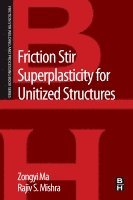
Friction Stir Superplasticity for Unitized Structures
A volume in the Friction Stir Welding and Processing Book Series
385 kr
Skickas inom 7-10 vardagar
This book describes the fundamentals and potential applications of 'friction stir superplasticity for unitized structures'. Conventional superplastic forming of sheets is limited to the thickness of 3 mm because the fine grained starting material is produced by rolling. Friction stir superplasticity has grown rapidly in the last decade because of the effectiveness of microstructural refinement. The thickness of the material remains almost constant, and that allows for forming of thick sheets/plates, which was not possible before. The field has reached a point where designers have opportunities to expand the extent of unitized structures, which are structures in which the traditional primary part and any supporting structures are fabricated as a single unit. With advanced optimization and material considerations, this class of structures can be lighter weight and more efficient, making them less costly, as well as mechanically less complex, reducing areas of possible failure.
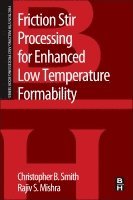
Discusses how friction stir processing allows selective microstructural refinement without thickness change Demonstrates how higher thickness sheets and plates can be superplastically formed Examples are presented for aluminum, magnesium and titanium alloys Covers the production of low-cost unitized structures by selectively processing cast sheets/platesFriction Stir Processing for Enhanced Low Temperature Formability
A volume in the Friction Stir Welding and Processing Book Series
434 kr
Skickas inom 7-10 vardagar
The use of friction stir processing to locally modify the microstructure to enhanced formability has the potential to alter the manufacturing of structural shapes. There is enough research to put together a short monograph detailing the fundamentals and key findings. One example of conventional manufacturing technique for aluminum alloys involves fusion welding of 5XXX series alloys. This can be replaced by friction stir welding, friction stir processing and forming. A major advantage of this switch is the enhanced properties. However qualification of any new process involves a series of tests to prove that material properties of interest in the friction stir welded or processed regions meet or exceed those of the fusion welded region (conventional approach). This book will provide a case study of Al5083 alloy with some additional examples of high strength aluminum alloys.
Demonstrates how friction stir processing enabled forming can expand the design space by using thick sheet/plate for applications where pieces are joined because of lack of formability Opens up new method for manufacturing of structural shapes Shows how the process has the potential to lower the cost of a finished structure and enhance the design allowables434 kr
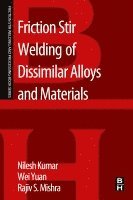
Skickas inom 7-10 vardagar
678 kr
Skickas inom 7-10 vardagar
This book will summarize research work carried out so far on dissimilar metallic material welding using friction stir welding (FSW). Joining of dissimilar alloys and materials are needed in many engineering systems and is considered quite challenging. Research in this area has shown significant benefit in terms of ease of processing, material mixing, and superior mechanical properties such as joint efficiencies. A summary of these results will be discussed along with potential guidelines for designers.
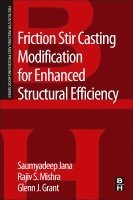
Explains solid phase process and distortion of work piece Addresses dimensional stability and repeatability Addresses joint strength Covers metallurgical properties in the joint area Covers fine microstructure Introduces improved materials use (e.g., joining different thicknesses) Covers decreased fuel consumption in light weight aircraft Addresses automotive and ship applicationsFriction Stir Casting Modification for Enhanced Structural Efficiency
A Volume in the Friction Stir Welding and Processing Book Series
593 kr
Skickas inom 7-10 vardagar
Friction Stir Casting Modification for Enhanced Structural Efficiency: A Volume in the Friction Stir Welding and Processing Book Series summarizes current research and applications of friction stir processing techniques for casting modification.
Research in this area has shown significant benefit in terms of fatigue performance as a result of friction stir processing. This book addresses the latest research, providing readers with a summary of these results and new guidelines for designers.
Provides the benefits of friction stir casting, including its solid phase process, low distortion of workpiece, good dimensional stability and repeatability, high joint strength, and more Summarizes current research and applications of friction stir processing techniques for casting modification Presents it usage in the production of products such as rugs, wire, or any other gases, and its applications for decreased fuel consumption in light weight aircraft, and its automotive and ship applications678 kr
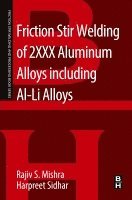
Skickas inom 7-10 vardagar
Friction Stir Processing of 2XXX Aluminum Alloys including Al-Li Alloys is the latest edition in the Friction Stir Welding and Processing series and examines the application of friction stir welding to high strength 2XXX series alloys, exploring the past and current developments in the field. The book features recent research showing significant benefit in terms of joint efficiency and fatigue performance as a result of friction stir welding.
Friction stir welding has demonstrated significant benefits in terms of its potential to reduce cost and increase manufacturing efficiency of industrial products including transportation, particularly the aerospace sector. The 2XXX series aluminum alloys are the premium aluminum alloys used in aerospace.
The book includes discussion of the potential future directions for further optimization, and is designed for both practicing engineers and materials scientists, as well as researchers in the field.
Provides comprehensive coverage of friction stir welding of 2XXX series alloys Discusses the physical metallurgy of the alloys Includes physical metallurgy-based guidelines for obtaining high joint efficiency Features illustrated examples of the application of FSW in the aerospace industry593 kr
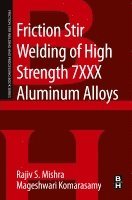
Skickas inom 7-10 vardagar
Friction Stir Welding of High Strength 7XXX Aluminum Alloys is the latest edition in the Friction Stir series and summarizes the research and application of friction stir welding to high strength 7XXX series alloys, exploring the past and current developments in the field.
Friction stir welding has demonstrated significant benefits in terms of its potential to reduce cost and increase manufacturing efficiency of industrial products in transportation, particularly the aerospace sector. The 7XXX series aluminum alloys are the premium aluminum alloys used in aerospace. These alloys are typically not weldable by fusion techniques and considerable effort has been expended to develop friction stir welding parameters. Research in this area has shown significant benefit in terms of joint efficiency and fatigue performance as a result of friction stir welding. The book summarizes those results and includes discussion of the potential future directions for further optimization.
Offers comprehensive coverage of friction stir welding of 7XXX series alloys Discusses the physical metallurgy of the alloys Includes physical metallurgy based guidelines for obtaining high joint efficiency Summarizes the research and application of friction stir welding to high strength 7XXX series alloys, exploring the past and current developments in the field604 kr
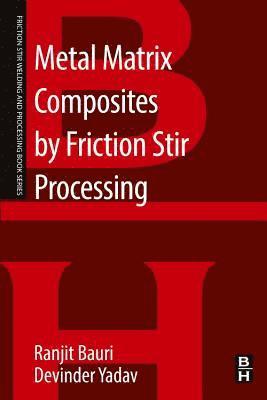
Skickas inom 7-10 vardagar
Metal Matrix Composites by Friction Stir Processing discusses the capabilities of utilizing friction stir processing (FSP) as a tool to manufacture new materials, such as composites. FSP is considered a tool for grain refinement. However, this work illustrates how FSP has a wider capability due to the material flow and mixing the process offers. This book highlights such aspects by demonstrating the ability of the process to incorporate a second phase and make metal matrix composites (MMCs). The book covers the current research on processing MMCs by FSP, and presents a novel approach of making ductile MMCs by FSP using metal particle reinforcements.
Demonstrates how friction stir processing can be used to make metal matrix composites Includes a review of different approaches of making metal matrix composites by friction stir processing Demonstrates the utility of friction stir processing in making new types of non-equilibrium ductile composites Provides a comparison of properties of friction stir processed composites to those of conventional metal matrix composites678 kr
Skickas inom 7-10 vardagar
Fatigue in Friction Stir Welding provides knowledge on how to design and fabricate high performance, fatigue resistance FSW joints. It summarizes fatigue characterizations of key FSW configurations, including butt and lap-shear joints. The book's main focus is on fatigue of aluminum alloys, but discussions of magnesium, steel, and titanium alloys are also included. The FSW process-structure-fatigue performance relationships, including tool rotation, travel speeds, and pin tools are covered, along with sections on extreme fatigue conditions and environments, including multiaxial, variable amplitude, and corrosion effects on fatigue of the FSW.
From a practical design perspective, appropriate fatigue design guidelines, including engineering and microstructure-sensitive modeling approaches are discussed. Finally, an appendix with numerous representative fatigue curves for design and reference purposes completes the work.
Provides a comprehensive characterization of fatigue behavior for various FSW joints and alloy combinations, along with an in-depth presentation on crack initiation and growth mechanisms Presents the relationships between process parameters and fatigue behavior Discusses modeling strategies and design recommendations, along with experimental data for reference purposes