Frontiers in Molecular Biology - Böcker
Visar alla böcker i serien Frontiers in Molecular Biology. Handla med fri frakt och snabb leverans.
7 produkter
7 produkter
1 558 kr
Skickas inom 3-6 vardagar
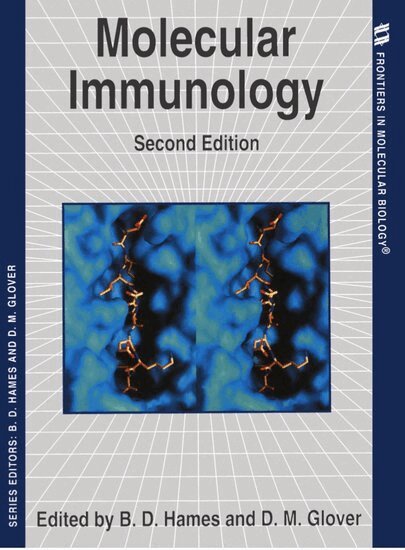
Like other volumes in the Frontiers in Molecular Biology series, this book presents an up-to-date picture of current research topics in a key area. The contributors to this book have been carefully chosen to reflect the main thrusts of research effort across a broad range within the rapidly developing field of immunology. Subjects covered include immunoglobulin gene rearrangement, the MHC antigens, B-cell activation, and the complement system.
1 944 kr
Skickas inom 5-8 vardagar
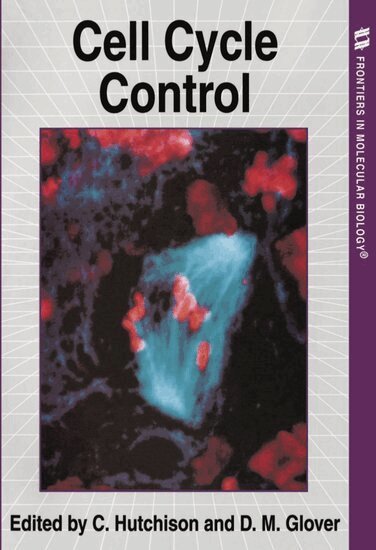
What makes a cell begin the complicated process of cell division? How does it stop? What happens when things go wrong? The use of developing technologies has revealed the extraordinary degree to which cell cycle control mechanisms have been conserved through eukaryotic evolution. This book presents a detailed overview of current research in cell cycle control.
964 kr
Skickas inom 7-10 vardagar
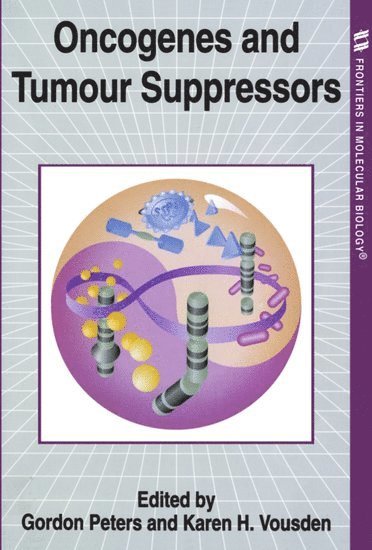
Oncogenes and tumour suppressor genes have been the focus of much research because of their role not only in cancer but also in normal cell growth and differentiation. Oncogenes and Tumour Suppressors is a unique volume that brings together a team of leading researchers to present and critically assess our current knowledge. The book covers two major areas of interest: oncogenes and signal transduction, and tumour supressors and cell cycle control. Topics covered include the mechanisms of oncogene perturbation; growth factors and their receptors in cell transformation; oncogenic cytoplasmic protein tyrosine kinases; the RAS/RAP/ERK signal transduction pathway; oncogenic transcription factors; mammalian cell cycle control; the retinoblastoma gene product and its relatives; the tumour suppressor gene p53; tumour suppressors and the inheritance of cancer; the clinical relevance of oncogenes. Oncogenes and Tumour Suppressors is a major review work that provides an unparalleled summary of our current understanding of this field as viewed by some of its leading researchers. It is of interest to all those involved in research on the cell cycle, signal transduction, and cancer biology. The book is also an excellent reference source with over 1800 selected citations to the primary literature.
Del 13 - Frontiers in Molecular Biology
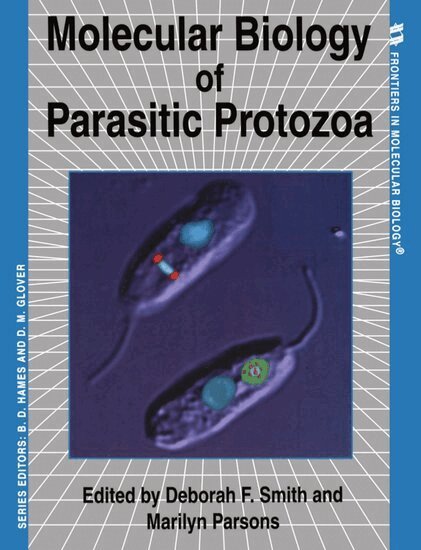
Molecular Biology of Parasitic Protozoa
Häftad, Engelska, 1996
1 141 kr
Skickas inom 3-6 vardagar
Parasitic Protozoa cause major infectious diseases of humans and domestic animals. In recent years, new techniques in molecular biology have allowed tremendous advances in our understanding of these parasites. Molecular Biology of Parasitic Protozoa covers this fast-moving field at an advanced level for which there is no other up-to-date book. Topics covered include trypanosomatid and Toxoplasma genetics, structure and replication of kinetoplast DNA, regulation of gene expression in trypanosomes, trans-splicing, RNA editing, the three genomes of Plasmodium, mechanisms of drug resistance, biogenesis of glycosomes and hydrogenosomes, glycosylphosphatidylinositols and the surface architecture of parasitic protozoa. Molecular Biology of Parasitic Protozoa is a unique compendium of current research findings in this important area. It contains over 900 references and provides a comprehensive review of the field as well as valuable insights and predictions of future progress by leading researchers.
1 475 kr
Skickas inom 7-10 vardagar
Cytokines are soluble mediators of intercellular communication. They contribute to a chemical signalling language that regulates development, tissue repair, haemopoiesis, inflammation and the immune response. Potent cytokine polypepides have pleiotropic activities and functional redundancy. They act in a complex network where one cytokine can influence the production of, and response to, many other cytokines. In the past five years, this bewildering array of more than 100 effector molecules and associated cell surface receptors has been simplified by study of cytokine and cytokine receptor structure; elucidation of convergent intracellular signalling pathways; and molecular genetics, and targeted gene disruption to 'knock-out' production of individual cytokines in mice. It is also now clear that the pathophysiology of infectious, autoimmune and malignant disease can be partially explained by the induction of cytokines and the subsequent cellular response. Viral homologues exist for many cytokines and receptors and genetic variations in cytokine production may influence response to pathogenic stimuli. Cytokine and cytokine antagonists have shown therapeutic potential in a number of chronic and acute diseases. The Cytokine Network: Frontiers in Molecular Biology is not a survey of individual cytokines, but guides the reader through the latest research on the cytokine network as a whole covering genomics, signalling pathways, control of the immune response, and therapeutics.
1 370 kr
Skickas inom 7-10 vardagar
The purpose of Protein-Protein Recognition is to bring together concepts and systems pertaining to protein-protein interactions in a single unifying volume. In the light of the information from the genome sequencing projects and the increase in structural information it is an opportune time to try to make generalizations about how and why proteins form complexes with each other. The emphasis of the book is on heteromeric complexes (complexes in which each of the components can exist in an unbound state) and will use well-studied model systems to explain the processes of forming complexes. After an introductory section on the kinetics, thermodynamics, analysis, and classification of protein-protein interactions, weak, intermediate, and high affinity complexes are dealt with in turn. Weak affinity complexes are represented by electron transfer proteins and integrin complexes. Anti-lysozyme antibodies, the MHC proteins and their interactions with T-cell receptors, and the protein interactions of eukaryotic signal transduction are the systems used to explain complexes with intermediate affinities. Finally, tight binding complexes are represented by the interaction of protein inhibitors with serine proteases and by nuclease inhibitor complexes. Throughout the chapters common themes are the technologies which have had the greatest impact, how specificity is determined, how complexes are stabilized, and medical and industrial applications.
698 kr
Skickas inom 7-10 vardagar
The growth and differentiation of living organisms are continuously adjusted to a multitude of environmental factors, each of which underlies a perpetual variation. The sessile existence of plants further emphasizes the requirement for efficient adaptation and defence mechanisms. The changes in environmental factors may range from moderate to dramatic and can concern many components at the same time. They may be abiotic or biotic in nature and range from essential to toxic in their effects. Among the numerous abiotic factors are nutrients, light, oxygen, water, temperature, gravity, wind, touch and chemicals. Biotic factors are represented by other organisms involved in symbiotic, pathogenic or herbivorous interactions with plants. All of these environmental factors are independently and specifically recognized by plants. Perception and overall response are linked by signal transduction pathways at cellular, systemic and interorganismic levels. In order to guarantee proper adaptation to the environment, signals generated following perception of a multitude of environmental factors need to be integrated and evaluated according to their importance. Cross-talk between different signaling pathways within such networks appears to be the basis for the evaluation of the importance of incoming signals. Knowledge of these complex processes allows a better understanding of the molecular mechanisms underlying adaptation. Modulation of distinct signaling elements can generate plants with improved stress resistance.This book represents a comprehensive summary of the enormous amount of information that is now available on signal transduction processes involved in the communication of plants with abiotic and biotic elements of their environment.