GENUS: Gender in Modern Culture – serie
Visar alla böcker i serien GENUS: Gender in Modern Culture. Handla med fri frakt och snabb leverans.
3 produkter
3 produkter
Del 11 - GENUS: Gender in Modern Culture
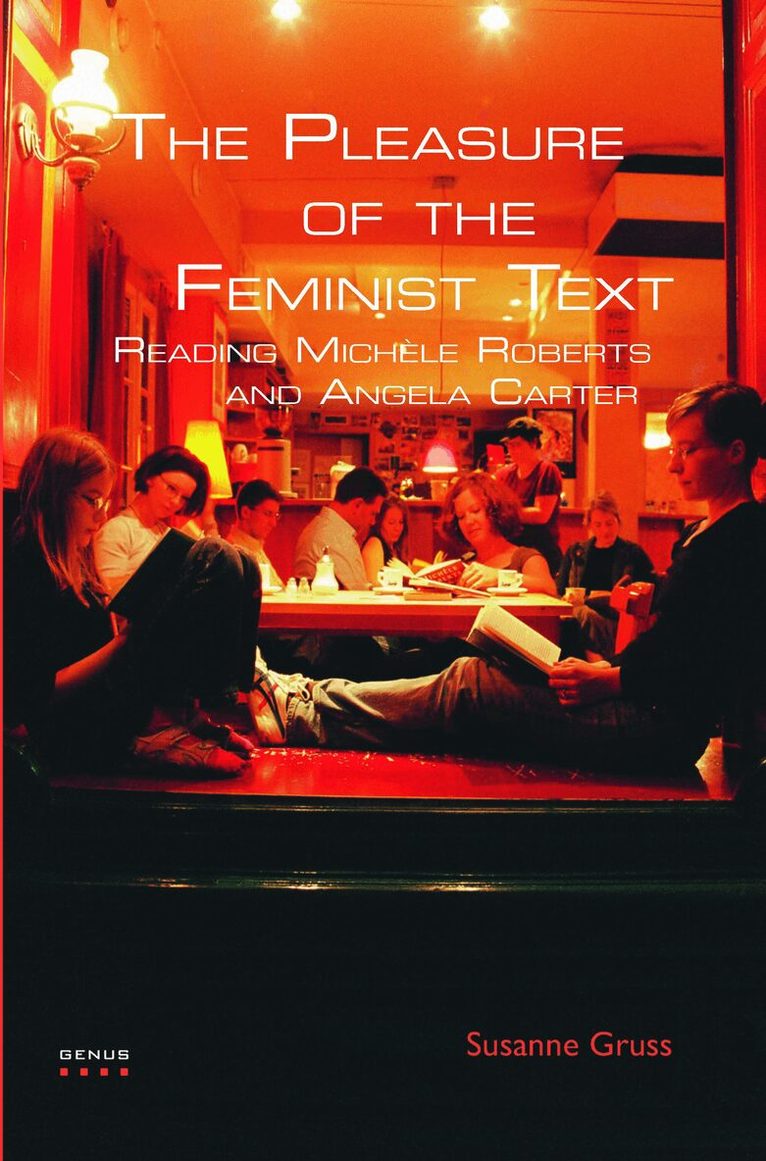
Pleasure of the Feminist Text
Reading Michèle Roberts and Angela Carter
Häftad, Engelska, 2009
2 078 kr
Skickas inom 3-6 vardagar
“I would regard myself as a feminist writer, because I’m a feminist in everything else and one can’t compartmentalise these things in one’s life.” (Angela Carter)“When I became a feminist in 1968, I felt that I’d come home: the first home I ever had that was feminine. And it was very wild and theatrical and erotic, the early feminism.” (Michèle Roberts)Angela Carter and Michèle Roberts share a keen interest in gender and sexual identity, but many of their topics seem to mark them as opposites: Roberts’s fascination with the impact of religion, motherhood and autobiography on female identity covers areas that Carter shuns in her writings. In reading these two authors parallel and in contrast to each other, this monograph follows a triple objective: it provides a comprehensive critical introduction to the works of Roberts, explores aspects of Carter’s work that have not yet been analyzed sufficiently (religion, motherhood, and masculinity), and uses both authors to explore motifs and strategies of feminist writing. The analyses of both authors’ works are supplemented by close readings of a wide range of theoretical perspectives (especially French feminism and psychoanalysis) and concise theoretical outlines of the topics covered (radical feminism, religion, motherhood and fatherhood, masculinity, fairy tales, romances and chick lit, and history and auto/biography).
Del 10 - GENUS: Gender in Modern Culture
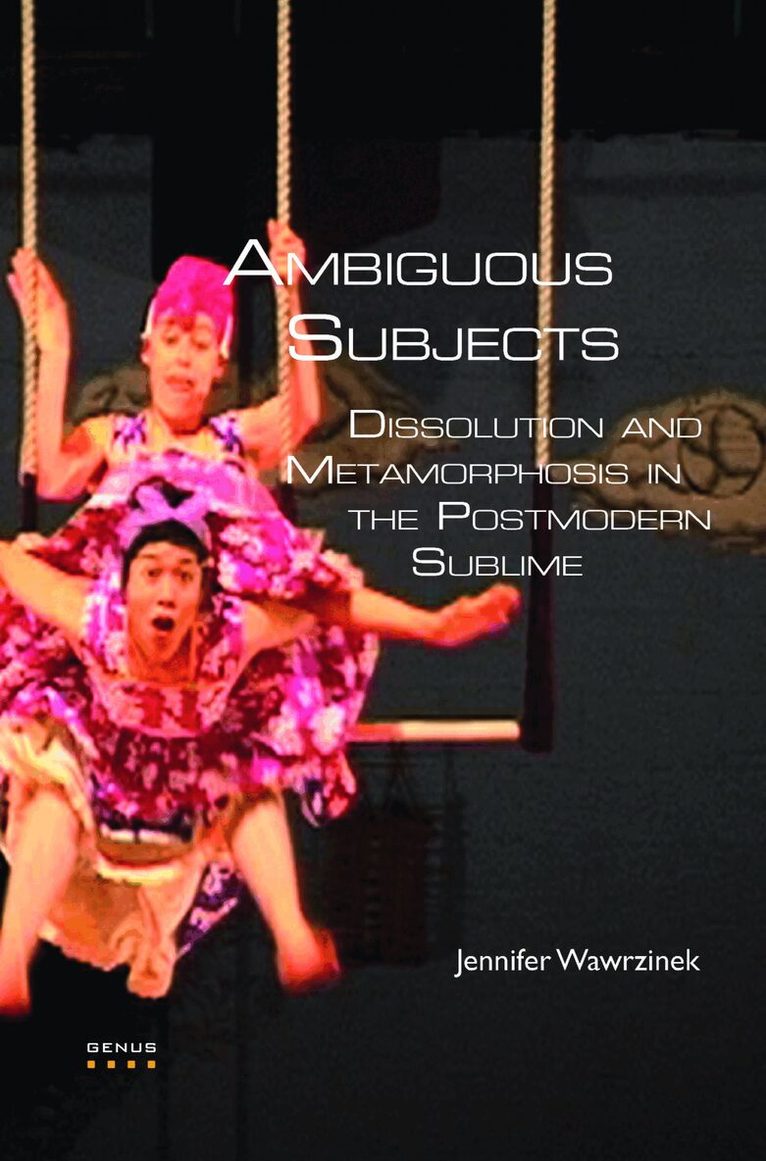
Ambiguous Subjects
Dissolution and Metamorphosis in the Postmodern Sublime
Häftad, Engelska, 2008
964 kr
Skickas inom 3-6 vardagar
In the history of ideas, the aesthetic categories of the sublime and the grotesque have exerted a powerful force over the cultural imagination. Ambiguous Subjects is one of the first studies to examine the relationship between these concepts. Tracing the history of the sublime from the eighteenth century through Burke and Kant, Wawrzinek illustrates the ways in which the sublime has traditionally been privileged as an inherently masculine and imperialist mode of experience that polices and abjects the grotesque to the margins of acceptable discourse, and the way in which twentieth-century reconfigurations of the sublime increasingly enable the productive situating of these concepts within a dialogic relation as a means of instating an ethical relation to others.This book examines the articulations of both the sublime and the grotesque in three postmodern texts. Looking at novels by Nicole Brossard and Morgan Yasbincek, and the performance work of The Women’s Circus, Wawrzinek illuminates the ways in which these writers and performers restructure the spatial and temporal parameters of the sublime in order to allow various forms of highly contingent transcendence that always necessarily remain in relation to the grotesque body. Ambiguous Subjects illustrates how the sublime and the grotesque can co-exist in a manner where each depends on and is inflected through the other, thus enabling a notion of individuality and of community as contingent, but nevertheless very real, moments in time.Ambiguous Subjects is essential reading for anyone interested in aesthetics, continental philosophy, gender studies, literary theory, sociology and politics.
Del 12 - GENUS: Gender in Modern Culture
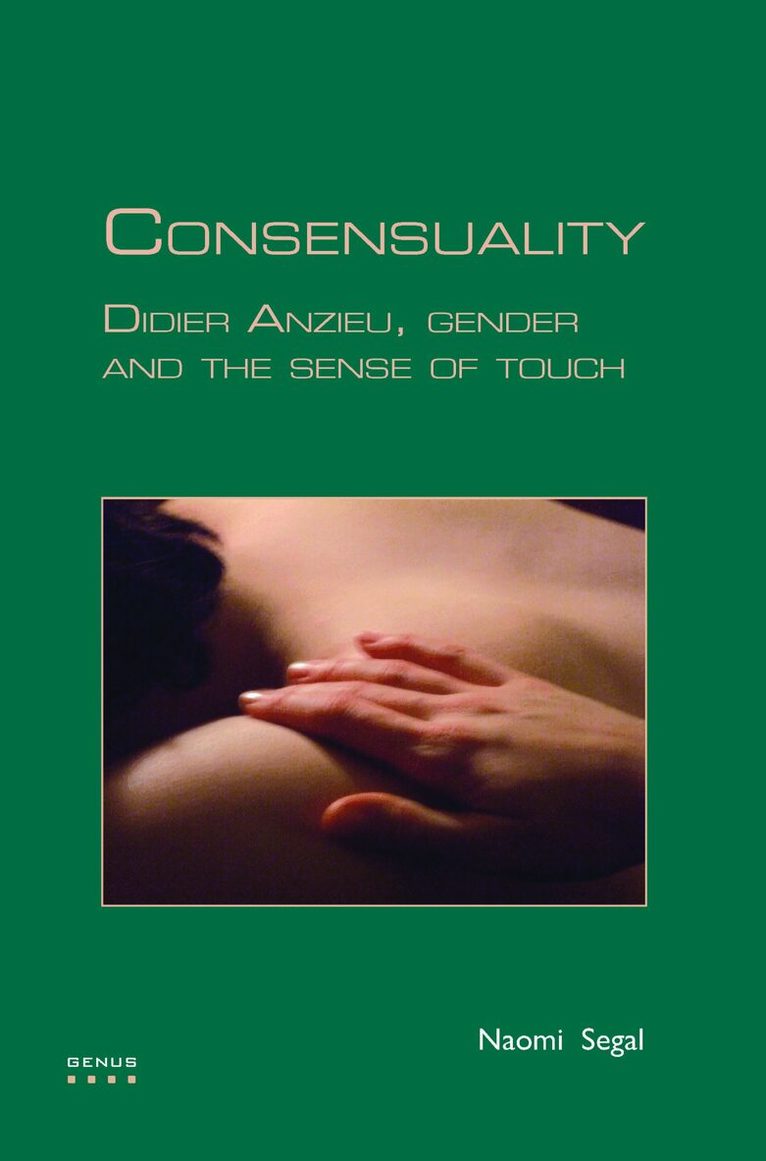
Consensuality
Didier Anzieu, gender and the sense of touch
Häftad, Engelska, 2009
1 583 kr
Skickas inom 3-6 vardagar
The body is an emissary. We know little of our own feelings or the feelings of others, but that ignorance is mediated through our organ of touch, the skin. The term ‘consensuality’ stands for the co-presence of perceptions on the skin, which is the backcloth to sensation and thought. If the intelligence of the body is the basis of both sense and consent, consensuality also has to do with human relations based on the sense of touch, particularly the mother-child couple and the relation of desire, love and loss. This book touches on a range of cultural figures including Gide, Princess Diana, Kafka, Gautier and Rilke, and such films as Gattaca, The Talented Mr Ripley, Being John Malkovich, The Piano and The Truman Show, together with theories of the caress, phantom limbs and replacement children. Connecting all these is the work of psychoanalyst Didier Anzieu, who wrote on group psychology, psychodrama, psychic envelopes, creativity and thought; he also published a study of May ‘68 written from the heart of Nanterre. He was analysed by Lacan, not knowing at the time that the latter had treated Anzieu’s mother. His Le Moi-peau (The Skin-ego) shows how the psychic skin holds, protects and communicates but can also constrict or tear. If love enwraps and loss flays, how do we mourn?