Geomorphological Landscapes of the World – serie
Visar alla böcker i serien Geomorphological Landscapes of the World. Handla med fri frakt och snabb leverans.
2 produkter
2 produkter
5 080 kr
Skickas inom 7-10 vardagar
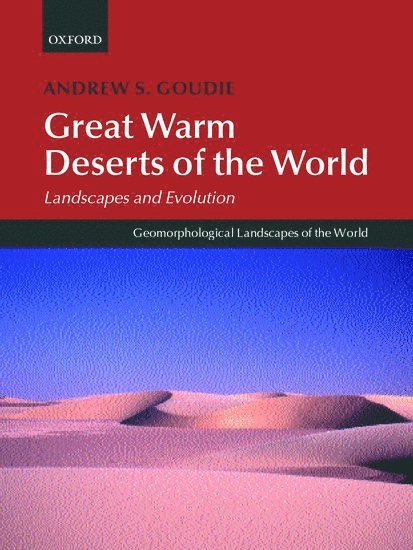
This is the first-ever regional study of the geomorphology of the world's deserts, demonstrating why different deserts have special landscape features and land-forming processes. It explains the climatic and tectonic history of deserts, showing how the histories of the deserts have been long and complex, and how they have responded to global changes in climate, particularly over the course of the last few millions of years. Each of the major warm deserts of the world is treated in detail, and the book is extensively illustrated with numerous plates and figures. A large and comprehensive bibliography provides a guide to the international literature.
4 615 kr
Skickas inom 7-10 vardagar
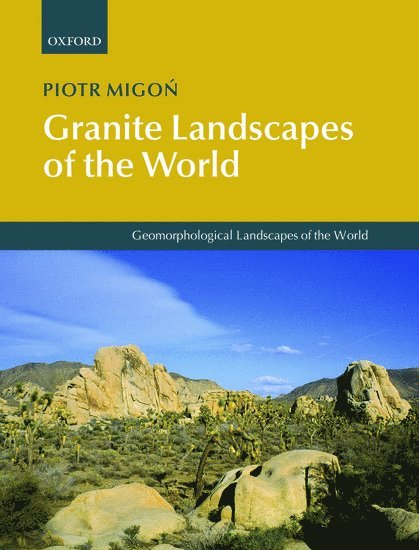
Outcrops of granitic rocks cover a large proportion of the Earth's surface and host a range of spectacular landforms and landscapes, from extensive plains dotted by inselbergs to deeply dissected mountain ranges. They are often strikingly beautiful, but more importantly, they provide valuable insights into the mechanisms of geomorphic evolution both in the past and at present.The book offers a comprehensive view of the geomorphology of granite areas, examining individual landforms and their assemblages. Weathering processes, and the phenomenon of deep weathering in particular, are given much emphasis as these are fundamental to the understanding of the geomorphic evolution of granite areas. Granite landforms directly related to weathering, such as boulders, tors, inselbergs, and features of surface microrelief are examined in respect to their characteristics and origin. Patterns of slope evolution are shown in the context of both rock slopes and deeply weathered terrains. Granite geomorphology in the coastal, periglacial and glacial context is presented to show how the characteristics of granite control landform evolution in these specific environments. In the closing part a variety of geological controls is reviewed and their primacy over other factors is advocated, followed by an attempt to provide a typology of natural granite landscapes. Finally, certain specific ways of human transformation of granite landscapes are presented.The book will be useful to a range of earth science disciplines, including geomorphology, igneous petrology, engineering geology and soil science. Cultural geographers and people dealing with conservation of geological heritage should find it of interest. Examples from all parts of the world and extensive referencing ensure that it will act as an up-to-date guidebook to the fascinating world of granite geomorphology.