George H. Shriver Lecture Series in Religion in American History Ser. – serie
326 kr
Läs direkt efter köp
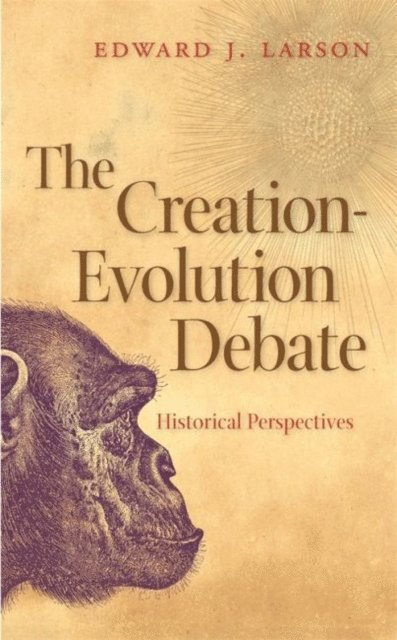
Few issues besides evolution have so strained Americans'' professed tradition of tolerance. Few historians besides Pulitzer Prize winner Edward J. Larson have so perceptively chronicled evolution''s divisive presence on the American scene. This slim volume reviews the key aspects, current and historical, of the creation-evolution debate in the United States.Larson discusses such topics as the transatlantic response to Darwinism, the American controversy over teaching evolution in public schools, and the religious views of American scientists. He recalls the theological qualms about evolution held by some leading scientists of Darwin''s time. He looks at the 2006 Dover, Pennsylvania, court decision on teaching Intelligent Design and other cases leading back to the landmark 1925 Scopes trial. Drawing on surveys that Larson conducted, he discusses attitudes of American scientists toward the existence of God and the afterlife.By looking at the changing motivations and backgrounds of the stakeholders in the creation-evolution debate—clergy, scientists, lawmakers, educators, and others—Larson promotes a more nuanced view of the question than most of us have. This is no incidental benefit for Larson''s readers; it is one of the book''s driving purposes. If we cede the debate to those who would frame it simplistically rather than embrace its complexity, warns Larson, we will not advance beyond the naive regard of organized religion as the enemy of intellectual freedom or the equally myopic myth of the scientist as courageous loner willing to die for the truth.
326 kr
Läs direkt efter köp
578 kr
Läs direkt efter köp
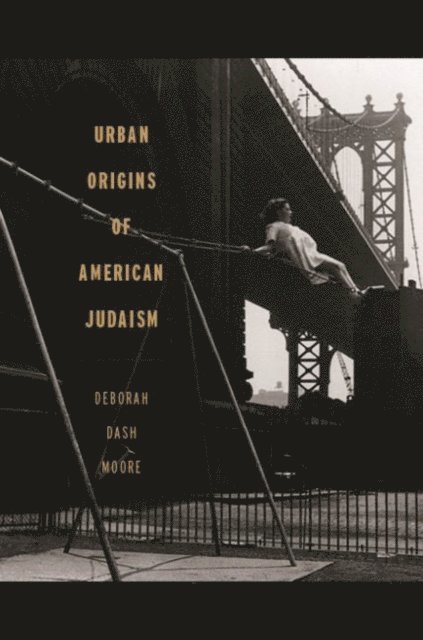
The urban origins of American Judaism began with daily experiences of Jews, their responses to opportunities for social and physical mobility as well as constraints of discrimination and prejudice. Deborah Dash Moore explores Jewish participation in American cities and considers the implications of urban living for American Jews across three centuries. Looking at synagogues, streets, and snapshots, she contends that key features of American Judaism can be understood as an imaginative product grounded in urban potentials.Jews signaled their collective urban presence through synagogue construction, which represented Judaism on the civic stage. Synagogues housed Judaism in action, its rituals, liturgies, and community, while simultaneously demonstrating how Jews Judaized other aspects of their collective life, including study, education, recreation, sociability, and politics. Synagogues expressed aesthetic aspirations and translated Jewish spiritual desires into brick and mortar. Their changing architecture reflects shifting values among American Jews.Concentrations of Jews in cities also allowed for development of public religious practices that ranged from weekly shopping for the Sabbath to exuberant dancing in the streets with Torah scrolls on the holiday of Simhat Torah. Jewish engagement with city streets also reflected Jewish responses to Catholic religious practices that temporarily transformed streets into sacred spaces. This activity amplified an urban Jewish presence and provided vital contexts for synagogue life, as seen in the captivating photographs Moore analyzes.
400 kr
Läs direkt efter köp
That Americans take to sports with a spiritual fervor is no secret. Athletics has even been called a civil religion for how it permeates our daily lives as we chase our own dreams of glory or watch others compete. Few would deny our national devotion to sports; however, many would gloss over it as all of a piece. To do that, as William J. Baker shows us, is to miss the fascinating variety of experiences at the intersection of sports and religion—and the ramifications of such on a national citizenry defined, as Baker writes, “by the team they cheer on Saturday and the church they attend on Sunday.” With nods to modern and ancient history, Baker looks at the ever-changing relationship between faith and sports through vignettes about devout athletes, coaches, and journalists.Of Gods and Games offers an accessible entrée into some of the larger issues embedded in American culture’s sports–religion connection. Baker first considers two Christian athletes who have engaged sports and religion on fundamentally different terms: Shelly Pennefather, one of the dominant women’s basketball players of the late 1980s, who left the sport for life as a cloistered nun; and Heisman Trophy winner Tim Tebow, who has used his college and pro football careers as a platform for evangelizing. In discussing basketball coach Dean Smith (University of North Carolina) and football coaches Steve Spurrier (University of South Carolina) and Bill McCartney (University of Colorado) Baker looks at how each strove to honor faith amid sometimes complicated personal lives and ever-crushing professional demands. Finally, Baker looks at how faith inspired such sportswriters as Grantland Rice, who sprinkled his stories with religious allusions, and Watson Spoelstra, who struck a deal with God at his daughter’s deathbed (she recovered) and subsequently devoted his off-hours and retirement years to charity work.