Great Tramcars – serie
Visar alla böcker i serien Great Tramcars. Handla med fri frakt och snabb leverans.
2 produkter
2 produkter
Inbunden, Engelska, 2020
270 kr
Skickas
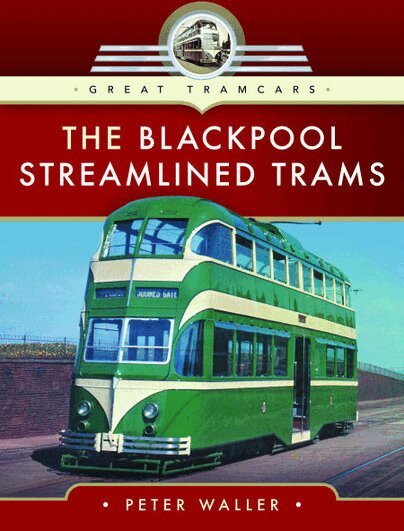
In the early 1930s the tramcar in Blackpool was at a crossroads; the system needed investment in both new track and new trams whilst there was a serious threat that the 'town' routes - as elsewhere in Britain as operators faced the same challenges - might have been converted to bus operation.The appointment of Walter Luff as the new general manager was, however, to prove a turning point. Working closely with English Electric, based in nearby Preston, Luff developed a series of streamlined trams - both single-deck and double-deck - that were to revolutionise the town's tramway. By the end of 1930s, the corporation had acquired more than 100 new trams - the majority built by English Electric but with 20 coming from Brush - that ensured the survival not only of the key route along the Promenade to Fleetwood but also of the bulk of the 'town' routes.Over the next 70 years these trams were to form the cornerstone of the Blackpool system. Almost from the start, when a number were modified to cater for the changed requirements during the Second World War, many of the trams were rebuilt - into the power cars that worked with the trailers, for example, or the one-man operated cars of the early 1970s - that extended their lives and saw them outlast more modern designs. It was only with the modernisation of the Blackpool system in the first decade of the 20th century that, finally, they became largely obsolete but still, as part of the heritage fleet, they remain very much part of the contemporary Blackpool scene.This book examines the history of Blackpool's streamlined trams of the 1930s from development through to preservation.
Inbunden, Engelska, 2020
273 kr
Skickas
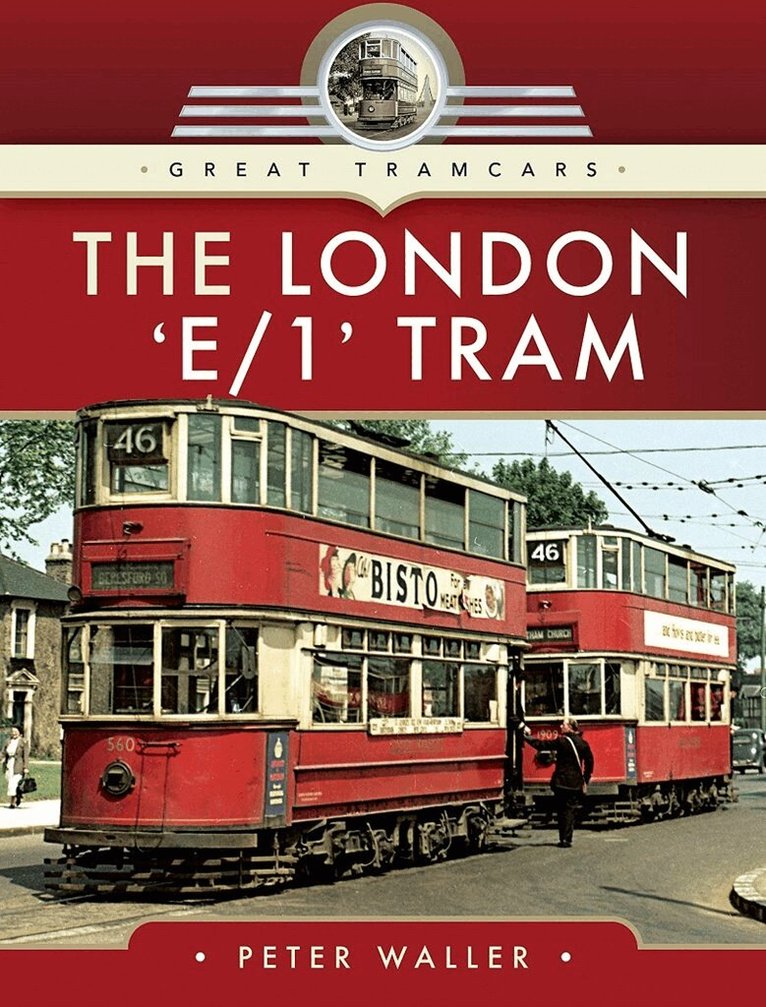
Probably the single most numerous of tramcar constructed for operation on Britain's first generation electric tramways, the London County Council's 'E/1' class had an operational history that stretched for almost 50 years. The first were produced towards the end of the first decade of the 20th century and the last were withdrawn with the conclusion of 'Operation Tramaway' - the final conversion of the once great London tramway system - in July 1952.Over the years, more than 1,000 were built for operation by the LCC with similar cars being constructed for a number of the council operated systems in the capital prior to the creation of the LPTB in July 1933\. The last batch - effectively rebuilds of single-deck cars that had once operated through the Kingsway Subway prior to its modernisation - not completed until the early 1930s. During the 1920s the LCC cars had undergone a Pullmanisation programme and, during the following decade, a number underwent the LPTB's Rehabilitation scheme. Moreover, with the removal of the restriction on the use of enclosed lower-deck vestibules, many others were converted to fully-enclosed during that decade.Although withdrawals commenced in the 1930s, as the tram system north of the river was converted to trolleybus operation, and others were lost as a result of enemy action during the war, a sizeable number survived to the system's final days.This book examines the history of this important class from development through to preservation.