Harvard Film Studies – serie
Visar alla böcker i serien Harvard Film Studies. Handla med fri frakt och snabb leverans.
7 produkter
7 produkter
356 kr
Skickas inom 5-8 vardagar
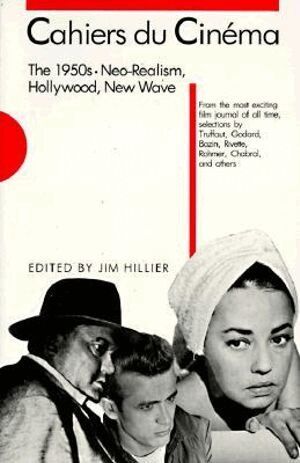
Cahiers du Cinéma is the most prestigious and influential film journal ever published. An anthology devoted entirely to its writings, in English translation, is long overdue.The selections in this volume are drawn from the colorful first decade of Cahiers, 1951–1959, when a group of young iconoclasts rocked the world of film criticism with their provocative views on international cinema—American, Italian, and French in particular. They challenged long-established Anglo-Saxon attitudes by championing American popular movies, addressing genres such as the Western and the thriller and the aesthetics of technological developments like CinemaScope, emphasizing mise en scène as much as thematic content, and assessing the work of individual filmmakers such as Hawks, Hitchcock, and Nicholas Ray in terms of a new theory of the director as author, auteur, a revolutionary concept at the time. Italian film, especially the work of Rossellini, prompted sharp debates about realism that helped shift the focus of critical discussion from content toward style. The critiques of French cinema have special interest because many of the journal’s major contributors and theorists—Godard, Truffaut, Rohmer, Rivette, Chabrol—were to become some of France’s most important film directors and leaders of the New Wave.Translated under the supervision of the British Film Institute, the selections have for the most part never appeared in English until now. Jim Hillier has organized them into topical groupings and has provided introductions to the parts as well as the whole. Together these essays, reviews, discussions, and polemics reveal the central ideas of the Cahiers of the 1950s not as fixed doctrines but as provocative, productive, often contradictory contributions to crucial debates that were to overturn critical thinking about film.
Del 5 - Harvard Film Studies
The 1960s (1960–1968)
New Wave, New Cinema, Reevaluating Hollywood
Häftad, Engelska, 1992
412 kr
Skickas inom 10-15 vardagar
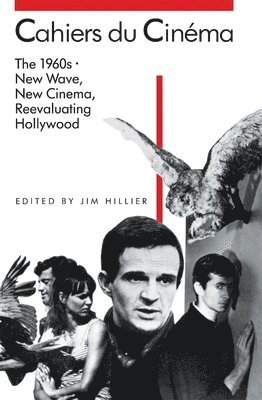
In the turbulent sixties, the provocative French film journal Cahiers du Cinéma was at its most influential and controversial. The first successes of the New Wave by major Cahiers contributors such as Jean-Luc Godard, François Truffaut, Jacques Rivette, Eric Rohmer, and Claude Chabrol focused international attention on the revitalization of French cinema and its relation to film criticism; and in the early 1960s the journal’s laudatory critiques of popular American movies were attaining the greatest notoriety.As the lively articles, interviews, and polemical discussions in this volume reveal, the 1960s saw the beginnings of significant new directions in filmmaking and film criticism changes in which the New Wave itself was a major factor. The auteur theory that the journal had championed in the 1950s began to be rethought and revalued. At the same time, along with a reassessment of American film, Cahiers began to embrace new, often oppositional forms of cinema and criticism, culminating in the political and aesthetic radicalism of the ensuing decade.The selections, translated under the supervision of the British Film Institute, are annotated by Jim Hillier, and context is provided in his general introduction and part introductions. For an understanding of the important changes that took place in cinema and film criticism in the 1960s and beyond, this book is essential reading.
879 kr
Tillfälligt slut
No detailed description available for "Two or Three Things I Know about Her".
906 kr
Tillfälligt slut
No detailed description available for "Jean Renoir".
Del 7 - Harvard Film Studies
Making Meaning
Inference and Rhetoric in the Interpretation of Cinema
Häftad, Engelska, 1991
516 kr
Skickas inom 10-15 vardagar
David Bordwell’s new book is at once a history of film criticism, an analysis of how critics interpret film, and a proposal for an alternative program for film studies. It is an anatomy of film criticism meant to reset the agenda for film scholarship. As such Making Meaning should be a landmark book, a focus for debate from which future film study will evolve.Bordwell systematically maps different strategies for interpreting films and making meaning, illustrating his points with a vast array of examples from Western film criticism. Following an introductory chapter that sets out the terms and scope of the argument, Bordwell goes on to show how critical institutions constrain and contain the very practices they promote, and how the interpretation of texts has become a central preoccupation of the humanities. He gives lucid accounts of the development of film criticism in France, Britain, and the United States since World War II; analyzes this development through two important types of criticism, thematic-explicatory and symptomatic; and shows that both types, usually seen as antithetical, in fact have much in common. These diverse and even warring schools of criticism share conventional, rhetorical, and problem-solving techniques—a point that has broad-ranging implications for the way critics practice their art. The book concludes with a survey of the alternatives to criticism based on interpretation and, finally, with the proposal that a historical poetics of cinema offers the most fruitful framework for film analysis.
Del 2 - Harvard Film Studies
Pursuits of Happiness
The Hollywood Comedy of Remarriage
Häftad, Engelska, 1984
309 kr
Skickas inom 5-8 vardagar
During the ’30s and ’40s, Hollywood produced a genre of madcap comedies that emphasized reuniting the central couple after divorce or separation. Their female protagonists were strong, independent, and sophisticated. Here, Stanley Cavell names this new genre of American film—“the comedy of remarriage”—and examines seven classic movies for their cinematic techniques and for such varied themes as feminism, liberty, and interdependence.Included are Adam’s Rib, The Awful Truth, Bringing Up Baby, His Girl Friday, It Happened One Night, The Lady Eve, and The Philadelphia Story.
914 kr
Tillfälligt slut
Marcel Carné symbolizes the period, approximately 1930-1945, when French cinema recaptured the creative vitality and prestige it had relinquished almost completely to the American film industry. The first critical biography of this director of classic films, including the epic historical romance Les Enfants du paradis (Children of Paradise), relates the saga of Carné’s meteoric rise in the 1930s and his decline from critical grace after the war. Between 1937 and 1945 Carné directed a number of works that are now part of France’s cultural patrimony, most notably Le Quai des Brumes (1938), LeJour se lève (1939), Les Visiteurs du soir (1942), and the best known, Les Enfants du paradis (1945). The artistic merit of these films is widely acknowledged; their significance, however, is not solely aesthetic. To know Carné and his films is to know how cinematic art responded to social and political events — to the period of French history that witnessed the Popular Front, the Front’s demise, the fall of France, and the Occupation. Edward Baron Turk discloses the incongruities between the director’s aesthetic of poetic realism and his professed leftist sympathies; he situates Carné’s questionable stance and activities during the Occupation within the broader context of an artist’s ethical responsibilities in times of war; and he examines the ramifications of Carné’s censure during the postwar purges for the director’s subsequent fortunes. Turk’s use of the psychoanalytic concepts of androgyny, masochism, fetishism, and primal scene allows us to understand more clearly how Carné thought and worked. Turk also addresses the representations and maskings of homosexuality in Carné’s films and the extent to which they have colored film history’s often ambivalent assessments of the director. The centerpiece of the book is an extended analysis of what is arguably the most famous and beloved of all French films, Les Enfants du paradis, scripted by the poet-screenwriter Jacques Prévert. The book draws on unpublished correspondence from, among others, Jean Cocteau, François Truffaut, and Simone Signoret, and on interviews by the author with Arletty, Jean-Louis Barrault, Mme. Jacques Prévert, Pierre Prévert, Claude Renoir, Alexander Trauner, Truffaut, and Carné himself. This portrait of Carné thus becomes the portrait of an age, a great age in the history of French cinema, albeit a tragic age in the history of France.