Herbert Marcuse: Collected Papers - Böcker
Visar alla böcker i serien Herbert Marcuse: Collected Papers. Handla med fri frakt och snabb leverans.
12 produkter
12 produkter
2 085 kr
Skickas inom 10-15 vardagar
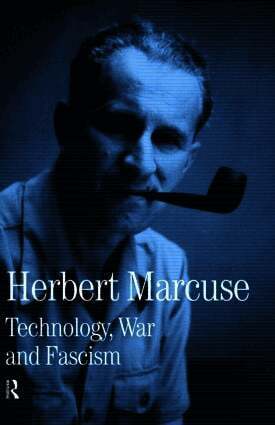
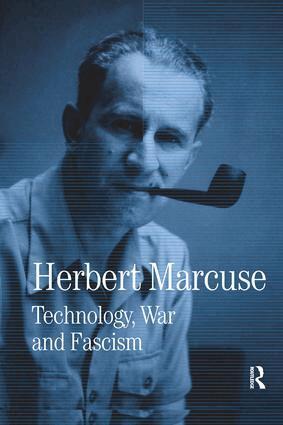
Herbert Marcuse is one of the most influential thinkers of our time. Born in Berlin, Marcuse studied philosophy with Husserl and Heidegger at the Universities of Freiburg and Berlin. Marcuse's critical social theory ingeniously fuses phenomenology, Freudian thought and Marxist theory; and provides a solid ground for his reputation as the most crucial figure inspiring the social activism and New Left politics of the 1960s and 1970s. The largely unpublished work collected in this volume makes clear the continuing relevance of Marcuse's thought to contemporary issues. The texts published here, dealing with concerns during the period 1942-1951, exhibit penetrating critiques of technology and analyses of the ways that modern technology produces novel forms of society and culture with new modes of social control. The material collected in Technology, War and Facism provides exemplary attempts to link theory with practice, to develop ideas that can be used to grasp and transform existing social reality.Technology, War and Fascism is the first of six volumes of Herbert Marcuse's Collected Papers to be edited by Douglas Kellner. Each volume is a collection of previously un-published or uncollected essays, unfinished manuscripts and letters by one of the greatest thinkers of our time.
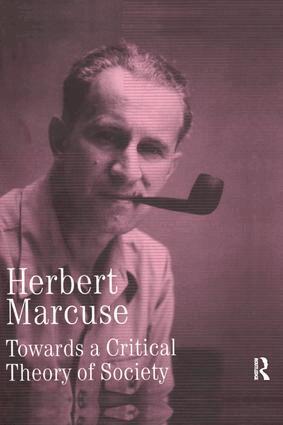
Towards a Critical Theory of Society
Collected Papers of Herbert Marcuse, Volume 2
Inbunden, Engelska, 2001
1 965 kr
Skickas inom 10-15 vardagar
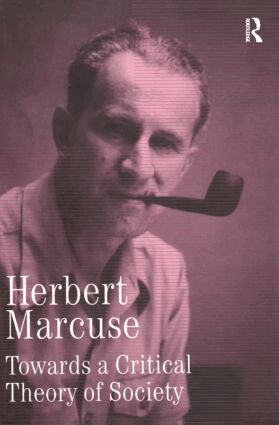
This second volume of Marcuse's collected papers includes unpublished manuscripts from the late 1960s and early 1970s, such as Beyond One-Dimensional Man, Cultural Revolution and The Historical Fate of Bourgeois Democracy, as well as a rich collection of letters. It shows Marcuse at his most radical, focusing on his critical theory of contemporary society, his analyses of technology, capitalism, the fate of the individual, and prospects for social change in contemporary society.
1 965 kr
Skickas inom 10-15 vardagar
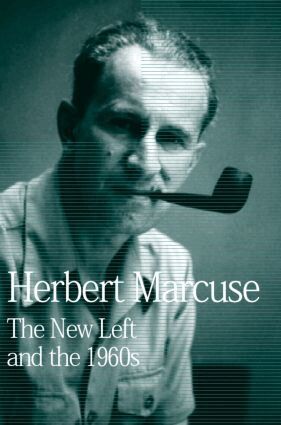
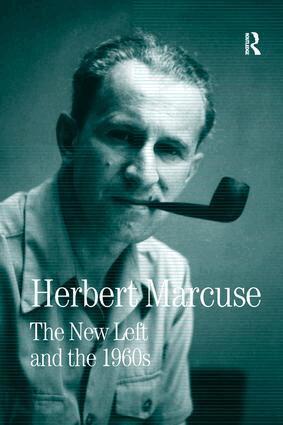
The New Left and the 1960s is the third volume of Herbert Marcuse's collected papers. In 1964, Marcuse published a major study of advanced industrial society, One Dimensional Man, which was an important influence on the young radicals who formed the New Left. Marcuse embodied many of the defining political impulses of the New Left in his thought and politics - hence a younger generation of political activists looked up to him for theoretical and political guidance. The material collected in this volume provides a rich and deep grasp of the era and the role of Marcuse in the theoretical and political dramas of the day.This volume contains articles, letters, talks, and interviews including: "On the New Left," a transcription of the 1968 talk at the Guardian newspaper's twentieth anniversary; "Reflections on the French Revolution," which contains comments on the 1968 French student and worker uprising; "Liberation from the Affluent Society," which presents Marcuse's contribution to the 1967 Dialectics of Liberations conference; and "United States: Questions of Organization and the Revolutionary Subject," a conversation between Marcuse and the German writer Hans Magnus Enzenberger, published here in English for the first time.Edited by Douglas Kellner, this volume will be of interest to all those previously unfamiliar with Herbert Marcuse, generally acknowledged as a major figure in the intellectual and social mileux of the 1960s and 1970s, as well as to specialists, who will here have access to papers and articles collected in one volume for the first time.
1 965 kr
Skickas inom 10-15 vardagar
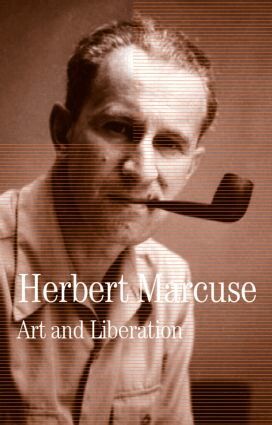
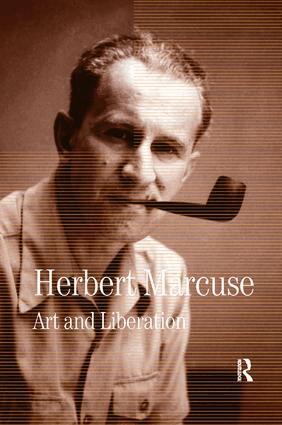
The role of art in Marcuse’s work has often been neglected, misinterpreted or underplayed. His critics accused him of a religion of art and aesthetics that leads to an escape from politics and society. Yet, as this volume demonstrates, Marcuse analyzes culture and art in the context of how it produces forces of domination and resistance in society, and his writings on culture and art generate the possibility of liberation and radical social transformation.The material in this volume is a rich collection of many of Marcuse’s published and unpublished writings, interviews and talks, including ‘Lyric Poetry after Auschwitz’, reflections on Proust, and Letters on Surrealism; a poem by Samuel Beckett for Marcuse’s eightieth birthday with exchange of letters; and many articles that explore the role of art in society and how it provides possibilities for liberation.This volume will be of interest to those new to Marcuse, generally acknowledged as a major figure in the intellectual and social milieus of the 1960s and 1970s, as well as to the specialist, giving access to a wealth of material from the Marcuse Archive in Frankfurt and his private collection in San Diego, some of it published here in English for the first time.A comprehensive introduction by Douglas Kellner reflects on the genesis, development, and tensions within Marcuse’s aesthetic, while an afterword by Gerhard Schweppenhäuser summarizes their relevance for the contemporary era.
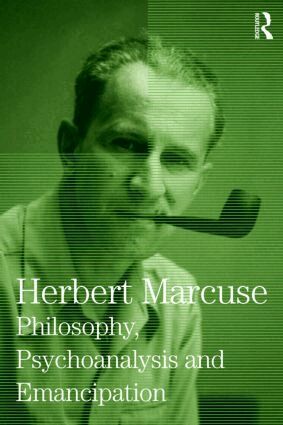
Philosophy, Psychoanalysis and Emancipation
Collected Papers of Herbert Marcuse, Volume 5
Inbunden, Engelska, 2010
2 100 kr
Skickas inom 10-15 vardagar
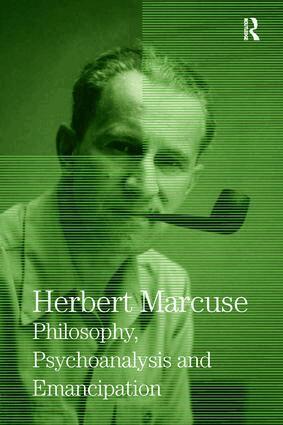
Edited by Douglas Kellner and Clayton Pierce, Philosophy, Psychoanalysis and Emancipation is the fifth volume of Herbert Marcuse's collected papers. Containing some of Marcuse’s most important work, this book presents for the first time his unique syntheses of philosophy, psychoanalysis, and critical social theory, directed toward human emancipation and social transformation.Within philosophy, Marcuse engaged with disparate and often conflicting philosophical perspectives - ranging from Heidegger and phenomenology, to Hegel, Marx, and Freud - to create unique philosophical insights, often overlooked in favor of his theoretical and political interventions with the New Left, the subject of previous volumes. This collection assembles significant, and in some cases unknown texts from the Herbert Marcuse archives in Frankfurt, including: critiques of positivism and idealism, Dewey’s pragmatism, and the tradition of German philosophy philosophical essays from the 1930s and 1940s that attempt to reconstruct philosophy on a materialist base Marcuse’s unique attempts to bring together Freud and philosophy philosophical reflections on death, human aggression, war, and peace Marcuse’s later critical philosophical perspectives on science, technology, society, religion, and ecology.A comprehensive introduction by Douglas Kellner, Tyson Lewis and Clayton Pierce places Marcuse’s work in the context of his engagement with the main currents of twentieth century politics and philosophy. An Afterword by Andrew Feenberg provides a personal memory of Marcuse as scholar, teacher and activist, and summarizes the lasting relevance of his radical thought.
2 414 kr
Skickas inom 10-15 vardagar
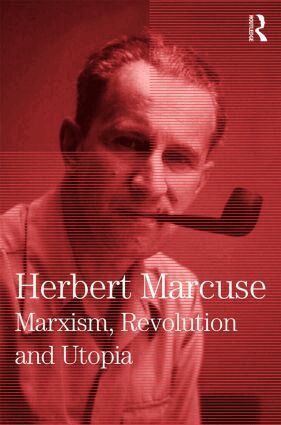
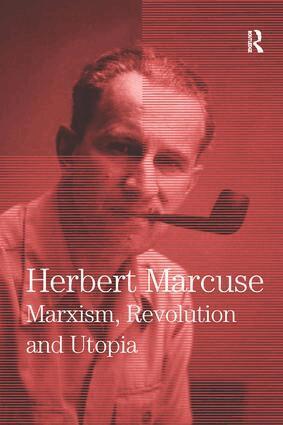
This collection assembles some of Herbert Marcuse’s most important work and presents for the first time his responses to and development of classic Marxist approaches to revolution and utopia, as well as his own theoretical and political perspectives.This sixth and final volume of Marcuse's collected papers shows Marcuse’s rejection of the prevailing twentieth-century Marxist theory and socialist practice - which he saw as inadequate for a thorough critique of Western and Soviet bureaucracy - and the development of his revolutionary thought towards a critique of the consumer society. Marcuse's later philosophical perspectives on technology, ecology, and human emancipation sat at odds with many of the classic tenets of Marx’s materialist dialectic which placed the working class as the central agent of change in capitalist societies. As the material from this volume shows, Marcuse was not only a theorist of Marxist thought and practice in the twentieth century, but also proves to be an essential thinker for understanding the neoliberal phase of capitalism and resistance in the twenty-first century.A comprehensive introduction by Douglas Kellner and Clayton Pierce places Marcuse’s philosophy in the context of his engagement with the main currents of twentieth century philosophy while also providing important analyses of his anticipatory theorization of capitalist development through a neoliberal restructuring of society. The volume concludes with an afterword by Peter Marcuse.
749 kr
Skickas inom 10-15 vardagar
Herbert Marcuse is one of the most influential thinkers of our time. Born in Berlin, Marcuse studied philosophy with Husserl and Heidegger at the Universities of Freiburg and Berlin. Marcuse's critical social theory ingeniously fuses phenomenology, Freudian thought and Marxist theory; and provides a solid ground for his reputation as the most crucial figure inspiring the social activism and New Left politics of the 1960s and 1970s. The largely unpublished work collected in this volume makes clear the continuing relevance of Marcuse's thought to contemporary issues. The texts published here, dealing with concerns during the period 1942-1951, exhibit penetrating critiques of technology and analyses of the ways that modern technology produces novel forms of society and culture with new modes of social control. The material collected in Technology, War and Facism provides exemplary attempts to link theory with practice, to develop ideas that can be used to grasp and transform existing social reality.Technology, War and Fascism is the first of six volumes of Herbert Marcuse's Collected Papers to be edited by Douglas Kellner. Each volume is a collection of previously un-published or uncollected essays, unfinished manuscripts and letters by one of the greatest thinkers of our time.
Towards a Critical Theory of Society
Collected Papers of Herbert Marcuse, Volume 2
Häftad, Engelska, 2017
695 kr
Skickas inom 10-15 vardagar
This second volume of Marcuse's collected papers includes unpublished manuscripts from the late 1960s and early 1970s, such as Beyond One-Dimensional Man, Cultural Revolution and The Historical Fate of Bourgeois Democracy, as well as a rich collection of letters. It shows Marcuse at his most radical, focusing on his critical theory of contemporary society, his analyses of technology, capitalism, the fate of the individual, and prospects for social change in contemporary society.
749 kr
Skickas inom 10-15 vardagar
The New Left and the 1960s is the third volume of Herbert Marcuse's collected papers. In 1964, Marcuse published a major study of advanced industrial society, One Dimensional Man, which was an important influence on the young radicals who formed the New Left. Marcuse embodied many of the defining political impulses of the New Left in his thought and politics - hence a younger generation of political activists looked up to him for theoretical and political guidance. The material collected in this volume provides a rich and deep grasp of the era and the role of Marcuse in the theoretical and political dramas of the day.This volume contains articles, letters, talks, and interviews including: "On the New Left," a transcription of the 1968 talk at the Guardian newspaper's twentieth anniversary; "Reflections on the French Revolution," which contains comments on the 1968 French student and worker uprising; "Liberation from the Affluent Society," which presents Marcuse's contribution to the 1967 Dialectics of Liberations conference; and "United States: Questions of Organization and the Revolutionary Subject," a conversation between Marcuse and the German writer Hans Magnus Enzenberger, published here in English for the first time.Edited by Douglas Kellner, this volume will be of interest to all those previously unfamiliar with Herbert Marcuse, generally acknowledged as a major figure in the intellectual and social mileux of the 1960s and 1970s, as well as to specialists, who will here have access to papers and articles collected in one volume for the first time.
695 kr
Skickas inom 10-15 vardagar
The role of art in Marcuse’s work has often been neglected, misinterpreted or underplayed. His critics accused him of a religion of art and aesthetics that leads to an escape from politics and society. Yet, as this volume demonstrates, Marcuse analyzes culture and art in the context of how it produces forces of domination and resistance in society, and his writings on culture and art generate the possibility of liberation and radical social transformation.The material in this volume is a rich collection of many of Marcuse’s published and unpublished writings, interviews and talks, including ‘Lyric Poetry after Auschwitz’, reflections on Proust, and Letters on Surrealism; a poem by Samuel Beckett for Marcuse’s eightieth birthday with exchange of letters; and many articles that explore the role of art in society and how it provides possibilities for liberation.This volume will be of interest to those new to Marcuse, generally acknowledged as a major figure in the intellectual and social milieus of the 1960s and 1970s, as well as to the specialist, giving access to a wealth of material from the Marcuse Archive in Frankfurt and his private collection in San Diego, some of it published here in English for the first time.A comprehensive introduction by Douglas Kellner reflects on the genesis, development, and tensions within Marcuse’s aesthetic, while an afterword by Gerhard Schweppenhäuser summarizes their relevance for the contemporary era.
Philosophy, Psychoanalysis and Emancipation
Collected Papers of Herbert Marcuse, Volume 5
Häftad, Engelska, 2017
709 kr
Skickas inom 10-15 vardagar
Edited by Douglas Kellner and Clayton Pierce, Philosophy, Psychoanalysis and Emancipation is the fifth volume of Herbert Marcuse's collected papers. Containing some of Marcuse’s most important work, this book presents for the first time his unique syntheses of philosophy, psychoanalysis, and critical social theory, directed toward human emancipation and social transformation.Within philosophy, Marcuse engaged with disparate and often conflicting philosophical perspectives - ranging from Heidegger and phenomenology, to Hegel, Marx, and Freud - to create unique philosophical insights, often overlooked in favor of his theoretical and political interventions with the New Left, the subject of previous volumes. This collection assembles significant, and in some cases unknown texts from the Herbert Marcuse archives in Frankfurt, including: critiques of positivism and idealism, Dewey’s pragmatism, and the tradition of German philosophy philosophical essays from the 1930s and 1940s that attempt to reconstruct philosophy on a materialist base Marcuse’s unique attempts to bring together Freud and philosophy philosophical reflections on death, human aggression, war, and peace Marcuse’s later critical philosophical perspectives on science, technology, society, religion, and ecology.A comprehensive introduction by Douglas Kellner, Tyson Lewis and Clayton Pierce places Marcuse’s work in the context of his engagement with the main currents of twentieth century politics and philosophy. An Afterword by Andrew Feenberg provides a personal memory of Marcuse as scholar, teacher and activist, and summarizes the lasting relevance of his radical thought.
709 kr
Skickas inom 10-15 vardagar
This collection assembles some of Herbert Marcuse’s most important work and presents for the first time his responses to and development of classic Marxist approaches to revolution and utopia, as well as his own theoretical and political perspectives.This sixth and final volume of Marcuse's collected papers shows Marcuse’s rejection of the prevailing twentieth-century Marxist theory and socialist practice - which he saw as inadequate for a thorough critique of Western and Soviet bureaucracy - and the development of his revolutionary thought towards a critique of the consumer society. Marcuse's later philosophical perspectives on technology, ecology, and human emancipation sat at odds with many of the classic tenets of Marx’s materialist dialectic which placed the working class as the central agent of change in capitalist societies. As the material from this volume shows, Marcuse was not only a theorist of Marxist thought and practice in the twentieth century, but also proves to be an essential thinker for understanding the neoliberal phase of capitalism and resistance in the twenty-first century.A comprehensive introduction by Douglas Kellner and Clayton Pierce places Marcuse’s philosophy in the context of his engagement with the main currents of twentieth century philosophy while also providing important analyses of his anticipatory theorization of capitalist development through a neoliberal restructuring of society. The volume concludes with an afterword by Peter Marcuse.