Hertie Governance Report - Böcker
Visar alla böcker i serien Hertie Governance Report. Handla med fri frakt och snabb leverans.
12 produkter
12 produkter
239 kr
Skickas inom 5-8 vardagar
Democratic governance faces unprecedented challenges across the OECD world and beyond. Enormous strains will be placed on states' resources and their governing capacities to deal with the combined effects of the financial crisis, climate change, and demographic change. The basic foundations of established 'statehood' will be tested. At the same time, the architecture of the state has fundamentally changed over the past three decades. The Governance Report 2014 questions whether governments still have the capacities to respond. The Report develops a framework to explore the administrative capacities of the public sector in OECD countries, analyses how these capacities have been used to develop innovative policy approaches to key governance challenges, and explores governance innovations to enhance governance capacities. In addition, the Report presents a dashboard of indicators that assess administrative capacities from multiple perspectives. The Governance Report 2014 advances the debate on the problem-solving capacity of the modern state in the light of ongoing and future challenges.
The Problem-solving Capacity of the Modern State
Governance Challenges and Administrative Capacities
Inbunden, Engelska, 2014
1 566 kr
Skickas inom 5-8 vardagar
The early 21st century has presented considerable challenges to the problem-solving capacity of the contemporary state in the industrialised world. Among the many uncertainties, anxieties and tensions, it is, however, the cumulative challenge of fiscal austerity, demographic developments, and climate change that presents the key test for contemporary states. Debates abound regarding the state's ability to address these and other problems given increasingly dispersed forms of governing and institutional vulnerabilities created by politico-administrative and economic decision-making structures. This volume advances these debates, first, by moving towards a cross-sectoral perspective that takes into account the cumulative nature of the contemporary challenge to governance focusing on the key governance areas of infrastructure, sustainability, social welfare, and social integration; second, by considering innovations that have sought to add problem-solving capacity; and third, by exploring the kind of administrative capacities (delivery, regulatory, coordination, and analytical) required to encourage and sustain innovative problem-solving. This edition introduces a framework for understanding the four administrative capacities that are central to any attempt at problem-solving and how they enable the policy instruments of the state to have their intended effect. It also features chapters that focus on the way in which these capacities have become stretched and how they have been adjusted, given the changing conditions; the way in which different states have addressed particular governance challenges, with particular attention paid to innovation at the level of policy instrument and the required administrative capacities; and, finally, types of governance capacities that lie outside the boundaries of the state.
259 kr
Skickas inom 5-8 vardagar
The promise of an ever-closer union that has guided Europe from the Treaty of Rome to the present time rests on the evolution of democratic governance to meet the many challenges that European communities face. Now after years of managing the financial and fiscal crises, the European Union has to take stock and focus on the issues that will fundamentally shape its long-term prospects.The Governance Report 2015 takes an interdisciplinary approach, examining what is needed to achieve stability in the Eurozone and the full integration of the European single market, how decision-making has changed, and how crisis management has affected the Union's democratic legitimacy. A set of governance indicators will trace how European states have become more alike or more different over time. Ultimately, the Report seeks answers to the question of what can make Europe succeed, fail, or muddle through from a governance perspective.
Beyond the Crisis
The Governance of Europe's Economic, Political and Legal Transformation
Inbunden, Engelska, 2015
1 132 kr
Skickas inom 7-10 vardagar
In the wake of the euro crisis, the European Union has been transformed in many ways. Is it now on the right track? The euro crisis, the steps taken to manage it, and the resulting transformations have triggered a necessary process of reconsidering economic governance in the European Union. This volume-- the third in a series of annual editions tackling different aspects of governance-- examines the long list of open political, legal, and economic questions related to the functioning and fundamental structure of the Union as a whole and the economic and monetary union in particular. Organised in three main sections, the contributions to this collection bring the perspectives of different academic disciplines to bear on the functional aspects of economic governance, the institutional transformations that have taken place, and their implications for the Union's legitimacy. A separate chapter looks at inequalities in perceptions of economic conditions and well-being within the European Union to identify trends particularly during the eurozone crisis. In doing so, the chapters in this volume take stock of the current situation, shed light on the dilemmas and challenges that must be recognised and addressed, and explore various options for the way ahead. The collection's ultimate goal is to assess whether the recent transformations lead EU governance in the right direction or require further adjustment.
249 kr
Skickas inom 7-10 vardagar
Infrastructure is a fundamental driver of economic growth and social development. Yet, unmet investment needs coexist with white elephants and bridges to nowhere, while major construction projects face huge cost overruns and citizen protest. The governance of infrastructure is already complex, involving a wide array of stakeholders and strategies. Drawing on novel survey data and case studies from around the world, The Governance Report 2016 examines the capacity of public administration to manage infrastructure investments, highlights governance innovations, and provides guidance for public governance of infrastructure. The Report offers information, analysis, and tools for policymakers, practitioners, and academics interested in infrastructure and other large-scale projects.
1 538 kr
Skickas
Infrastructure only tends to be noticed when it is absent, declining, or decrepit, or when enormous cost overruns, time delays, or citizen protests make the headlines. If infrastructure is indeed a fundamental driver of economic growth and social development, why is it so difficult to get right?In addressing this perennial question, this volume-the fourth edition in an annual series tackling different aspects of governance around the world-makes the case for a governance perspective on infrastructure. This implies moving beyond rational economic analysis of what should be done towards an analysis of the political, institutional, and societal mechanisms that shape decision-making about infrastructure investment, planning, and implementation. Engaging with theories from sociology, political science, and public administration, and drawing on empirical analyses bridging OECD and non-OECD countries, the contributions to this volume dissect the logics of infrastructure governance in a novel way, providing timely analyses that will enrich both scholarly and policy debates about how to get infrastructure governance right.
1 817 kr
Skickas inom 3-6 vardagar
As difficult as it might seem to define governance, it appears to be that much more difficult to measure it. Since the World Bank Institute launched the Worldwide Governance Indicators in the late 1990s, the governance indicators field has flourished and experienced significant advances in terms of methodology, data coverage and quality, and policy relevance. Other major initiatives have added to a momentum that propelled research on governance indicators seen in few other academic fields in the economic and social sciences. Given these developments and the prominence and policy relevance the field of governance indicator research has achieved, the time is ripe to take stock and ask what has been accomplished, what the shortcomings and potentials might be, and what steps present themselves as a way forward. This volume-- the fifth edition in an annual series tackling different aspects of governance around the world-- assesses what has been achieved, identifies strengths and weaknesses of current work, and points to issues that need to be tackled in order to advance the field, both in its academic importance as well as in its policy relevance. In short, the contributions to this volume explore the scope of existing governance indices and indicator frameworks, elaborate on current challenges in measuring and analysing governance, and consider how to overcome them.
170 kr
Skickas inom 5-8 vardagar
The Global Financial Crisis (GFC) of 2008-9 was the greatest economic stress test since the 1940s. It put not only financial markets and currencies at risk; entire economies and political systems were threatened as the GFC soon revealed major governance shortcomings and weaknesses felt across a wide spectrum of policy fields. Globalization seemed in jeopardy, the Washington Consensus of neoliberal policies broken, and democratic backsliding set in as populism and protectionism began to take root. The GFC triggered many responses to improve governance through reforms and regulatory measures of many kinds across a wide range of fields: most prominently in finance and banking, but also in fiscal policy, trade, labor markets and social security. Ten years after the GFC, the 2018 Governance Report takes stock and asks:How have countries fared, and are they better prepared to avoid or withstand another crisis of GFC proportions? To answer this question, the 2018 Report focuses on the performance of countries before and after the GFC. Using elaborate indicator and data systems, applying state-of-the-art analytics, and covering a wide range of countries, it offers a systematic comparison of governance performance from three perspectives: What public goods are being provided, at what quality and to what effect? How ready are countries to address governance challenges in the context of globalization? What are the administrative capacities of the public sector? With measures taken before the GFC and today, these perspectives on governance performance provide important benchmarks for measuring both resilience and progress and can assist policymakers in designing effective solutions.
177 kr
Skickas inom 5-8 vardagar
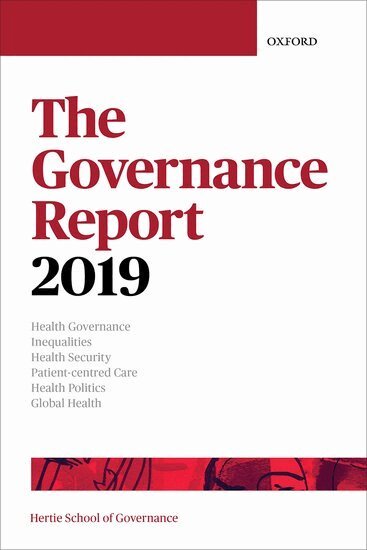
Health promotion and protection for all citizens and health care for patients represent some of the most important policy challenges worldwide. Virtually every single area of life-professional productivity, cultural creativity, political and social participation, and citizens' quality of life-is influenced by the state of health at the individual and at the population level. But are current forms of health governance and health care services sufficient to overcome inequalities, ensure health security, harness technological developments, and cover future needs?The Governance Report 2019 focuses on health governance and the models and strategies used to make health policy an integral part of modern social policy and meet growing challenges. Health governance involves state, market, non-governmental, professional, and individual actors often working across sectors and depends on interactions at multiple levels-from local clinics to global forums. The Report traces the development of health governance institutions and actors, examines factors influencing the health-related decisions of individuals and policy-makers alike, highlights innovations both at international level and at the intersection between individuals and professionals, and offers recommendations to ensure that health care and health policy are governed to meet future challenges.
1 464 kr
Skickas inom 5-8 vardagar
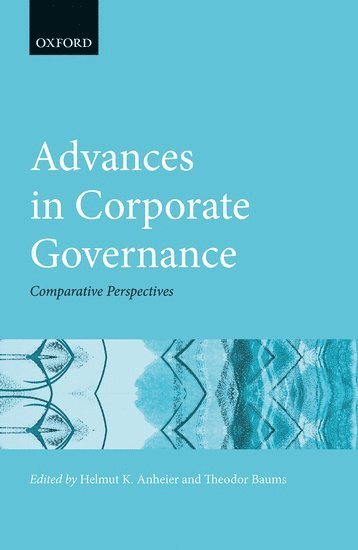
The governance of the modern corporation is broadly understood as the mechanisms, relations, and processes for balancing the interests of stakeholders. It spells out the rules and procedures for decision-making, accountability and transparency, and distributional rights. Corporate governance thus provides the framework in which corporate objectives are set, the means of attaining them, the kind of performance monitoring required, and by whom. In the aftermath of the global financial crisis and large-scale corporate failures, the issue of corporate governance has repeatedly received the attention of policy-makers and the wider public. Extending the study of corporate governance beyond that of listed corporations sheds new light on the overall performance of corporations in market economies. These include small to medium-sized corporations, nonprofit organisations and philanthropic foundations, public corporations and public-private partnerships, social enterprises and cooperatives, international organisations, and corporations in cyberspace. A decade after the massive failures in the governance of financial corporations, and with continued governance failures in other parts of the economy since then, this volume takes stock and asks: what has been the performance of corporate governance regimes, and have regulatory changes and corporate governance codes made a difference? What are the strengths and weaknesses of current corporate governance systems and codes? How do corporate forms differ in their governance performance, and what have been the experiences across countries? And, finally, what implications for understanding governance behaviour and for policy-makers and regulators come to mind?
267 kr
Skickas inom 5-8 vardagar
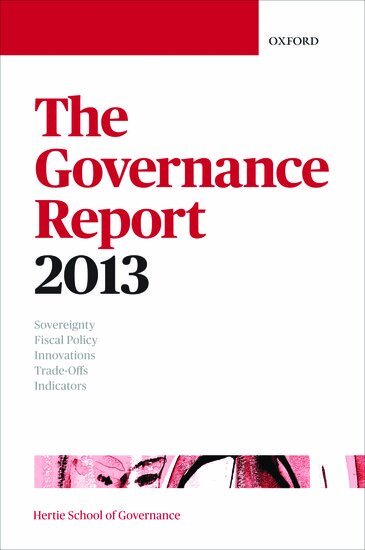
This Report is about the state of governance. Few would doubt that the conditions of governance have changed -- and continue to change -- as the early 21st century seems to enter a period of profound uncertainty. Yet, at the same time, the world seems alive with a cacophony of approaches -- old and new -- on how to improve governance and, ultimately, policy outcomes. This Report -- the first in a series of annual editions produced by the Hertie School of Governance -- seeks to address the implications of the current state of the world in terms of "good governance", that is, the effective, efficient, and reliable set of legitimate institutions and actors dedicated to dealing with matters of public concern, be it in the field of financial markets, health care, security, or migration, and across local, national, and international levels. Following an introduction that offers a framework of basic concepts and models, The Governance Report 2013 then goes on to explore a number of global challenges and the reasons behind seemingly lacklustre responses and highlight the need for responsible sovereignty; examine in depth the challenges of financial and fiscal governance with a focus on the trade-offs and ways to address them; analyse key governance innovations and their potential for success; and assess existing indicators of governance, while proposing a new framework for collecting, interpreting, and applying governance-related information. The findings lead to a set of concrete proposals on the way ahead.
1 633 kr
Skickas inom 7-10 vardagar
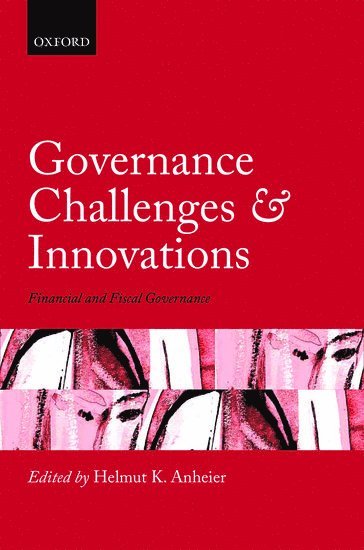
Few would doubt that the conditions of governance have changed-and continue to change-as the early 21st century seems to enter a period of profound uncertainty. Yet, at the same time, the world seems alive with a cacophony of approaches-old and new-on how to improve governance and, ultimately, policy outcomes. This collection-the first in a series of annual editions-seeks to address the implications of the current state of the world in terms of "good governance", i.e. the effective, efficient, and reliable set of legitimate institutions and actors dedicated to dealing with matters of public concern, be it in the field of financial markets (the focus of this edition), health care, security, or migration, and across local, national and international levels. Researchers at The Hertie School of Governance (Berlin, Germany) and other experts examine the current state of governance challenges and innovations from a variety of inter-disciplinary perspectives. This edition features a special set of chapters on the challenges of financial and fiscal governance, the tradeoffs faced by governance actors, and the new arrangements that have emerged or are required to not only address the ongoing crisis but also ensure greater stability into the future. This special section is complemented by chapters introducing basic concepts and models; exploring other global challenges and the reasons behind seemingly lackluster responses to them and highlighting the need for responsible sovereignty; conceptualizing governance innovation and introducing key examples; and assessing existing indicators of governance, while proposing a new framework for collecting, interpreting and applying governance-related information.