Histories of American Education – serie
Visar alla böcker i serien Histories of American Education. Handla med fri frakt och snabb leverans.
13 produkter
13 produkter
Inbunden, Engelska, 2019
654 kr
Skickas inom 10-15 vardagar
In The Instrumental University, Ethan Schrum provides an illuminating genealogy of the educational environment in which administrators, professors, and students live and work today. After World War II, research universities in the United States underwent a profound mission change. The Instrumental University combines intellectual, institutional, and political history to reinterpret postwar American life through the changes in higher education. Acknowledging but rejecting the prevailing conception of the Cold War university largely dedicated to supporting national security, Schrum provides a more complete and contextualized account of the American research university between 1945 and 1970. Uncovering a pervasive instrumental understanding of higher education during that era, The Instrumental University shows that universities framed their mission around solving social problems and promoting economic development as central institutions in what would soon be called the knowledge economy. In so doing, these institutions took on more capitalistic and managerial tendencies and, as a result, marginalized founding ideals, such as pursuit of knowledge in academic disciplines and freedom of individual investigators.The technocratic turn eroded some practices that made the American university special. Yet, as Schrum suggests, the instrumental university was not yet the neoliberal university of the 1970s and onwards in which market considerations trumped all others. University of California president Clark Kerr and other innovators in higher education were driven by a progressive impulse that drew on an earlier tradition grounded in a concern for the common good and social welfare.
Inbunden, Engelska, 2019
358 kr
Skickas inom 3-6 vardagar
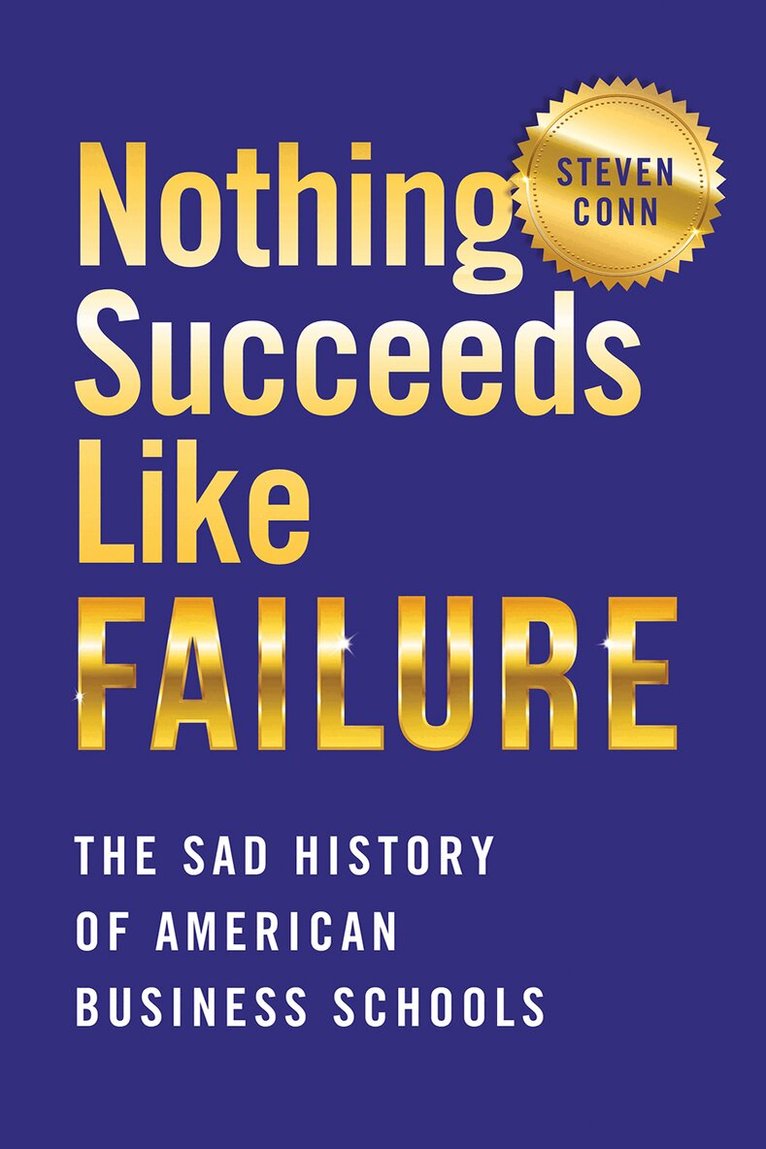
Do business schools actually make good on their promises of "innovative," "outside-the-box" thinking to train business leaders who will put society ahead of money-making? Do they help society by making better business leaders? No, they don't, Steven Conn asserts, and what's more they never have. In throwing down a gauntlet on the business of business schools, Conn's Nothing Succeeds Like Failure examines the frictions, conflicts, and contradictions at the heart of these enterprises and details the way business schools have failed to resolve them. Beginning with founding of the Wharton School in 1881, Conn measures these schools' aspirations against their actual accomplishments and tells the full and disappointing history of missed opportunities, unmet aspirations, and educational mistakes. Conn then poses a set of crucial questions about the role and function of American business schools. The results aren't pretty. Posing a set of crucial questions about the function of American business schools, Nothing Succeeds Like Failure is pugnacious and controversial. Deeply researched and fun to read, Nothing Succeeds Like Failure argues that the impressive façades of business school buildings resemble nothing so much as collegiate versions of Oz. Conn pulls back the curtain to reveal a story of failure to meet the expectations of the public, their missions, their graduates, and their own lofty aspirations of producing moral and ethical business leaders.
Inbunden, Engelska, 2020
1 665 kr
Skickas inom 10-15 vardagar
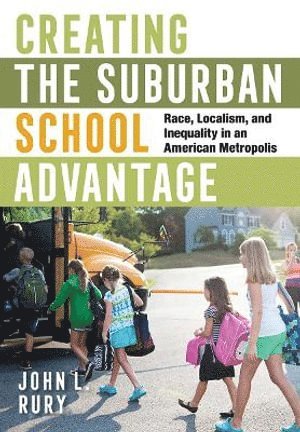
Creating the Suburban School Advantage explains how American suburban school districts gained a competitive edge over their urban counterparts. John L. Rury provides a national overview of the process, focusing on the period between 1950 and 1980, and presents a detailed study of metropolitan Kansas City, a region representative of trends elsewhere.While big-city districts once were widely seen as superior and attracted families seeking the best educational opportunities for their children, suburban school systems grew rapidly in the post–World War II era as middle-class and more affluent families moved to those communities. As Rury relates, at the same time, economically dislocated African Americans migrated from the South to center-city neighborhoods, testing the capacity of urban institutions. As demographic trends drove this urban-suburban divide, a suburban ethos of localism contributed to the socioeconomic exclusion that became a hallmark of outlying school systems. School districts located wholly or partly within the municipal boundaries of Kansas City, Missouri, make for revealing cases that illuminate our understanding of these national patterns.As Rury demonstrates, struggles to achieve greater educational equity and desegregation in urban centers contributed to so-called white flight and what Senator Daniel Patrick Moynihan considered to be a crisis of urban education in 1965. Despite the often valiant efforts made to serve inner city children and bolster urban school districts, this exodus, Rury cogently argues, created a new metropolitan educational hierarchy—a mirror image of the urban-centric model that had prevailed before World War II. The stubborn perception that suburban schools are superior, based on test scores and budgets, has persisted into the twenty-first century and instantiates today's metropolitan landscape of social, economic, and educational inequality.
Inbunden, Engelska, 2020
1 665 kr
Skickas inom 10-15 vardagar
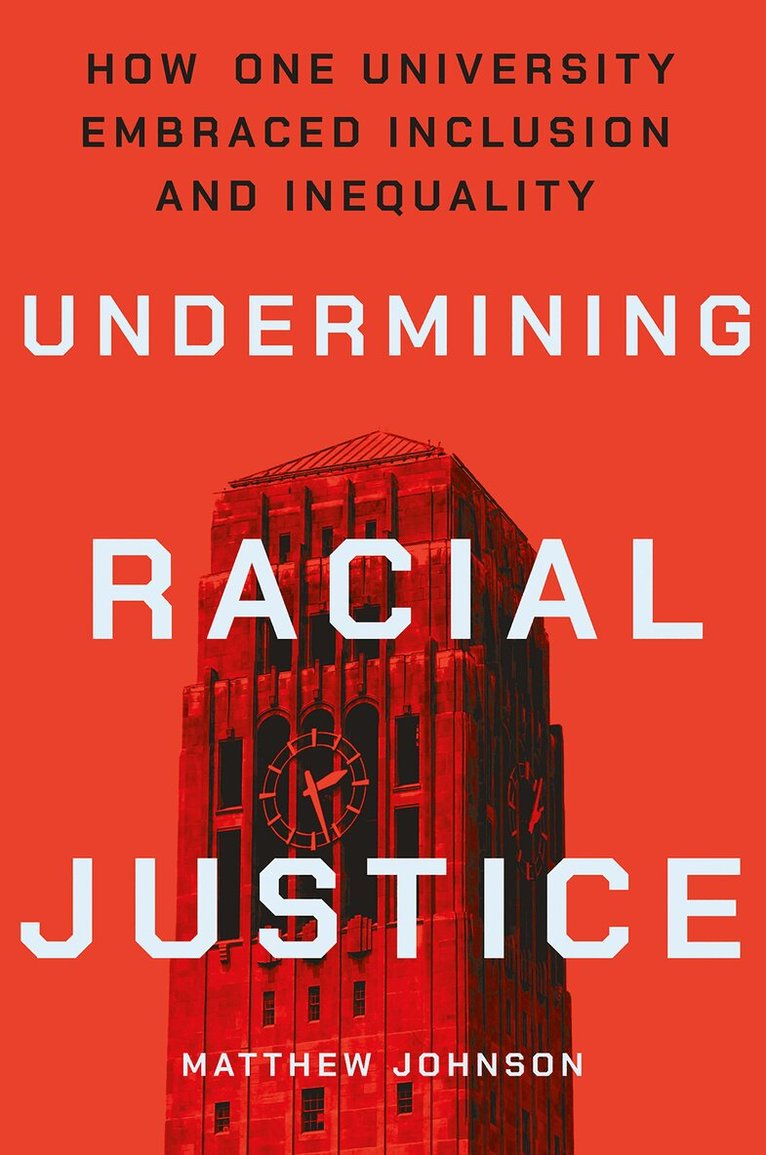
Over the last sixty years, administrators on college campuses nationwide have responded to black campus activists by making racial inclusion and inequality compatible. This bold argument is at the center of Matthew Johnson's powerful and controversial book. Focusing on the University of Michigan, often a key talking point in national debates about racial justice thanks to the contentious Gratz v. Bollinger 2003 Supreme Court case, Johnson argues that UM leaders incorporated black student dissent selectively into the institution's policies, practices, and values. This strategy was used to prevent activism from disrupting the institutional priorities that campus leaders deemed more important than racial justice. Despite knowing that racial disparities would likely continue, Johnson demonstrates that these administrators improbably saw themselves as champions of racial equity. What Johnson contends in Undermining Racial Justice is not that good intentions resulted in unforeseen negative consequences, but that the people who created and maintained racial inequities at premier institutions of higher education across the United States firmly believed they had good intentions in spite of all the evidence to the contrary. The case of the University of Michigan fits into a broader pattern at elite colleges and universities and is a cautionary tale for all in higher education. As Matthew Johnson illustrates, inclusion has always been a secondary priority, and, as a result, the policies of the late 1970s and 1980s ushered in a new and enduring era of racial retrenchment on campuses nationwide.
Häftad, Engelska, 2021
236 kr
Skickas inom 10-15 vardagar
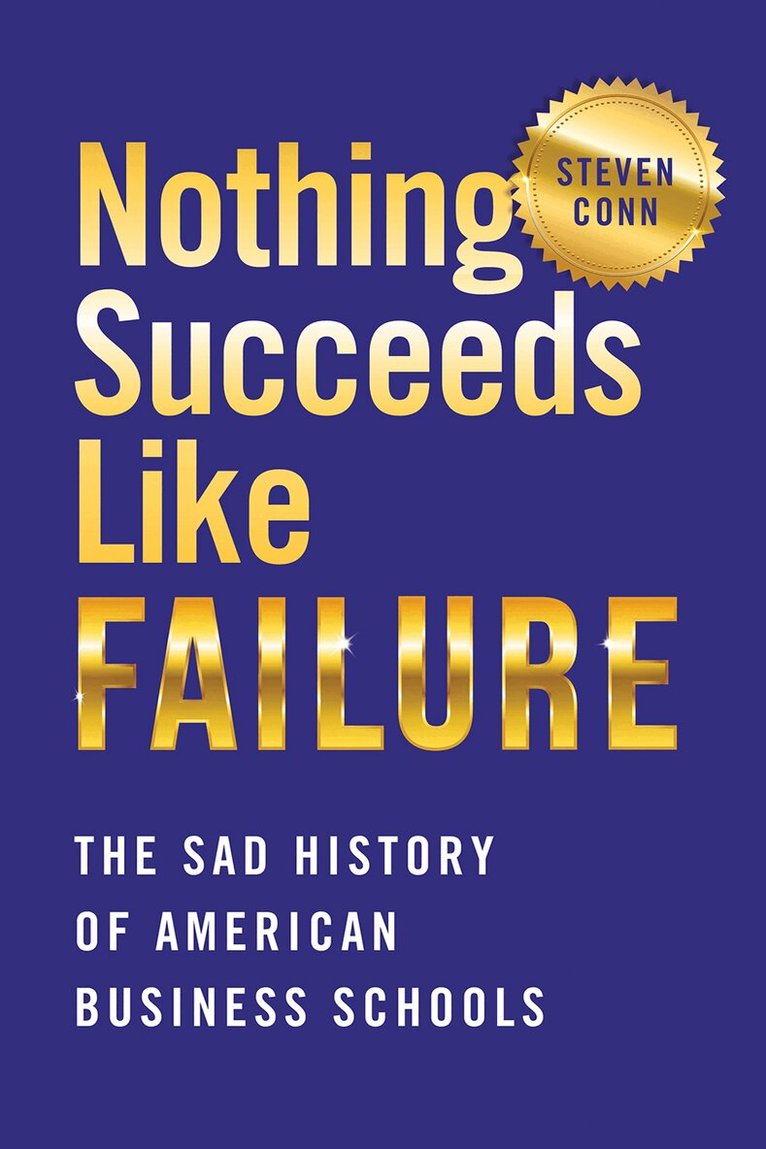
Do business schools actually make good on their promises of "innovative," "outside-the-box" thinking to train business leaders who will put society ahead of money-making? Do they help society by making better business leaders? No, they don't, Steven Conn asserts, and what's more they never have. In throwing down a gauntlet on the business of business schools, Conn's Nothing Succeeds Like Failure examines the frictions, conflicts, and contradictions at the heart of these enterprises and details the way business schools have failed to resolve them. Beginning with founding of the Wharton School in 1881, Conn measures these schools' aspirations against their actual accomplishments and tells the full and disappointing history of missed opportunities, unmet aspirations, and educational mistakes. Conn then poses a set of crucial questions about the role and function of American business schools. The results aren't pretty. Posing a set of crucial questions about the function of American business schools, Nothing Succeeds Like Failure is pugnacious and controversial. Deeply researched and fun to read, Nothing Succeeds Like Failure argues that the impressive façades of business school buildings resemble nothing so much as collegiate versions of Oz. Conn pulls back the curtain to reveal a story of failure to meet the expectations of the public, their missions, their graduates, and their own lofty aspirations of producing moral and ethical business leaders.
Häftad, Engelska, 2022
293 kr
Skickas inom 10-15 vardagar
Creating the Suburban School Advantage explains how American suburban school districts gained a competitive edge over their urban counterparts. John L. Rury provides a national overview of the process, focusing on the period between 1950 and 1980, and presents a detailed study of metropolitan Kansas City, a region representative of trends elsewhere.While big-city districts once were widely seen as superior and attracted families seeking the best educational opportunities for their children, suburban school systems grew rapidly in the post–World War II era as middle-class and more affluent families moved to those communities. As Rury relates, at the same time, economically dislocated African Americans migrated from the South to center-city neighborhoods, testing the capacity of urban institutions. As demographic trends drove this urban-suburban divide, a suburban ethos of localism contributed to the socioeconomic exclusion that became a hallmark of outlying school systems. School districts located wholly or partly within the municipal boundaries of Kansas City, Missouri, make for revealing cases that illuminate our understanding of these national patterns.As Rury demonstrates, struggles to achieve greater educational equity and desegregation in urban centers contributed to so-called white flight and what Senator Daniel Patrick Moynihan considered to be a crisis of urban education in 1965. Despite the often valiant efforts made to serve inner city children and bolster urban school districts, this exodus, Rury cogently argues, created a new metropolitan educational hierarchy—a mirror image of the urban-centric model that had prevailed before World War II. The stubborn perception that suburban schools are superior, based on test scores and budgets, has persisted into the twenty-first century and instantiates today's metropolitan landscape of social, economic, and educational inequality.
Inbunden, Engelska, 2023
522 kr
Skickas inom 10-15 vardagar
The Education Myth questions the idea that education represents the best, if not the only, way for Americans to access economic opportunity. As Jon Shelton shows, linking education to economic well-being was not politically inevitable. In the eighteenth and nineteenth centuries, for instance, public education was championed as a way to help citizens learn how to participate in a democracy. By the 1930s, public education, along with union rights and social security, formed an important component of a broad-based fight for social democracy.Shelton demonstrates that beginning in the 1960s, the political power of the education myth choked off powerful social democratic alternatives like A. Philip Randolph and Bayard Rustin's Freedom Budget. The nation's political center was bereft of any realistic ideas to guarantee economic security and social dignity for the majority of Americans, particularly those without college degrees. Embraced first by Democrats like Lyndon Johnson, Jimmy Carter, and Bill Clinton, Republicans like George W. Bush also pushed the education myth. The result, over the past four decades, has been the emergence of a deeply inequitable economy and a drastically divided political system.
Häftad, Engelska, 2022
393 kr
Skickas inom 10-15 vardagar
Over the last sixty years, administrators on college campuses nationwide have responded to black campus activists by making racial inclusion and inequality compatible. This bold argument is at the center of Matthew Johnson's powerful and controversial book. Focusing on the University of Michigan, often a key talking point in national debates about racial justice thanks to the contentious Gratz v. Bollinger 2003 Supreme Court case, Johnson argues that UM leaders incorporated black student dissent selectively into the institution's policies, practices, and values. This strategy was used to prevent activism from disrupting the institutional priorities that campus leaders deemed more important than racial justice. Despite knowing that racial disparities would likely continue, Johnson demonstrates that these administrators improbably saw themselves as champions of racial equity. What Johnson contends in Undermining Racial Justice is not that good intentions resulted in unforeseen negative consequences, but that the people who created and maintained racial inequities at premier institutions of higher education across the United States firmly believed they had good intentions in spite of all the evidence to the contrary. The case of the University of Michigan fits into a broader pattern at elite colleges and universities and is a cautionary tale for all in higher education. As Matthew Johnson illustrates, inclusion has always been a secondary priority, and, as a result, the policies of the late 1970s and 1980s ushered in a new and enduring era of racial retrenchment on campuses nationwide.
Inbunden, Engelska, 2023
422 kr
Skickas inom 10-15 vardagar
In A Is for Arson, Campbell F. Scribner sifts through two centuries of debris to uncover the conditions that have prompted school vandalism and to explain why attempts at prevention have inevitably failed. Vandalism costs taxpayers hundreds of millions of dollars every year, as students, parents, and even teachers wreak havoc on school buildings. Why do they do it? Can anything stop them? Who should pay for the damage? Underlying these questions are long-standing tensions between freedom and authority, and between wantonness and reason. Property destruction is not simply a moral failing, to be addressed with harsher punishments, nor can the problem be solved through more restrictive architecture or policing. Scribner argues that education itself is a source of intractable struggle, and that vandalism is often the result of an unruly humanity. To understand schooling in the United States, one must first confront the all-too-human emotions that have led to fires, broken windows, and graffiti.A Is for Arson captures those emotions through new historical evidence and diverse theoretical perspectives, helping readers understand vandalism variously as a form of political conflict, as self-education, and as sheer chaos. By analyzing physical artifacts as well as archival sources, Scribner offers new perspectives on children's misbehavior and adults' reactions and allows readers to see the complexities of education—the built environment of teaching and learning, evolving approaches to youth psychology and student discipline—through the eyes of its often resistant subjects.
Inbunden, Engelska, 2024
1 572 kr
Skickas inom 10-15 vardagar
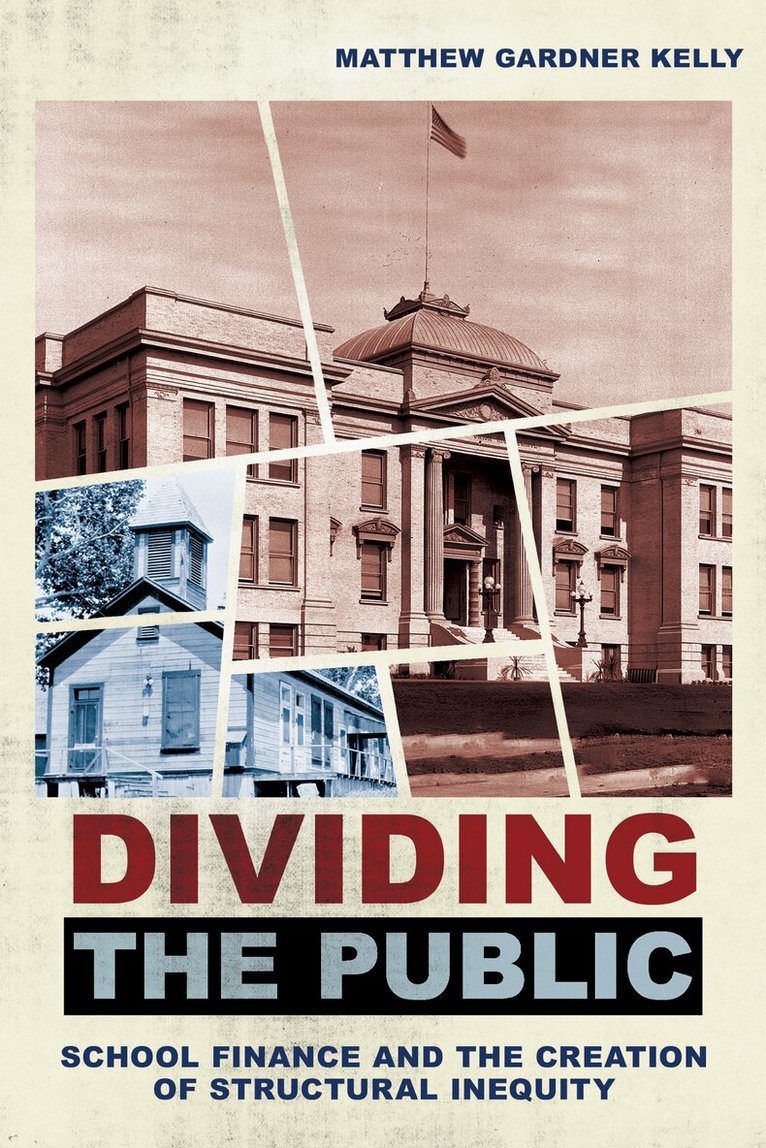
Winner of the Vincent P. DeSantis Book Prize from The Society for Historians of the Gilded Age and Progressive Era, and awarded with Honorable Mention in the Outstanding Book Award by the History of Education Society; and Honorable Mention in the New Scholar's Book Award from AERA's Division F. Winner of the Society of Professors of Education 2025 Outstanding Book Award.In Dividing the Public, Matthew Gardner Kelly takes aim at the racial and economic disparities that characterize public education funding in the United States. With California as his focus, Kelly illustrates that the use of local taxes to fund public education was never an inadvertent or de facto product of past practices, but an intentional decision adopted in place of well-known alternatives during the Progressive Era, against past precedent and principle in several states.From efforts to convert expropriated Indigenous and Mexican land into common school funding in the 1850s, to reforms that directed state aid to expanding white suburbs during the years surrounding World War II, Dividing the Public traces, in intricate detail, how a host of policies connected to school funding have divided California by race and class over time. In bringing into view the neglected and poorly understood history of policymaking connected to school finance, Kelly offers a new story about the role public education played in shaping the racially segregated, economically divided, and politically fragmented world of the post-1945 metropolis.
Häftad, Engelska, 2024
277 kr
Skickas inom 10-15 vardagar
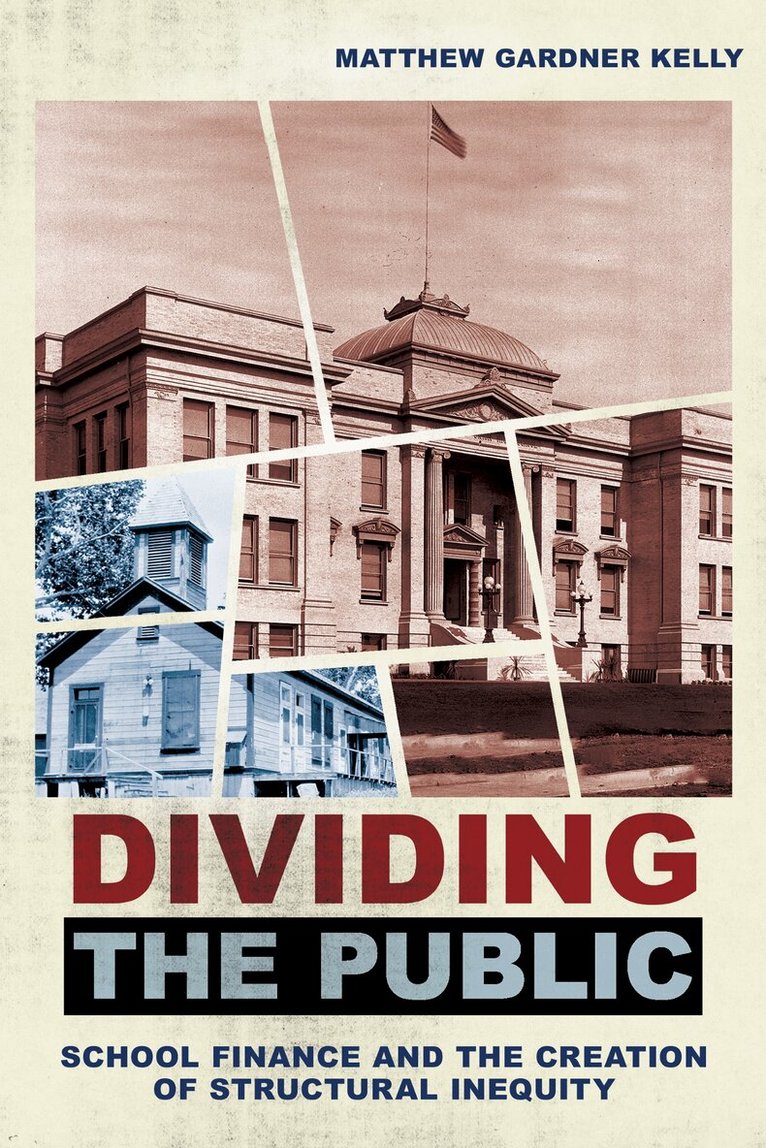
Winner of the Vincent P. DeSantis Book Prize from The Society for Historians of the Gilded Age and Progressive Era, and awarded with Honorable Mention in the Outstanding Book Award by the History of Education Society; and Honorable Mention in the New Scholar's Book Award from AERA's Division F. Winner of the Society of Professors of Education 2025 Outstanding Book Award.In Dividing the Public, Matthew Gardner Kelly takes aim at the racial and economic disparities that characterize public education funding in the United States. With California as his focus, Kelly illustrates that the use of local taxes to fund public education was never an inadvertent or de facto product of past practices, but an intentional decision adopted in place of well-known alternatives during the Progressive Era, against past precedent and principle in several states.From efforts to convert expropriated Indigenous and Mexican land into common school funding in the 1850s, to reforms that directed state aid to expanding white suburbs during the years surrounding World War II, Dividing the Public traces, in intricate detail, how a host of policies connected to school funding have divided California by race and class over time. In bringing into view the neglected and poorly understood history of policymaking connected to school finance, Kelly offers a new story about the role public education played in shaping the racially segregated, economically divided, and politically fragmented world of the post-1945 metropolis.
Inbunden, Engelska, 2025
465 kr
Skickas inom 10-15 vardagar
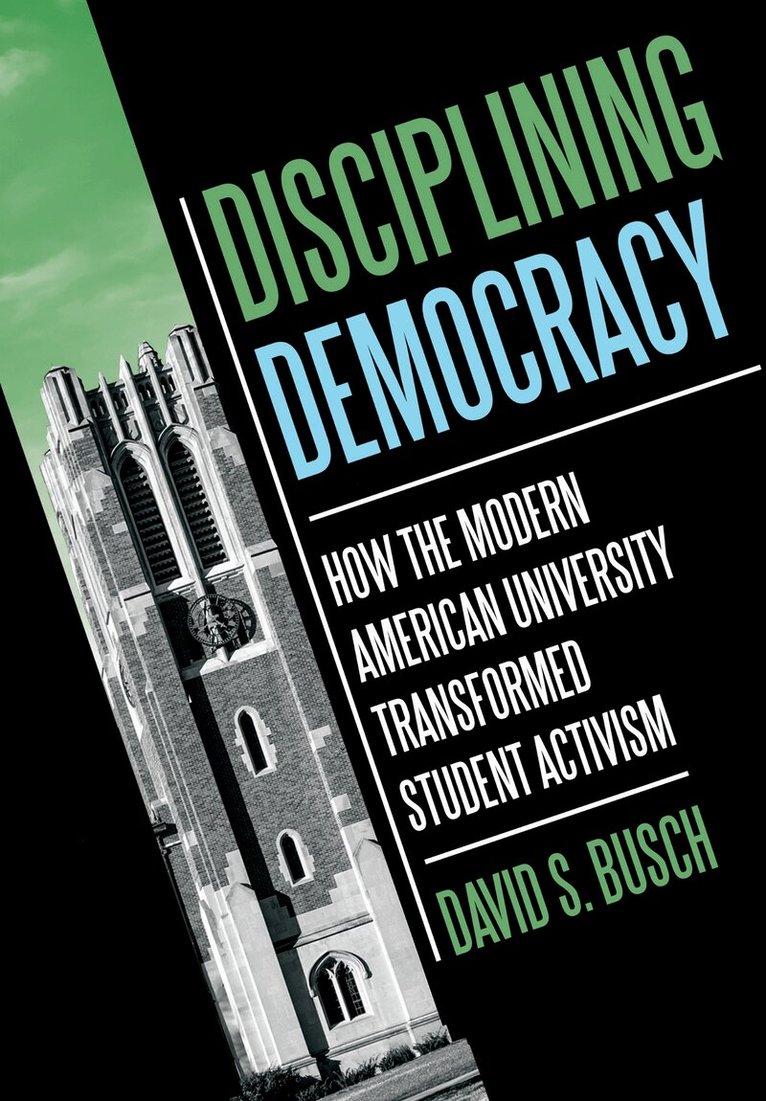
Disciplining Democracy reveals the political consequences for the triumph of "service learning" as the dominant pedagogical model of civic engagement in the modern American university. Volunteer-based civic engagement programs in higher education are popularly understood as curricular opportunities that enable young people to engage as citizens in campus and public life. But, as David S. Busch argues, these civic programs are also emblematic of a new political tradition in American higher education—a culture of "disciplining democracy"—that polices the boundaries of appropriate forms of citizenship both for the student and for the university itself.Looking at seven different universities across two political eras, Busch unearths a common institutional trend: that student activists' demand for "action education" in the 1960s—a demand that many believed would reimagine the political role of the university—was reconstituted as university-sponsored volunteer programs by the 1980s. Disconnected from their political roots and visions, these programs became the source for the promotion of service learning as the primary model of the new civics in American higher education and an integral part of institutional strategies for responding to student activism. Embraced by universities big and small, private and public, the triumph of service learning as the new civics narrowed the political terrain of engaged citizenship and set limits on the modern American university's mission. In excavating the genealogy of the new civics and its institutional legacy, Disciplining Democracy offers a new way to understand the university as a political actor in American life.
Inbunden, Engelska, 2026
565 kr
Skickas inom 10-15 vardagar
Playing the Game uncovers the history of state and regional colleges as engines of opportunity in postwar America. By 1970, these institutions enrolled more students than elite private or flagship public universities did, and yet they remained on the margins of public attention and scholarly research. Marc A. VanOverbeke shows how these colleges fought for recognition by turning to an unlikely ally: college sports.Drawing on extensive archival research, VanOverbeke reveals how athletics boosted institutional legitimacy and public support, while students harnessed sports to push for greater inclusion and racial justice. Black and Mexican American students, in particular, challenged segregation and discrimination on and off the field, making athletics a powerful site of protest and change.Playing the Game reframes the role of college sports, showing how athletics helped shape not only school identity but also the national struggle for equality and educational opportunity.