History and Theory of Psychology – serie
Visar alla böcker i serien History and Theory of Psychology. Handla med fri frakt och snabb leverans.
12 produkter
12 produkter
786 kr
Skickas inom 10-15 vardagar
The motivation for this volume in the History and Theory of Psychology series is to look across sub-disciplines within psychology and highlight instances where researchers transcended the tendency to think about methodology along traditional lines. Contributors have located examples of researchers who built upon existing ideas to create methods true to their interests and theoretical convictions.Emerging Methods in Psychology shows how a discipline creates new methods and carves out possibilities that not only generate data, but also advance knowledge of human psychological functioning. It concentrates on showcasing the possibilities that exist when the researcher focuses on the relationship between theory, method, and data.The question of what kind of expertise is required is a key issue. This is particularly the case in psychology where the tradition of standardizing methods over the last century has served to stabilize research questions. Knowledge creation is deeply affective and ambiguous rather than the secure accumulation of data by a socially legitimized procedure. This innovative volume moves beyond psychology as social engineering into new varieties of social knowledge.
673 kr
Skickas inom 10-15 vardagar
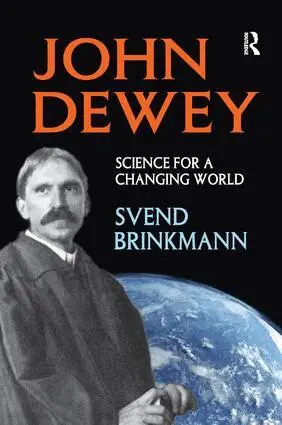
John Dewey was an American psychologist, philosopher, educator, social critic, and political activist. John Dewey: Science for a Changing World addresses Dewey's contemporary relevance; his life and intellectual trajectory; his basic philosophical ideas, with an emphasis on his philosophy of nature; and his educational theory, which has often been misunderstood. In addition, Dewey's pragmatism and pragmatist ethics are discussed, as are some of the criticisms that can be directed at them. Throughout the book, Dewey's ideas are related to the general history of ideas, but there is also a constant focus on how Dewey may assist us in solving some of the problems that face us in a so-called postmodern era. This book is the first to offer an interpretation of John Dewey's works with particular emphasis on his contribution to psychology.John Dewey distinguished himself by combining a culturalist approach to human life with a naturalistic one. He was an avowed naturalist and follower of Darwin, and Brinkmann shows how his non-reductionist, naturalist psychology can serve as a much-needed correction to contemporary forms of "evolutionary psychology." Dewey's psychology, however, is not an isolated element in his thinking as a whole, so the author also provides an introduction to the philosophical, ethical, and educational ideas that go hand-in-hand with his psychology.In the past couple of decades, there has been a renaissance of pragmatist ideas in philosophy, political theory, and education. Scholars are returning to the writings of William James, Charles Peirce, George Herbert Mead, and John Dewey. This book continues the fine tradition of Transaction's History and Theory of Psychology series.
786 kr
Skickas inom 10-15 vardagar
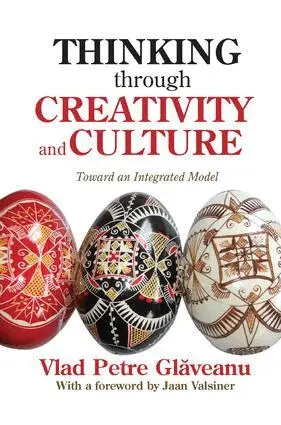
Creativity and culture are inherently linked. Society and culture are part and parcel of creativity's process, outcome, and subjective experience. Equally, creativity does not reside in the individual independent of culture and society.Vlad Petre Glveanu's basic framework includes creators and community, from which new artifacts emerge and existing artifacts are developed. He points to a relationship between self and other, new and old, specific for every creative act. Using this multifaceted system requires that researchers employ ecological research in order to capture the heterogeneity and social dimensions of creativity.Glveanu uses an approach based on cultural psychology to present creativity in lay terms and within everyday settings. He concludes with a unitary cultural framework of creativity interrelating actors, audiences, actions, artifacts, and affordances.
2 053 kr
Skickas inom 10-15 vardagar
The motivation for this volume in the History and Theory of Psychology series is to look across sub-disciplines within psychology and highlight instances where researchers transcended the tendency to think about methodology along traditional lines. Contributors have located examples of researchers who built upon existing ideas to create methods true to their interests and theoretical convictions.Emerging Methods in Psychology shows how a discipline creates new methods and carves out possibilities that not only generate data, but also advance knowledge of human psychological functioning. It concentrates on showcasing the possibilities that exist when the researcher focuses on the relationship between theory, method, and data.The question of what kind of expertise is required is a key issue. This is particularly the case in psychology where the tradition of standardizing methods over the last century has served to stabilize research questions. Knowledge creation is deeply affective and ambiguous rather than the secure accumulation of data by a socially legitimized procedure. This innovative volume moves beyond psychology as social engineering into new varieties of social knowledge.
2 176 kr
Skickas inom 10-15 vardagar
After Piaget proves that Jean Piaget's work is critical for understanding some of the most current proposals in the study of psychological development. It analyzes Piaget's legacy, moving beyond the harsh critiques that have circulated since he lost prominence. It also brings together new developments and research practices that have grown out of Jean Piaget's tradition, while providing a retrospective glance into the intellectual atmospheres of different periods at which the contributors encountered Piaget.This book reveals the richness and coherence of the School of Geneva's research during the last decades before Piaget's death. Contributions from scholars who formed part of the School of Geneva during the 1970s and '80s demonstrate Piaget's influence on such diverse fields as infant development, ethnology, neuropsychology, semiotic development, and epistemology. After Piaget is part of Transaction's History and Theory of Psychology series.
2 053 kr
Skickas inom 10-15 vardagar
John Dewey was an American psychologist, philosopher, educator, social critic, and political activist. John Dewey: Science for a Changing World addresses Dewey's contemporary relevance; his life and intellectual trajectory; his basic philosophical ideas, with an emphasis on his philosophy of nature; and his educational theory, which has often been misunderstood. In addition, Dewey's pragmatism and pragmatist ethics are discussed, as are some of the criticisms that can be directed at them. Throughout the book, Dewey's ideas are related to the general history of ideas, but there is also a constant focus on how Dewey may assist us in solving some of the problems that face us in a so-called postmodern era. This book is the first to offer an interpretation of John Dewey's works with particular emphasis on his contribution to psychology.John Dewey distinguished himself by combining a culturalist approach to human life with a naturalistic one. He was an avowed naturalist and follower of Darwin, and Brinkmann shows how his non-reductionist, naturalist psychology can serve as a much-needed correction to contemporary forms of "evolutionary psychology." Dewey's psychology, however, is not an isolated element in his thinking as a whole, so the author also provides an introduction to the philosophical, ethical, and educational ideas that go hand-in-hand with his psychology.In the past couple of decades, there has been a renaissance of pragmatist ideas in philosophy, political theory, and education. Scholars are returning to the writings of William James, Charles Peirce, George Herbert Mead, and John Dewey. This book continues the fine tradition of Transaction's History and Theory of Psychology series.
2 053 kr
Skickas inom 10-15 vardagar
Creativity and culture are inherently linked. Society and culture are part and parcel of creativity's process, outcome, and subjective experience. Equally, creativity does not reside in the individual independent of culture and society.Vlad Petre Glveanu's basic framework includes creators and community, from which new artifacts emerge and existing artifacts are developed. He points to a relationship between self and other, new and old, specific for every creative act. Using this multifaceted system requires that researchers employ ecological research in order to capture the heterogeneity and social dimensions of creativity.Glveanu uses an approach based on cultural psychology to present creativity in lay terms and within everyday settings. He concludes with a unitary cultural framework of creativity interrelating actors, audiences, actions, artifacts, and affordances.
2 053 kr
Skickas inom 10-15 vardagar
The heart of this book is the translation of The Life Space of the Urban Child, written in 1935 by Martha and Hans Heinrich Muchow. Life Space provides a fresh look at children as actors and how they absorb their city environments. It uses an empirical base connected with theories about the worlds in which children live.The first section provides historical background on Muchow's study and the author. The second section presents the translation of the Life Space study, as well as comments from an environmental psychologist's perspective. The third section reviews the study's theoretical foundations, including the concept of "critical personalism," the perspectives of phenomenology, and the notion of Umwelt (environment). The last section addresses various lines of research developed from the Life Space study, including Muchow's work in describing children in urban environments, methodological approaches, and the significance of space in social science and educational contexts.The manner in which Martha Muchow conducted her studies is itself of note. She obtained access to the children in their environments and combined observation with cartographies and essays produced by the children. This approach was new at the time and continues to inspire researchers today. This volume is the latest work in Transaction's History and Theory of Psychology series.
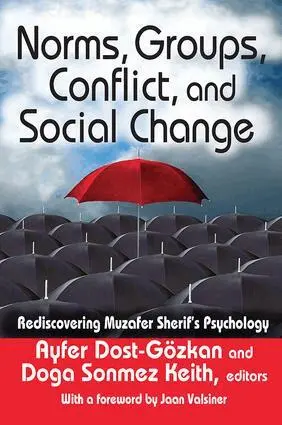
Norms, Groups, Conflict, and Social Change
Rediscovering Muzafer Sherif's Psychology
Inbunden, Engelska, 2015
2 243 kr
Skickas inom 10-15 vardagar
This book is about the life and work of a Turkish-American social scientist, Muzafer Sherif (1905–1988). He was known for his seminal work on norm and group formations, social judgment, and intergroup conflicts and cooperation. Although Sherif is identified as one of the founders of social psychology, his contribution to the science of psychology goes beyond the limits of social psychology as it is generally defined today.This volume aims to rediscover the theory and research of its subject in the socio-historical context of his time, as well as his relevance for contemporary psychology. Chapters cover a range of topics: an in-depth portrayal of Sherif's life and intellectual struggle in Turkey and in the United States; his metatheoretical considerations on the science of psychology; his theory and research on group and intergroup relationships, social norms and social change; formation and change of frames of reference, ego-involvements and identity; and psychology of slogans.Sherif had profound life experiences in different cultural contexts from the Ottoman Empire and World War I to American universities, which enabled him to see the essentiality of the historico-cultural context in the formation of human phenomena. Sherif's psychology is an elegant exemplar of an integrative science of psychology that is worth rediscovering.
693 kr
Skickas inom 10-15 vardagar
After Piaget proves that Jean Piaget's work is critical for understanding some of the most current proposals in the study of psychological development. It analyses Piaget's legacy, moving beyond the harsh critiques that have circulated since he lost prominence. It also brings together new developments and research practices that have grown out of Jean Piaget's tradition, while providing a retrospective glance into the intellectual atmospheres of different periods at which the contributors encountered Piaget.This book reveals the richness and coherence of the School of Geneva's research during the last decades before Piaget's death. Contributions from scholars who formed part of the School of Geneva during the 1970s and '80s demonstrate Piaget's influence on such diverse fields as infant development, ethnology, neuropsychology, semiotic development, and epistemology. After Piaget is part of Transaction's History and Theory of Psychology series.
2 113 kr
Skickas inom 10-15 vardagar
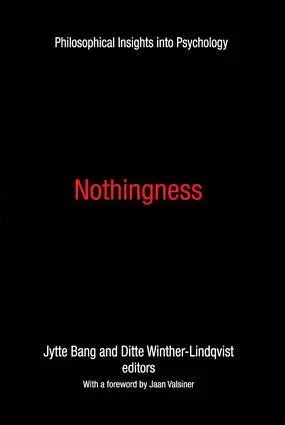
This book addresses nothingness as not only the intangible presence of an emotional, cultural, social, or even political void that is felt on an existential level, but has some solid foundations in reality. The death of a loved one, the social isolation of an individual, or the culture shock one may experience in another country are examples of situations in which an external sense of absence mirrors an internal psychological and philosophical sense of nothingness.Not much has been explicitly written on nothingness in the history of psychology. On the other hand, nothingness seems to be implicitly embedded in many scholars' work. This duality of explicitly and implicitly expressed ideas about nothingness reveals how psychology finds inspiration in philosophy, and vice versa. The book aims to illustrate how the concept of the presence of absence—nothingness—fills a void in contemporary psychological theorizing.
2 113 kr
Skickas inom 10-15 vardagar
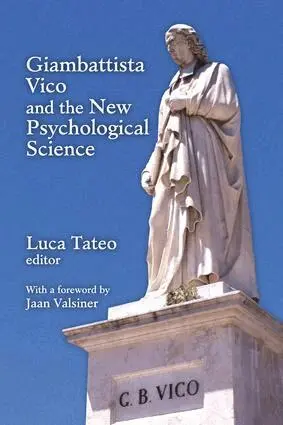
Giambattista Vico (1668–1744) was an Italian philosopher, rhetorician, and historian. As one of the great thinkers of the Enlightenment, he exerted tremendous influence on the social sciences. He was the first to stress cultural and linguistic dimensions in the development of both the human mind and social institutions. Although his ideas on the relationship between mind and culture and his epistemology have inspired the work of many scholars in psychology, his sizeable influence has been scarcely acknowledged. The volume is organized in two sections. The first locates Vico in his historical context and in the landscape of contemporary human and social sciences. The second part presents those of Vico's concepts that seem promising for the development of a new way of looking at psychological phenomena. In the book's conclusion, Luca Tateo gathers the ideas of the volume's contributors to suggest future development of the psychological sciences. This book aims to show how Vico's insights can inspire future research in the psychological sciences. It collects multidisciplinary contributions of leading international scholars that draw upon the thought of this original thinker. Collectively, the contributors remind us of the legacy and continuing influence of this inspiring historical figure.