How to Teach - Böcker
Visar alla böcker i serien How to Teach. Handla med fri frakt och snabb leverans.
7 produkter
7 produkter
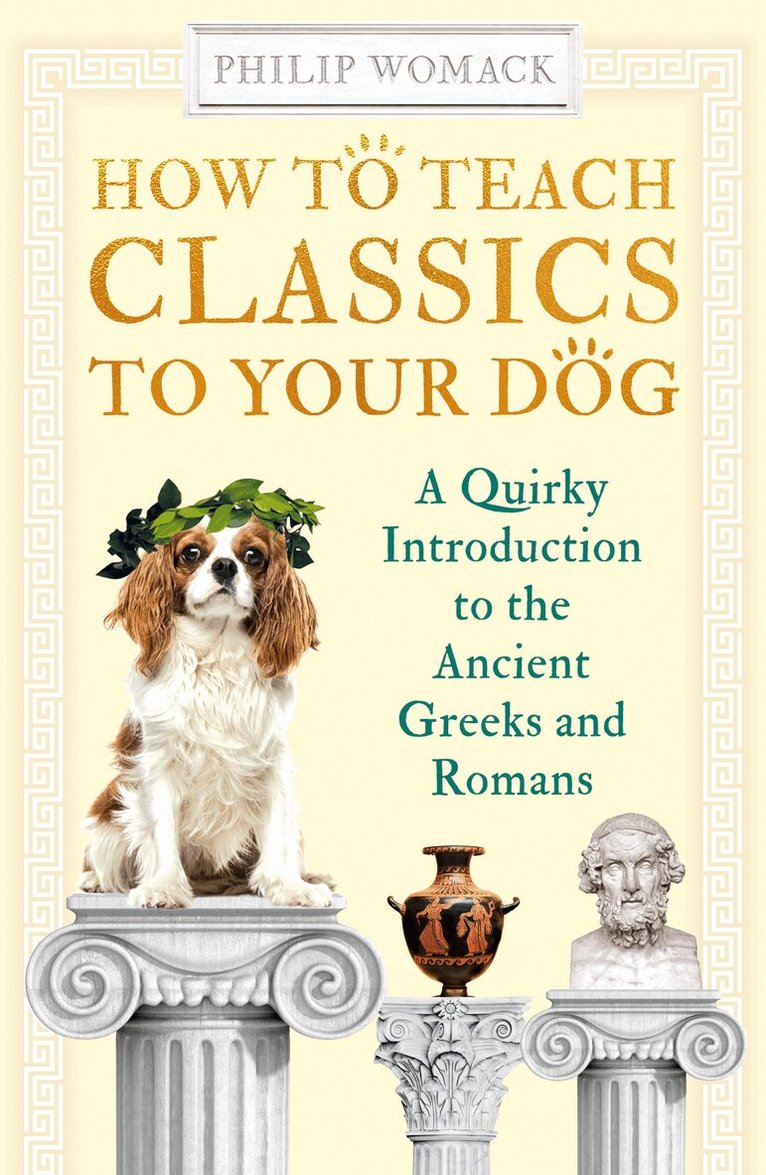
How to Teach Classics to Your Dog
A Quirky Introduction to the Ancient Greeks and Romans
Häftad, Engelska, 2021
124 kr
Skickas
‘Immensely informative, wrapped in an engagingly casual tone, complemented by more than a dash of the bizarre. You’d be barking to miss it.’ Professor Michael ScottCan you tell your Odysseus from your Oedipus?In this unique introduction, Philip Womack leads his beloved lurcher Una (and us) on a fleet-footed odyssey through the classical world. From Aeneas to Cerberus to Polydorus, you’ll learn about the world of the Ancient Greeks and Romans and, with a bit of luck, you’ll be able to pass it on to your dog. But maybe best leave out that story of the hounds who tore their very own master limb from limb…
119 kr
Skickas inom 5-8 vardagar
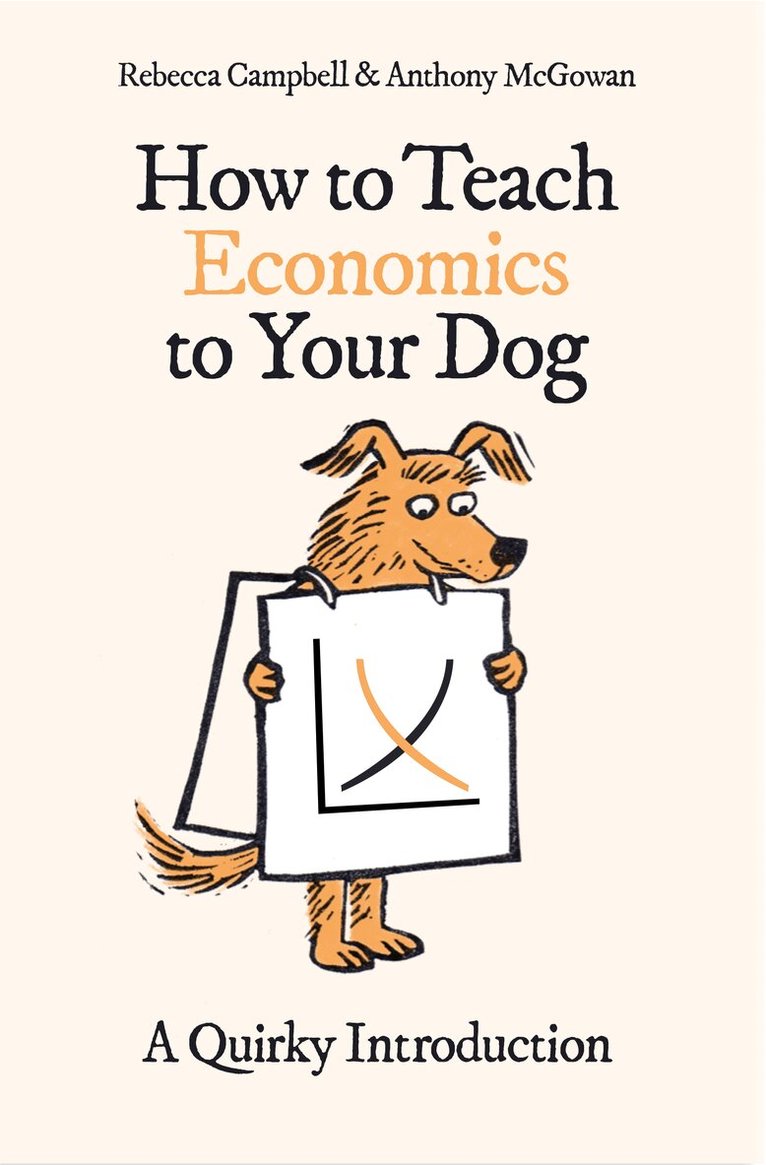
Monty is a dog, not a financial genius, but economics still shapes his everyday life.Over the course of seventeen walks, Dr Rebecca Campbell chews over economic concepts and investigates how they apply to our lives – people and mutts alike. There are no graphs, no charts (Monty can’t read them) and definitely no calculus!How to Teach Economics to Your Dog tackles the knotty question of what economics actually is. Is it a mathematical science like physics? Or a moral and philosophical investigation of how societies should manage scarce resources?Along the way we meet some of the great thinkers from Adam Smith to Thomas Piketty, and ponder questions such as: What on earth does quantitative easing mean? And why are some countries so much richer than others?
219 kr
Skickas
Part of Phil Beadle's How to Teach Series.If you buy only one book on metacognitive strategies for the last ten minutes of the lesson this year, make it this one!The Book of Plenary is part of Phil Beadle's How To Teach series, in which he examines in detail every aspect of the modern classroom. The first half of this volume gives interested teachers a series of easy-to-set-up activities that make plenaries engaging and worthwhile. The second half is a detailed and almost serious examination of metacognition in the classroom. It seeks to give teachers the stimulus to prepare and research plenaries fully so that they actively seek to develop the metacognitive experience, knowledge and self regulation of students. Distanced from glib 'learn-to-learn' programmes, this book engages with available research about metacognition and presents its relevance to the classroom in a lively, although sometimes childish, manner.
219 kr
Skickas
Phil Beadle's How to Teach series.In Reading for Pleasure, Kenny Pieper has gathered a range of tried-and-tested strategies to get kids reading, and enjoying it. We hear too often that kids don't read any more: Kenny thinks it should be every teacher's mission to prove this isn't true. In a squeezed curriculum it can be tempting to accept pupils' lack of reading and make excuses that there is not enough time to give to the 'luxury' of personal reading. Teachers do this at our peril. Reading is the essential building block of further literacy development as well as a skill, hobby and habit that we can take with us forever.Kenny Pieper takes the act of reading for granted, as many - but sadly not all - adults do. You're reading this right now. However, this isn't the case for everyone. Kenny teaches kids whose lives are terrifying obstacle courses of reading-related problems. They know they struggle with reading so they try to avoid reading at all costs. They leave school, not merely unaffected by this strange reading thing, but saddled with a great deal of emotional baggage about being an outsider, even more entrenched in a belief that reading is for others more intelligent than them. Then there are the children who can read perfectly well, but chose not to, unconvinced of the importance of reading in their lives. What difference does it make to them? We have to answer that question in school. We have a duty to put an end to illiteracy and aliteracy. Kids need reading role models and, as a teacher, that role model is you. You may be the only adult who that reluctant reader will ever see reading. Teachers are critical in giving all children the gift of being able to read well and to value reading.Topics covered include: the author's personal reading journey, how reading enabled him to become the first person in his family to go to university and convinced him that fostering a love of reading is his moral duty as an educator, illiteracy and aliteracy, reluctant readers, book reviews, prioritising personal reading by devoting ten minutes each lesson to it, habitual reading, the reading environment, interest inventories, technology, e-readers, Accelerated Reader programmes, recommended reading, building a class library, bookmarks, book tweets, book speed-dating, libraries, librarians, literacy and class inequality, parental involvement, podcasting, reading records, reading dialogue journals, the rights of the reader, reading aloud, silent reading and literacy and gender, amongst others.The benefits we can all reap when kids become confident readers who read for pleasure are obvious. Discover strategies which will: get kids talking about books, get them thinking about books, get them reading books, encourage independent reading, develop literacy skills and establish a classroom culture where reading is expected and celebrated.Suitable for primary and secondary teachers, leaders and SENCOs, or just anyone with an interest in or responsibility for getting kids to read.
275 kr
Skickas
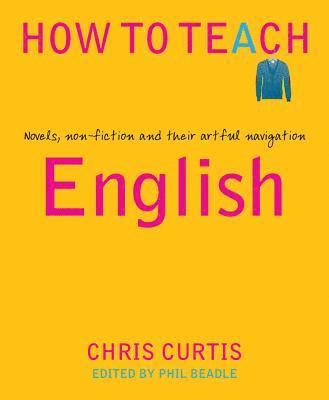
Jam-packed with enlivening ideas to help teachers make the subject of English more intellectually challenging for students – and to make it fun too!This artful addition to Phil Beadle’s How To Teach series is the work of a man whose humility fails to hide his brilliance, providing English teachers with a sophisticated yet simple framework to hook their lessons upon. Covering poetry, grammar, Shakespeare and how to teach writing, Chris Curtis has furnished every page with exciting ideas that can be put into practice immediately.Each chapter presents a store of practical strategies to help students in key areas – providing apposite examples, teaching sequences and the rationale behind them – and has been accessibly laid out so that teachers can pinpoint the solutions they need without having to spend an age wading through academic theory and pontification to find them. Suitable for all teachers of English.
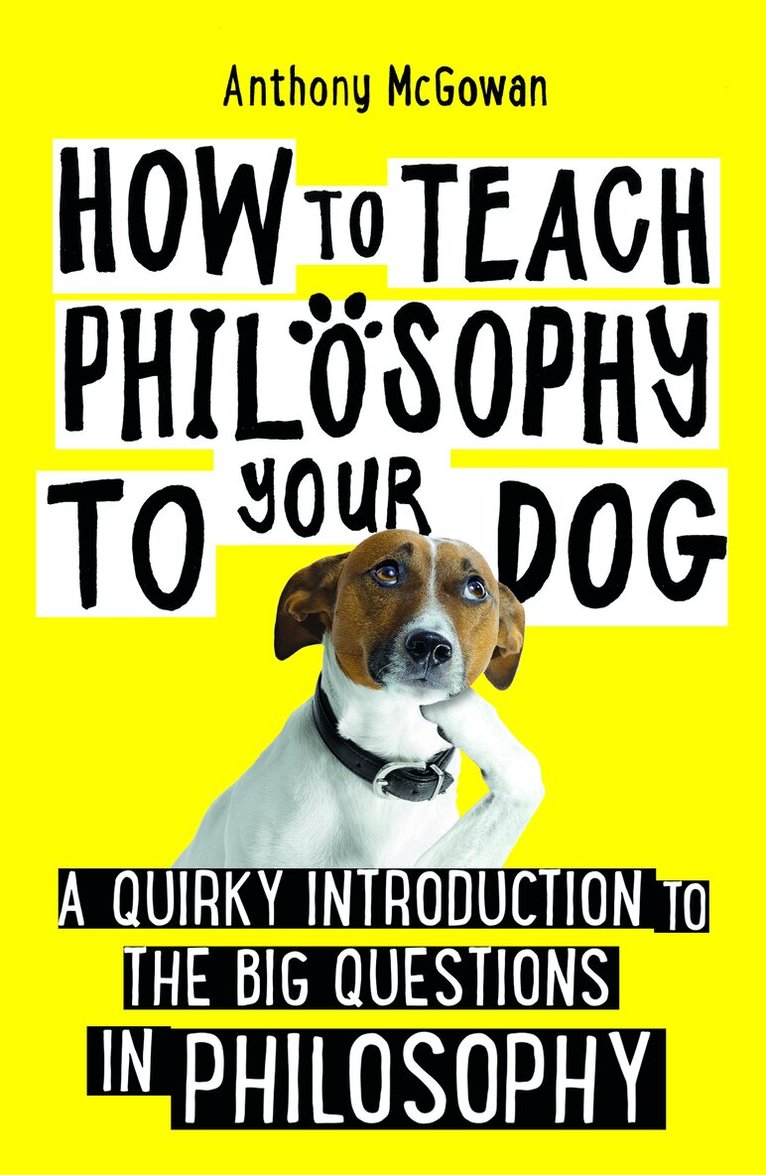
How to Teach Philosophy to Your Dog
A Quirky Introduction to the Big Questions in Philosophy
Häftad, Engelska, 2020
118 kr
Skickas
Monty was just like any other dog. A scruffy and irascible Maltese terrier, he enjoyed barking at pugs and sniffing at trees. But after yet another dramatic confrontation with the local Rottweiler, Anthony McGowan realises it’s high time he and Monty had a chat about what makes him a good or a bad dog.And they don’t stop at ethics. Taking his cue from Monty’s canine antics, McGowan leads us on an enlightening jaunt through the world of philosophy.Will Kant convince Monty to stop stealing cheesecake? How long will they put up with Socrates poking holes in every argument? Do they have free will to pursue answers to these questions? Join the dutiful duo as they set out to uncover who – if anyone – has the right end of the ethical stick and can tell us how best to live one’s life.But there is also a shadow over their conversations. Monty is not well… And so towards the end the biggest questions raise their heads: is there a God? Does life have a meaning? By the time of their last walk together, Monty – and the reader – will find that they have not just solved a few philosophical puzzles, but absorbed much of the history of Western philosophy.
126 kr
Skickas
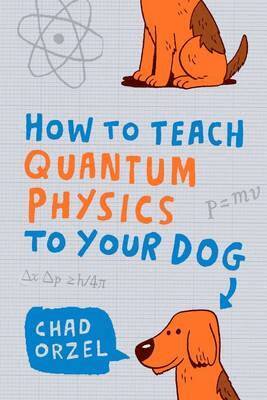
The international bestseller from the author of Breakfast with Einstein‘Elegantly approachable descriptions... with a refreshing emphasis on recent research. Highly satisfying.’ GuardianEmmy is no ordinary dog. When adopted from the shelter by physics professor Chad Orzel, she becomes immediately fascinated by his work. Could she use quantum tunnelling to get through the neighbour’s fence? How about diffracting round a tree to chase squirrels? Or using virtual particles to catch bunnies made of cheese?Taking Emmy’s anarchic behaviour as a starting point, Orzel explains the key theories of quantum physics. From quarks and gluons to Heisenberg’s uncertainty principle, this is a uniquely entertaining way to unlock the secrets of the universe.