Innovation in Human Centered Sustainability - Böcker
Visar alla böcker i serien Innovation in Human Centered Sustainability. Handla med fri frakt och snabb leverans.
4 produkter
4 produkter
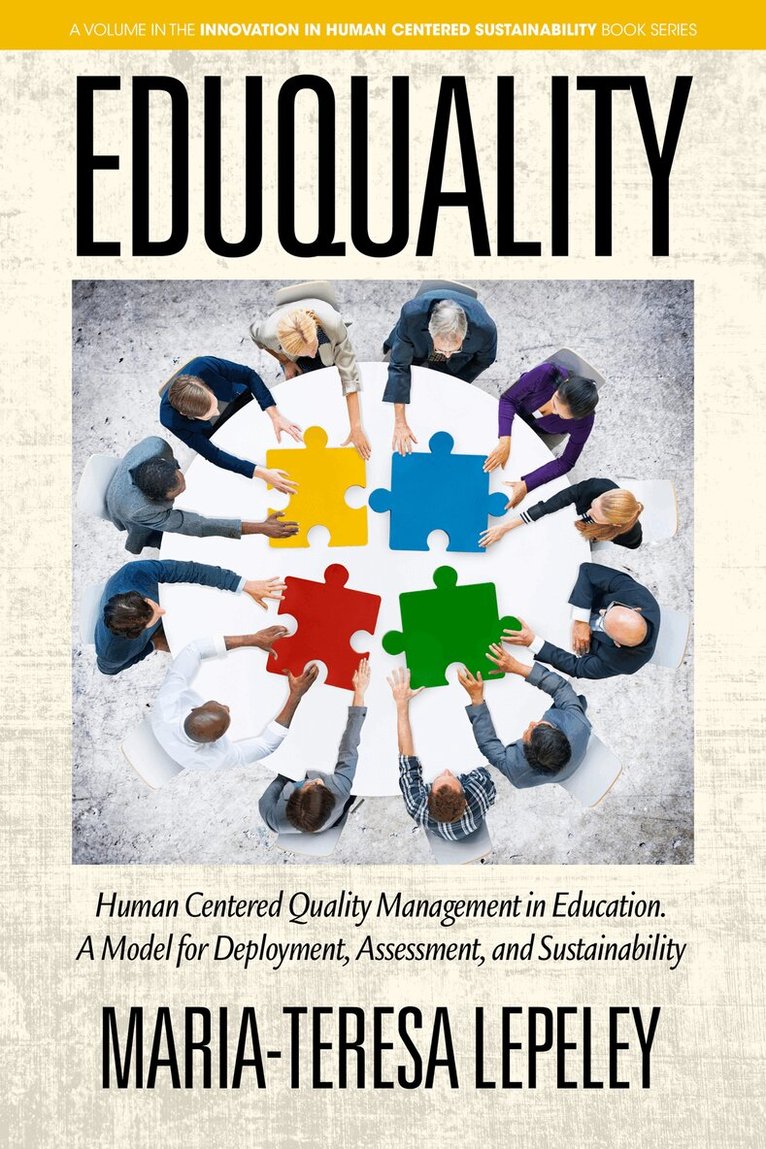
EDUQUALITY
Human Centered Quality Management in Education. A Model for Deployment, Assessment and Sustainability
Häftad, Engelska, 2019
517 kr
Skickas inom 7-10 vardagar
We, educators, are often so involved in daily teaching duties that lack time to absorb the broader picture of what is happening beyond our classrooms in a rapidly changing world. That is the norm in our profession. But our responsibility is to constantly improve the wellbeing of all the students enrolled in our classes. Education is the most important and most challenging profession there is. Educators shape future leaders, heroes, and people who can improve the world. Transformational educators have long term effects in the lives of students that projects on nations. On the opposite side, students waste time sitting in a classroom and can hamper future opportunities in life when educators fail to motivate them to assume responsibility for improving their wellbeing and build a better world for all.Education is not just another profession, it is an extraordinary endeavor with surmounting human responsibility to transform lives for the better.To claim the merit of education, educators must project education beyond school border into the context of society and the economy. To miss this context is a pending challenge. We, educators, need to earn the merit we deserve. But we now know that we earn merit with knowledge how to manage for quality and continuous improvement aiming at results leading to sustainability and working systematically to reach high standards.Lepeley, author of numerous publications on the subject, former examiner of the US Baldrige National Quality Award and adviser to NQAs in six countries in Latin America, presented her quality management model for education in the World Bank Global Network in the early 2000’s. Her model has pioneered integration of education with other disciplines and other sectors projecting the importance and impact of education on sustainable development. The author emphasizes that neglecting the surmounting demand for quality will impair education as a fundamental factor of development, harm the worth of educators, undermine the profession and dent the wellbeing of human beings in inclusive nations and a peaceful world.
EDUQUALITY
Human Centered Quality Management in Education. A Model for Deployment, Assessment and Sustainability
Inbunden, Engelska, 2019
955 kr
Skickas inom 7-10 vardagar
We, educators, are often so involved in daily teaching duties that lack time to absorb the broader picture of what is happening beyond our classrooms in a rapidly changing world. That is the norm in our profession. But our responsibility is to constantly improve the wellbeing of all the students enrolled in our classes. Education is the most important and most challenging profession there is. Educators shape future leaders, heroes, and people who can improve the world. Transformational educators have long term effects in the lives of students that projects on nations. On the opposite side, students waste time sitting in a classroom and can hamper future opportunities in life when educators fail to motivate them to assume responsibility for improving their wellbeing and build a better world for all.Education is not just another profession, it is an extraordinary endeavor with surmounting human responsibility to transform lives for the better.To claim the merit of education, educators must project education beyond school border into the context of society and the economy. To miss this context is a pending challenge. We, educators, need to earn the merit we deserve. But we now know that we earn merit with knowledge how to manage for quality and continuous improvement aiming at results leading to sustainability and working systematically to reach high standards.Lepeley, author of numerous publications on the subject, former examiner of the US Baldrige National Quality Award and adviser to NQAs in six countries in Latin America, presented her quality management model for education in the World Bank Global Network in the early 2000’s. Her model has pioneered integration of education with other disciplines and other sectors projecting the importance and impact of education on sustainable development. The author emphasizes that neglecting the surmounting demand for quality will impair education as a fundamental factor of development, harm the worth of educators, undermine the profession and dent the wellbeing of human beings in inclusive nations and a peaceful world.
581 kr
Skickas inom 7-10 vardagar
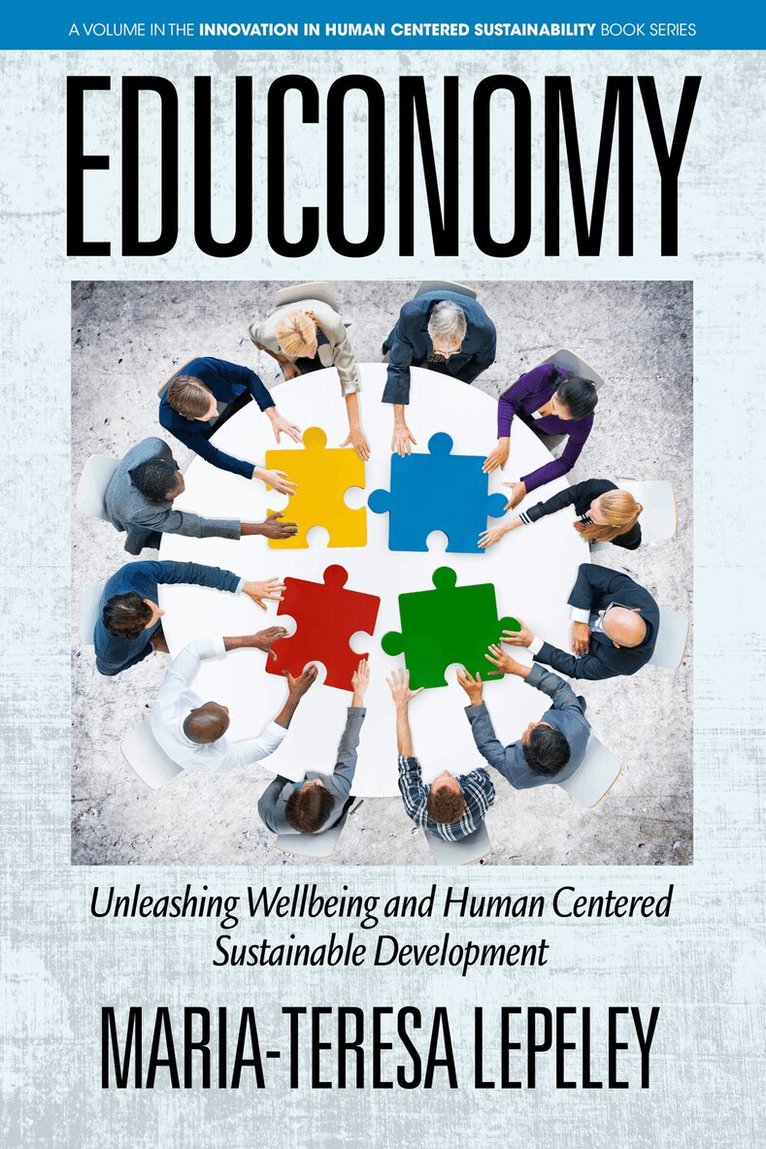
Investing in People is the world priority of the 21st century. The wellbeing of people is at the center of the agendas of the World Bank, International Monetary Fund, UN, OECD, ILO and all major development organizations. But the concern for people is not new. The celebrated books of Economics Nobel Awardees Theodore Schultz’s Investing in People. The Economics of Population Quality and Gary Becker’s Human Capital were published decades ago and challenged the same human dilemma. Yet, with few exceptions, most countries are still struggling for effective formulas to put people at the center of development.The core issue is that investing in people means improving the quality of education for all. But the main problem is that countries continue to take education as an expense, not as an investment in people. National budgets consider education as a sunken cost, rather than as an investment expected to produce high returns to secure quality improvement as necessary condition for sustainability. Shortcomings are abundant but one thing is certain: unless the quality of education for all is placed front and center in development agendas, chances for progress in the VUCA (volatile, uncertain, complex, ambiguous) environment are curtailed, human centered sustainability and wellbeing will be restrained and inequality will persist.The main problem it is not income inequality, it is education inequality.In the Knowledge Economy the human (as) resources formula is no longer working. Segmentation of the economy and education is probing increasingly counterproductive. The EDUCONOMY is a human centered structure for progress to optimize returns and minimize costs of investing in people.Gallup and Brandon Busteed coined the concept Educonomy to enhance the importance of quality in education backed up by extensive surveys and data bases. Lepeley’s EDUCONOMY. Unleashing Wellbeing and Human Centered Sustainable Development takes the discussion into new dimensions and addresses the complexity of the challenges.People are the DNA of Sustainable Development. Says Lepeley challenging old constructs and presenting innovative formulas pioneering human centered economics and economics of wellbeing that frame the Balanced Sustainable Development ESTE (economic, social, technology, environment) Model. ESTE is the product of the Educonomy built on three fundamental pillars: the Talent Economy, the Agility Economy and the Quality Economy convergent with demands of the Knowledge Economy. In the ESTE Model education is no longer a national expense, it is an investment that secures high rates of returns and social and economic inclusiveness anchored in quality standards for all.
1 027 kr
Skickas inom 7-10 vardagar
Investing in People is the world priority of the 21st century. The wellbeing of people is at the center of the agendas of the World Bank, International Monetary Fund, UN, OECD, ILO and all major development organizations. But the concern for people is not new. The celebrated books of Economics Nobel Awardees Theodore Schultz’s Investing in People. The Economics of Population Quality and Gary Becker’s Human Capital were published decades ago and challenged the same human dilemma. Yet, with few exceptions, most countries are still struggling for effective formulas to put people at the center of development.The core issue is that investing in people means improving the quality of education for all. But the main problem is that countries continue to take education as an expense, not as an investment in people. National budgets consider education as a sunken cost, rather than as an investment expected to produce high returns to secure quality improvement as necessary condition for sustainability. Shortcomings are abundant but one thing is certain: unless the quality of education for all is placed front and center in development agendas, chances for progress in the VUCA (volatile, uncertain, complex, ambiguous) environment are curtailed, human centered sustainability and wellbeing will be restrained and inequality will persist.The main problem it is not income inequality, it is education inequality.In the Knowledge Economy the human (as) resources formula is no longer working. Segmentation of the economy and education is probing increasingly counterproductive. The EDUCONOMY is a human centered structure for progress to optimize returns and minimize costs of investing in people.Gallup and Brandon Busteed coined the concept Educonomy to enhance the importance of quality in education backed up by extensive surveys and data bases. Lepeley’s EDUCONOMY. Unleashing Wellbeing and Human Centered Sustainable Development takes the discussion into new dimensions and addresses the complexity of the challenges.People are the DNA of Sustainable Development. Says Lepeley challenging old constructs and presenting innovative formulas pioneering human centered economics and economics of wellbeing that frame the Balanced Sustainable Development ESTE (economic, social, technology, environment) Model. ESTE is the product of the Educonomy built on three fundamental pillars: the Talent Economy, the Agility Economy and the Quality Economy convergent with demands of the Knowledge Economy. In the ESTE Model education is no longer a national expense, it is an investment that secures high rates of returns and social and economic inclusiveness anchored in quality standards for all.