International and Comparative Criminology – serie
Visar alla böcker i serien International and Comparative Criminology. Handla med fri frakt och snabb leverans.
3 produkter
3 produkter
Inbunden, Engelska, 2004
842 kr
Skickas inom 10-15 vardagar
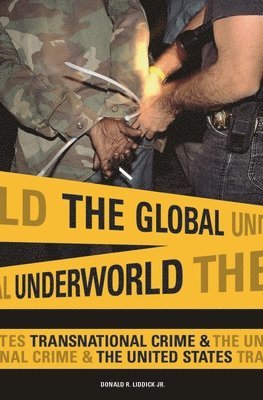
Transnational crime is an increasing national security threat to the United States and to individual citizens around the world. Criminal groups both in the United Staes and abroad operate crime cartels that span national boundaries, but in ways that affect all Americans, and wreak havoc on law enforcement organizations as well as businesses and other entities, such as the stock market. More often than not, transnational crime takes the form of organized crime, and in its many forms is responsible for over-priced goods, unsafe products, environmental hazards, corruption of public officials, the exploitation of women and children, tax evasion, theft and piracy, identity theft, organ smuggling, stock market fraud, drug trafficking, and black market trading in armaments and weapons of mass destruction, among other scandals and forms of misconduct. Because perpetrators often act in collusion with legitimate organizations and other powerful elites, who either cooperate knowingly or unknowingly or are coerced through violence, dealing with the problem is especially difficult. Here, Liddick describes the many groups responsible for transnational crimes, and the nature and scale of their various enterprises. The result is a powerful testament to the globalization of criminal organizations and their danger to American society.From the Russian mafiya to Chinese Triads, from outlaw motorcycle gangs to Latin American drug cartels, the nature and incidence of transnational crime is a serious threat to American security, both at the national and the individual level. Because of America's porous borders, it is relatively easy for criminal foreigners to set up their organizations within the United States Moreover, there are well-established groups already present in the United States that are now capable of operating on a multinational level. While response to the problem has been overdue, recent efforts to address transnational crime include technological innovations and controversial legislation such as the Patriot Act and the Homeland Security Act. But how well will these measures protect Americans from the increasing prevalence of criminal organizations that are capable of carrying out crimes that span the globe? This important book provides an engaging glimpse into the world of transnational crime through an introduction to the various groups involved, true stories of criminal misconduct, and a careful review and evaluation of efforts to address the problem.
E-bok
PDF, Engelska, 2004757 kr
Läs direkt efter köp
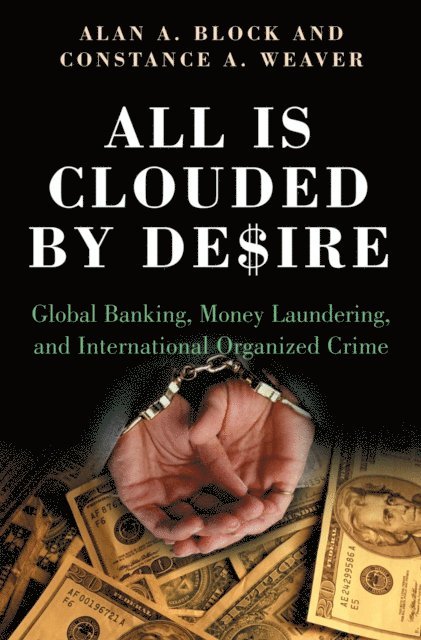
Before Enron, before Arthur Anderson, and before Worldcom, there was the Bank of New York money laundering scandal, which hit headlines in 1999. Promising to be one of the most important books on international organized crime, money laundering, and the complicity between legitimate and illegitimate businesses in both the United States and the former Soviet Union, among other places, during the last decade of the 20th century, All Is Clouded by Desire examines the criminal dealings that led to the revelation that the Bank of New York's Eastern European Division laundered $6 billion for Russian organized criminals and other shady organizations and individuals. In a series of intrigues that involved crooked Geneva banker Bruce Rappaport and high-level members of the Bank of New York, criminal Russian organizations were able to thrive and prosper during a time when the rest of the former Soviet Union crumbled amidst growing corruption and a declining economy. Tracing the financial shenanigans back many years, Block and Weaver illustrate how the underworld of high finance, money laundering, mafia groups, CIA operatives, and legitimate banking institutions can clean dirty money and operate criminal enterprises that span the globe.Block and Weaver carefully assemble a vivid examination of the world of hot money in the arena of international banking and the roles played by Intelligence, the politically connected, and the criminally inclined. Focusing on the intensely private Genava banker Bruce Rappaport and the Bank of New York, the authors show how the two worked together with dodgy Russian banks to move and launder billions through channels that include off-shore banks, shady joint-ventures, and outright criminal organizations. Relying on primary sources from the logs of the institutions involved, interviews with British Intelligence operatives and former CIA officers, secret discussions with private detectives handling the infamous Marc Rich tax case, and material collected by two private detective agencies in London and New York, the book exposes the various machinations that were instrumental in completing the financial schemes that would ultimately cause the downfall of two top Bank of New York executives.
E-bok
PDF, Engelska, 2004908 kr
Läs direkt efter köp
Transnational crime is an increasing national security threat to the United States and to individual citizens around the world. Criminal groups both in the United Staes and abroad operate crime cartels that span national boundaries, but in ways that affect all Americans, and wreak havoc on law enforcement organizations as well as businesses and other entities, such as the stock market. More often than not, transnational crime takes the form of organized crime, and in its many forms is responsible for over-priced goods, unsafe products, environmental hazards, corruption of public officials, the exploitation of women and children, tax evasion, theft and piracy, identity theft, organ smuggling, stock market fraud, drug trafficking, and black market trading in armaments and weapons of mass destruction, among other scandals and forms of misconduct. Because perpetrators often act in collusion with legitimate organizations and other powerful elites, who either cooperate knowingly or unknowingly or are coerced through violence, dealing with the problem is especially difficult. Here, Liddick describes the many groups responsible for transnational crimes, and the nature and scale of their various enterprises. The result is a powerful testament to the globalization of criminal organizations and their danger to American society.From the Russian mafiya to Chinese Triads, from outlaw motorcycle gangs to Latin American drug cartels, the nature and incidence of transnational crime is a serious threat to American security, both at the national and the individual level. Because of America's porous borders, it is relatively easy for criminal foreigners to set up their organizations within the United States Moreover, there are well-established groups already present in the United States that are now capable of operating on a multinational level. While response to the problem has been overdue, recent efforts to address transnational crime include technological innovations and controversial legislation such as the Patriot Act and the Homeland Security Act. But how well will these measures protect Americans from the increasing prevalence of criminal organizations that are capable of carrying out crimes that span the globe? This important book provides an engaging glimpse into the world of transnational crime through an introduction to the various groups involved, true stories of criminal misconduct, and a careful review and evaluation of efforts to address the problem.