International Communication - Böcker
Visar alla böcker i serien International Communication. Handla med fri frakt och snabb leverans.
4 produkter
4 produkter
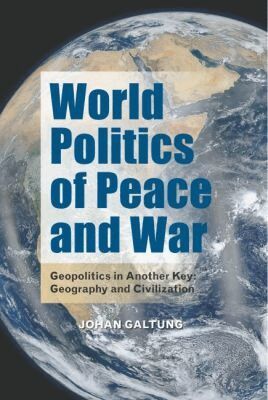
World Politics of Peace and War
Geopolitics in Another Key: Geography and Civilization
Inbunden, Engelska, 2015
593 kr
Skickas inom 10-15 vardagar
This book is about the role of geography and civilization in past, present, and future world politics, developed in the mid-1980s Geographically the world had been badly served by a division into three parts: “free” meaning capitalist, socialist, and the poor “Third World”; East, West, and South. Left out was a Fourth World in the Southeast, with China, Japan, and other countries taking the world by surprise, first the Japanese miracle, then China. There is more to come.Civilizationally the Northwest is Catholic-Protestant-secular; the Northeast Orthodox-secular, Muslim, and Hindu; the Southeast Daoist and Buddhist. Civilizations leave strong imprints on the worlds and their relations. One of them, Western civilization (but also Islam) sees itself with the right and duty to impost itself on others, even eliminating them.Based on this analysis and diagnosis, the book offers a view into the future, a prognosis, and proposals for strategy away from war, toward peace.This book is intended for students and specialists in international relations as an overview seen from the world, not one particular region.
World Politics of Peace and War
Geopolitics in Another Key: Geography and Civilization
Häftad, Engelska, 2015
300 kr
Skickas inom 10-15 vardagar
This book is about the role of geography and civilization in past, present, and future world politics, developed in the mid-1980s Geographically the world had been badly served by a division into three parts: “free” meaning capitalist, socialist, and the poor “Third World”; East, West, and South. Left out was a Fourth World in the Southeast, with China, Japan, and other countries taking the world by surprise, first the Japanese miracle, then China. There is more to come.Civilizationally the Northwest is Catholic-Protestant-secular; the Northeast Orthodox-secular, Muslim, and Hindu; the Southeast Daoist and Buddhist. Civilizations leave strong imprints on the worlds and their relations. One of them, Western civilization (but also Islam) sees itself with the right and duty to impost itself on others, even eliminating them.Based on this analysis and diagnosis, the book offers a view into the future, a prognosis, and proposals for strategy away from war, toward peace.This book is intended for students and specialists in international relations as an overview seen from the world, not one particular region.
912 kr
Skickas inom 10-15 vardagar
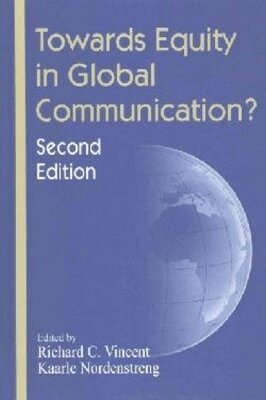
This is a book about global communication and equity. It comes as the world of media and communication has drastically changed. The fundamental issues and structures behind digital communication remain basically the same as they have been over the past 50 years. Also the communication problems and policy questions raised since the 1970s at the United Nations have not lost their overall relevance, while new perspectives emerged in moving from the New World Information and Communication Order (NWICO) to the World Summit on the Information Society (WSIS).The main issue of the media world is to which extent the resources for communication—both material and mental—are distributed in a fair and equal way between nations and people. New technologies have brought along many new possibilities, but their potential has far from materialized due to social and economic structures. While “imbalance” as the overall theme since the 1970s has been replaced by “digital divide” in the 2010s, the fundamental question is still equity.The book begins by offering a broad overview of communication by two eminent scholars. Johan Galtung’s presentation of the triangle State-Capital-Civil Society is a classic in the study of media and society. Majid Tehranian’s examination of communication and democracy suggests an exceptionally powerful historical and visionary perspective.The rest of the chapters are either updated from the first edition or new chapters that provide up-to-the-moment appraisals of some of the most important socioeconomic and political issues that affect the world of communication currently.The Appendix provides a complete record of the eleven MacBride Round Tables that were held between 1989 and 1999, a strategic move to carry on the idea of the NWICO in the ecumenical spirit of democratization of communication as advocated by the MacBride Report, Many Voices, One World (1980).This book is meant for the students and scholars of international commuication and development, political economy, and international relations. It is also a resource for members of governments and NGOs, as well as advocates of human rights and grassroots communication.
420 kr
Skickas inom 10-15 vardagar
This is a book about global communication and equity. It comes as the world of media and communication has drastically changed. The fundamental issues and structures behind digital communication remain basically the same as they have been over the past 50 years. Also the communication problems and policy questions raised since the 1970s at the United Nations have not lost their overall relevance, while new perspectives emerged in moving from the New World Information and Communication Order (NWICO) to the World Summit on the Information Society (WSIS).The main issue of the media world is to which extent the resources for communication—both material and mental—are distributed in a fair and equal way between nations and people. New technologies have brought along many new possibilities, but their potential has far from materialized due to social and economic structures. While “imbalance” as the overall theme since the 1970s has been replaced by “digital divide” in the 2010s, the fundamental question is still equity.The book begins by offering a broad overview of communication by two eminent scholars. Johan Galtung’s presentation of the triangle State-Capital-Civil Society is a classic in the study of media and society. Majid Tehranian’s examination of communication and democracy suggests an exceptionally powerful historical and visionary perspective.The rest of the chapters are either updated from the first edition or new chapters that provide up-to-the-moment appraisals of some of the most important socioeconomic and political issues that affect the world of communication currently.The Appendix provides a complete record of the eleven MacBride Round Tables that were held between 1989 and 1999, a strategic move to carry on the idea of the NWICO in the ecumenical spirit of democratization of communication as advocated by the MacBride Report, Many Voices, One World (1980).This book is meant for the students and scholars of international commuication and development, political economy, and international relations. It is also a resource for members of governments and NGOs, as well as advocates of human rights and grassroots communication.