International Ford Madox Ford Studies - Böcker
Visar alla böcker i serien International Ford Madox Ford Studies. Handla med fri frakt och snabb leverans.
6 produkter
6 produkter
Del 14 - International Ford Madox Ford Studies
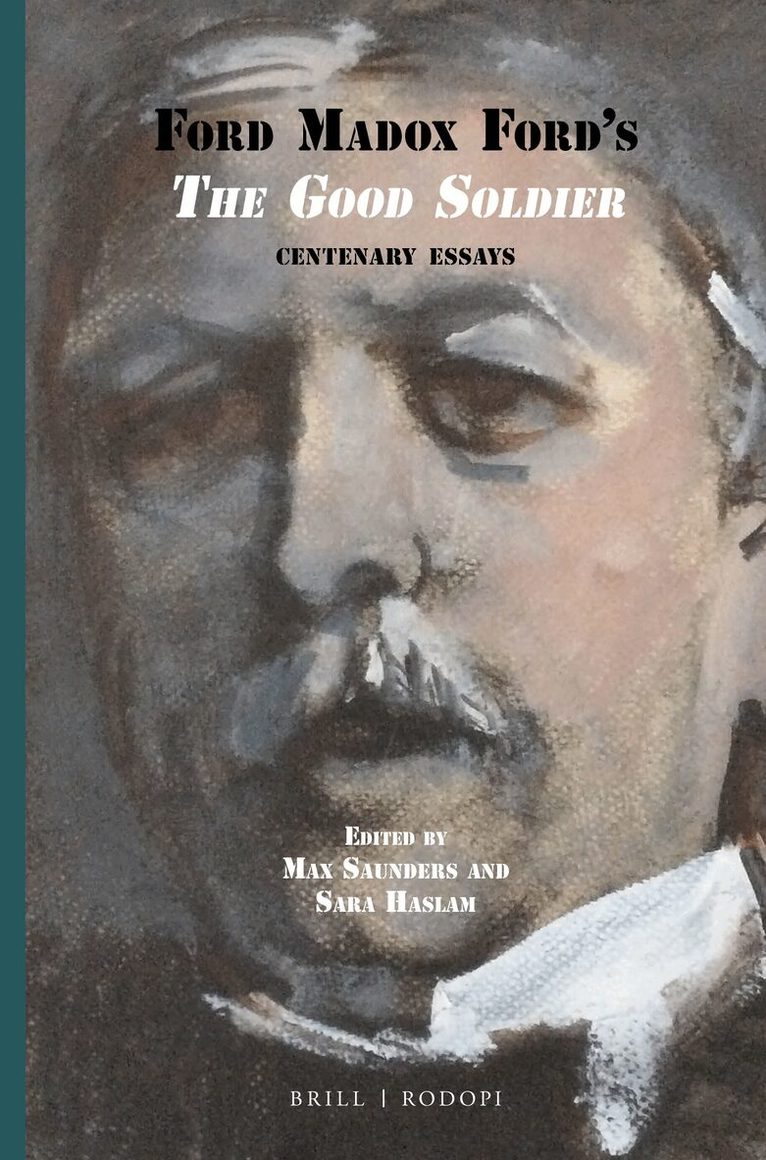
Ford Madox Ford's The Good Soldier
Centenary Essays
Häftad, Engelska, 2015
1 590 kr
Skickas inom 5-8 vardagar
The controversial British writer Ford Madox Ford is increasingly recognized as a major presence in early twentieth-century literature. He is best-known for his fiction, especially The Good Soldier, long considered a modernist masterpiece; and Parade’s End, which was adapted by Tom Stoppard for the acclaimed 2012 television series, starring Benedict Cumberbatch.This volume marks the centenary of The Good Soldier, with eighteen essays by established experts and new scholars. It includes groundbreaking work on the novel’s narrative technique, chronology, and genre; plus pioneering work considering the treatment of bodies and minds; eugenics; poison; and surveillance. Innovative comparative studies discuss Ford’s novel in relation to Henry James, Violet Hunt, H. G. Wells, Franz Kafka, Jean Rhys, David Jones, and Lawrence Durrell.
Del 15 - International Ford Madox Ford Studies
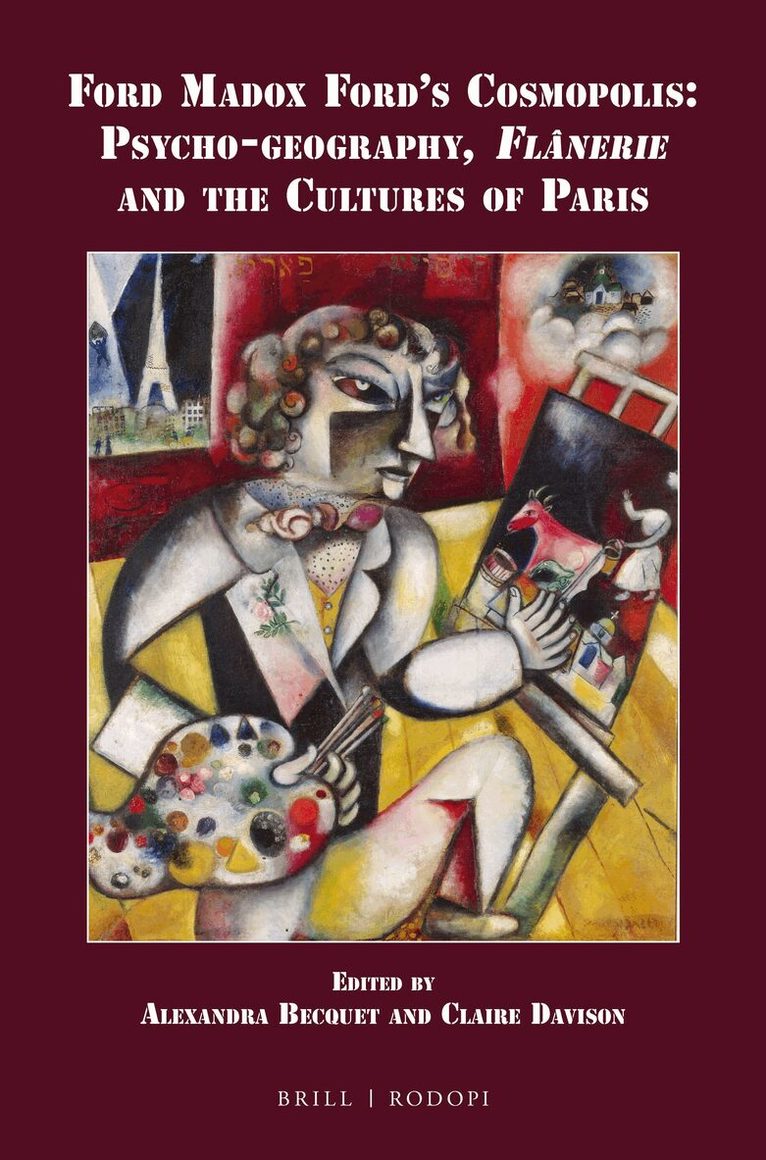
Ford Madox Ford’s Cosmopolis: Psycho-geography, Flânerie and the Cultures of Paris
Häftad, Engelska, 2016
1 550 kr
Skickas inom 5-8 vardagar
The controversial British writer Ford Madox Ford (1873–1939) is increasingly recognized as a major presence in early twentieth-century literature. This series of International Ford Madox Ford Studies was founded to reflect the recent resurgence of interest in him. Each volume is based upon a particular theme, issue, or work; and relates aspects of Ford’s writing, life, and contacts, to broader concerns of his time.Ford is best-known for his fiction, especially The Good Soldier, long considered a modernist masterpiece; and Parade’s End, which Anthony Burgess described as ‘the finest novel about the First World War’, Samuel Hynes has called ‘the greatest war novel ever written by an Englishman’, and which was adapted by Tom Stoppard for the acclaimed 2012 BBC/HBO television series, starring Benedict Cumberbatch and Rebecca Hall.The twelve essays in this volume, Ford Madox Ford’s Cosmopolis, focus directly on the internationalism so important to Ford, and bring out three main ideas. First, his lifelong commitment to an international vision of literature and culture. Second, ‘Cosmopolis’ also refers to Ford’s experiences of the particular cosmopolitan cities he lived in: London, Paris, New York. Third, the idea that his lifelong experience of Paris in particular informed and shaped his writing. Ford’s Cosmopolis is thus not only an ideal city or state open to such cosmopolitan exchange. It is also a mode of writing which invents forms and styles to render the experience of such hybridity, diversity, fluidity, and tolerance.Contributors are: Alexandra Becquet, Helen Chambers, Martina Ciceri, Laurence Davies, Claire Davison, Annalisa Federici, Georges Létissier, Caroline Patey, Andrea Rummel, Max Saunders, Rob Spence, Martin Stannard, George Wickes, Joseph Wiesenfarth.
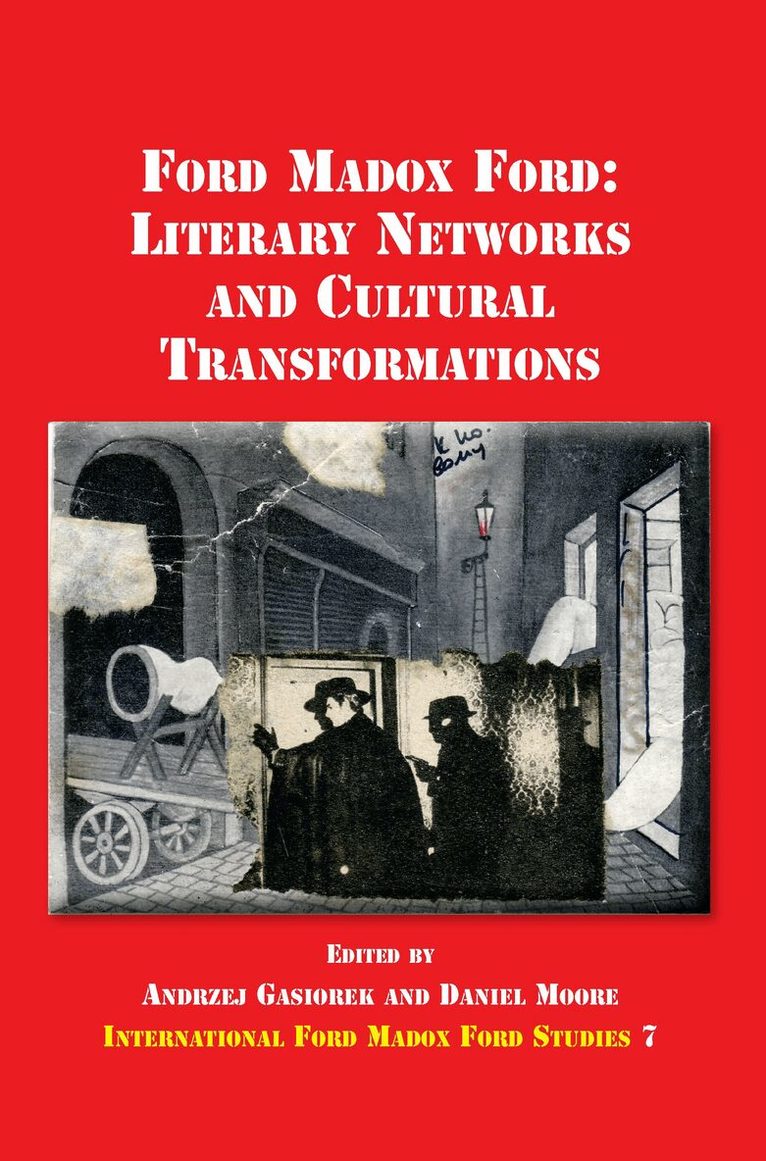
Del 7 - International Ford Madox Ford Studies
Ford Madox Ford
Literary Networks and Cultural Transformations
Häftad, Engelska, 2008
1 631 kr
Skickas inom 5-8 vardagar
The controversial British writer Ford Madox Ford (1873-1939) is increasingly recognized as a major presence in early twentieth-century literature. This series of International Ford Madox Ford Studies was founded to reflect the recent resurgence of interest in him. Each volume is based upon a particular theme or issue; and relates aspects of Ford’s work, life, and contacts, to broader concerns of his time. The present book is part of a large-scale reassessment of his roles in literary history.Ford is best-known for his fiction, especially The Good Soldier, long considered a modernist masterpiece; and Parade’s End, which Anthony Burgess described as ‘the finest novel about the First World War’; and Samuel Hynes has called ‘the greatest war novel ever written by an Englishman’. In these, as in most of his books, Ford renders and analyses the crucial transformations in modern society and culture. One of the most striking features of his career is his close involvement with so many of the major international literary groupings of his time. In the South-East of England at the fin-de-siècle, he collaborated for a decade with Joseph Conrad, and befriended Henry James and H. G. Wells. In Edwardian London he founded the English Review, publishing these writers alongside his new discoveries, Ezra Pound, D. H. Lawrence, and Wyndham Lewis. After the war he moved to France, founding the transatlantic review in Paris, taking on Hemingway as a sub-editor, discovering another generation of Modernists such as Jean Rhys and Basil Bunting, and publishing them alongside Joyce and Gertrude Stein. Besides his role as contributor and enabler to various versions of Modernism, Ford was also one of its most entertaining chroniclers.This volume includes twelve new essays on Ford’s engagement with the literary networks and cultural shifts of his era, by leading experts and younger scholars of Ford and Modernism. Two of the essays are by well-known creative writers: the novelist Colm Tóibín, and the novelist and cultural commentator Zinovy Zinik.
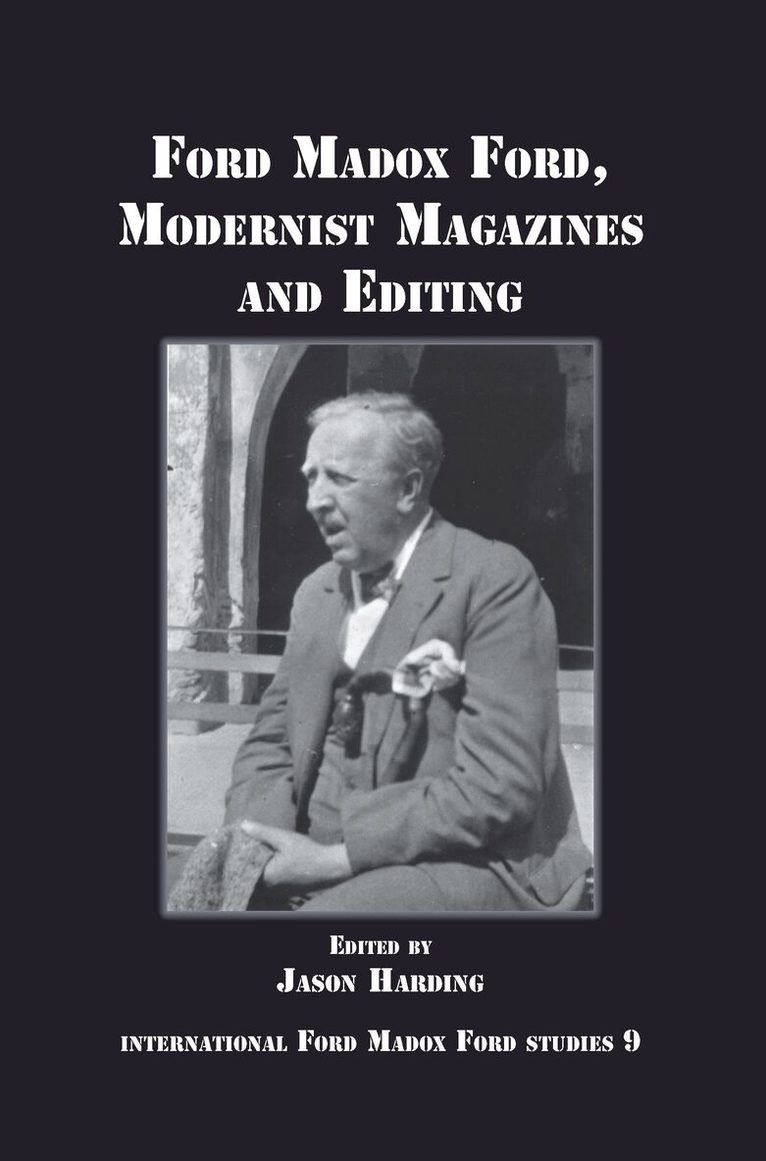
Del 9 - International Ford Madox Ford Studies
Ford Madox Ford, Modernist Magazines and Editing
Häftad, Engelska, 2010
1 631 kr
Skickas inom 5-8 vardagar
The controversial British writer Ford Madox Ford (1873-1939) is increasingly recognized as a major presence in early twentieth-century literature. This series of International Ford Madox Ford Studies was founded to reflect the recent resurgence of interest in him. Each volume is based upon a particular theme or issue; and relates aspects of Ford’s work, life, and contacts, to broader concerns of his time.Modernist periodicals and editorial theory have been very productive areas in recent research. This volume focuses on Ford and editing. Ford was one of the greatest editors of Modernist magazines. He founded the English Review in Edwardian London, publishing Henry James, Joseph Conrad, H. G. Wells, Ezra Pound, Wyndham Lewis, and D. H. Lawrence. His editorial relationships with all of these writers are examined in detail here, as are those with Jean Rhys, Ernest Hemingway, and Basil Bunting, connected with the transatlantic review launched by Ford in post-war Paris, which also carried experimental work by James Joyce, Gertrude Stein, and Tristan Tzara. These seventeen essays bring together distinguished scholars and poets, as well as younger experts on Modernism and its magazine culture. This collection provides a wealth of new research on the management, cultural politics, and editorial stance of Ford’s magazines; on the impact of his editorial contacts on his own and others’ work; and on editorial approaches to his writing, including his best-known novels, The Good Soldier and Parade’s End.
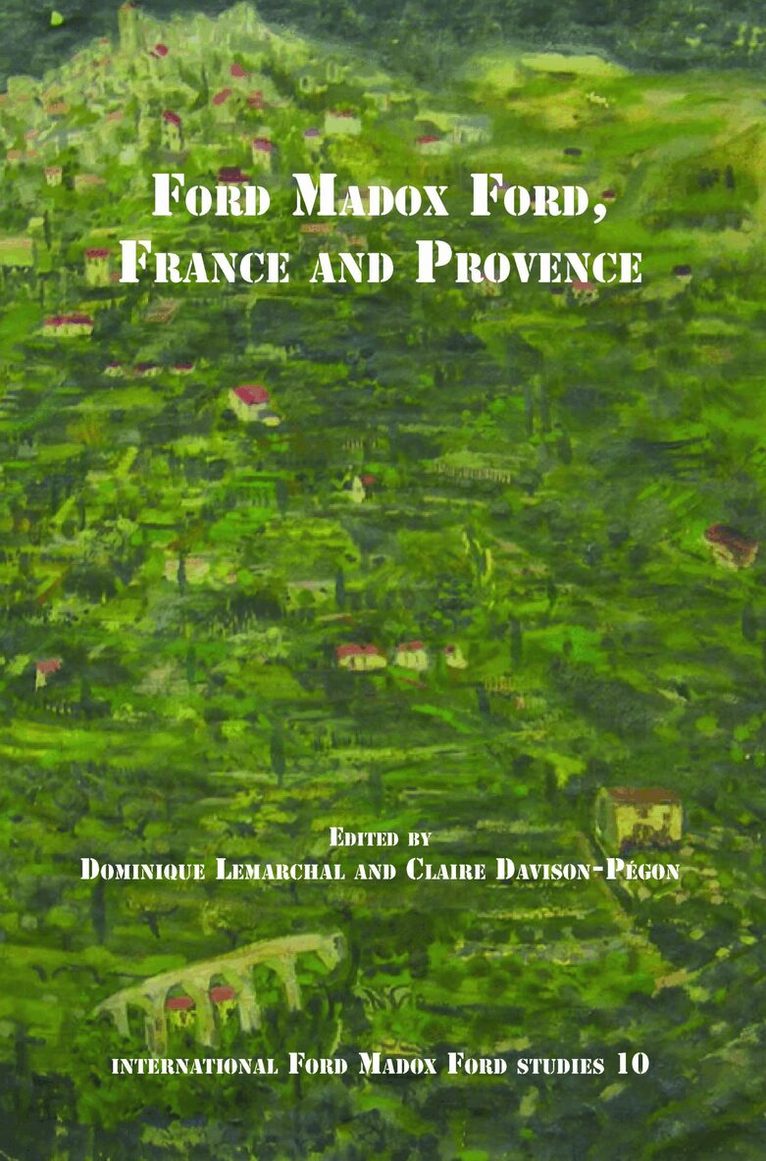
Del 10 - International Ford Madox Ford Studies
Ford Madox Ford, France and Provence
Häftad, Engelska, 2011
1 733 kr
Skickas inom 5-8 vardagar
The controversial British writer Ford Madox Ford (1873-1939) is increasingly recognized as a major presence in early twentieth-century literature. This series of International Ford Madox Ford Studies was founded to reflect the recent resurgence of interest in him. Each volume is based upon a particular theme or issue; and relates aspects of Ford’s work, life, and contacts, to broader concerns of his time. Ford is best-known for his fiction, especially The Good Soldier, long considered a modernist masterpiece; and Parade’s End, which Anthony Burgess described as ‘the finest novel about the First World War’; and Samuel Hynes has called ‘the greatest war novel ever written by an Englishman’. After the war Ford moved to France, beginning Parade’s End on the Riviera, founding the transatlantic review in Paris, taking on Hemingway as a sub-editor, discovering another generation of Modernists such as Jean Rhys and Basil Bunting, and publishing them alongside James Joyce and Gertrude Stein. From the late 1920s he spent more time in his beloved Provence, where he took a house with the painter Janice Biala. The present volume, combining contributions from eighteen British, French and American experts on Ford, and Modernism, has two connected sections. The first, on Ford’s engagement with France and French culture, is introduced by an essay by Ford himself, written in French, about France, and republished and also translated here for the first time; and includes an essay on literary Paris of the 1920s by the leading biographer Hermione Lee. The second, on Ford and Provence, is introduced in an essay by the novelist Julian Barnes, and includes a selection of previously unpublished letters from Janice Biala about her life with Ford in Provence. The volume also contains 16 pages of illustrations, including previously unseen photographs of Ford and Biala, and reproductions of Biala’s paintings and drawings of Provence.
1 672 kr
Skickas inom 5-8 vardagar
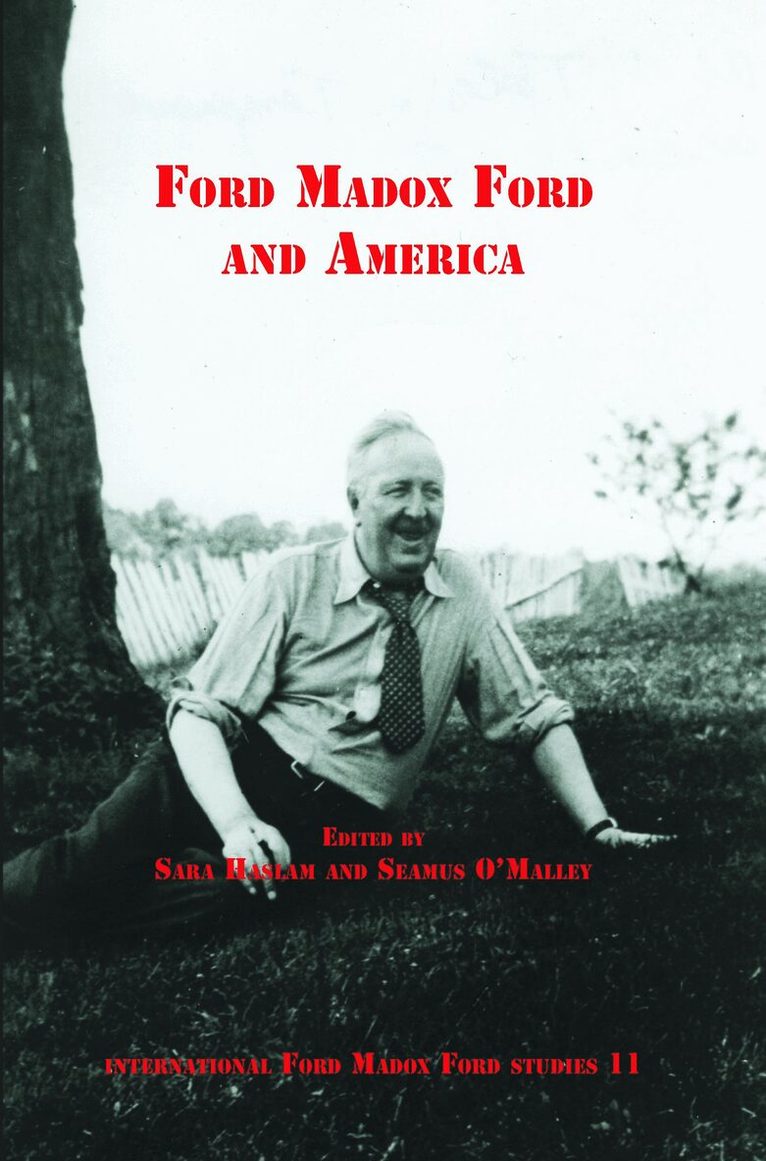
The controversial British writer Ford Madox Ford (1873-1939) is increasingly recognized as a major presence in early twentieth-century literature. This series of International Ford Madox Ford Studies was founded to reflect the recent resurgence of interest in him. Each volume is based upon a particular theme or issue; and relates aspects of Ford’s work, life, and contacts, to broader concerns of his time. Ford is best-known for his fiction, especially The Good Soldier, long considered a modernist masterpiece; and Parade’s End, which Anthony Burgess described as ‘the finest novel about the First World War’, Samuel Hynes has called ‘the greatest war novel ever written by an Englishman’, and which has been adapted by Tom Stoppard for the BBC and HBO.Ford’s America, like the other places he wrote about extensively such as England or France, is a place of the imagination as much as the real place in which he lived and travelled. This volume is the first extended treatment of Ford’s lifelong contacts with American literature and culture. It combines contributions from British and American experts on Ford and Modernism. It has five closely inter-connected sections which display, between them, the range of Ford’s creative relationships with American writers and American territory. The first explores the transatlantic dimension of Ford’s modernism, from his involvement with Americans like James and Pound in Britain before the war, through the Paris days among the Americans in the transatlantic review circle such as Hemingway and Stein, to his time in America in the 20s and 30s, and the American care for his reputation after his death. The second section focuses on New York, and the publishing world portrayed in Ford’s only novel set mainly in the US, When the Wicked Man. A third section, discussing culture, politics, and journalism in his writing of the 1930s, is followed by two examples of his commentary on contemporary American culture, both published here for the first time. The final section juxtaposes two examples of the many American writers who have paid tribute to Ford: an essay tracking Robert Lowell’s regular recollections of his encounters with him; and Mary Gordon’s celebration of his life with the Polish-American painter Janice Biala.The volume also contains fourteen illustrations, including artwork by Biala and photographs of Ford.