International Psychoanalytical Association Controversies in Psychoanalysis Series – Serie
Visar alla böcker i serien International Psychoanalytical Association Controversies in Psychoanalysis Series. Handla med fri frakt och snabb leverans.
12 produkter
12 produkter
2 036 kr
Skickas inom 10-15 vardagar
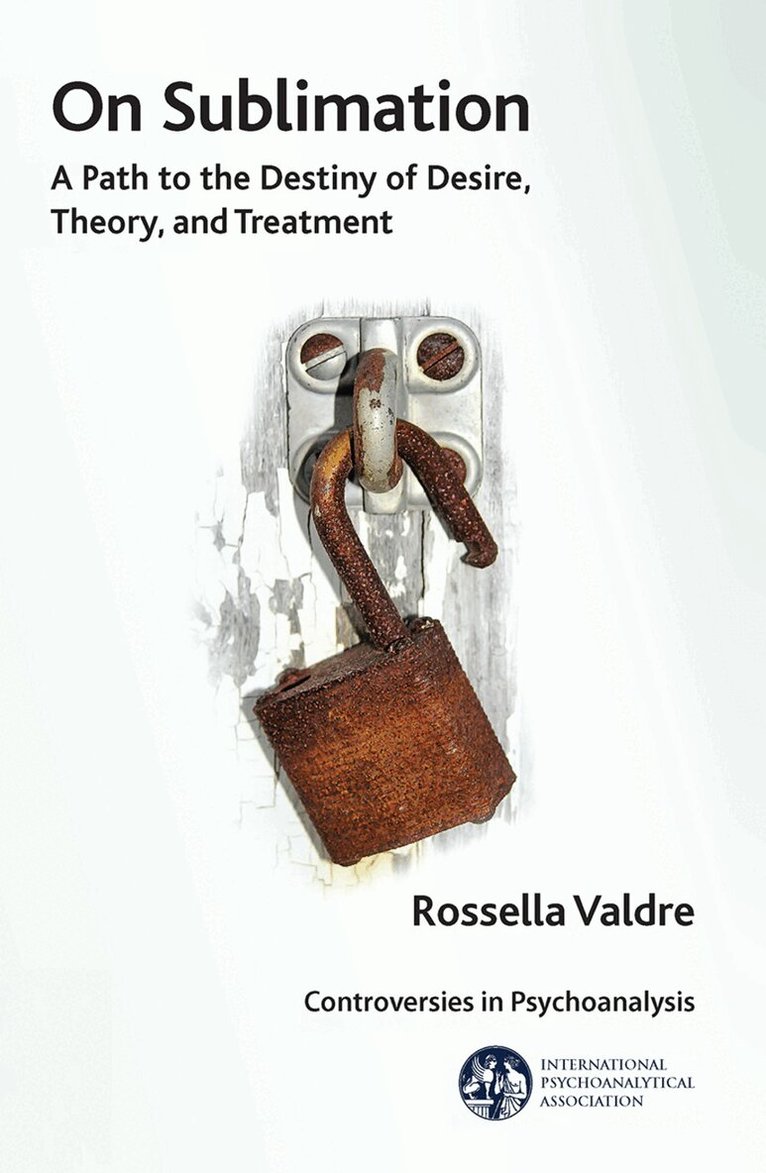
This book explores and revisits the concept of sublimation, in its various aspects and implications that it has in theory and clinical psychoanalysis, and also in its broader socio-cultural aspects. The basic assumption that aroused the author's interest in the topic is a certain surprise in observing how sublimation in psychoanalysis is in general spoken about less in contemporary discourse: so is it an outdated concept, an endangered species? Does it belong to the archaeology of psychotherapy? Or, on the contrary, is it so much a part of analytical practice and so well established and implicit in theory that it is not necessary to discuss it any more? It is the prevailing opinion of the author that sublimation is nowadays expressed differently and has undergone a sort of anthropological mutation, as has happened to several Freudian concepts with the changing historical and cultural contexts.
1 657 kr
Skickas inom 10-15 vardagar
While Freud opened the door on the formative and motivating power of sexuality, contemporary psychoanalysts, with some notable exceptions, have consigned sexuality to the psychoanalytic closet. This book not only re-opens the door on the broad subject of psychosexuality, but also provides fresh insights into heterosexuality, bisexuality, homosexuality, gender identity disorder, transvestism and transsexualism. This publication brings together some of the leading psychoanalytic authorities from around the globe to consider in depth the complex interweaving of identity, gender and sexuality from theoretical, clinical, historical and research perspectives. The author strongly recommends "Identity, Gender and Sexuality" to those looking for a book that does not pull punches. The reader will find a debate about the relative merits of clinical, empirical, and conceptual research, critical assessments of interdisciplinary findings from infant and child development research, embodied cognitive science, academic psychology, neurobiology, genetics, ethology, and other fields of inquiry, and honest and illuminating psychoanalytic case studies. - Donald Campbell
1 921 kr
Skickas inom 10-15 vardagar
In contemporary psychoanalysis, the concepts of time and history have become increasingly complex. It is evident that this trend offers us an opportunity to think about the intercrossing of the different temporal dimensions imbuing the subject, an inevitable aspect of the analytic process. History is time past but what is recovered is now the working through of the subject history, which carries the mark of both passing time and re-signifying time. It is precisely the notion of history that gains different dimensions when a purely deterministic analysis is disassembled. Continuities and breaks are found between subjective time and chronological time; between the inevitable decrepitude of the biological body with the passing of time and the timelessness of the unconscious; between linear, circular times and retroactive re-signification; between facts, screen memories, memory and the work of constructing history; between the times of repetition and the times of difference; between reversible and irreversible time; between the timelessness of the unconscious and the temporalities of the ego.
1 789 kr
Skickas inom 10-15 vardagar
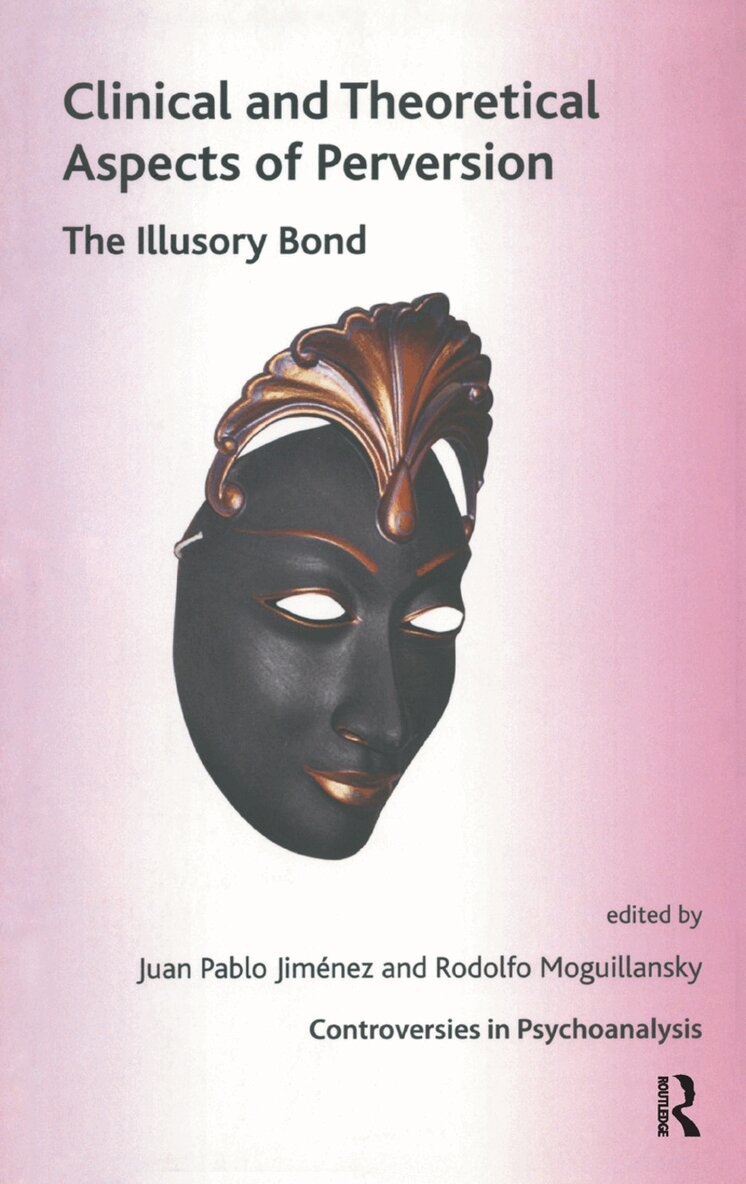
'Perversion is a challenge for theory and psychoanalytic practice that Juan Pablo Jimenez and Rodolfo Moguillansky, American psychoanalysts known for the originality of their contributions, have managed successfully. In this book they offer us vivid and detailed clinical material of patients of analysis who presented various kinds of perversions, w
1 789 kr
Skickas inom 10-15 vardagar
This book is an outcome of the European Conference on the theme of transsexualism held in Catania, Italy in 2006. It shows how psychoanalysis can reflect, discuss, dialogue and formulate useful insights on one of the most challenging situations that confront the mental health community.
What Do Our Terms Mean?
Explorations Using Psychoanalytic Theories and Concepts
Inbunden, Engelska, 2019
1 921 kr
Skickas inom 10-15 vardagar
This book focuses on theoretical and clinical progress in psychoanalysis through various thematic proposals developed by authors from diverse geographical areas, in order to open possibilities of generating a productive debate within the psychoanalytic world and related professional circles.
What Do Our Terms Mean?
Explorations Using Psychoanalytic Theories and Concepts
Häftad, Engelska, 2013
508 kr
Skickas inom 10-15 vardagar
Theoretical and clinical progress in psychoanalysis continues to develop new concepts and to reconsider old ones, often in contradiction with each other. By confronting and opening these debates, we might find points of convergence but also divergences that cannot be reconciled; the ensuing tension among these should be sustained in a pluralistic dialogue. What Do Our Terms Mean? is the latest book in the suuccessful International Psychonalytical Association series, 'Controversies in Psychoanalysis'.
455 kr
Skickas inom 10-15 vardagar
This book explores and revisits the concept of sublimation, in its various aspects and implications that it has in theory and clinical psychoanalysis, and also in its broader socio-cultural aspects. The basic assumption that aroused the author's interest in the topic is a certain surprise in observing how sublimation in psychoanalysis is in general spoken about less in contemporary discourse: so is it an outdated concept, an endangered species? Does it belong to the archaeology of psychotherapy? Or, on the contrary, is it so much a part of analytical practice and so well established and implicit in theory that it is not necessary to discuss it any more? It is the prevailing opinion of the author that sublimation is nowadays expressed differently and has undergone a sort of anthropological mutation, as has happened to several Freudian concepts with the changing historical and cultural contexts.The present book looks at sublimation from various angles: it takes you through the history of the concept, its birth with Freud and post-Freudian development; its implications and controversies in psychoanalytic theory and in the idea itself of psychoanalytic treatment; and its central role in creativity and art, exploring for example the "great" successful sublimations of Leonardo da Vinci and Emily Dickinson.At the heart of the book is contemporaneity and its contradictions: what is the place of sublimation in today's so-called 'postmodern' or hypermodern culture? The question, according to the author, is neither an idle one nor mere speculation: the existence of sublimation does not just coincide with the same psychoanalytic theory as Freud thought but also involves the destiny itself of contemporary man, his chances of survival and of living psychically, not squashed into consumerism, in the immediate satisfaction of his needs, or staying with the reassurance of gregariousness and the masses. The central thesis of this book is that sublimation and creativity, even in the most personal and minimal of forms, are essential to psychic life and to subjectivity. Despite this, as the book suggests in its conclusion, Freud himself thought that sublimation was never, due to its nature, complete: there will always be a 'scrap', a gap, something which is missing, as the human subject is pushed, throughout life, to the satisfaction of the drive.So today the contemporary cultural climate helps impoverish our capacity for sublimation because of the changed cultural scene, compared to the early 1900s, whilst the Freudian concept of sublimation is more than ever current and necessary. In the author's opinion, in both psychoanalytical theory and practice, this subject must be recaptured and reenergized, as a completely modern concept as well as being crucial to the very survival of psychoanalysis.
495 kr
Skickas inom 10-15 vardagar
'While Freud opened the door on the formative and motivating power of sexuality, contemporary psychoanalysts, with some notable exceptions, have consigned sexuality to the psychoanalytic closet. This book not only re-opens the door on the broad subject of psychosexuality, but also provides fresh insights into heterosexuality, bisexuality, homosexuality, gender identity disorder, transvestism and transsexualism. This publication brings together some of the leading psychoanalytic authorities from around the globe to consider in depth the complex interweaving of identity, gender and sexuality from theoretical, clinical, historical and research perspectives. I strongly recommend "Identity, Gender and Sexuality" to those looking for a book that does not pull punches. The reader will find a debate about the relative merits of clinical, empirical, and conceptual research, critical assessments of interdisciplinary findings from infant and child development research, embodied cognitive science, academic psychology, neurobiology, genetics, ethology, and other fields of inquiry, and honest and illuminating psychoanalytic case studies. - Donald Campbell
495 kr
Skickas inom 10-15 vardagar
'From time to time we listen to some curious views on psychoanalysis as an old fashioned and useless discipline, more important from an historical perspective than as a tool for understanding human life in its normal and pathological dimensions, as well as an effective therapeutic instrument. This book on transsexualism and transvestism shows exactly how psychoanalysis can reflect, discuss, dialogue and formulate useful insights on one of the most challenging situations that nowadays confront all members of the mental health community. Giovanna Ambrosio assembled this group of distinguished analytic thinkers, all of them with deep experience in the field of human sexuality, and asked them to contribute both to the attempt of understanding these relatively new forms of expression of human sexuality and what kind of interrelations psychoanalysis can offer. My own experience in the supervision of analytic psychotherapy with these patients shows me how simultaneously difficult and fascinating is the journey of each analyst or therapist who attempts to treat those patients. All the main areas are highlighted in this most useful and thoughtful book which I strongly recommend and which shows once again the extraordinary work carried out by the IPA's Committee on Women and Psychoanalysis.'- Claudio Eizirik, President International Psychoanalytical AssociationContributors: Jacqueline Amati-Mehler, Simona Argentieri, Colette Chiland, Domenico di Ceglie, Eulalia Torras de Bea, Estela V. Welldon
601 kr
Skickas inom 10-15 vardagar
In contemporary psychoanalysis, the concepts of time and history have become increasingly complex. It is evident that this trend offers us an opportunity to think about the intercrossing of the different temporal dimensions imbuing the subject, an inevitable aspect of the analytic process. History is time past but what is recovered is now the working through of the subject history, which carries the mark of both passing time and re-signifying time. It is precisely the notion of history that gains different dimensions when a purely deterministic analysis is disassembled.We find continuities and breaks between subjective time and chronological time; between the inevitable decrepitude of the biological body with the passing of time and the timelessness of the unconscious; between linear, circular times and retroactive re-signification; between facts, screen memories, memory and the work of constructing history; between the times of repetition and the times of difference; between reversible and irreversible time; between the timelessness of the unconscious and the temporalities of the ego. The time arrow points toward an irreversible time, with no return, but coexisting with circular times and the times of repetition.These plural, heterogeneous dimensions of time also enable us to think in terms of generating a prospective, future space of the time of becoming, of a desiring project or of anticipation, based on new versions of the past. In this context we are interested in underscoring the timespace relation in the psychoanalytic field (psychoanalytic space, space of the session). The papers collected in this book illustrate these concepts with all the theoretical variations characterizing state-of-the-art psychoanalysis.ContributorsIngeborg Bornholdt, Andre Green, Charles Hanly, Otto Kernberg, Jose E. Milmaniene, Michael Parsons, Rosine Perelberg, Janine Puget, Satish Reddy, Jean-Claude Rolland
508 kr
Skickas inom 10-15 vardagar
'Perversion is a challenge for theory and psychoanalytic practice that Juan Pablo Jimenez and Rodolfo Moguillansky, American psychoanalysts known for the originality of their contributions, have managed successfully. In this book they offer us vivid and detailed clinical material of patients of analysis who presented various kinds of perversions, which they accompany by a comprehensive and accurate review of major psychoanalytic contributions on the subject, and their own contributions to it.'The reader will find not only scholarship, but also he will find himself trapped in a thriller where the analyst is continually asked to leave his role as analyst to enter a game that fascinates and rejects. In a masterful way the authors describe their own internal vicissitudes in the treatment of these patients, the counter-transferential difficulties and how perversion becomes a source of inevitable collusions in the mind of the analyst. They take us to face, from an intersubjective perspective, dilemmas of interpretation, and to become aware of the situations in which the classic transferential interpretation, when it is not attuned to the psychic reality of the patient can retraumatize him and generate adverse events.'We also count, as in thrillers, on researchers who help us review the facts and the storyline. The chapters of the book are accompanied by discussions with relevant well-known figures of psychoanalysis, as P. Fonagy, C. Featherson, and R. Krause. The end result enriches the reader with this exchange of opinions, that is in agreement with the poliphonic character of current pluralistic psychoanalysis.'- Ricardo Bernardi, IJP Latin American Editor; IPA International Research Board Vice ChairContributors: Carlos R. Featherston, Peter Fonagy, Juan Pablo Jimenez, Rainer Krause, Rodolfo Moguillansky, Heitor Gunther Perdigao