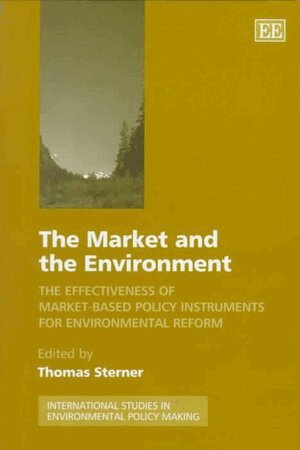
International Studies in Environmental Policy Making series - Böcker
Visar alla böcker i serien International Studies in Environmental Policy Making series. Handla med fri frakt och snabb leverans.
4 produkter
4 produkter
2 392 kr
Skickas inom 7-10 vardagar
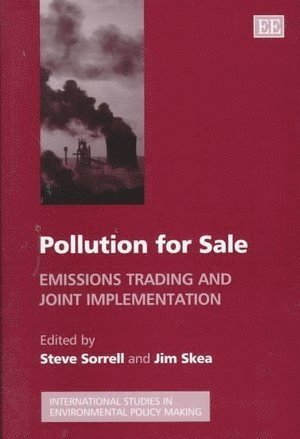
Emissions trading has become a central feature of global efforts to control climate change. Its inclusion in the Kyoto Protocol to the Framework Convention on Climate Change represents a victory for advocates of market-based instruments and builds upon twenty years of experience with trading schemes in the United States. However, the concept is controversial and attempts to introduce similar trading schemes in Europe have met with mixed results.This timely book provides a comprehensive overview of the theory and practice of emissions trading including the lessons learnt, the problems faced and the prospects for its extended use. It includes case studies of trading schemes in the US and Europe, and studies of international trading under the European acid rain regime. Problems of practical implementation, especially institutional feasibility and political acceptability, are given particular attention. The prospects for the international trading of greenhouse gases following the Kyoto Protocol are assessed, together with the potential conflict between emissions trading and established regulatory traditions.Pollution for Sale will be of great interest to policymakers, practitioners, researchers and students of environmental policy.
Market-based Instruments for Environmental Management
Politics and Institutions
Inbunden, Engelska, 2000
2 116 kr
Skickas inom 7-10 vardagar
Market-based instruments are becoming the environmental management tool of choice and have provided a new perspective on the conventional wisdom about policy instruments. This book analyses the complexities of designing and implementing market-based instruments using case study experiences from the Nordic countries, Japan, France, The Netherlands, Germany and Britain, where a range of green taxes have been introduced.The contributors examine the role of political processes in designing, introducing and implementing green taxes and charges and analyse the extent to which political concerns complicate the approach favoured by environmental economists. The authors then focus on the implementation of market-based instruments to achieve environmental objectives and offer an ex-post evaluation of different countries' experiences with economic instruments.This volume brings together contributions from political scientists and environmental economists and will prove invaluable for academics, practitioners and policymakers interested in the experiences of countries where market-based instruments are well established.
2 263 kr
Skickas inom 7-10 vardagar
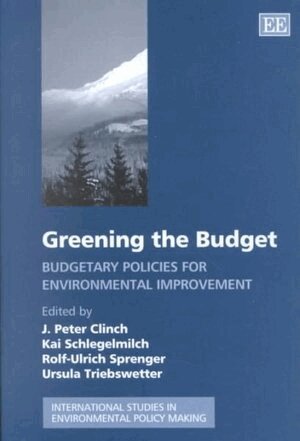
Greening the Budget regards the fundamental cause of environmental degradation as government and market failure and proposes the use of budgets as an instrument of environmental policy to rectify this problem. The book focuses on the elements of the public budget which currently affect the environment and explores the scope for greening both revenue and expenditure through specific measures. The authors begin by considering the effects of removing environmentally damaging subsidies and the potential for correcting market failure by way of appropriate pricing. They go on to examine the introduction of new taxes following the 'polluter pays' principle and, in contrast, the allocation of incentives for those who take the environmentally preferred course of action. They also explore the environmental and budgetary implications of European Union financial transfers by looking at a case study of the agricultural sector. The book concludes by addressing public purchasing and administration. This book will be of particular interest and value to scholars of environmental economics, researchers involved in environmental policy, and environmental consultants, practitioners and policymakers.
2 002 kr
Skickas inom 7-10 vardagar
Government policies to reduce environmental pollution and global warming are often criticized as damaging to the economy, particularly by reducing international competitiveness. This book addresses the issue by examining many of the policies concerned, and their effects on competitiveness. It demonstrates that well-designed, market-oriented environmental policies may be expected to improve both domestic and international competitiveness.The authors dismiss the fear that environmental policies will damage competitiveness by approaching the issue from four different perspectives: the economic analysis of competitiveness; a geo-economic approach to trade and foreign investment between Europe, NAFTA and Southeast Asia; studies of the effects of environmental policies on competitiveness; and the formal modelling of carbon taxation, international competitiveness and carbon leakage. The book also includes results from a global econometric model on the potential for carbon leakage, a detailed case study of German national policies, an examination of life cycle analysis and competitiveness, and an empirical study of green product development. This book will be of great interest to academics working in the field of environmental economics and researchers involved in environmental policy.