Intralogistik - Böcker
Visar alla böcker i serien Intralogistik. Handla med fri frakt och snabb leverans.
6 produkter
6 produkter
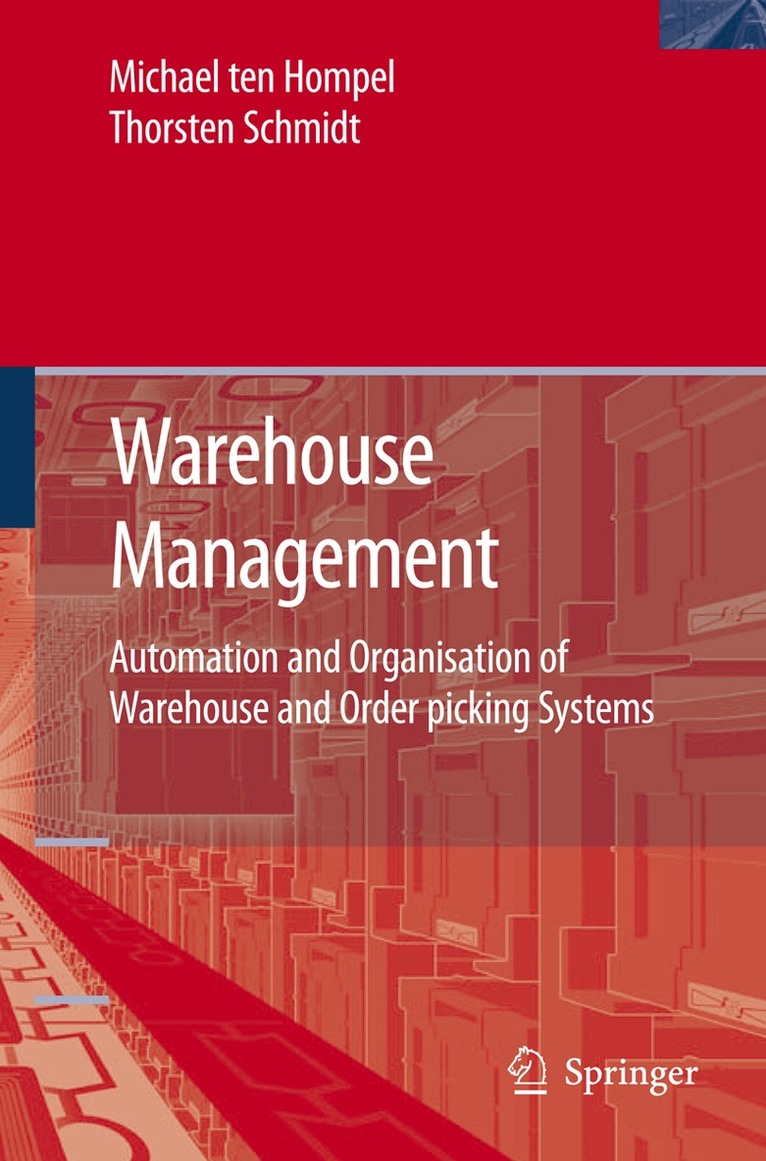
Warehouse Management
Automation and Organisation of Warehouse and Order Picking Systems
Inbunden, Engelska, 2006
1 577 kr
Skickas inom 10-15 vardagar
Modern warehouse and distribution systems constitute highly complex nodes within the value-added supply chain and have to meet a variety of requirements with regard to time, costs and quality. The efficient operation of such systems is a continuous challenge for anyone in charge. Recent developments of advanced computer-based control technologies have contributed to development of the necessary control and management systems called Warehouse Management Systems (WMS). Nevertheless, due to the high complexity, users often find it hard to handle WMS. The design, choice and operation of a WMS requires extensive know-how and experience because of the large variety of solutions and system requirements. This book gives an overview of possible solutions which help readers to make the right choice. It presents the background and potential, but also the risks and strategies to handle them. It sets the basis for comparisons for all those readers who are responsible for the evaluation and specification of warehouse management systems. Furthermore, it is meant as basic support for students and interested beginners. This book is based on practical knowledge without neglecting the basic context or assuming special technical knowledge. Some basic processes and technologies that are required for a better understanding are described in detail. System-developers will find some new ideas when problems and limits of current developments are discussed. New approaches with regard to the structure and design of WMS are presented. Readers can expect a simple and well-documented explantion of WMS based on the open-source initiative myWMS. The software can be operated on a common PC independent of the platform and without any obligatory user login data. Thus, the operation, function and benefits of a WMS can be visualized.
Warehouse Management
Automation and Organisation of Warehouse and Order Picking Systems
Häftad, Engelska, 2014
1 169 kr
Skickas inom 10-15 vardagar
Modern warehouse and distribution systems constitute highly complex nodes within the value-added supply chain and have to meet a variety of requirements with regard to time, costs and quality. The efficient operation of such systems is a continuous challenge for anyone in charge. Recent developments of advanced computer-based control technologies have contributed to development of the necessary control and management systems called Warehouse Management Systems (WMS). Nevertheless, due to the high complexity, users often find it hard to handle WMS. The design, choice and operation of a WMS requires extensive know-how and experience because of the large variety of solutions and system requirements. This book gives an overview of possible solutions which help readers to make the right choice. It presents the background and potential, but also the risks and strategies to handle them. It sets the basis for comparisons for all those readers who are responsible for the evaluation and specification of warehouse management systems. Furthermore, it is meant as basic support for students and interested beginners. This book is based on practical knowledge without neglecting the basic context or assuming special technical knowledge. Some basic processes and technologies that are required for a better understanding are described in detail. System-developers will find some new ideas when problems and limits of current developments are discussed. New approaches with regard to the structure and design of WMS are presented. Readers can expect a simple and well-documented explantion of WMS based on the open-source initiative myWMS. The software can be operated on a common PC independent of the platform and without any obligatory user login data. Thus, the operation, function and benefits of a WMS can be visualized.
333 kr
Skickas inom 10-15 vardagar
Dieses Lehrbuch bearbeitet in leicht verständlicher Art die Themen der Transport- und Lagerbereiche nach funktionellem Aufbau, Vor- und Nachteilen, sowie deren Einsatzgebieten. Besondere Berücksichtigung finden flexible Transportmittel, neue Lagersysteme und Automatisierungsmöglichkeiten bei der Kommissioniertechnik.Die Zielgruppen- Studierende des Maschinenbaus im Fach Fördertechnik sowie technischer Fachrichtungen- Studierende des Wirtschaftsingenieurwesens im Fach Logistik an Fachhochschulen und Universitäten- Produktions-, Planungs- und Wirtschaftsingenieure der Industrie und der Beratungsbranche, die sich mit der planerischen Seite dieses Fachgebiets beschäftigen
896 kr
Skickas inom 10-15 vardagar
Dieses Buch beschreibt bewährte, praxistaugliche Methoden zur Planung innerbetrieblicher Transportsysteme. Der Fokus liegt auf den wesentlichen Systemen und Förderfahrzeugen, die derzeit in der Industrie eingesetzt werden: Gabelstapler, fahrerlose Transportfahrzeuge, Routenzüge und Elektrohängebahnen. Neben einer Beschreibung relevanter Systemelemente und Gestaltungsmöglichkeiten liefert das Buch Empfehlungen zur Auswahl eines geeigneten Systems entsprechend der individuellen Anforderungen. Planungsschritte von der Erhebung von Plandaten bis zur Umsetzung werden vorgestellt. Methoden, die bei Planungsentscheidungen wie der Bestimmung der Anzahl benötigter Fahrzeuge helfen, sind detailliert beschrieben; ihre Anwendung wird anhand von Fallbeispielen demonstriert. Do's and Dont’s, basierend auf Erfahrungen von Praktikern und Wissenschaftlern, tragen dazu bei, Planungsfehler zu vermeiden.Das Buch wendet sich an Planer und Betreiber derartiger Systeme, Studierende einschlägiger Studienfächer bekommen einen vertieften Einblick in die Umsetzung der Methoden.
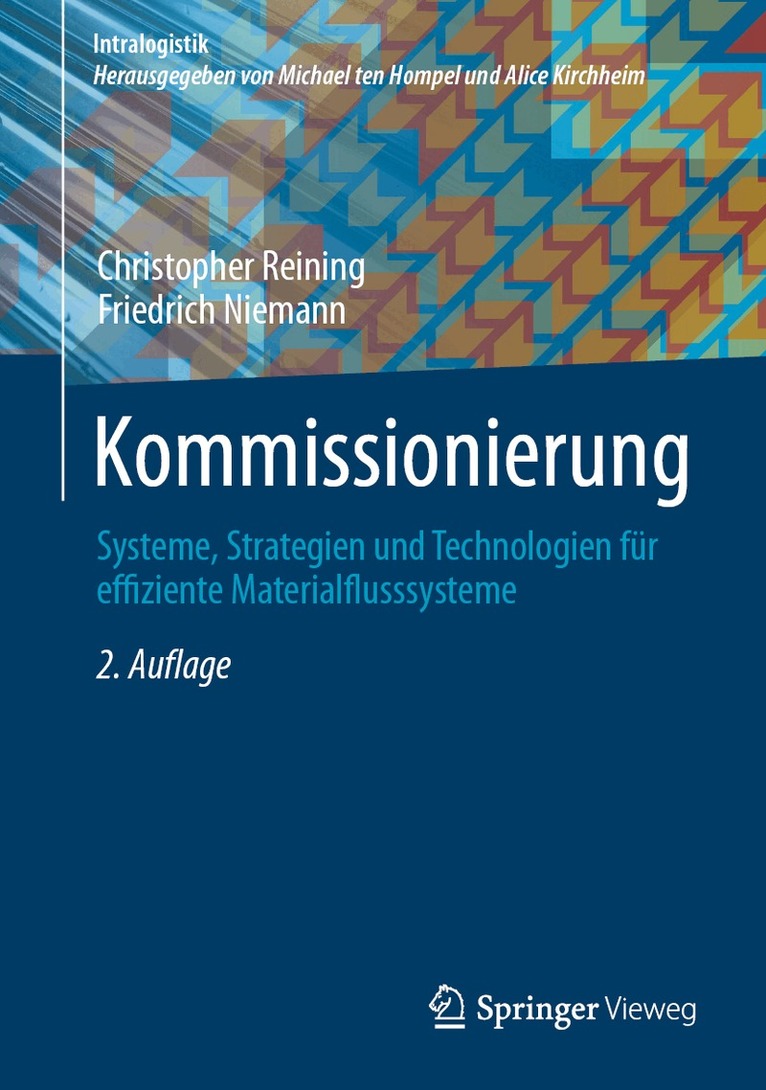
Kommissionierung
Systeme, Strategien und Technologien für effiziente Materialflusssysteme
Inbunden, Tyska, 2026
1 396 kr
Kommande
Die Kommissionierung ist ein zentrales Element innerbetrieblicher Materialflusssysteme. Sie bildet innerhalb eines Unternehmens die Schnittstelle zum Kunden (Distribution) oder stellt für nachfolgende Produktionsvorgänge die Bauteile oder Komponenten bedarfsgerecht bereit (Produktionsversorgung). Für die Gestaltung von Kommissioniersystemen existieren zahlreiche Möglichkeiten, die bei der Planung berücksichtigt werden müssen. Herausragende Aspekte für die Auslegung eines Systems sind dabei die Reaktionszeit und die Kosten. Insbesondere dem Kostenaspekt fällt heutzutage eine große Bedeutung zu, da die Kommissionierung immer noch von einem großen Anteil manueller Vorgänge geprägt ist. Das Buch berücksichtigt vorhandene Theorien und Richtlinien zu diesem Thema, erweitert diese jedoch mit neuen Erkenntnissen in Bezug auf die Strukturierung, Bezeichnungen und Berechnungen von Kommissioniersystemen und liefert somit einen umfassenden Einblick. Dabei richtet sich das Buch an Studierende und Lehrende, die ein grundlegendes Wissen in logistischen Fragestellungen mitbringen. Es unterstützt den Leser mit zahlreichen Abbildungen und strukturierten Übersichten, die das Einarbeiten in die Materie vereinfachen. Verschiedene Beispiele runden den Umfang des Buches ab und ermöglichen es dem Leser, das erlernte Wissen anhand dieser praxisrelevanten Fallbeschreibungen zu reflektieren.
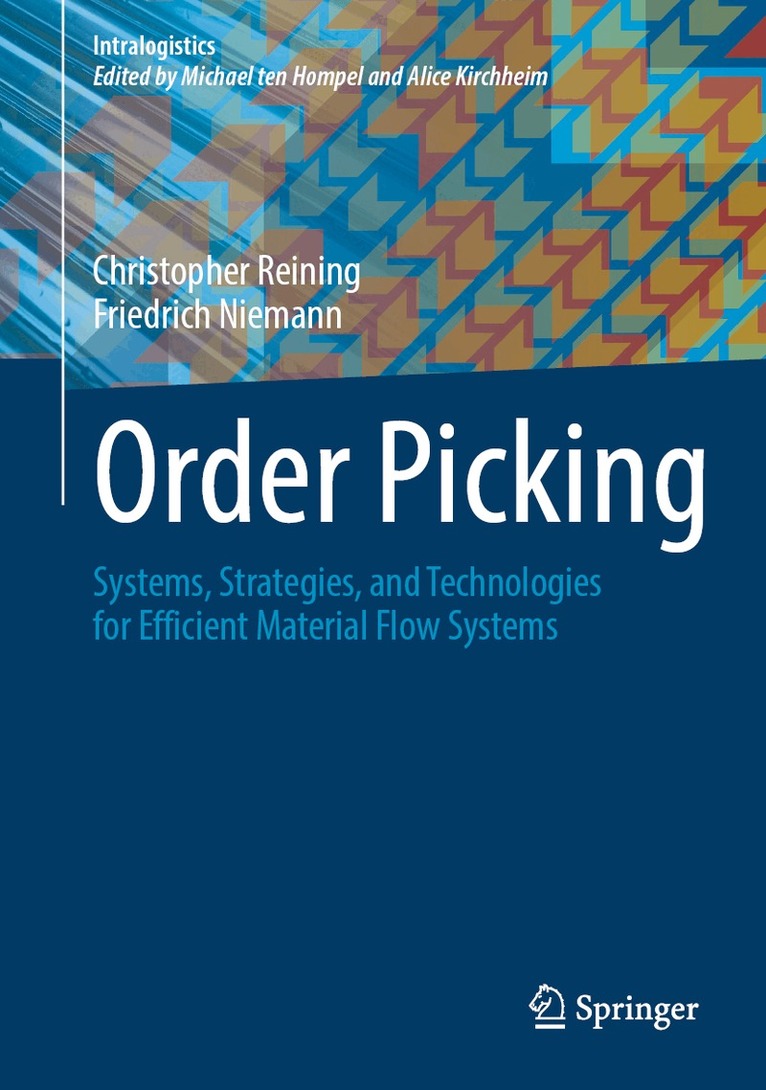
Order Picking
Systems, Strategies, and Technologies for Efficient Material Flow Systems
Inbunden, Engelska, 2026
2 712 kr
Kommande
Commissioning is a central element of internal material flow systems. Within a company, it forms the interface to the customer (distribution) or provides the parts or components as required for subsequent production processes (production supply). There are numerous options for the design of order picking systems, which must be taken into account during planning. Outstanding aspects for the design of a system are the reaction time and the costs. The cost aspect in particular is of great importance nowadays, as order picking is still characterised by a large proportion of manual processes.The book takes into account existing theories and guidelines on this topic, but expands on them with new insights into the structuring, labelling and calculations of order picking systems, thus providing a comprehensive insight. The book is aimed at students and teachers who have a basic knowledge of logistics issues. It supports the reader with numerous illustrations and structured overviews that simplify familiarisation with the subject matter. Various examples round off the scope of the book and enable the reader to reflect on the knowledge learnt using these practical case descriptions.