Introducing... – serie
Visar alla böcker i serien Introducing.... Handla med fri frakt och snabb leverans.
23 produkter
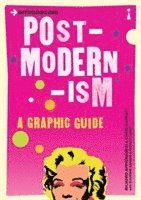
Introducing Postmodernism
A Graphic Guide
Av Chris Garratt, Richard Appignanesi
Häftad, 2007
110 kr
Lägg i varukorg
What connects Marliyn Monroe, Disneyworld, "The Satanic Verses" and cyber space? Answer: Postmodernism. But what exactly is postmodernism?This Graphic Guide explains clearly the maddeningly enigmatic concept that has been used to define the world's cultural condition over the last three …
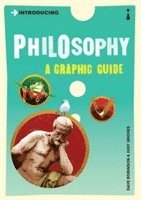
Introducing Philosophy
A Graphic Guide
Häftad, 2007
110 kr
Lägg i varukorg
Philosophers have always enjoyed asking awkward and provocative questions, such as:What is the nature of reality?What are human beings really like?What is special about the human mind and consciousness?Are we free to choose who we are and what we do?Can we prove that God exists?Can we be certain …
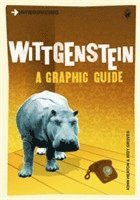
Introducing Wittgenstein
A Graphic Guide
Av John Heaton
Häftad, 2009
4,0 utav 5 stjärnor. Totalt antal röster: (1)
110 kr
Lägg i varukorg
This is a superlative graphic guide described as 'warm, witty and wise' by Jonathan Ree to an enigmatic master of twentieth-century philosophy.
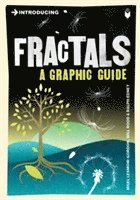
Introducing Fractals
A Graphic Guide
Av Nigel Lesmoir-Gordon, Will Rood
Häftad, 2009
110 kr
Lägg i varukorg
Fractals are the geometry of the natural world. They're about the broken, wrinkled, wiggly world- the uneven shapes of nature, unlike the idealised forms of Euclidean geometry. We see fractals everywhere; indeed, we are fractals ourselves.Fractal geometry is an extension of classical geometry which …
Introducing Relativity
A Graphic Guide
Häftad, 2009
110 kr
Lägg i varukorg
A superlative, fascinating graphic account of Albert Einstein's strange world and how his legacy has been built upon since.It is now more than a century since Einstein's theories of Special and General Relativity began to revolutionise our view of the universe. Beginning near the speed of light and …
Introducing Psychology
A Graphic Guide
Av Nigel Benson
Häftad, 2007
94 kr
Lägg i varukorg
What is psychology? When did it begin? Where did it come from? How does psychology compare with related subjects such as psychiatry and psychotherapy? To what extent is it scientific?Introducing Psychology answers all these questions and more, explaining what the subject has been in the past and …
Introducing Quantum Theory
A Graphic Guide
Häftad, 2007
108 kr
Lägg i varukorg
Quantum theory confronts us with bizarre paradoxes which contradict the logic of classical physics.At the subatomic level, one particle seems to know what the others are doing, and according to Heisenberg's "uncertainty principle", there is a limit on how accurately nature can be observed. And yet …
Introducing Freud
A Graphic Guide
Av Oscar Zarate, Richard Appignanesi
Häftad, 2007
113 kr
Lägg i varukorg
Freud revolutionized the way we think about ourselves. His psychoanalytic terms such as Id, Ego, libido, neurosis and Oedipus Complex have become a part of our everyday vocabulary.But do we know what they really mean?Introducing Freud successfully demystifies the facts of Freud's discovery of …
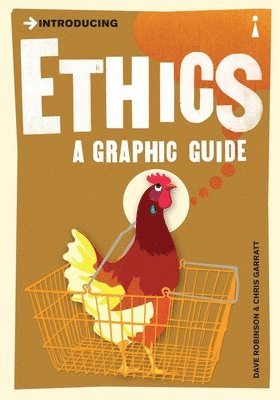
Introducing Ethics
A Graphic Guide
Av Chris Garratt, Dave Robinson
Häftad, 2008
110 kr
Lägg i varukorg
What is the place of individual choice and consequence in a post-Holocaust world of continuing genocidal ethnic cleansing? Is "identity" now a last-ditch cultural defence of ethnic nationalisms and competing fundamentalisms? In a climate of instant information, free markets and possible ecological …
Introducing Nietzsche
A Graphic Guide
Av Laurence Gane, Piero Pierini
Häftad, 2008
4,0 utav 5 stjärnor. Totalt antal röster: (1)
108 kr
Lägg i varukorg
Why must we believe that God is dead? Can we accept that traditional morality is just a 'useful mistake'? Did the principle of 'the will to power' lead to the Holocaust? What are the limitations of scientific knowledge? Is human evolution complete or only beginning? It is difficult to overestimate …
Introducing Buddha
A Graphic Guide
Häftad, 2008
2,0 utav 5 stjärnor. Totalt antal röster: (1)
110 kr
Lägg i varukorg
Meditation, Karma, Zen, Tantric and Nirvana are some of the many Buddhist ideas Westerners hear of frequently, even if their meaning has been lost in translation. This vast and complex non-theistic religion is woven into the fabric of Asian civilisations. from India to the Himalayan regions, China, …
Introducing Logic
A Graphic Guide
Av Bill Mayblin, Dan Cryan m. fl.
Häftad, 2008
110 kr
Lägg i varukorg
Logic is the backbone of Western civilization, holding together its systems of philosophy, science and law. Yet despite logic's widely acknowledged importance, it remains an unbroken seal for many, due to its heavy use of jargon and mathematical symbolism.This book follows the historical …
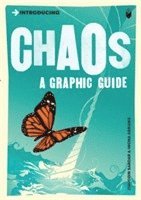
Introducing Chaos
A Graphic Guide
Av Ziauddin Sardar, Iwona Abrams
Häftad, 2008
108 kr
Lägg i varukorg
If a butterfly flaps its wings in Brazil, does it cause a tornado in Texas?Chaos theory attempts to answer such baffling questions. The discovery of randomness in apparently predictable physical systems has evolved into a science that declares the universe to be far more unpredictable than we have …
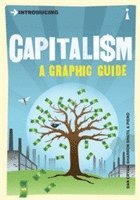
Introducing Capitalism
A Graphic Guide
Häftad, 2009
110 kr
Lägg i varukorg
Capitalism now dominates the globe, both in economics and ideology, shapes every aspect of our world and influences everything from laws, wars and government to interpersonal relationships. Introducing Capitalism tells the story of its remarkable and often ruthless rise, evolving through strife and …
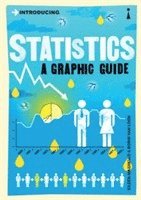
Introducing Statistics
A Graphic Guide
Häftad, 2009
106 kr
Lägg i varukorg
From the medicine we take, the treatments we receive, the aptitude and psychometric tests given by employers, the cars we drive, the clothes we wear to even the beer we drink, statistics have given shape to the world we inhabit. For the media, statistics are routinely 'damning', 'horrifying', or, …
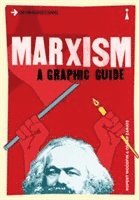
Introducing Marxism
A Graphic Guide
Häftad, 2009
108 kr
Lägg i varukorg
Was Marx himself a 'Marxist'? Was his visionary promise of socialism betrayed by Marxist dictatorship? Is Marxism inevitably totalitarian? What did Marx really say? "Introducing Marxism" provides a fundamental account of Karl Marx's original philosophy, its roots in 19th century European ideology, …
Introducing Critical Theory
A Graphic Guide
Av Stuart Sim
Häftad, 2009
110 kr
Lägg i varukorg
What might a 'theory of everything' look like? Is science an ideology? Who were Adorno, Horkheimer or the Frankfurt School? The decades since the 1960s have seen an explosion in the production of critical theories. Deconstructionists, poststructuralists, postmodernists, second-wave feminists, new …
Introducing Foucault
A Graphic Guide
Häftad, 2009
110 kr
Lägg i varukorg
Michel Foucault's work was described at his death as 'the most important event of thought in our century'. As a philosopher, historian and political activist, he certainly left behind an enduring and influential body of work, but is this acclaim justified? "Introducing Foucault" places his work in …
Introducing Keynes
A Graphic Guide
Av Peter Pugh
Häftad, 2009
113 kr
Lägg i varukorg
As we find ourselves at the cusp of an economic downturn, there has been a clear reinvigoration of Keynesian economics as governments are attempting to stimulate the market through public funds. Forming his economic theories in the wake of the Great Depression, John Maynard Keynes argued that a …
Introducing Islam
A Graphic Guide
Häftad, 2009
110 kr
Lägg i varukorg
Islam is one of the world's great monotheistic religions. Islamic culture, spanning 1,500 years, has produced some of the finest achievements of humanity. Yet the religion followed by a fifth of humankind is too often seen in the West in terms of fundamentalism, bigotry and violence- a perception …
Introducing Linguistics
A Graphic Guide
Av R. L. Trask
Häftad, 2009
113 kr
Lägg i varukorg
Covering thinkers from Aristotle to Saussure and Chomsky, "Introducing Linguistics" reveals the rules and beauty that underlie language, our most human skill.
Introducing Stephen Hawking
A Graphic Guide
Av J.P. McEvoy
Häftad, 2009
110 kr
Lägg i varukorg
'An ideal introduction [to Stephen Hawking]' - Independent'Astonishingly comprehensive - clearer than Hawking himself' - FocusStephen Hawking was a world-famous physicist with a cameo in The Simpsons on his CV, but outside of his academic field his work was little understood. To the public he was a …