Issues in Heritage Management - Böcker
Visar alla böcker i serien Issues in Heritage Management. Handla med fri frakt och snabb leverans.
8 produkter
8 produkter
2 243 kr
Skickas inom 10-15 vardagar
First published in 1999. The Issues in Heritage Management series is a joint venture between Routledge and English Heritage. It provides accessible, thought-provoking books on issues central to heritage management. Each book within the series is designed to provide a topical introduction to a key issue in heritage management for students in higher education and for heritage professionals. Rapid changes are taking place in countryside management today, making their impact on the historic landscape. In an accessible format, this volume examines the questions and conflicts that arise in Managing the Historic Rural Landscape. It is essential reading for students and professionals concerned with countryside management, in particular those involved with cultural landscapes and students of planning.
613 kr
Skickas inom 10-15 vardagar
First published in 1999. The Issues in Heritage Management series is a joint venture between Routledge and English Heritage. It provides accessible, thought-provoking books on issues central to heritage management. Each book within the series is designed to provide a topical introduction to a key issue in heritage management for students in higher education and for heritage professionals. Rapid changes are taking place in countryside management today, making their impact on the historic landscape. In an accessible format, this volume examines the questions and conflicts that arise in Managing the Historic Rural Landscape. It is essential reading for students and professionals concerned with countryside management, in particular those involved with cultural landscapes and students of planning.
Managing Historic Sites and Buildings
Reconciling Presentation and Preservation
Inbunden, Engelska, 1999
2 113 kr
Skickas inom 10-15 vardagar
Managing Historic Sites and Buildings looks at the choices and the tensions that exist in conservation and interpretation of the heritage. Preservation and presentation are central activities, arguably means and ends in the conservation of the historic environment. But are they self-reinforcing or do they work against each other? In a series of essays which span form prehistoric sacred site to Second World war military remains, from medieval monastery to 1970s housing estate, we look at contemporary concerns and debates about the way the past is shaped, physically and metaphorically , by these two aspects of heritage management.Starting from the position that the fundamental purpose of the whole process is to communicate understanding about the human past, these essays examine how far the ideologies, strategies, tactics and techniques of preservation and presentation are mutually supportive. the success of integrated approaches that are inclusive of social, economic and green environmental concerns is understood, but the value of developing truly sustainable management for individual historic places is only just becoming evident. At the heart of such an approach lies a crucial relationship between the activity of preserving historic places and of promoting understanding of their significance.
Managing Historic Sites and Buildings
Reconciling Presentation and Preservation
Häftad, Engelska, 1999
578 kr
Skickas inom 10-15 vardagar
Managing Historic Sites and Buildings looks at the choices and the tensions that exist in conservation and interpretation of the heritage. Preservation and presentation are central activities, arguably means and ends in the conservation of the historic environment. But are they self-reinforcing or do they work against each other? In a series of essays which span form prehistoric sacred site to Second World war military remains, from medieval monastery to 1970s housing estate, we look at contemporary concerns and debates about the way the past is shaped, physically and metaphorically , by these two aspects of heritage management.Starting from the position that the fundamental purpose of the whole process is to communicate understanding about the human past, these essays examine how far the ideologies, strategies, tactics and techniques of preservation and presentation are mutually supportive. the success of integrated approaches that are inclusive of social, economic and green environmental concerns is understood, but the value of developing truly sustainable management for individual historic places is only just becoming evident. At the heart of such an approach lies a crucial relationship between the activity of preserving historic places and of promoting understanding of their significance.
2 176 kr
Skickas inom 10-15 vardagar
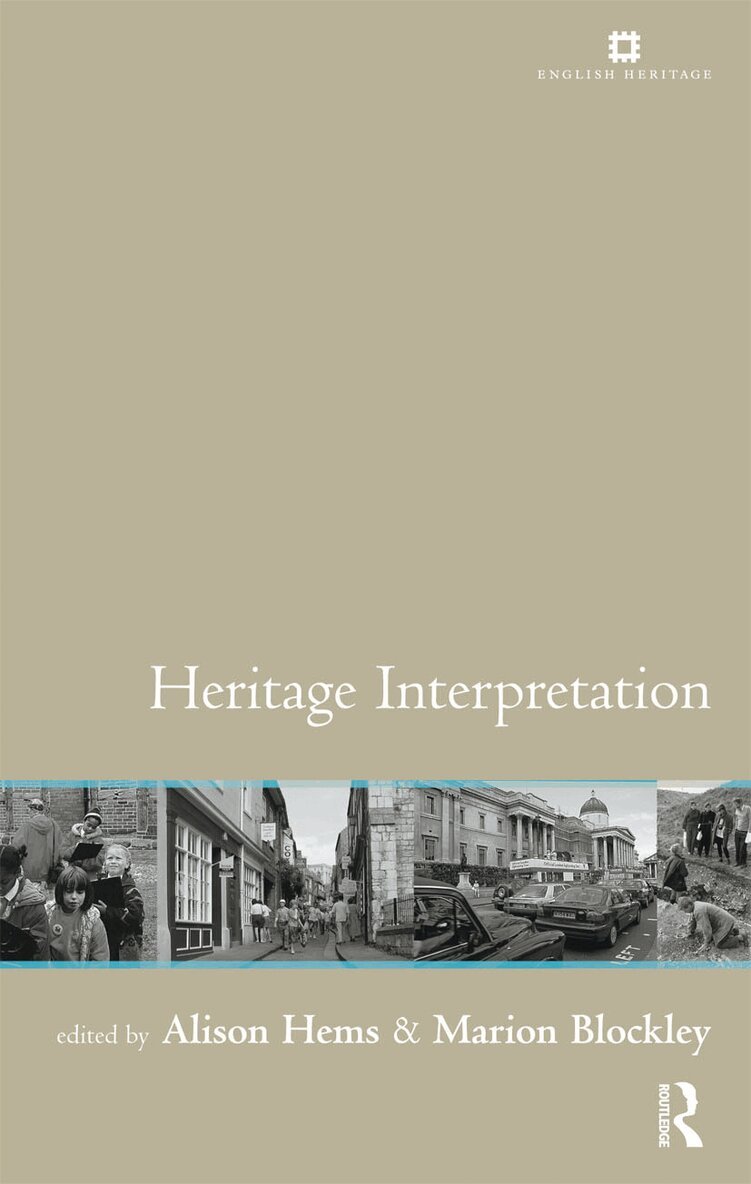
An essential guide to present practice and policy concerning issues in heritage management, Heritage Interpretation draws on the accumulated expertise and international reputation for excellence of the UK heritage industry to describe and analyze best practice in heritage interpretation.The contributors, all responsible for developing best practices, come from a range of heritage organizations including English Heritage, The National Trust, Historic Scotland, CADW and National Parks. They draw on examples from throughout the UK, from public art and twentieth-century military remains, to cathedrals and urban heritage, and discuss the range of interpretive options available and how they can be appropriately tailored to specific places and audiences.Providing practical guidance on interpretive techniques, the book provides insights into the philosophies and thinking that underpins their adoption in particular contexts.This clear and easy guide is an valuable addition to the reading list of any student of history or heritage studies.
595 kr
Skickas inom 10-15 vardagar
An essential guide to present practice and policy concerning issues in heritage management, Heritage Interpretation draws on the accumulated expertise and international reputation for excellence of the UK heritage industry to describe and analyze best practice in heritage interpretation.The contributors, all responsible for developing best practices, come from a range of heritage organizations including English Heritage, The National Trust, Historic Scotland, CADW and National Parks. They draw on examples from throughout the UK, from public art and twentieth-century military remains, to cathedrals and urban heritage, and discuss the range of interpretive options available and how they can be appropriately tailored to specific places and audiences.Providing practical guidance on interpretive techniques, the book provides insights into the philosophies and thinking that underpins their adoption in particular contexts.This clear and easy guide is an valuable addition to the reading list of any student of history or heritage studies.
2 053 kr
Skickas inom 10-15 vardagar
Practical, inspiring and instructive, Education and the Historic Environment emphasizes the contribution to both education and heritage that results from a positive relationship between the two disciplines. Education and the Historic Environment examines evidence, case studies and chapters from a wide cross section of the heritage sector and:argues for the value of using the physical remains of the pastshows how and where the historic environment can be used to fit into and enhance learningexamines how guidelines are reinforcedlooks at how physical heritage can not only be used to teach obvious subjects such as history, but are also useful across the curriculum, from literacy and numeracy to citizenship.Teachers at all levels, and students, academics and professionals in archaeology and heritage management, will all be able to use the case studies to reform and enhance their work.
614 kr
Skickas inom 10-15 vardagar
Practical, inspiring and instructive, Education and the Historic Environment emphasizes the contribution to both education and heritage that results from a positive relationship between the two disciplines. Education and the Historic Environment examines evidence, case studies and chapters from a wide cross section of the heritage sector and:argues for the value of using the physical remains of the pastshows how and where the historic environment can be used to fit into and enhance learningexamines how guidelines are reinforcedlooks at how physical heritage can not only be used to teach obvious subjects such as history, but are also useful across the curriculum, from literacy and numeracy to citizenship.Teachers at all levels, and students, academics and professionals in archaeology and heritage management, will all be able to use the case studies to reform and enhance their work.