Justice and Peacebuilding – serie
Visar alla böcker i serien Justice and Peacebuilding. Handla med fri frakt och snabb leverans.
11 produkter
11 produkter
Häftad, Engelska, 2003
129 kr
Skickas inom 3-6 vardagar
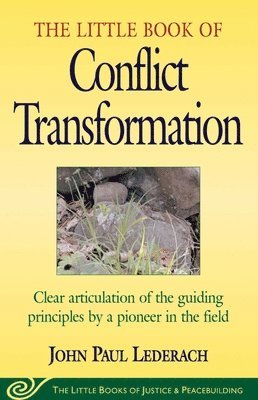
A guide to conflict resolution, or as the author prefers, “conflict transformation” that emphasizes the importance of building relationships and social structures through a radical respect for human rights and life.This clearly articulated statement offers a hopeful and workable approach to conflict—that eternally beleaguering human situation. John Paul Lederach is internationally recognized for his breakthrough thinking and action related to conflict on all levels—person-to-person, factions within communities, warring nations. He explores why "conflict transformation" is more appropriate than "conflict resolution" or "management." But he refuses to be drawn into impractical idealism. Topics include:Defining Conflict TransformationConflict and ChangeConnecting Resolution and TransformationCreating a Map of ConflictDeveloping Our CapacitiesAnd much more!Firmly rooted in faith and Mennonite teachings, and related to the popular concept of restorative justice, conflict transformation is an idea with a deep reach. Its practice, says Lederach, requires "both solutions and social change." It asks not simply "How do we end something not desired?" but "How do we end something destructive and build something desired?" How do we deal with the immediate crisis, as well as the long-term situation? What disciplines make such thinking and practices possible?This title is part of The Little Books of Justice and Peacebuilding series.
Häftad, Engelska, 2005
129 kr
Skickas inom 3-6 vardagar
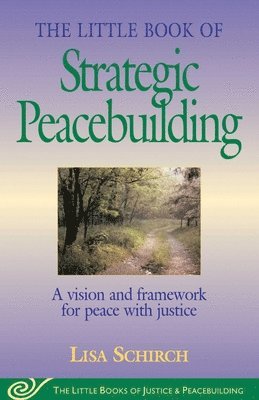
So we'd all like a more peaceful world—no wars, no poverty, no more racism, no community disputes, no office tensions, no marital skirmishes. Lisa Schirch sets forth paths to such realities. In fact, she points a way to more than the absence of conflict.She foresees just peace—a sustainable state of affairs because it is a peace which insists on justice. Chapters include:Defining Strategic PeacebuildingValues for PeacebuildingAn Overview of Peacebuilding ProcessesWaging Conflict NonviolentlyReducing Direct ViolenceTransforming RelationshipsAnd more!Schirch singles out four critical actions that must be undertaken if peace is to take root at any level): ) waging conflict nonviolently, reducing direct violence, transforming relationships; and building capacity. From Schirch's 15 years of experience as a peacebuilding consultant in Africa, Asia, and Latin America.“This Little Book is an attempt to bring together the various fields and activities related to peacebuilding to integrate them into one conceptual framework. At the core of this framework is the idea of strategic peacebuilding, an interdisciplinary, coordinated approach to building a sustainable justpeace—a peace with justice. Strategic peacebuilding requires clear goals. While the concept of justpeace is growing in popularity, few writings lay out the vision and practice of justpeace. One aim of this book is to promote the concept of justpeace as an overall goal or vision for peacebuilding.A title in The Little Books of Justice and Peacebuilding Series.
Häftad, Engelska, 2015
146 kr
Skickas inom 3-6 vardagar
How can teachers and administrators better deal with discipline, punishment, bullying, truancy, and other issues? Can community-building begin in a classroom?The authors of this book believe that by applying restorative justice at school, we can build a healthier and more just society. With practical applications and models.Can an overworked teacher possibly turn an unruly incident with students into an "opportunity for learning, growth, and community-building"? If restorative justice has been able to salvage lives within the world of criminal behavior, why shouldn't its principles be applied in school classrooms and cafeterias? And if our children learn restorative practices early and daily, won't we be building a healthier, more just society? Topics include:Why restorative justiceThe role of discipline and punishmentCharacteristics of peaceable schoolsFlexible policiesWhole school training approachesClass meetingsTruancy mediationBullyingAnd more!Two educators answer yes, yes, and yes in this new addition to The Little Books of Justice and Peacebuilding series. Amstutz and Mullet offer applications and models. "Discipline that restores is a process to make things as right as possible." This Little Book shows how to get there.
Häftad, Engelska, 2006
138 kr
Skickas inom 3-6 vardagar
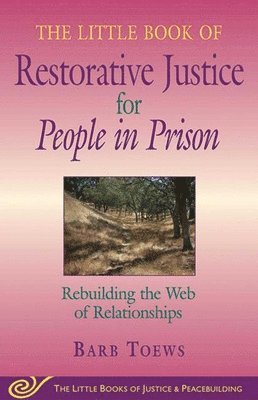
Over 170,000 copies sold! Restorative justice argues that crime destroys people and relationships. Justice, then, must repair and rebuild people and relationships. This is true for men and women that are incarcerated as it is for victims.The more than 2.3 million incarcerated individuals in the United States are often regarded as a throw-away population. While the criminal-justice system focuses on giving offenders "what they deserve," it does little to restore the needs created by crime or to explore the factors that lead to it. Restorative justice, with its emphasis on identifying the justice needs of everyone involved in a crime, is helping to restore prisoners' sense of humanity while holding them accountable for their actions.In this book, Barb Toews, with years of experience in prison work, shows how people in prison can live restorative-justice principles. She shows how these practices can change prison culture and society. Chapters include;Crime and Criminal JusticeRestorative JusticeReconnecting CommunityReconnecting IndividualsReconnecting Victims and Their Communities of CareReconnecting OffendersReconnecting Offenders’ FamiliesRestorative-Justice PracticesRestorative Practices, Justice, and PrisonRestorative Living in PrisonWritten for readers who are incarcerated, and for all those who work with people in prison, this book also clearly outlines the experiences and needs of this under-represented and often overlooked part of our society.
Häftad, Engelska, 2007
138 kr
Skickas inom 3-6 vardagar
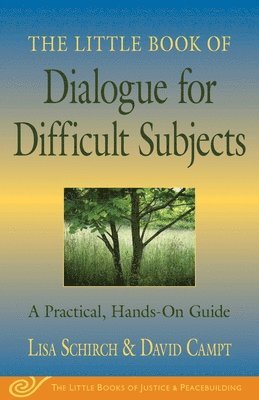
Here is a process for talking about tension-filled topics. Useful for families, small groups, businesses, and private and governmental organizations, now, more than ever, because we are divided by political party, race, religion, and region, dialogue is an essential tool.The word "dialogue" suffers from over-use, yet its practice is as transforming and as freshly hopeful as ever. Authors Schirch and Campt demonstrate dialogue's life and possibilities in this clear and absorbing manual: "Dialogue allows people in conflict to listen to each other, affirm their common ground, and explore their differences in a safe environment." Chapters include: Defending Dialogue, Organizing a Dialogue Process, Moving from Dialogue to Action, Assessing Dialogue Effectiveness and more.Schirch has worked throughout the Southern hemisphere in peacebuilding projects. Campt has focused on racial and class reconciliation in American cities.Part of the Little Book of Justice and Peacebuilding Series.
Häftad, Engelska, 2015
118 kr
Skickas inom 11-20 vardagar
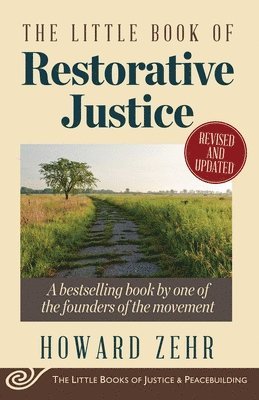
Over 150,000-copies sold! Author Howard Zehr is the father of Restorative Justice and is known worldwide for his pioneering work in transforming our understanding of justice.Here Zehr proposes workable principles and practices for making Restorative Justice possible in this revised and updated edition of his bestselling, seminal book on the movement.Restorative Justice, with its emphasis on identifying the justice needs of everyone involved in a crime, is a worldwide movement of growing influence that is helping victims and communities heal, while holding criminals accountable for their actions.This is not soft-on-crime, feel-good philosophy, but rather a concrete effort to bring justice and healing to everyone involved in a crime. In The Little Book of Restorative Justice, Zehr first explores how restorative justice is different from criminal justice. Then, before letting those appealing observations drift out of reach into theoretical space, Zehr presents Restorative Justice practices. Zehr undertakes a massive and complex subject and puts it in graspable from, without reducing or trivializing it. Topics include:Three pillars of restorative justiceThe “who” and the “how” are importantThe goals of restorative justiceCore approaches often involve an encounterAnd much more!This resource is also suitable for academic classes and workshops, for conferences and trainings, as well as for the layperson interested in understanding this innovative and influential movement.
Häftad, Engelska, 2015
274 kr
Skickas inom 3-6 vardagar
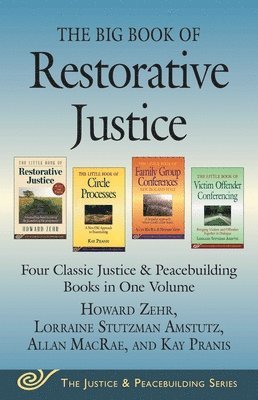
For the first time, the four most popular restorative justice books in the Justice & Peacebuilding series—The Little Book of Restorative Justice: Revised and Updated, The Little Book of Victim Offender Conferencing, The Little Book of Family Group Conferences, and The Little Book of Circle Processes—are available in one affordable volume.Restorative justice, with its emphasis on identifying the justice needs of everyone involved in a crime, is a worldwide movement of growing influence that is helping victims and communities heal while holding criminals accountable for their actions. This is not a soft-on-crime, feel-good philosophy, but rather a concrete effort to bring justice and healing to everyone involved in a crime. Circle processes draw from the Native American tradition of gathering in a circle to solve problems as a community. Peacemaking circles are used in neighborhoods, in schools, in the workplace, and in social services to support victims of all kinds, resolve behavior problems, and create positive climates.Each book is written by a scholar at the forefront of these movements, making this important reading for classrooms, community leaders, and anyone involved with conflict resolution.
Häftad, Engelska, 2019
154 kr
Skickas inom 3-6 vardagar
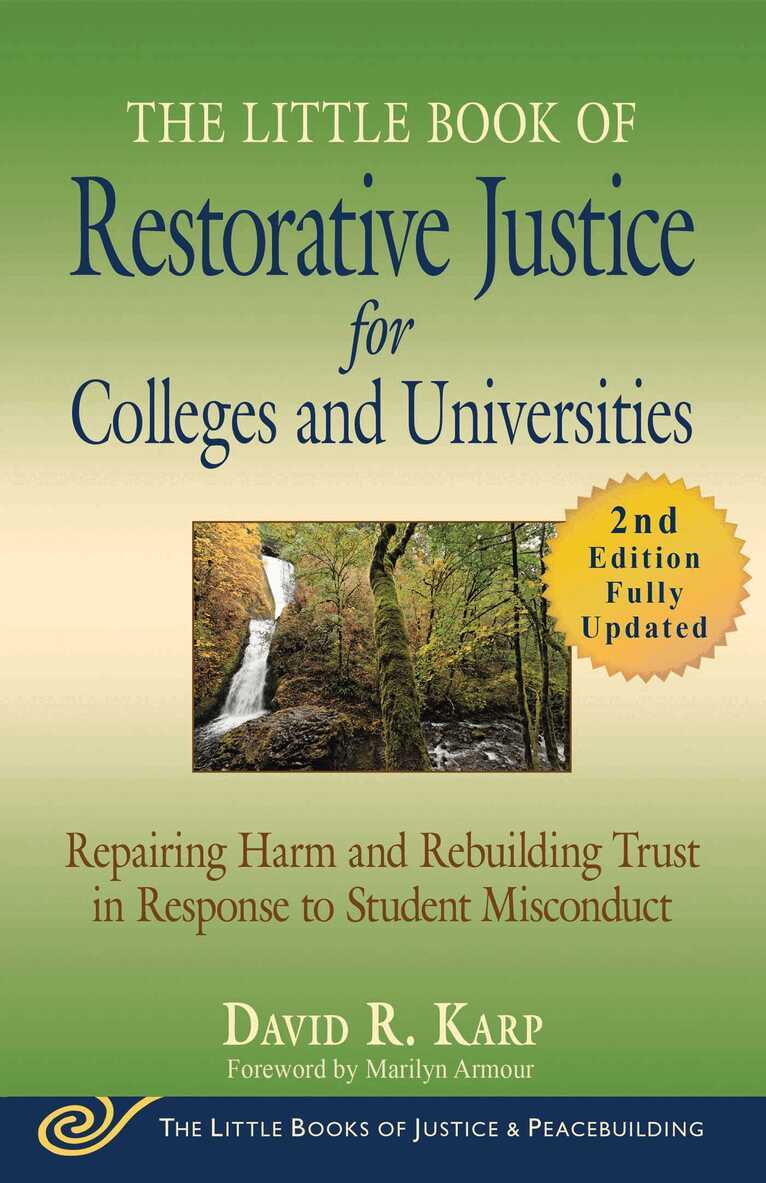
A Practitioner's Reference and Guide to Implement Restorative Justice on CampusHere’s a call to colleges and universities to consider implementing restorative practices on their campuses, ensuring fair treatment of students and staff while minimizing institutional liability, protecting the campus community, and boosting morale, from an associate dean of student affairs who has put these models to work on his campus.Restorative justice is a collaborative decision-making process that includes victims, offenders, and others who are seeking to hold offenders accountable by having them (a) accept and acknowledge responsibility for their offenses, (b) to the best of their ability, repair the harm they caused to victims and communities, and (c) work to reduce the risk of re-offense by building positive social ties to the community.David Karp writes in his introduction, “As a student affairs administrator, I have become deeply committed to the concept and practice of restorative justice. I have experienced how it can work given the very real pressures among campus conduct administrators to manage high case loads, ensure fair treatment, minimize institutional liability, protect the campus community, boost morale in a division with high turnover, and help students learn from their mistakes without creating insurmountable obstacles to their future successes.”
Häftad, Engelska, 2023
88 kr
Skickas
Häftad, Engelska, 2024
106 kr
Skickas inom 11-20 vardagar
A practical guide to listening well in restorative justice programs and any relationship.The Little Book of Listening is an introduction to and practical guide for listening as an emergent strategy for creating a transformed world. It presents radical listening as an essential macro-skill, one that is essential in forming “right relationships” with ourselves and others that are the necessary prerequisite to all lasting forms of social change.This is a collaborative book, constructed from the contributions of twenty-six listeners from a wide variety of backgrounds who have shared their strategies, experiences, inspiration, and hopes for a transformed world through listening justly and equitably. One of the primary goals of the book is to offer practical tools for readers to develop the skills to listen to themselves and others more effectively, drawing attention to the barriers and filters that so often distract us from listening. Another goal is to inspire readers through the personal stories of how just listening has impacted the authors and invite readers to adopt these approaches themselves. Finally, we aim for this text to be a resource for practitioners in the fields of justicebuilding and peacebuilding.Conversations are how humans explore new ideas and reach new understandings: paradigms shift and the world is changed by our communication with each other. Whatever processes are used, it is imperative that facilitators and participants listen deeply, humbly, and attentively, without ego or agenda, to themselves and to one another.
Häftad, Engelska, 2015
123 kr
Tillfälligt slut
Here is a thoughtful and thought-provoking look at the impact of sexual abuse demonstrating how restorative justice can create hope through trauma.Restorative justice is gaining acceptance for addressing harm and crime. Interventions have been developed for a wide range of wrongdoing. This book considers the use of restorative justice in response to sexual abuse. Rather than a blueprint or detailing a specific set of programs, it is more about mapping possibilities. It allows people to carefully consider its use in responding to violent crimes such as sexual abuse.Criminal justice approaches tend to sideline and re-traumatize victims, and punish offenders to the detriment of accountability. Alternatively, restorative justice centers on healing for victims, while holding offenders meaningfully accountable. Criminal justice responses tend to individualize the problem, and catch marginalized communities, such as ethnic minorities, within its net. Restorative justice recognizes that sexual abuse is a form of gender-based violence. The table of contents includes:Understanding Sexual AbuseRestorative JusticeVictims: A Case StudyOffenders: A Case StudyLimits and PossibilitiesAnd much more!Community-based practices are needed, sometimes in conjunction with, and sometimes to counteract, traditional criminal justice responses.