Konstantinos Karamanlis Institute for Democracy Yearbook Series – serie
Visar alla böcker i serien Konstantinos Karamanlis Institute for Democracy Yearbook Series. Handla med fri frakt och snabb leverans.
6 produkter
6 produkter
Inbunden, Engelska, 2009
1 082 kr
Skickas inom 10-15 vardagar
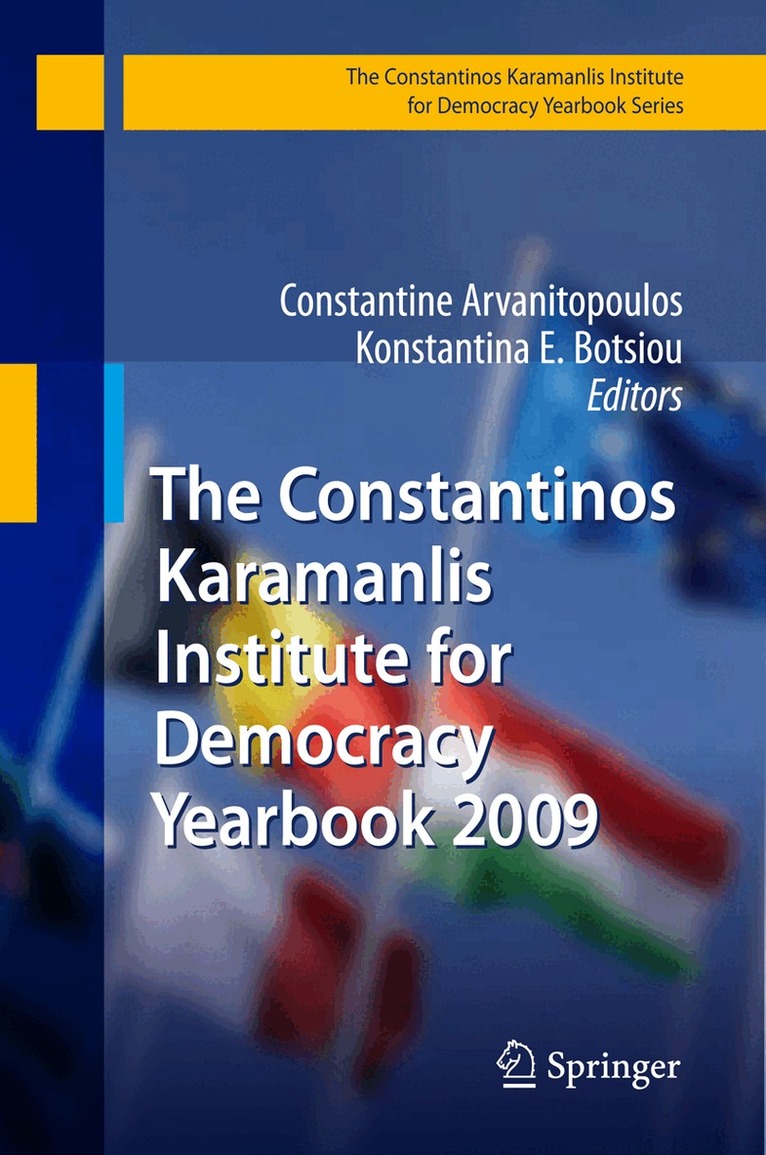
Constantine Arvanitopoulos and Konstantina E. Botsiou Europe at a Crossroads European uni?cation has rested on a dual premise. One part was the effort of the European nations to consolidate peace by overcoming the nationalism which had 1 twice drenched the continent in blood in the 20th century. War among West European states became unthinkable in the post-war era. The second part was the creation of a single European economy following the tremendous task of post-war 2 reconstruction and recovery. Over the years the achievement of economic stability was matched by initiatives that aimed to render Western Europe competitive on a global scale. The creation of the European Union (EU) in the 1990s through the Treaties of Maastricht (1992) and Amsterdam (1997), and later Nice (2001), which successively revised the founding Treaties of Rome (1957), was largely a response 3 to the challenge of globalisation. Integration ‘rejuvenated’ the nation state, thus creating the hybrid of the Euro- 4 pean welfare state, a mix of state-imposed stability and private initiative. Like its 1 Sforza, C. (1936). Europe and the Europeans: Community: Report A study in historical psych- ogy and international politics. London: George G. Harrap and Company. 2 Milward, A. S. (1984). The reconstruction of Western Europe 1945–1951. London: Routledge. Hogan, M. J. (1987). The Marshall plan: America, Britain, and the reconstruction of Western Europe, 1947–1954. Cambridge: Cambridge University Press. 3 Dyson, K. , & Featherstone, K. (1999).
Inbunden, Engelska, 2010
1 115 kr
Skickas inom 10-15 vardagar
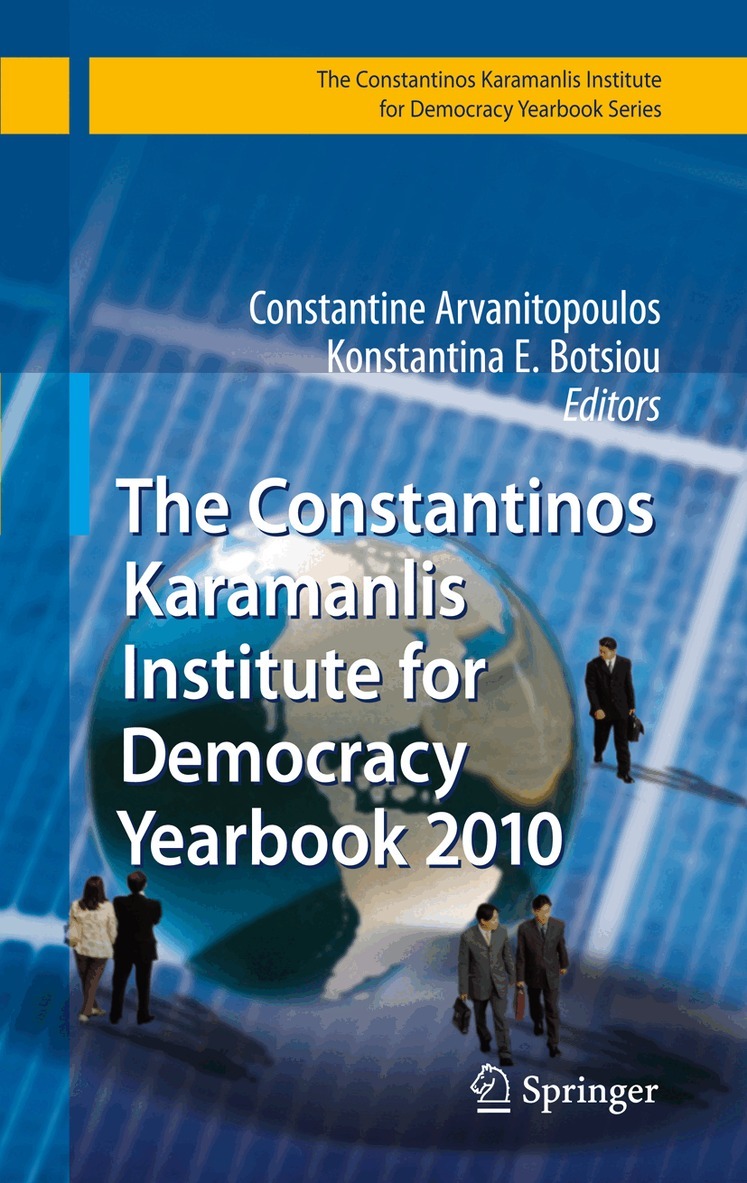
2010 marks a turning point for international politics. The impact of the global crisis is reflected in the readiness of both national governments and international organisations to rebuild relations between state and market within a safer regulatory framework. New models of development gained ground during the crisis: investments in new energy technologies, medical research, education, security and employment. In Europe, novel ideas interact with major institutional changes put into effect by the Lisbon Treaty. A wide range of policies, from the field of European security to the problems of migration and from EU enlargement to Euro-American cooperation, are affected by the changes on all these levels. The Constantinos Karamanlis Institute for Democracy Yearbook 2010 addresses vital aspects of the European and international agenda, bringing together prominent scholars and policymakers from a variety of national backgrounds.
Inbunden, Engelska, 2011
1 082 kr
Skickas inom 10-15 vardagar
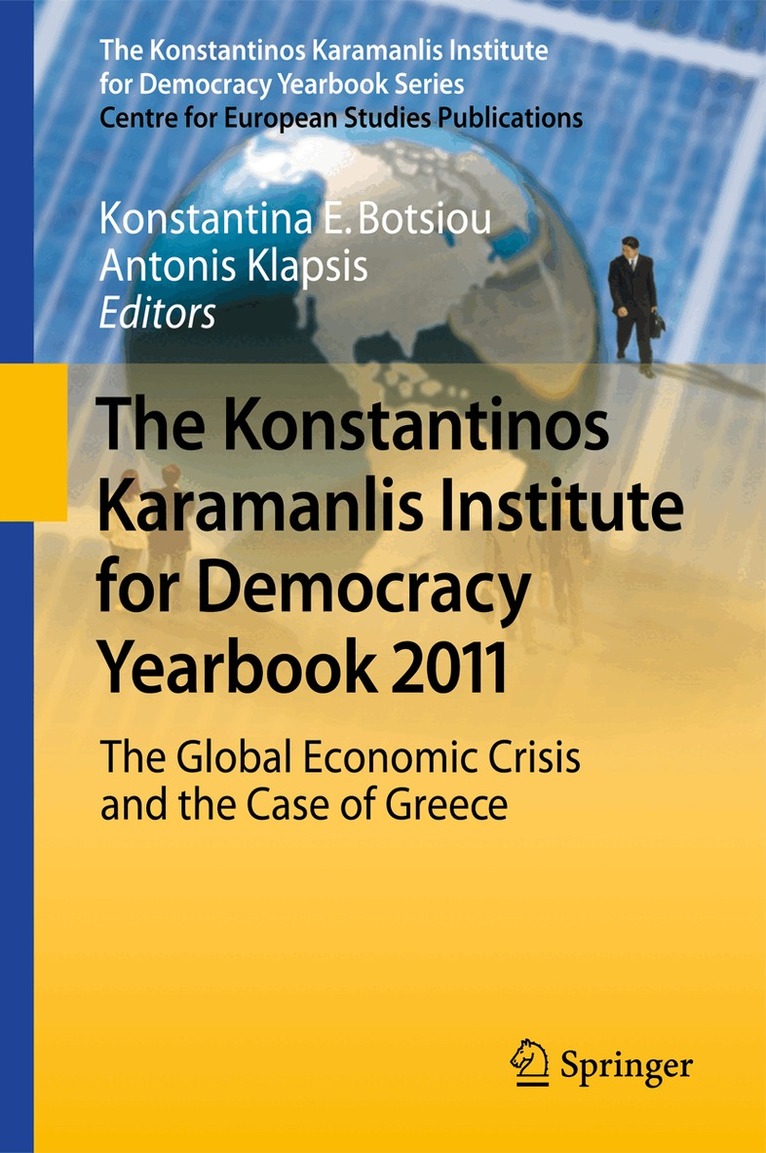
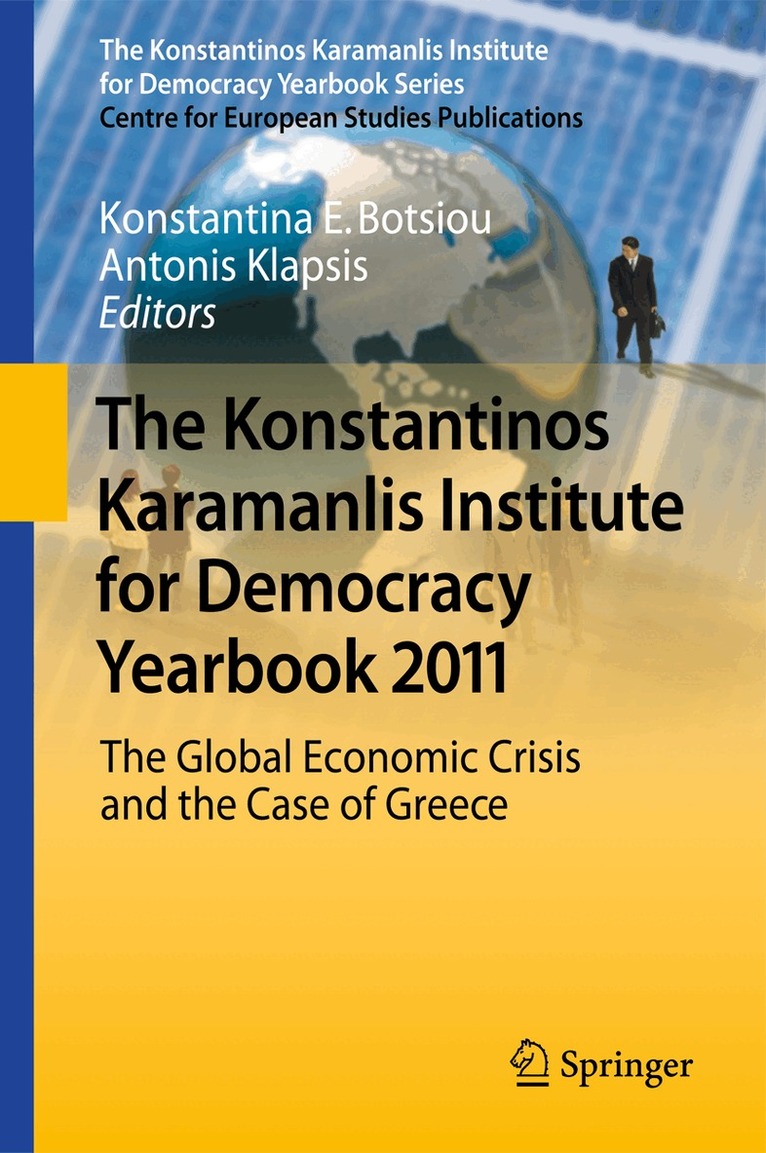
The global economy is still experiencing the effects of the worst economic crisis since the Great Depression of the 1930s. Over the last three years economies worldwide have slowed and international trade has declined. Most importantly, the crisis has negatively affected the lives of ordinary people, creating a sense of uncertainty about the future and thus posing a direct threat to social cohesion, thus posing new challenges to political leadership. Climate change is also forcing the developed world to formulate a common strategy that will balance growth and environmental protection. The aim of the book is to examine these international trends and comprehend the transformations that take place internationally. The multi-authored work presents several accounts on the course of vital aspects of politics and economy. As a result, the contents of the book focusses on four main subjects: 1) global economic crisis and its consequences, 2) economic governance, 3) political leadership, and 4) climate change.
Häftad, Engelska, 2012
1 115 kr
Skickas inom 10-15 vardagar
2010 marks a turning point for international politics. The impact of the global crisis is reflected in the readiness of both national governments and international organisations to rebuild relations between state and market within a safer regulatory framework. New models of development gained ground during the crisis: investments in new energy technologies, medical research, education, security and employment. In Europe, novel ideas interact with major institutional changes put into effect by the Lisbon Treaty. A wide range of policies, from the field of European security to the problems of migration and from EU enlargement to Euro-American cooperation, are affected by the changes on all these levels. The Constantinos Karamanlis Institute for Democracy Yearbook 2010 addresses vital aspects of the European and international agenda, bringing together prominent scholars and policymakers from a variety of national backgrounds.
Häftad, Engelska, 2013
1 082 kr
Skickas inom 10-15 vardagar
The global economy is still experiencing the effects of the worst economic crisis since the Great Depression of the 1930s. Over the last three years economies worldwide have slowed and international trade has declined. Most importantly, the crisis has negatively affected the lives of ordinary people, creating a sense of uncertainty about the future and thus posing a direct threat to social cohesion, thus posing new challenges to political leadership. Climate change is also forcing the developed world to formulate a common strategy that will balance growth and environmental protection. The aim of the book is to examine these international trends and comprehend the transformations that take place internationally. The multi-authored work presents several accounts on the course of vital aspects of politics and economy. As a result, the contents of the book focusses on four main subjects: 1) global economic crisis and its consequences, 2) economic governance, 3) political leadership, and 4) climate change.
Häftad, Engelska, 2015
1 082 kr
Skickas inom 10-15 vardagar
Constantine Arvanitopoulos and Konstantina E. Botsiou Europe at a Crossroads European uni?cation has rested on a dual premise. One part was the effort of the European nations to consolidate peace by overcoming the nationalism which had 1 twice drenched the continent in blood in the 20th century. War among West European states became unthinkable in the post-war era. The second part was the creation of a single European economy following the tremendous task of post-war 2 reconstruction and recovery. Over the years the achievement of economic stability was matched by initiatives that aimed to render Western Europe competitive on a global scale. The creation of the European Union (EU) in the 1990s through the Treaties of Maastricht (1992) and Amsterdam (1997), and later Nice (2001), which successively revised the founding Treaties of Rome (1957), was largely a response 3 to the challenge of globalisation. Integration ‘rejuvenated’ the nation state, thus creating the hybrid of the Euro- 4 pean welfare state, a mix of state-imposed stability and private initiative. Like its 1 Sforza, C. (1936). Europe and the Europeans: Community: Report A study in historical psych- ogy and international politics. London: George G. Harrap and Company. 2 Milward, A. S. (1984). The reconstruction of Western Europe 1945–1951. London: Routledge. Hogan, M. J. (1987). The Marshall plan: America, Britain, and the reconstruction of Western Europe, 1947–1954. Cambridge: Cambridge University Press. 3 Dyson, K. , & Featherstone, K. (1999).