Laser & Optical Science & Technology - Böcker
Visar alla böcker i serien Laser & Optical Science & Technology. Handla med fri frakt och snabb leverans.
9 produkter
9 produkter
954 kr
Skickas inom 10-15 vardagar
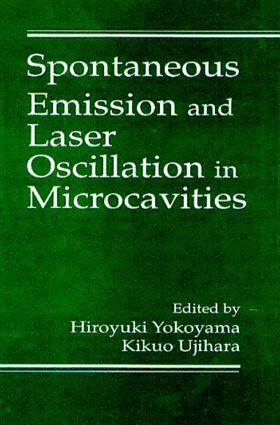
In spite of the increasing importance of microcavities, device physics or the observable phenomena in optical microcavities such as enhanced or inhibited spontaneous emission and its relation with the laser oscillation has not been systematically well-described-until now. Spontaneous Emission and Laser Oscillation in Microcavities presents the basics of optical microcavities. The volume is divided into ten chapters, each written by respected authorities in their areas. The book surveys several methods describing free space spontaneous emission and discusses changes in the feature due to the presence of a cavity. The effect of dephasing of vacuum fields on spontaneous emission in a microcavity and the effects of atomic broadening on spontaneous emission in an optical microcavity are examined. The book details the splitting in transmission peaks of planar microcavities containing semiconductor quantum wells. A simple but useful way to consider the change in the spontaneous emission rate from the viewpoint of mode density alteration by wavelength-sized cavities is provided. Authors also discuss the spontaneous emission in dielectric planar microcavities. Spontaneous emission in microcavity surface emitting lasers is covered, as are the effects of electron confinement in semiconductor quantum wells, wires, and boxes also given. The volume extends the controlling spontaneous emission phenomenon to laser oscillation. Starting from the Fermi golden rule, the microcavity laser rate equations are derived, and the oscillation characteristics are analyzed. Recent progress in optical microcavity experiments is summarized, and the applicability in massively optical parallel processing systems and demands for the device performance are explored. This volume is extremely useful as a textbook for graduate and postgraduate students and works well as a unique reference for researchers beginning to study in the field.
949 kr
Skickas inom 7-10 vardagar
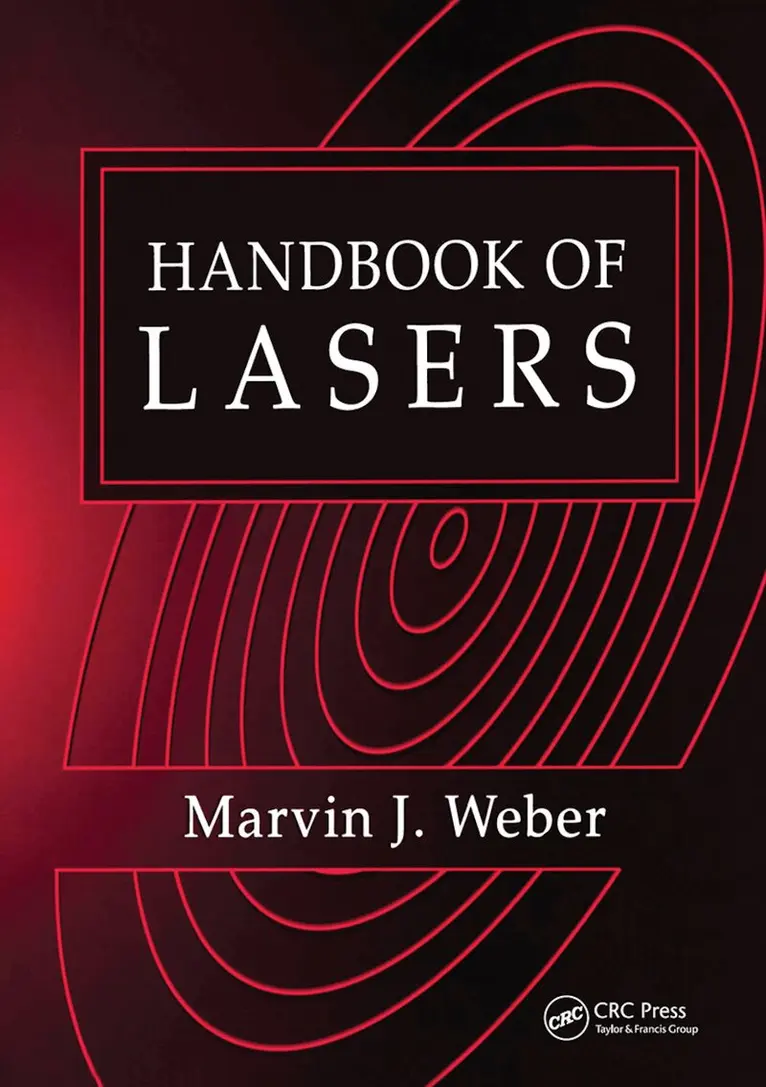
Lasers continue to be an amazingly robust field of activity. Anyone seeking a photon source is now confronted with an enormous number of possible lasers and laser wavelengths to choose from, but no single, comprehensive source to help them make that choice.The Handbook of Lasers provides an authoritative compilation of lasers, their properties, and original references in a readily accessible form. Organized by lasing media-solids, liquids, and gases-each section is subdivided into distinct laser types. Each type carries a brief description, followed by tables listing the lasing element or medium, host, lasing transition and wavelength, operating properties, primary literature citations, and, for broadband lasers, reported tuning ranges.The importance and value of the Handbook of Lasers cannot be overstated. Serving as both an archive and as an indicator of emerging trends, it reflects the state of knowledge and development in the field, provides a rapid means of obtaining reference data, and offers a pathway to the literature. It contains data useful for comparison with predictions and for developing models of processes, and may reveal fundamental inconsistencies or conflicts in the data.
5 687 kr
Skickas inom 10-15 vardagar
In the CRC Handbook of Laser Science and Technology: Supplement 2, experts summarize the discovery and properties of new optical materials that have appeared since the publication of Volumes III-V. Included are the latest advances in optical crystals, glasses and plastics, laser host materials, phase conjugation materials, linear electrooptic materials, nonlinear optical materials, magnetooptic materials, elastooptic materials, photorefractive materials, liquid crystals, and thin film coatings. The book also includes expanded coverage of optical waveguide materials and new sections on optical liquids, glass fiber lasers, diamond optics, and gradient index materials. Appendices include Designation of Russian Optical Glasses; Abbreviations, Acronyms, and Mineralogical or Common Names for Optical Materials; and Abbreviations for Methods of Preparing Optical Materials. Extensive tabulations of materials properties with references to the primary literature are provided throughout the supplement.The CRC Handbook of Laser Science and Technology: Supplement 2 represents the latest volume in the most comprehensive, up-to-date listing of the properties of optical materials for lasers and laser systems, making it an essential reference work for all scientists and engineers working in laser research and development.
2 609 kr
Tillfälligt slut
Lasers continue to be an amazingly robust field of activity. Anyone seeking a photon source is now confronted with an enormous number of possible lasers and laser wavelengths to choose from, but no single, comprehensive source to help them make that choice.The Handbook of Lasers provides an authoritative compilation of lasers, their properties, and original references in a readily accessible form. Organized by lasing media-solids, liquids, and gases-each section is subdivided into distinct laser types. Each type carries a brief description, followed by tables listing the lasing element or medium, host, lasing transition and wavelength, operating properties, primary literature citations, and, for broadband lasers, reported tuning ranges.The importance and value of the Handbook of Lasers cannot be overstated. Serving as both an archive and as an indicator of emerging trends, it reflects the state of knowledge and development in the field, provides a rapid means of obtaining reference data, and offers a pathway to the literature. It contains data useful for comparison with predictions and for developing models of processes, and may reveal fundamental inconsistencies or conflicts in the data.
3 591 kr
Skickas inom 10-15 vardagar
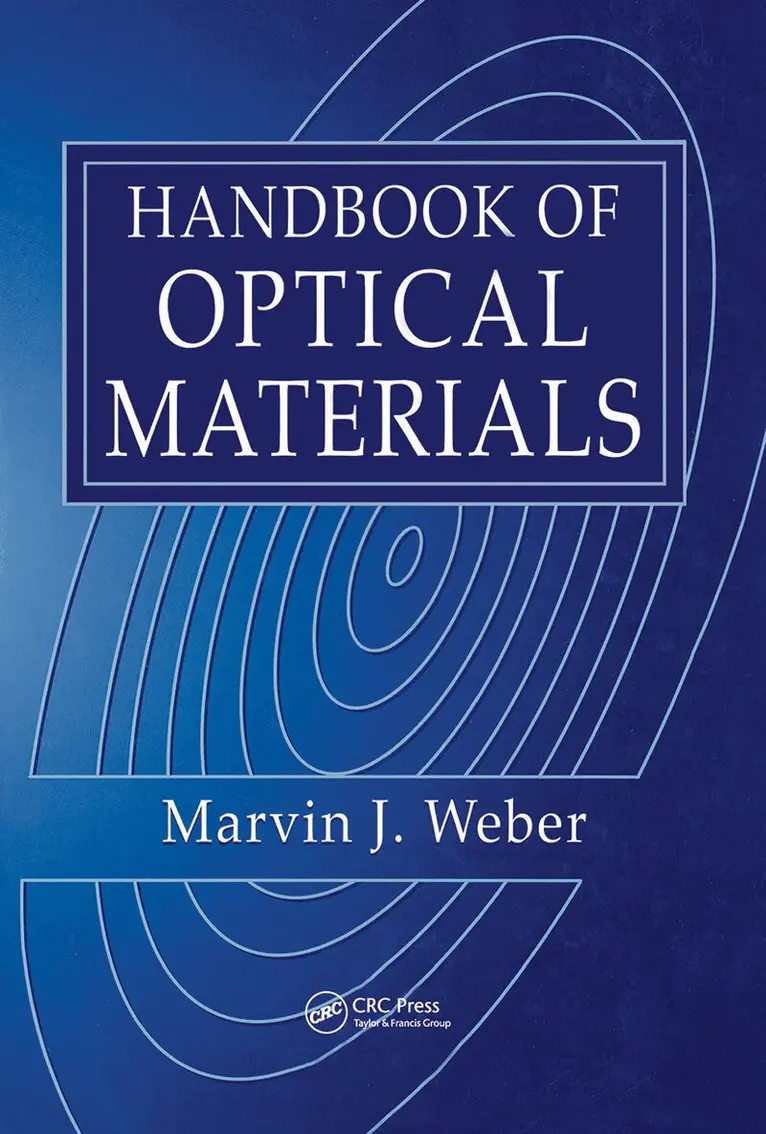
For years scientists turned to the CRC Handbook of Laser Science & Technology for reliable data on optical materials. Out of print for several years, that standard-setting work now has a successor: the Handbook of Optical Materials.This new handbook is an authoritative compilation of the physical properties of materials used in all types of lasers and optical systems. In it, scientist, author, and editor Dr. Marvin J. Weber provides extensive data tabulations and references for the most important optical materials, including crystals, glasses, polymers, metals, liquids, and gases. The properties detailed include both linear and nonlinear optical properties, mechanical properties, thermal properties together with many additional special properties, such as electro-, magneto-, and elasto-optic properties.Using a minimum of narration and logically organized by material properties, the handbook's unique presentation simplifies the process of comparing different materials for their suitability in particular applications. Appendices furnish a wealth of other useful information, including lists of the many abbreviations and acronyms that proliferate in this field. The Handbook of Optical Materials is simply the most complete one-stop source available for materials data essential to lasers and optical systems.
3 861 kr
Skickas inom 10-15 vardagar
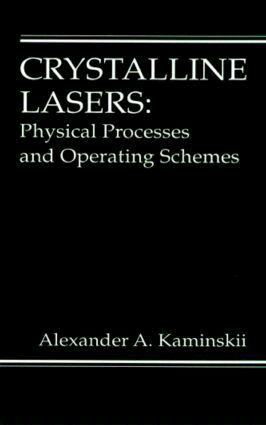
By the end of the 1970s, crystalline lasers were widely used in science, engineering, medicine, and technology. The types of lasers used have continued to grow in number to include newly discovered crystalline hosts, previously known compounds generating at other spectral wavelengths, and broadband tunable stimulated emission. This has led to the creation of an extremely promising new generation of crystalline lasers that are both highly efficient and more reliable. The major part of this book is devoted to describing multilevel operating laser schemes for stimulated emission excitation in insulating crystals doped with lanthanide ions.The first part of Crystalline Lasers deals with the history of the physics and spectroscopy of insulating laser crystals. The chapters in the second part of the book present results from the study of Stark-energy levels of generating ions in laser crystals and their radiative and nonradiative intermanifold transition characteristics. This section includes extensive tabular data and reference information. Popular and novel operating schemes of crystalline lasers are covered in Part 3.In the chapters in the fourth part of the book, the newest technologies in the physics and engineering of crystalline lasers are considered. The results of investigations into laser action under selective excitations, miniature crystalline lasers, and the properties of nonlinear activated laser crystals are presented and analyzed.Crystalline Lasers summarizes and reviews the results of many years of research and studies of activator ions and multilevel operating laser schemes, and discusses exciting prospects of using these systems to create new types of crystalline lasers. This book will be of use to laser scientists and engineers, physicists, and chemical engineers.
2 171 kr
Skickas inom 10-15 vardagar
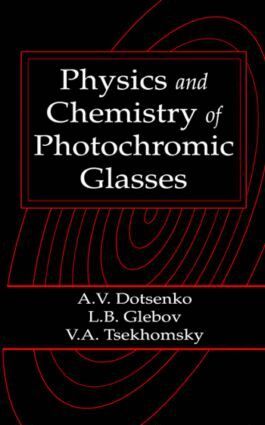
Photochromic glasses are among the most widespread types of glasses, due largely to their popular use in sunglasses. These glasses are used not only in sunglasses, but also in various opto-electronic devices that have been developed and produced throughout the world. Until now, information about photochromic glasses has been widely dispersed in the literature, much of which was published in Russian and therefore of limited accessibility to the Western world. Physics and Chemistry of Photochromic Glasses brings together the combined knowledge and understanding of photochromic glasses from these publications. Coverage includes the structure, optical properties, coloration and bleaching mechanisms, technology, and metrology of these interesting materials.
7 513 kr
Skickas inom 10-15 vardagar
In spite of the increasing importance of microcavities, device physics or the observable phenomena in optical microcavities such as enhanced or inhibited spontaneous emission and its relation with the laser oscillation has not been systematically well-described-until now.Spontaneous Emission and Laser Oscillation in Microcavities presents the basics of optical microcavities. The volume is divided into ten chapters, each written by respected authorities in their areas.The book surveys several methods describing free space spontaneous emission and discusses changes in the feature due to the presence of a cavity. The effect of dephasing of vacuum fields on spontaneous emission in a microcavity and the effects of atomic broadening on spontaneous emission in an optical microcavity are examined. The book details the splitting in transmission peaks of planar microcavities containing semiconductor quantum wells.A simple but useful way to consider the change in the spontaneous emission rate from the viewpoint of mode density alteration by wavelength-sized cavities is provided. Authors also discuss the spontaneous emission in dielectric planar microcavities. Spontaneous emission in microcavity surface emitting lasers is covered, as are the effects of electron confinement in semiconductor quantum wells, wires, and boxes also given.The volume extends the controlling spontaneous emission phenomenon to laser oscillation. Starting from the Fermi golden rule, the microcavity laser rate equations are derived, and the oscillation characteristics are analyzed. Recent progress in optical microcavity experiments is summarized, and the applicability in massively optical parallel processing systems and demands for the device performance are explored.This volume is extremely useful as a textbook for graduate and postgraduate students and works well as a unique reference for researchers beginning to study in the field.
4 132 kr
Skickas inom 10-15 vardagar
During the last ten to fifteen years, researchers have made considerable progress in the study of inorganic scintillators. New scintillation materials have been investigated, novel scintillation mechanisms have been discovered, and additional scintillator applications have appeared. Demand continues for new and improved scintillation materials for a variety of applications including nuclear and high energy physics, astrophysics, medical imaging, geophysical exploration, radiation detection, and many other fields. However, until now there have been no books available that address in detail the complex scintillation processes associated with these new developments.Now, a world leader in the theory and applications of scintillation processes integrates the latest scientific advances of scintillation into a new work, Physical Processes in Inorganic Scintillators. Written by distinguished researcher Piotr Rodnyi, this volume explores this challenging subject, explains the complexities of scintillation from a modern point of view, and illuminates the way to the development of better scintillation materials.This unique work first defines the fundamental physical processes underlying scintillation and governing the primary scintillation characteristics of light output, decay time, emission spectrum, and radiation hardness. The book then discusses the complicated mechanisms of energy conversion and transformation in inorganic scintillators. The section on the role of defects in energy transfer and scintillation efficiency will be of special interest. Throughout, the author does not offer complicated derivations of equations but, instead, presents useful equations with practical results.