Michel Foucault, Lectures at the Collège de France – serie
Visar alla böcker i serien Michel Foucault, Lectures at the Collège de France. Handla med fri frakt och snabb leverans.
17 produkter
Courage of Truth
Av Michel Foucault, A. Davidson
Inbunden, 2011
714 kr
Lägg i varukorg
The Courage of the Truth is the last course that Michel Foucault delivered at the Collège de France. Here, he continues the theme of the previous year's lectures in exploring the notion of "truth-telling" in politics to establish a number of ethically irreducible conditions based on courage and …
Hermeneutics of the Subject
Lectures at the College de France 1981-1982
Av NA NA
Inbunden, 2005
653 kr
Lägg i varukorg
The Hermeneutics of the Subject is the third volume in the collection of Michel Foucault's lectures at the Collège de France, one of the world's most prestigious institutions. Faculty at the Collège give public lectures, in which they present works-in-progress on any subject of their choosing. …
On The Government of the Living
Lectures at the Collège de France, 1979-1980
Av M. Foucault, Arnold I. Davidson
Häftad, 2014
275 kr
Lägg i varukorg
With these lectures Foucault inaugurates his investigations of truth-telling in the ethical domain of practices of techniques of the self. How and why, he asks, does the government of men require those subject to power to be subjects who must tell the truth about themselves?
Psychiatric Power
Lectures at the Collège de France, 1973-1974
Inbunden, 2006
551 kr
Lägg i varukorg
In this new addition to the Collège de France Lecture Series Michel Foucault explores the birth of psychiatry, examining Western society's division of 'mad' and 'sane' and how medicine and law influenced these attitudes. This seminal new work by a leading thinker of the modern age opens new vistas …
Psychiatric Power
Lectures at the Collège de France, 1973-1974
Häftad, 2008
312 kr
Lägg i varukorg
In this addition to the Collège de France Lecture Series Michel Foucault explores the birth of psychiatry, examining Western society's division of 'mad' and 'sane' and how medicine and law influenced these attitudes. This seminal new work by a leading thinker of the modern age opens new vistas …
Security, Territory, Population
Lectures at the College De France, 1977 - 78
Av M. Foucault, Arnold I. Davidson
Inbunden, 2007
714 kr
Lägg i varukorg
This book derives from Foucault's lectures at the College de France between January and April 1978, which can be seen as a radical turning point in his thought. Focusing on 'bio-power', he studies the foundations of this new technology of power over population and explores the technologies of …
Birth of Biopolitics
Lectures at the Collège de France, 1978-1979
Av Arnold I. Davidson, Graham Burchell m. fl.
Häftad, 2008
366 kr
Lägg i varukorg
Foucault continues on the theme of his 1978 course by focusing on the study of liberal and neo-liberal forms of government and concentrating in particular on two forms of neo-liberalism: German post-war liberalism and the liberalism of the Chicago School.
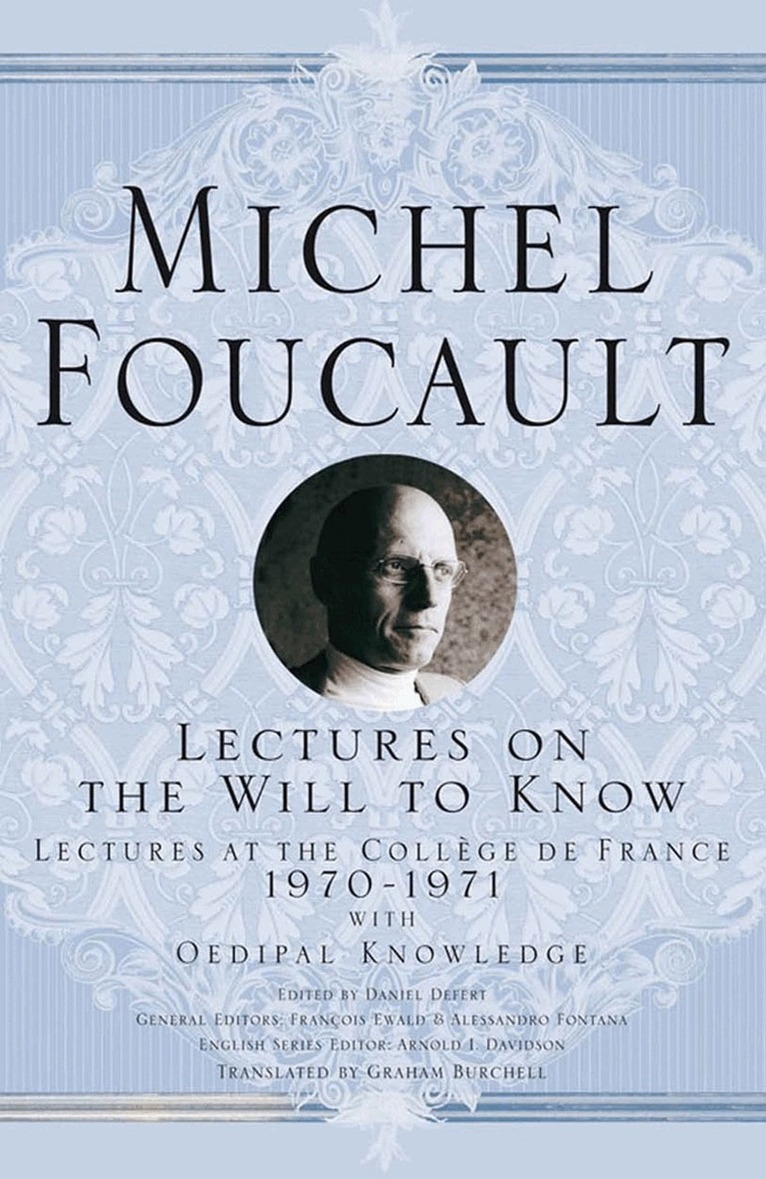
Lectures on the Will to Know
Inbunden, 2013
442 kr
Lägg i varukorg
In the first of his annual series of lectures at the Collège de France, Foucault develops a vigorous Nietzschean history of the will to know through an analysis of changing procedures of truth, legal forms, and class struggles in ancient Greece.
Lectures on the Will to Know
Häftad, 2014
442 kr
Lägg i varukorg
In the first of his annual series of lectures at the Collège de France, Foucault develops a vigorous Nietzschean history of the will to know through an analysis of changing procedures of truth, legal forms, and class struggles in ancient Greece.
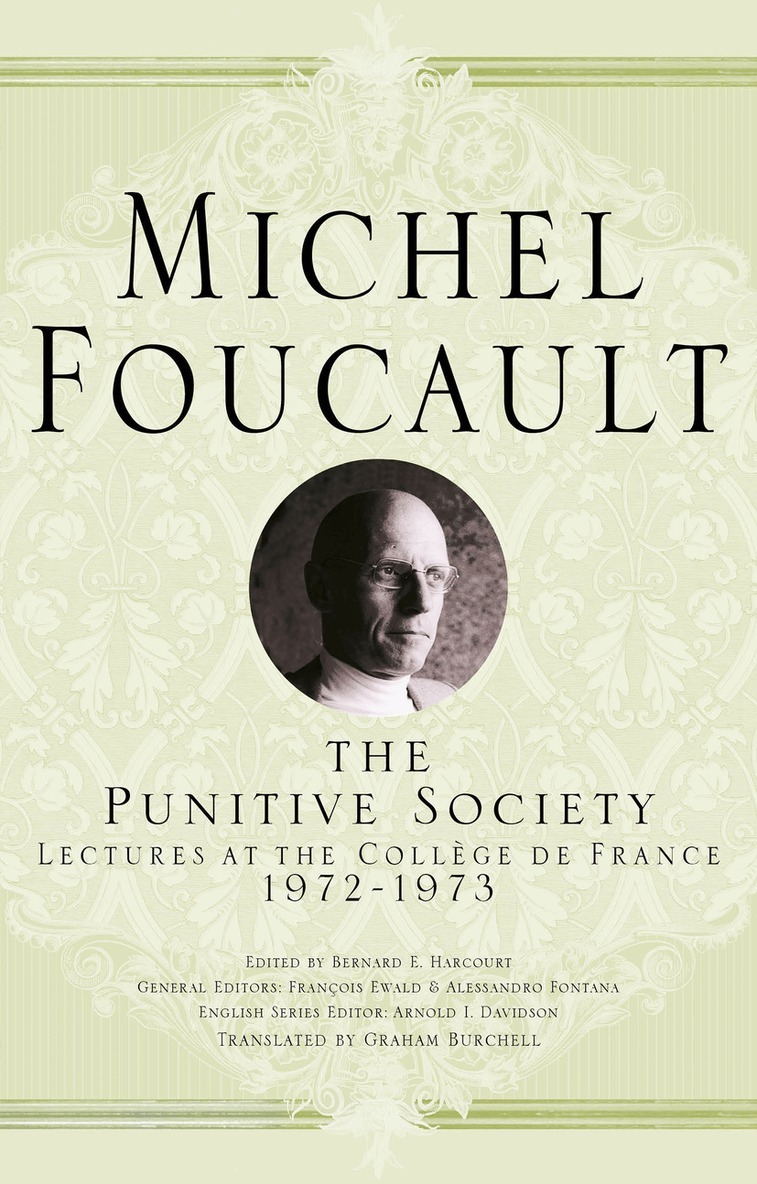
Punitive Society
Lectures at the Collège de France, 1972-1973
Av Michel Foucault, Arnold I. Davidson
Inbunden, 2015
551 kr
Lägg i varukorg
These thirteen lectures on the 'punitive society,' delivered at the Collège de France in the first three months of 1973, examine the way in which the relations between justice and truth that govern modern penal law were forged, and question what links them to the emergence of a new punitive regime …
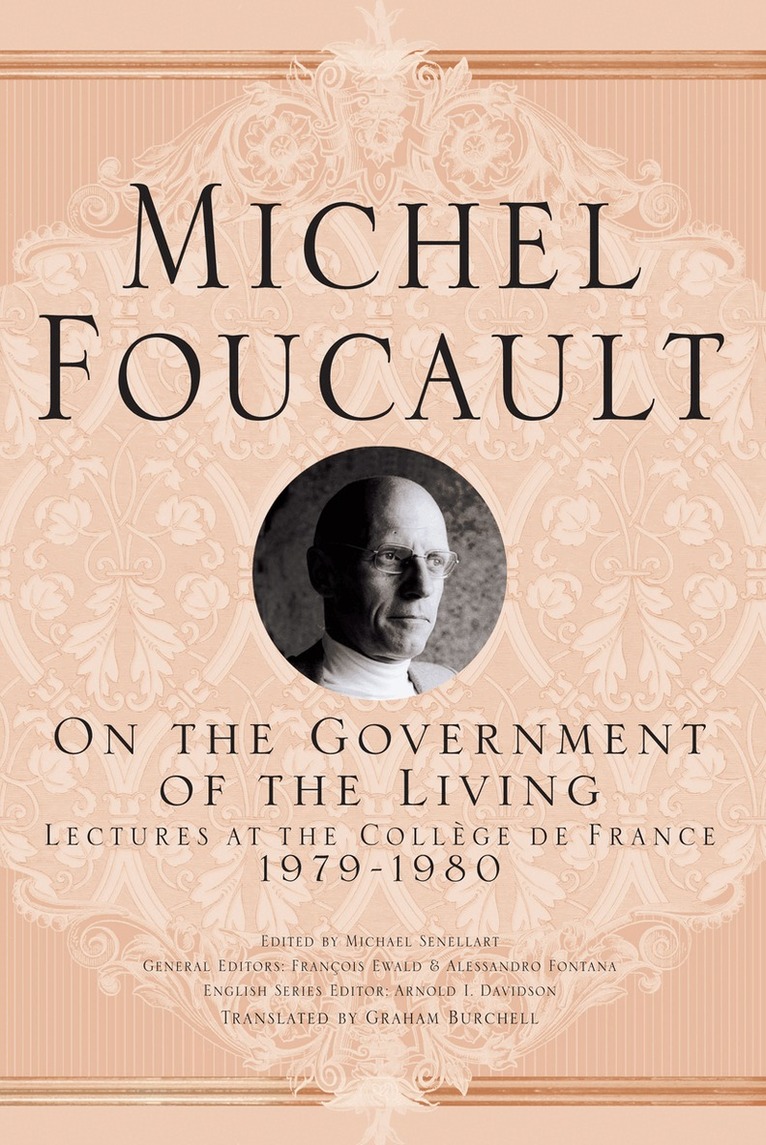
On The Government of the Living
Lectures at the Collège de France, 1979-1980
Av M. Foucault, Arnold I. Davidson
Inbunden, 2014
420 kr
Lägg i varukorg
With these lectures Foucault inaugurates his investigations of truth-telling in the ethical domain of practices of techniques of the self. How and why, he asks, does the government of men require those subject to power to be subjects who must tell the truth about themselves?
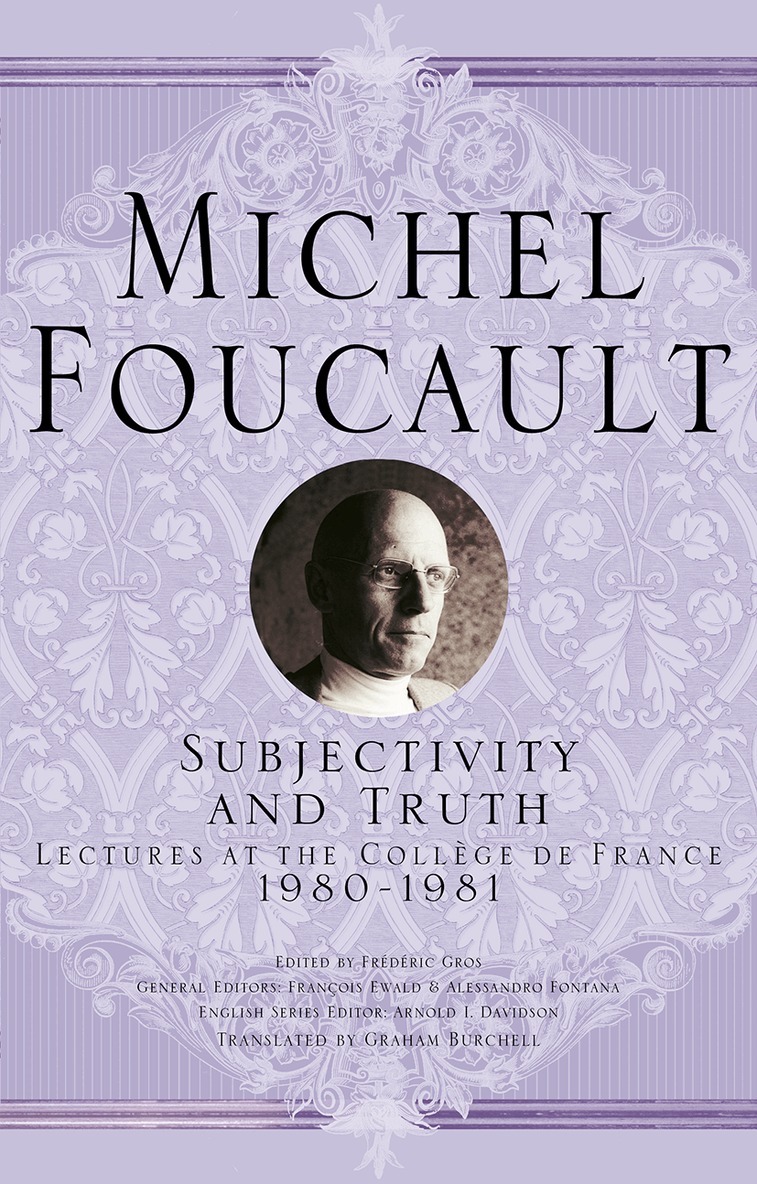
Subjectivity and Truth
Lectures at the Collège de France, 1980-1981
Av Michel Foucault, François Ewald m. fl.
Inbunden, 2017
497 kr
Lägg i varukorg
“The working hypothesis is this: it is true that sexuality as experience is obviously not independent of codes and systems of prohibitions, but it needs to be recalled straightaway that these codes are astonishingly stable, continuous, and slow to change. It needs to be recalled also that the way …
Government of Self and Others
Lectures at the Collège de France 1982–1983
Av Arnold I. Davidson, Graham Burchell m. fl.
Inbunden, 2010
605 kr
Lägg i varukorg
An exciting and highly original examination of the practices of truth-telling and speaking out freely (parr?sia) in ancient Greek tragedy and philosophy. Foucault discusses the difficult and changing practices of truth-telling in ancient democracies and tyrannies and offers a new perspective on the …
Government of Self and Others
Lectures at the Collège de France 1982–1983
Av Arnold I. Davidson, Graham Burchell m. fl.
Häftad, 2010
605 kr
Lägg i varukorg
An exciting and highly original examination of the practices of truth-telling and speaking out freely (parr?sia) in ancient Greek tragedy and philosophy. Foucault discusses the difficult and changing practices of truth-telling in ancient democracies and tyrannies and offers a new perspective on the …
Courage of Truth
Av M. Foucault
Inbunden, 2011
442 kr
Lägg i varukorg
The Courage of the Truth is the last course that Michel Foucault delivered at the College de France before his death in 1984. In this course, he continues the theme of the previous year's lectures in exploring the notion of "truth-telling" in politics to establish a number of ethically irreducible …
Courage of Truth
Av M. Foucault
Häftad, 2011
279 kr
Lägg i varukorg
The Courage of the Truth is the last course that Michel Foucault delivered at the College de France before his death in 1984. In this course, he continues the theme of the previous year's lectures in exploring the notion of "truth-telling" in politics to establish a number of ethically irreducible …
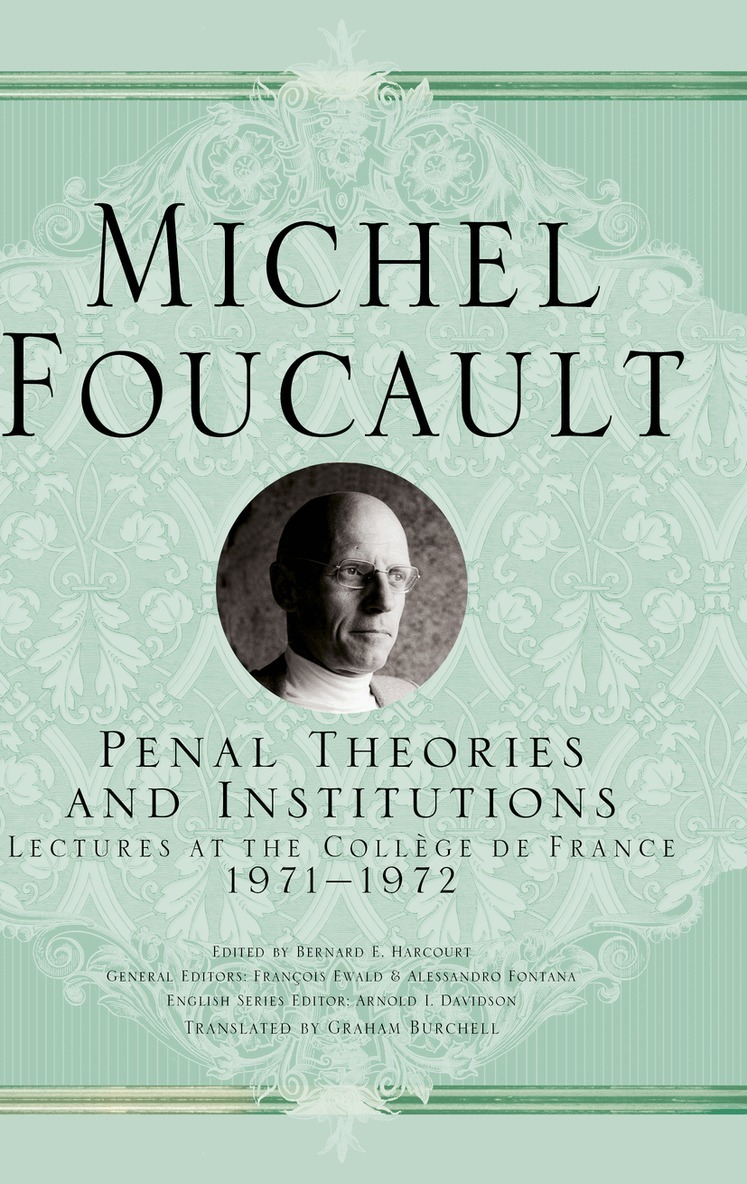
Penal Theories and Institutions
Lectures at the Collège de France, 1971-1972
Inbunden, 2019
497 kr
Lägg i varukorg
“What characterizes the act of justice is not resort to a court and to judges; it is not the intervention of magistrates (even if they had to be simple mediators or arbitrators). What characterizes the juridical act, the process or the procedure in the broad sense, is the regulated development of a …