Life Course Approach to Adult Health – serie
Visar alla böcker i serien Life Course Approach to Adult Health. Handla med fri frakt och snabb leverans.
4 produkter
4 produkter
1 307 kr
Skickas inom 5-8 vardagar
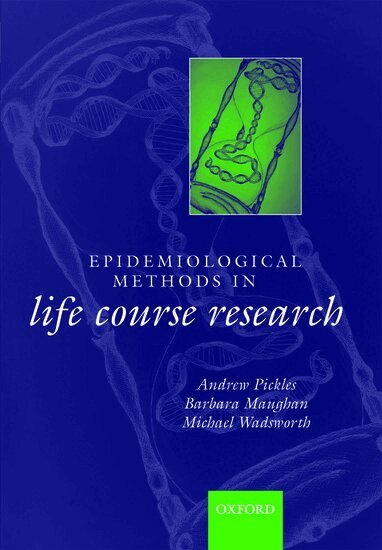
Life course epidemiology is concerned with the origins of risk, resilience, and the processes of ageing, and how this information can be of value in a public health context - particularly for preventive health care. Its challenge is to discover, develop and analyse sources of data that cover many years of life, especially the early developmental period when, it is thought, some fundamental aspects of lifetime health begin. It also analyses genetic propensity and environmental exposures. The rapid development of life course epidemiology, in parallel with new work on developmental biology and the biology of ageing, has bought innovative and ingenious methods of data collection. These require new methodological techniques for the design of observational and quasi-experimental studies of life course pathways to adult health. This book describes these developments, together with arguments for improving the measurement of the social environment and its role in developing individual vulnerability or adaptation. The development of bio-bank large-scale population studies for the investigation of genetic effects is discussed, alongside the challenges this creates for the epidemiologist. The changing design of studies, increasing flow of longitudinal data, management of data, analytic challenges, timing, and both traditional and more recent methods of managing these features in the study of causality, are discussed.Life course epidemiology has an essential role in developing methods to evaluate precisely the impact of interacting developmental, environmental, and genetic effects, knowledge of which is fundamental for the design of effective prevention strategies in public health, as well as for the advancement of understanding in the broader spheres of health and medicine.
Del 2 - Life Course Approach to Adult Health
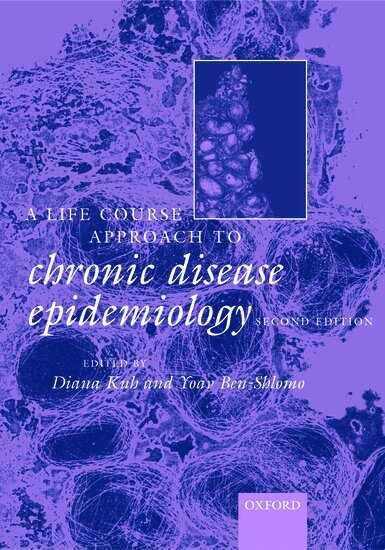
A Life Course Approach to Chronic Disease Epidemiology
Häftad, Engelska, 2004
1 720 kr
Skickas inom 5-8 vardagar
The first edition in 1997 of A life course approach to chronic disease epidemiology became a classic text for epidemiological and public health researchers interested in the childhood origins of adult chronic disease. Since then the new field of life course epidemiology has expanded rapidly, attracting the interest not only of academics across the health and social sciences but also policy makers, funding bodies, and the general public. Its purpose is to study how biological and social factors during gestation, childhood, adolescence and earlier adult life independently, cumulatively and interactively influence later life health and disease.Contributors to this fully revised second edition capture the excitement of the developing field and assess the latest evidence regarding sources of risk to health across the life course and across generations. The original chapters on life course influences on cardiovascular disease, diabetes, blood pressure, respiratory disease and cancer have been updated and extended. New chapters on life course influences on obesity, biological ageing and neuropsychiatric disorders have been added. Life course explanations for disease trends and for socioeconomic differentials in disease risk are given more attention in this new edition, reflecting recent developments in the field. The section on policy implications has been expanded, assessing the role of interventions to improve childhood social circumstances, as well as interventions to improve early growth. Emerging new research themes and the theoretical and methodological challenges facing life course epidemiology are highlighted.
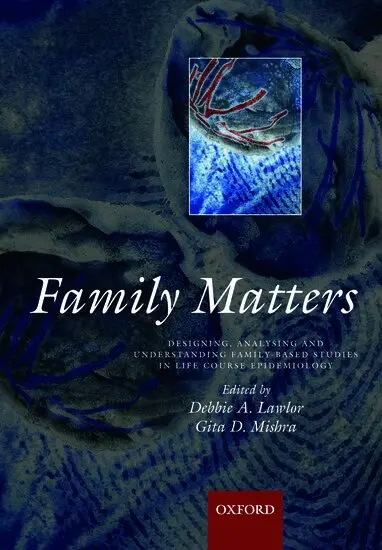
Family matters
Designing, analysing and understanding family based studies in life course epidemiology
Häftad, Engelska, 2009
642 kr
Skickas inom 7-10 vardagar
Family-based studies, including intergenerational, sibling, and twin studies, are increasingly being used to explore life course epidemiology. However, there are issues relating to study design and the statistical analysis of family-based studies that are still not well understood, and comprehending the underlying assumptions of these studies and drawing the inferences from them can be complex. This book provides the knowledge and skills required to design, analyse, and correctly interpret family-based studies. It explains what these studies can tell us about life course epidemiology; provides practical guidance on how to set-up and maintain birth cohorts for completing family-based studies in life course epidemiology; describes how to undertake appropriate statistical analyses of family-based studies and correctly interpret results from these analyses; and provides examples that illustrate the ways in which family-based studies can enhance our understanding of life course epidemiology. In addition, there is discussion of difficulties specific to setting up such studies in low- and middle-income countries, and issues relating to proxy informants, where parents provide information on children and vice versa, or siblings provide information about each other. Examples of how family-based studies have been used in understanding the life course epidemiology of cardiovascular disease, mental health, and reproductive health illustrate the applicability of the research to these areas, but also more generally to the wider field of life course epidemiology.
1 128 kr
Skickas inom 5-8 vardagar
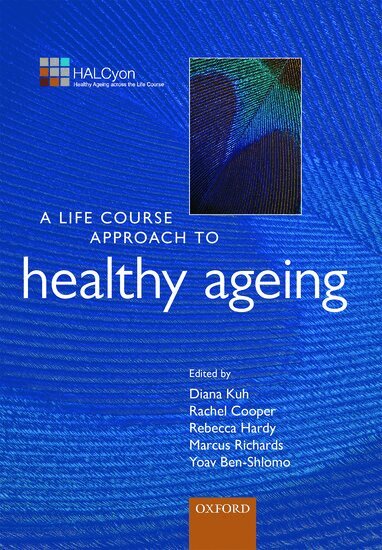
Healthy ageing has long been a neglected area of epidemiological research as the traditional focus has been on specific chronic diseases of older life. There is a growing consensus from scientists, research funders and policy makers that ageing itself needs to be studied from an interdisciplinary and life course perspective, to inform strategies for reducing the societal and individual costs of an ageing population. A Life Course Approach to Healthy Ageing is a synthesis of life course perspectives in epidemiology and interdisciplinary perspectives in ageing research. It brings together expert investigators of maturing birth cohort and ageing studies, cross-cutting methodologists, and authorities in ageing research and knowledge transfer from across the world in one wide-ranging volume.Contributors discuss how aspects of healthy ageing are conceptualised, defined and measured; relate to each other; change across life; and are influenced by biological, psychological and social factors operating from early life onwards. They identify research gaps, and suggest how evidence from observational studies can be strengthened through improved study design and longitudinal analysis, thereby increasing the research contribution to practice or policy change.The book considers how we might delay or slow down the progressive, generalised impairment of function that occurs at the individual, body system and cellular levels, as people grow older. It also considers the determinants of wellbeing in older people, including personal fulfilment, positive emotions and social relationships. Broad in scope, discussing topics from genetics to psychological and social wellbeing, A Life Course Approach to Healthy Ageing is a key resource for epidemiologists, social scientists, clinicians, public health physicians, policy makers and practitioners with a research interest in healthy ageing.