Literacy Teaching Series - Böcker
Visar alla böcker i serien Literacy Teaching Series. Handla med fri frakt och snabb leverans.
5 produkter
5 produkter
2 040 kr
Skickas inom 10-15 vardagar
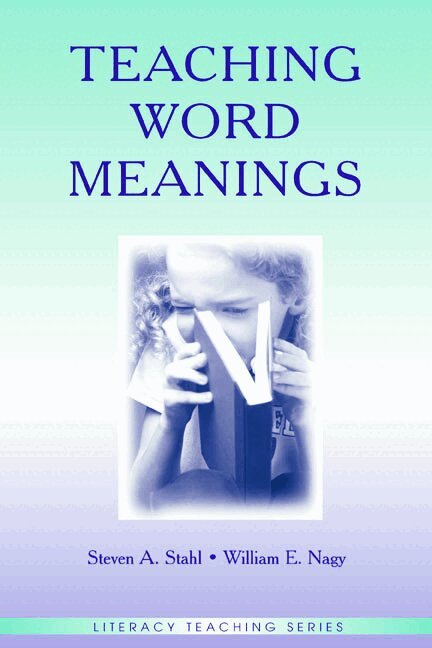
Learning new words is foundational to success in school and life. Researchers have known for years that how many word meanings a student knows is one of the strongest predictors of how well that student will understand text and be able to communicate through writing. This book is about how children learn the meanings of new words (and the concepts they convey) and how teachers can be strategic in deciding which words to teach, how to teach them, and which words not to teach at all.This book offers a comprehensive approach to vocabulary instruction. It offers not just practical classroom activities for teaching words (though plenty of those are included), but ways that teachers can make the entire curriculum more effective at promoting students' vocabulary growth. It covers the 'why to' and 'when to' as well as the 'how to' of teaching word meanings.Key features of this exciting new book include:*A variety of vocabulary activities. Activities for teaching different kinds of words such as high frequency words, high utility words, and new concepts, are explained and illustrated.*Guidelines for choosing words. A chart provides a simple framework built around seven basic categories of words that helps teachers decide which words to teach and how to teach them.*Word learning strategies. Strategies are offered that will help students use context, word parts, and dictionaries more effectively.*Developing Word Consciousness. Although specific vocabulary instruction is fully covered, the primary goal of this book is to develop students' independent interest in words and their motivation to learn them.*Integrated Vocabulary Instruction. Teachers are encouraged to improve the reading vocabularies of their students by looking for opportunities to integrate vocabulary learning into activities that are undertaken for other purposes.
532 kr
Skickas inom 10-15 vardagar
Learning new words is foundational to success in school and life. Researchers have known for years that how many word meanings a student knows is one of the strongest predictors of how well that student will understand text and be able to communicate through writing. This book is about how children learn the meanings of new words (and the concepts they convey) and how teachers can be strategic in deciding which words to teach, how to teach them, and which words not to teach at all.This book offers a comprehensive approach to vocabulary instruction. It offers not just practical classroom activities for teaching words (though plenty of those are included), but ways that teachers can make the entire curriculum more effective at promoting students' vocabulary growth. It covers the 'why to' and 'when to' as well as the 'how to' of teaching word meanings.Key features of this exciting new book include:*A variety of vocabulary activities. Activities for teaching different kinds of words such as high frequency words, high utility words, and new concepts, are explained and illustrated.*Guidelines for choosing words. A chart provides a simple framework built around seven basic categories of words that helps teachers decide which words to teach and how to teach them.*Word learning strategies. Strategies are offered that will help students use context, word parts, and dictionaries more effectively.*Developing Word Consciousness. Although specific vocabulary instruction is fully covered, the primary goal of this book is to develop students' independent interest in words and their motivation to learn them.*Integrated Vocabulary Instruction. Teachers are encouraged to improve the reading vocabularies of their students by looking for opportunities to integrate vocabulary learning into activities that are undertaken for other purposes.
532 kr
Skickas inom 10-15 vardagar
This book is a sequel to the author's earlier volume entitled, Literacy Instruction in Multicultural Settings. In addition to extensive updating of earlier material, this book extends the content coverage to include issues of power, attitudes, and systemic change through the application of discourse theory and critical theory. In doing so, however, the author has tried to maintain the brevity, stylistic clarity, and classroom focus of the earlier volume.Key features of this important new book include:*Teaching Flexibility. Although written with the classroom needs of pre-service teachers in mind, theory and research are treated in sufficient depth to make the book suitable for graduate courses and for teacher study groups.*Issues Organization. Each chapter is organized around familiar issues that characterize schools and classrooms with diverse student populations and explores these issues through new lenses that most teachers have not previously encountered.*Social Constructivist Perspective. Critical theory, discourse theory, and historical perspective are introduced in order to sensitize readers to the need to recognize negative, socially sustained patterns that hamper literacy achievement and replace them with positive patterns. To this end each chapter asks students to maintain a running list of negative patterns along with alternative positive patterns.
2 647 kr
Skickas inom 10-15 vardagar
Clearly organized and beautifully written, Interpreting Literature With Children is a remarkable book that stands on the edge of two textbook genres: the survey of literature text and the literary criticism text. Neither approach, however, says enough about how children respond to literature in everyday classroom situations. That is the mission of this book. It begins by providing a solid foundation in both approaches and then examines multiple ways of developing children's literary interpretation through talk, through culture, class, and gender, as well as through creative modes of expression, including writing, the visual arts, and drama. The result is a balanced resource for teachers who want to deepen their understanding of literature and literary engagement. Because of its modest length and price and its ongoing focus on how to increase student engagement with literature, either pre-service or practicing teachers can use this text in children's literature, language arts, or literacy and language courses.
784 kr
Skickas inom 10-15 vardagar
Clearly organized and beautifully written, Interpreting Literature With Children is a remarkable book that stands on the edge of two textbook genres: the survey of literature text and the literary criticism text. Neither approach, however, says enough about how children respond to literature in everyday classroom situations. That is the mission of this book. It begins by providing a solid foundation in both approaches and then examines multiple ways of developing children's literary interpretation through talk, through culture, class, and gender, as well as through creative modes of expression, including writing, the visual arts, and drama. The result is a balanced resource for teachers who want to deepen their understanding of literature and literary engagement. Because of its modest length and price and its ongoing focus on how to increase student engagement with literature, either pre-service or practicing teachers can use this text in children's literature, language arts, or literacy and language courses.