Making of 20th Century – serie
Visar alla böcker i serien Making of 20th Century. Handla med fri frakt och snabb leverans.
6 produkter
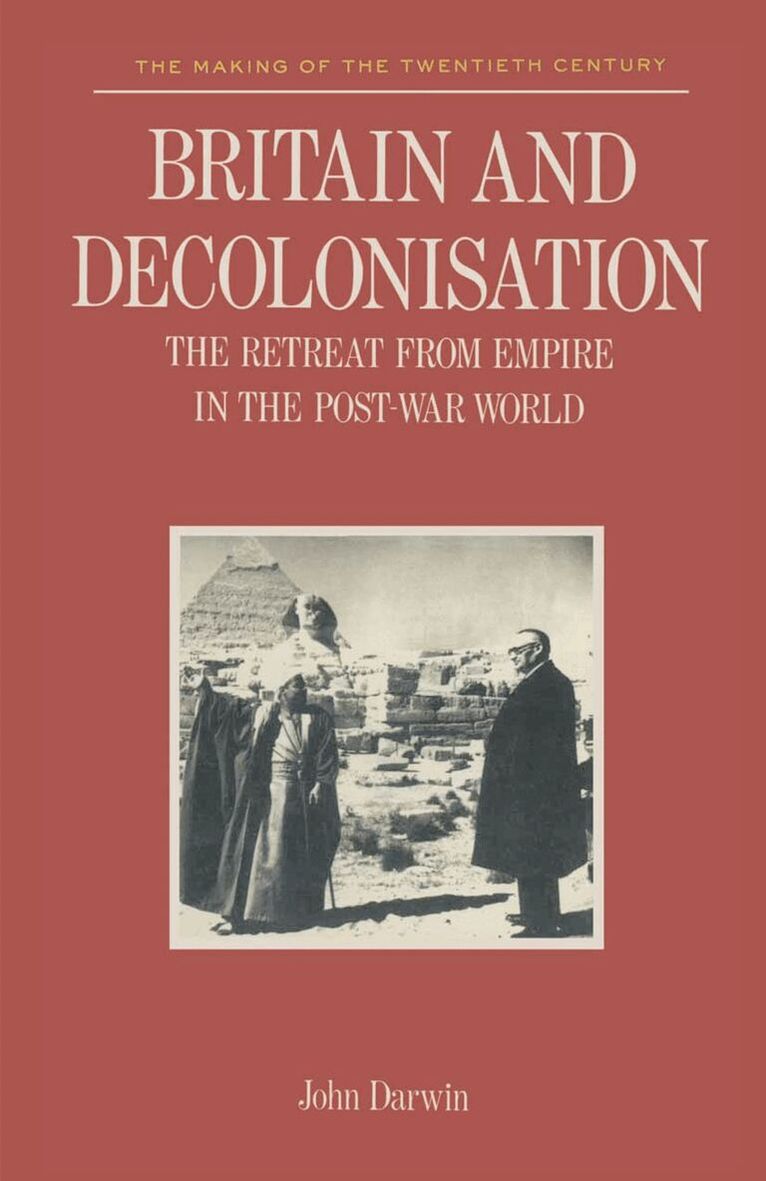
Britain and Decolonisation
The Retreat from Empire in the Post-War World
Av John Darwin
Häftad, 1988
573 kr
Lägg i varukorg
As the greatest imperial power before 1939 Britain played a leading role in the great post-war shift in the relationship between the West and the Third World which we call 'decolonisation'. But why did decolonisation come about and what were its effects? Was nationalism in colonial societies or …
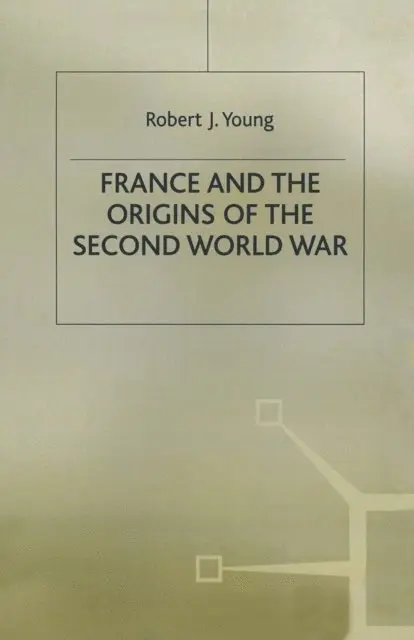
France and the Origins of the Second World War
Inbunden, 1996
2040 kr
Lägg i varukorg
France's drift into war and subsequent collapse have often been attributed to her level of confidence. Either she had too much, or too little. This work contends that these two moods were not mutually exclusive, that they coexisted throughout the interwar years, sustained by competing visions of …
France and the Origins of the Second World War
Häftad, 1996
588 kr
Lägg i varukorg
France's drift into war and subsequent collapse have often been attributed to her level of confidence. Either she had too much, or too little. This work contends that these two moods were not mutually exclusive, that they coexisted throughout the interwar years, sustained by competing visions of …
Britain and Decolonisation
The Retreat from Empire in the Post-War World
Av John Darwin
E-bok, 1988
626 kr
Lägg i varukorg
As the greatest imperial power before 1939 Britain played a leading role in the great post-war shift in the relationship between the West and the Third World which we call ''decolonisation''. But why did decolonisation come about and what were its effects? Was nationalism in colonial societies or …
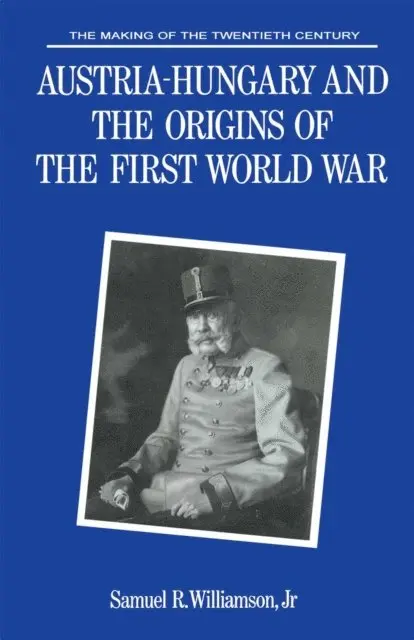
Austria-Hungary and the Origins of the First World War
E-bok, 1990
624 kr
Lägg i varukorg
A major re-examination of Habsburg decision-making from 1912 to July 1914, the study argues that Austria-Hungary and not Germany made the crucial decisions for war in the summer of 1914. Based on extensive new archival research, the book traces the gradual militarization of Austro-Hungarian foreign …
France and the Origins of the Second World War
E-bok, 1996
642 kr
Lägg i varukorg
France''s drift into war and subsequent collapse have often been attributed to her level of confidence. Either she had too much, or too little. This work contends that these two moods were not mutually exclusive, that they coexisted throughout the interwar years, sustained by competing visions of …