Master's Series in Physics and Astronomy - Böcker
Visar alla böcker i serien Master's Series in Physics and Astronomy. Handla med fri frakt och snabb leverans.
5 produkter
5 produkter
923 kr
Skickas inom 10-15 vardagar
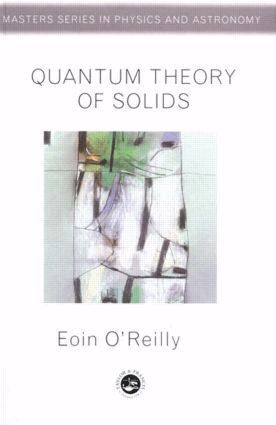
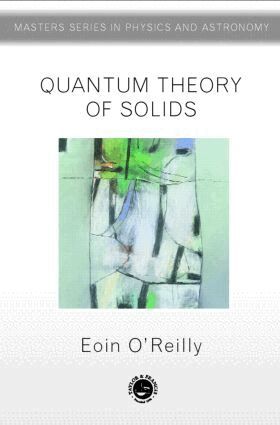
Quantum Theory of Solids presents a concisely-structured tour of the theory relating to chemical bonding and its application to the three most significant topics in solid state physics: semiconductors, magnetism, and superconductivity--topics that have seen major advances in recent years. This is a unique treatment that develops the concepts of quantum theory for the solid state from the basics through to an advanced level, encompassing additional quantum mechanics techniques, such as the variational method and perturbation theory. Written at the senior undergraduate/masters level, it provides an exceptional grounding in the subject.
1 759 kr
Skickas inom 10-15 vardagar
Quantum Theory of Solids presents a concisely-structured tour of the theory relating to chemical bonding and its application to the three most significant topics in solid state physics: semiconductors, magnetism, and superconductivity--topics that have seen major advances in recent years. This is a unique treatment that develops the concepts of quantum theory for the solid state from the basics through to an advanced level, encompassing additional quantum mechanics techniques, such as the variational method and perturbation theory. Written at the senior undergraduate/masters level, it provides an exceptional grounding in the subject.
2 231 kr
Skickas inom 10-15 vardagar
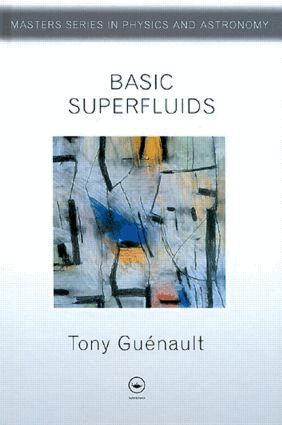
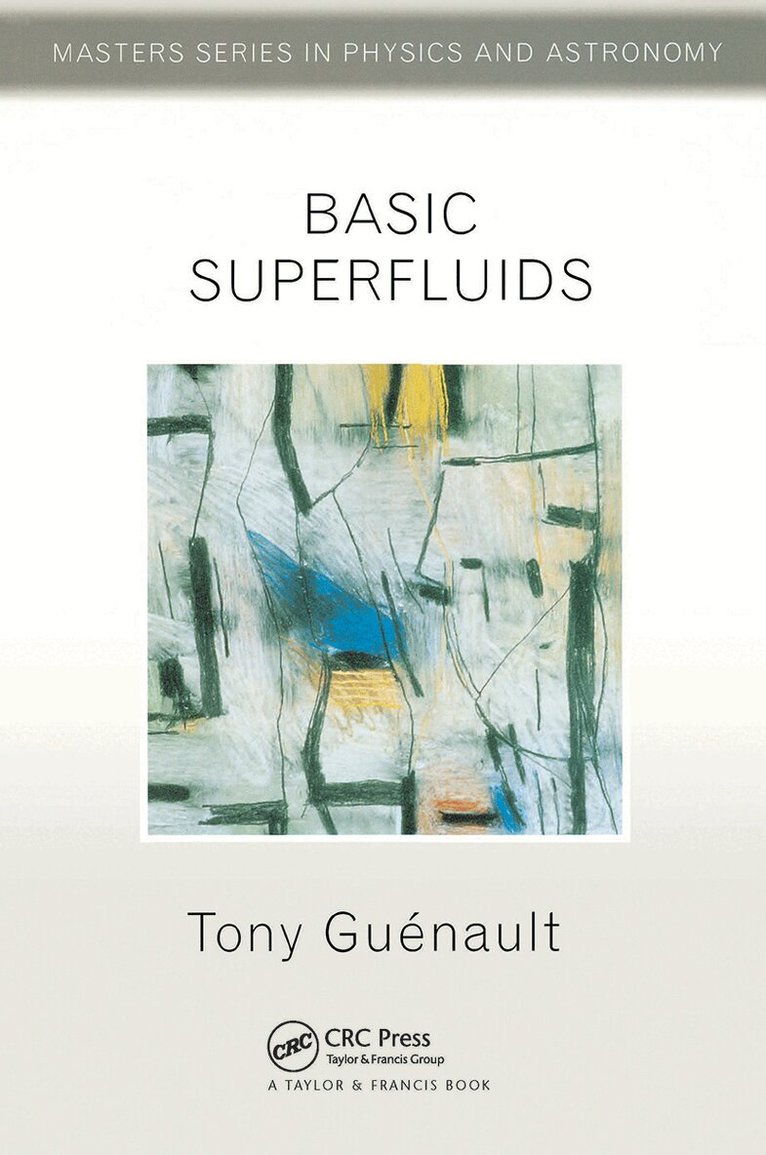
Superfluidity is the jewel in the crown of low temperature physics. When temperatures are low enough, every substance in thermal equilibrium must become ordered. Since some materials remain fluid to the lowest temperatures, it is a fascinating question as to how this ordering can take place. One possibility is the formation of a superfluid state, a state in which there is macroscopic quantum order-effectively quantum mechanics in a tea-cup. The author develops and presents these ideas in the beginning of Basic Superfluids. The book assumes some basic knowledge of quantum, statistical and thermal physics, and builds on this background to give a readable introduction to the three superfluids of low temperature physics. A short chapter describing experimental techniques is included. The emphasis throughout is on physical principles rather than technical detail, with the aim of introducing the subject in an accessible yet authoritative way to final-year undergraduates or starting postgraduate students.
896 kr
Skickas inom 10-15 vardagar
Superfluidity is the jewel in the crown of low temperature physics. When temperatures are low enough, every substance in thermal equilibrium must become ordered. Since some materials remain fluid to the lowest temperatures, it is a fascinating question as to how this ordering can take place. One possibility is the formation of a superfluid state, a state in which there is macroscopic quantum order-effectively quantum mechanics in a tea-cup. The author develops and presents these ideas in the beginning of Basic Superfluids. The book assumes some basic knowledge of quantum, statistical and thermal physics, and builds on this background to give a readable introduction to the three superfluids of low temperature physics. A short chapter describing experimental techniques is included. The emphasis throughout is on physical principles rather than technical detail, with the aim of introducing the subject in an accessible yet authoritative way to final-year undergraduates or starting postgraduate students.
896 kr
Skickas inom 10-15 vardagar
Cluster physics is the foundation of the increasingly important field of nanotechnology. Clusters, ranging in size from a few to many millions of atoms, constitute a fascinating field of research in physics, chemistry and materials science. They are formed by most of the elements of the Periodic Table, and the types of bonding and the resultant clusters are equally as varied.This book introduces atomic clusters, ranging from weakly-bonded clusters of argon to strongly-bonded carbon clusters and metal nano-particles. It includes worked examples to enable lecturers and students to gauge their understanding and progress. Atomic and Molecular Clusters describes the experimental generation, detection and interrogation of clusters and theoretical approaches developed to aid understanding of their physical properties. It classifies clusters according to their bonding types and gives examples of present and possible future applications of clusters in electronic, optical and magnetic devices.