Mathematics for Sustainable Developments – serie
Visar alla böcker i serien Mathematics for Sustainable Developments. Handla med fri frakt och snabb leverans.
8 produkter
8 produkter
Inbunden, Engelska, 2026
2 639 kr
Kommande
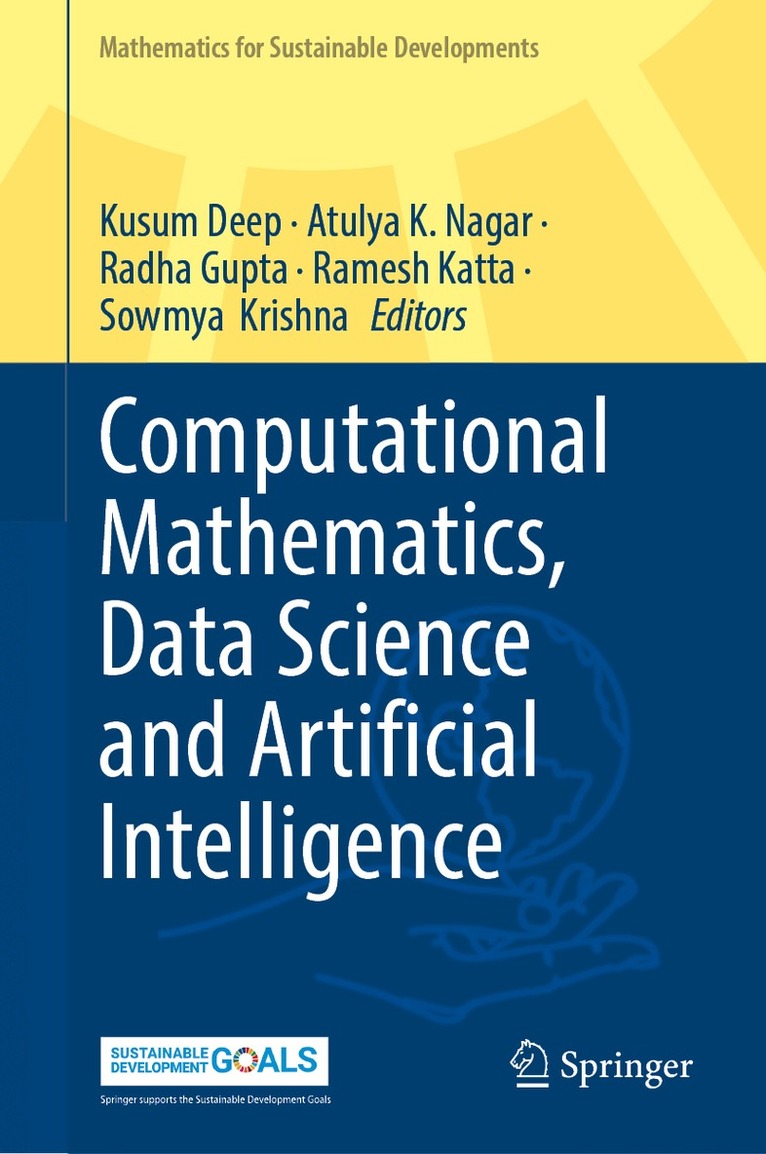
This book discusses the technical foundations and practical applications of data science, machine learning, artificial intelligence (AI), and business intelligence. By aligning its themes with key Sustainable Development Goals (SDGs)—including SDG 2 (Zero Hunger), SDG 3 (Good Health and Well-being), SDG 9 (Industry, Innovation and Infrastructure), SDG 11 (Sustainable Cities and Communities), SDG 12 (Responsible Consumption and Production), and SDG 16 (Peace, Justice and Strong Institutions)—the book underscores the transformative potential of intelligent data use in addressing global challenges.Designed for decision-makers, analysts, researchers, policy leaders, and professionals with a working knowledge of data analytics, the book provides both inspiration and technical depth to navigate the evolving landscape of data-driven innovation. It presents chapters that guide the development and deployment of data-driven solutions across diverse domains. Going beyond theory, chapters in the book focus on real-world challenges and innovations—ranging from plant disease detection and epidemiology to bio-inspired materials, antineoplastic drugs, and Ebola response. Additional chapters examine the role of data in physiotherapy, brand management, social networking, sustainable production, graph theory, and optimization strategies.
Inbunden, Engelska, 2026
2 639 kr
Kommande
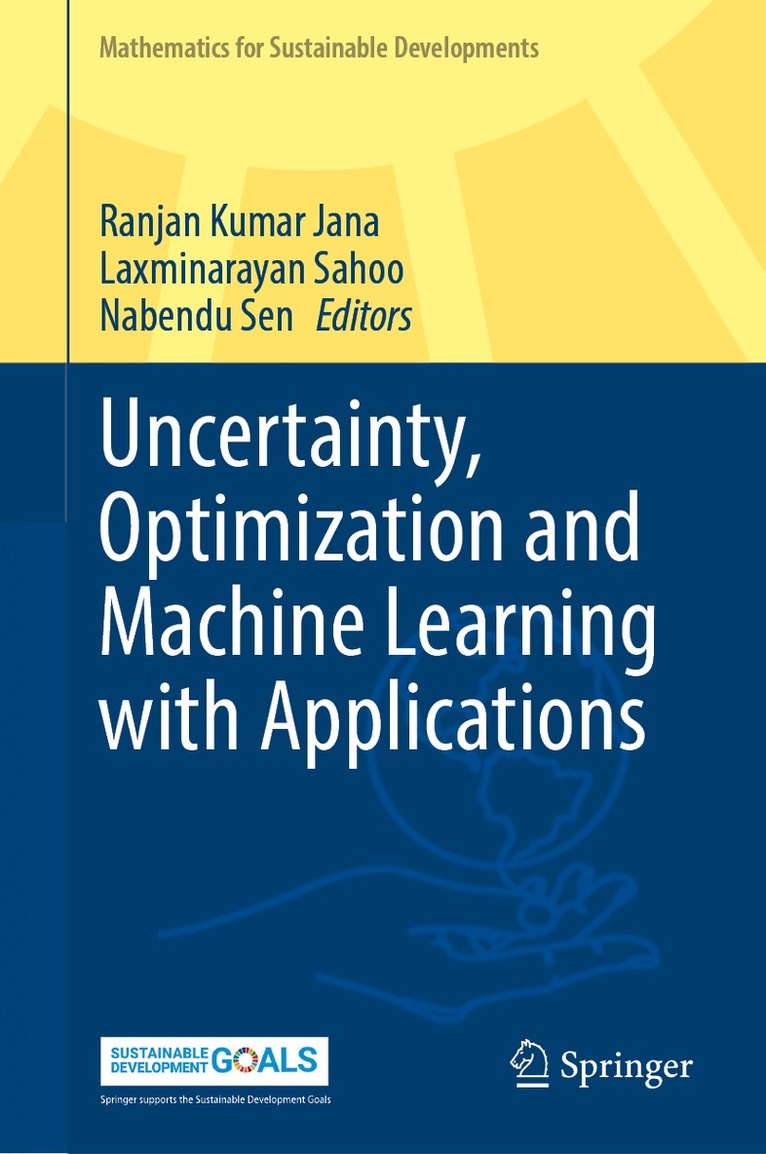
This book is a collection of select chapters on topics related to uncertainty, optimization techniques and machine learning applications, emphasizing applications that directly address topics related to five SDG goals:SDG 3 (Good Health and Well-Being); SDG 7 (Affordable and Clean Energy); SDG 9 (Industry, Innovation and Infrastructure); SDG 12 (Responsible Consumption and Production); SDG 13 (Climate Action).The book studies the intricate landscape of these converging SDG fields. It is designed to facilitate a deeper understanding of the complexities involved in decision-making, risk management and predictive analysis in uncertain environments. The book serves as a comprehensive reference for researchers, practitioners and students, providing tools and insights to address real-world challenges through cutting-edge approaches in uncertainty, optimization and machine learning. Contents of the book are divided into seven parts:Part 1: Advanced Mathematical Techniques. It offers foundational methods, including solidarity network allocation rules and applications of hidden Markov models in genomic analysis, setting the groundwork for advanced applications in diverse industries.Part 2: Risk Assessment and Decision-Making Techniques. It addresses occupational risks, consumer behaviour in green product purchasing and optimal strategies in high-risk industries through refined decision-making models.Part 3: Financial Analysis and Predictive Modelling. It helps readers explore anomaly detection in cryptocurrency markets and portfolio selection using genetic algorithms, as well as advanced probabilistic models that enhance predictive accuracy for financial and healthcare applications.Part 4: Portfolio Optimization. It discusses the Markowitz portfolio optimization with beta weighting based on market trends. Evolutionary computation for portfolio optimization for Indian market and a comparison of meta-heuristic techniques for portfolio optimization has also been presented.Part 5: Optimization and Inventory Management. It focuses on innovative inventory policies that account for factors like deteriorating demand and carbon emissions, incorporating fuzzy group decision-making to address sustainability.Part 6: Renewable Energy and Environmental Management. It underscores sustainable practices through multi-attribute decision-making frameworks, examining the impact of government subsidies on green supply chains and optimizing renewable energy projects.Part 7: Artificial Intelligence and Machine Learning Applications. It showcases AI’s transformative impact, from algorithmic trading to advancements in healthcare and construction. Topics like deep learning in medical imaging and AI-driven portfolio optimization highlight the growing potential of AI across domains.
Inbunden, Engelska, 2026
1 958 kr
Skickas inom 10-15 vardagar
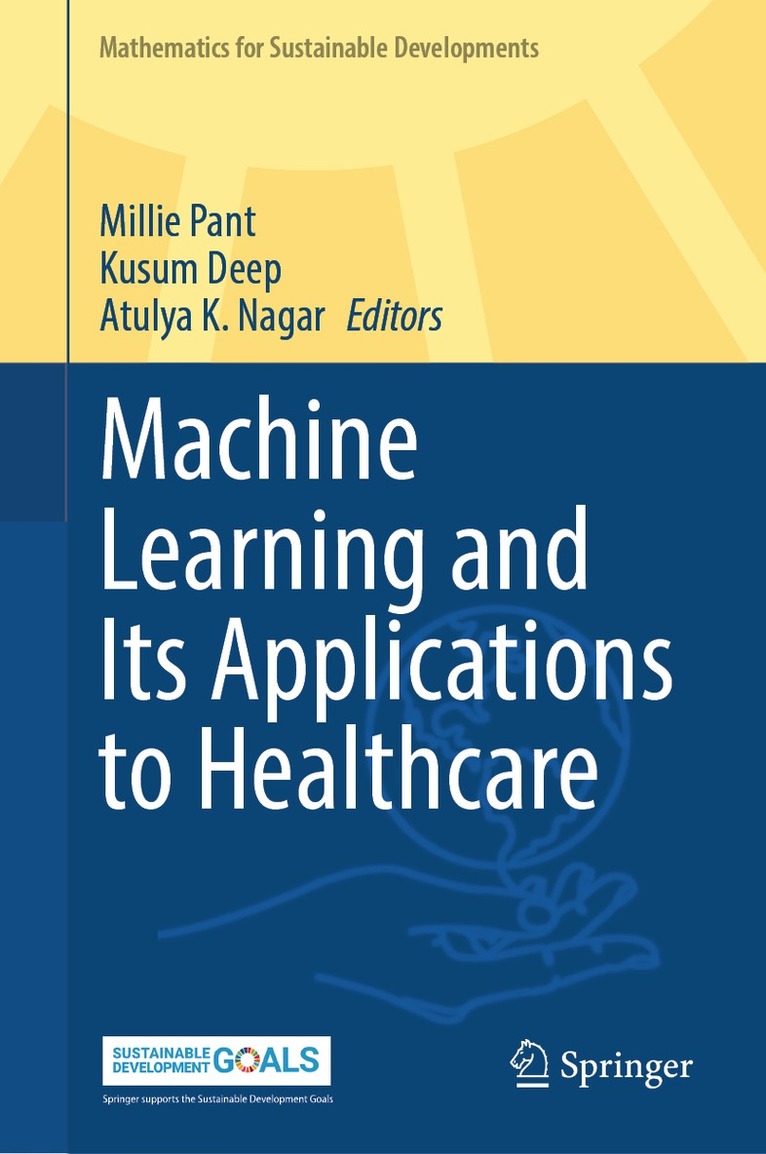
This book offers a comprehensive collection of 35 research contributions on the transformative role of soft computing techniques such as fuzzy logic, neural networks, genetic algorithms, and hybrid methodologies in solving complex problems in healthcare. By aligning its themes with Sustainable Development Goals (SDG 3: Good Health and Well-Being), the book offers a comprehensive analysis of how these technologies are being integrated into medical diagnosis, predictive modeling, disease classification, personalized medicine and healthcare management. Through an exploration of current trends, research advancements and practical implementations, the book demonstrates the immense potential of soft computing to improve healthcare outcomes. It features a wide array of applications, including diagnostic systems for diseases such as cancer, Alzheimer's and cardiovascular conditions, as well as personalized treatment recommendations, patient monitoring systems and medical image analysis. It is aimed at researchers, practitioners and healthcare professionals, seeking to explore and apply advanced computational techniques to the medical field, providing both theoretical insights and practical applications.
Inbunden, Engelska, 2026
2 053 kr
Skickas inom 11-20 vardagar
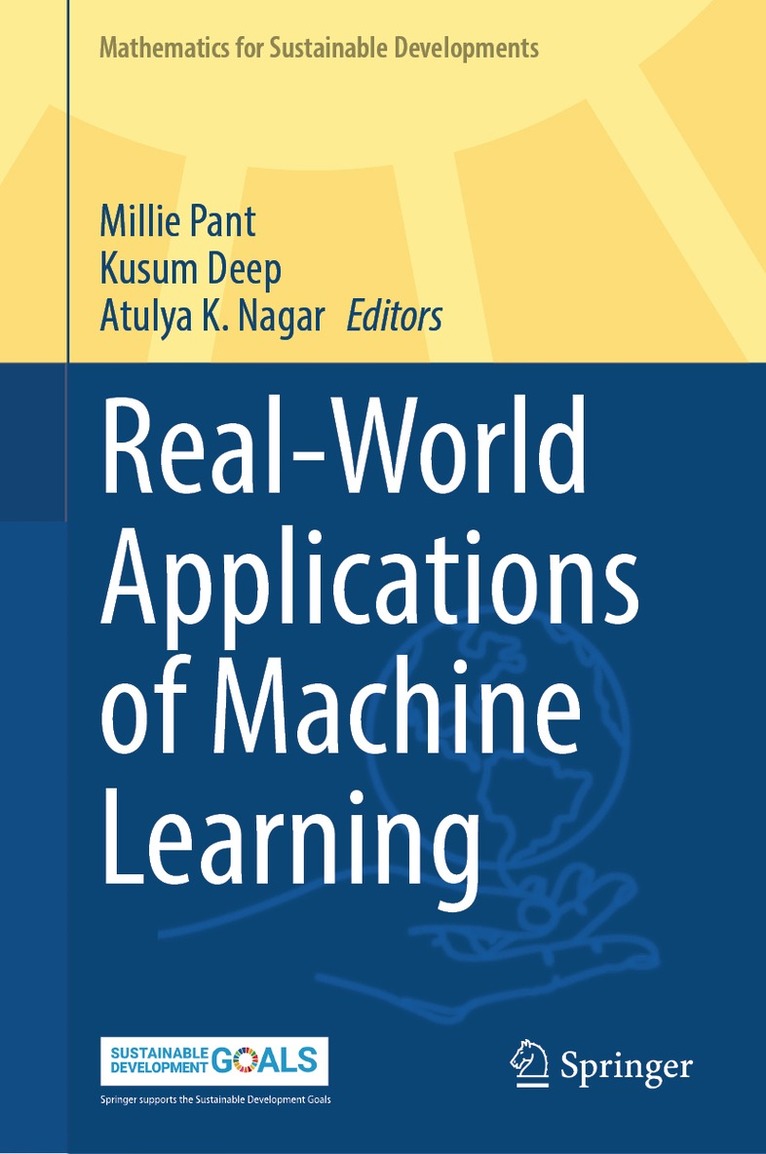
This book offers a comprehensive collection of 40 research contributions that explore the diverse and growing impact of machine learning across various domains. By aligning its themes with Sustainable Development Goals (SDG9: Industry, Innovation and Infrastructure), the book examines the practical applications ranging from healthcare, agriculture, cybersecurity and renewable energy systems to natural language processing, education and defense technologies. Each contribution highlights contemporary challenges, innovative methodologies and real-world implementations, offering insights into the interdisciplinary nature of machine learning research. The book serves as a valuable reference for researchers, practitioners and students interested in the evolving applications of machine learning to address complex and multidisciplinary problems.
Inbunden, Engelska, 2026
1 669 kr
Kommande
This book discusses the Universal Design for Learning (UDL) framework as essential tool for creating inclusive and effective mathematics classrooms and lessons in the twenty-first century. It emphasizes sustainable applications that directly address topics related to SDG 4 (Quality Education) and SDG 5 (Gender Equality). This book focuses on how UDL espouses the use of multiple means of representation, engagement and expression to accommodate the diverse learning needs of all students. It further highlights the need to integrate UDL principles in mathematics lessons, educators design instruction that is compelling, inclusive, accessible, engaging and challenging for every student, regardless of the characteristics (like abilities or backgrounds) that they bring into the classrooms.This book studies how the UDL principles can be used to design instruction that promotes critical thinking, problem-solving, collaboration, innovation and technological literacy, which are vital skills in the twenty-first century. It offers a holistic, research-driven and practical guide to UDL-based mathematics teaching, making it an invaluable resource for educators seeking impactful and inclusive strategies. What makes this book unique is its comprehensive approach to applying UDL, specifically in the context of mathematics education. The project outlines theoretical underpinnings and provides practical strategies and tools teachers can implement in their classrooms. The project offers research-based insights and real-world applications, thus making it a valuable knowledge resource for educators seeking to enhance their teaching practices.
Inbunden, Engelska, 2025
1 904 kr
Skickas inom 10-15 vardagar
This edited book provides a comprehensive framework for the integration of mathematical methodologies into biological research, emphasizing applications that directly address topics related to SDG 3 (Good Health and Well Being) and SDG 6 (Clean Water and Sanitation). From the mathematical modeling of infectious diseases to the design of smart agricultural systems, each chapter presents key global issues where mathematical analysis is a powerful tool for driving progress. This work emphasizes the importance of mathematical models in predicting outcomes, optimizing interventions and understanding the dynamics of complex biological systems.The central theme of the book is the application of mathematical methods, ranging from deterministic models, stochastic processes, fractional calculus and machine learning algorithms to biological problems, framed in the context of sustainability. Each chapter is crafted to showcase how mathematical models not only enhance our understanding of biological phenomena but also play a pivotal role in developing solutions to global issues such as pandemics, environmental degradation and resource management.
Häftad, Engelska, 2026
1 904 kr
Skickas inom 10-15 vardagar
This edited book provides a comprehensive framework for the integration of mathematical methodologies into biological research, emphasizing applications that directly address topics related to SDG 3 (Good Health and Well Being) and SDG 6 (Clean Water and Sanitation). From the mathematical modeling of infectious diseases to the design of smart agricultural systems, each chapter presents key global issues where mathematical analysis is a powerful tool for driving progress. This work emphasizes the importance of mathematical models in predicting outcomes, optimizing interventions and understanding the dynamics of complex biological systems.The central theme of the book is the application of mathematical methods, ranging from deterministic models, stochastic processes, fractional calculus and machine learning algorithms to biological problems, framed in the context of sustainability. Each chapter is crafted to showcase how mathematical models not only enhance our understanding of biological phenomena but also play a pivotal role in developing solutions to global issues such as pandemics, environmental degradation and resource management.
Inbunden, Engelska, 2026
844 kr
Skickas inom 10-15 vardagar
This book discusses the fascinating world of data science and cases in sustainability focusing on topics related to pattern recognition and machine learning, emphasizing applications that directly address topics related to SDG 9 (Industry, Innovation and Infrastructure). Recognizing the sustainable applications of big data, this text emphasizes the shift from traditional statistical analyses to more sophisticated methods. Each of these techniques—pattern recognition and machine learning—plays a crucial role in extracting hidden knowledge from vast amount of data. Targeted to students, researchers and professionals, it highlights the multidisciplinary and sustainable nature of the field and showcasing real-world applications and equips the readers to navigate the data-driven future.The first of the two volumes, the book highlights the multidisciplinary nature of data science in the fields of computer science, statistics, physics and economics. It meticulously guides its readers through the data science workflow, covering data collection, preparation, storage, analysis, management and visualization. It highlights specific techniques and algorithms used in each of the above-mentioned stages and offers explanations of major learning mechanisms: dimensionality reduction, classification, clustering and outlier analysis. Additionally, it sheds light on the modern field of deep learning and unfolds the complexity of its mechanism with explanation. Case studies showcase the practical applications and successes of data science across various domains.