
Mediterranean Studies in Late Antiquity and the Middle Ages – serie
Visar alla böcker i serien Mediterranean Studies in Late Antiquity and the Middle Ages. Handla med fri frakt och snabb leverans.
3 produkter
3 produkter
Inbunden, Engelska, 2022
1 740 kr
Skickas inom 5-8 vardagar
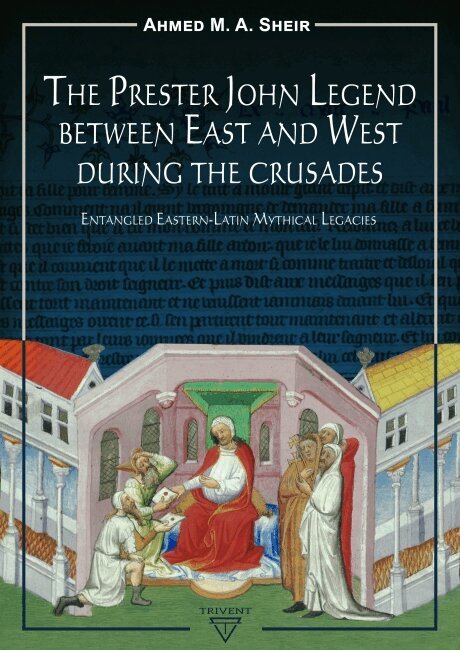
This book considers the history of the Prester John legend and its impact on the Crusades, investigating its entangled mythical history between East and West during the twelfth and thirteenth centuries. The present study thus responds to the still pressing need for a comprehensive historical investigation of the twelfth and thirteenth crusading history of the legend and its impact on the Muslim-Crusader encounters, examining various Latin, Arabic, Syriac, and Coptic accounts. It further reflects on new eastern aspects of the legend, presenting a new Arab scholarly view. This book first charts a pre-history of the legend in the late ancient Christian prophecy of the Last Emperor down to the emergence of the legend in the mid-twelfth century. Second, the work presents a historical discussion of the legend and its association with actual occurrences in the Far East and the Levant, analysing the legend history under the crusading crisis and the imperial papal schism in Europe. Meanwhile, the work considers the vague Prester John Letter addressed to Manuel I Komnenus, Byzantine Emperor, and its elaborate conception of a mythical eastern kingdom, revealing imaginative parallels on the wondrous East and legendary Eastern Christian kings in Arabic Muslim and Christian accounts of the Muslim geographer and cartographer al-Idr?s?, the Coptic ?b? al-Mak?rim and the Syriac Ibn al-?Ibr? (Bar Hebraeus), among others. Moreover, the book examines how the legend impacted war and peace processes between the Ayyubids and the Crusaders during the Fifth Crusade against Egypt (1217-1221), revealing how it was mingled with Arabic and Eastern Christian prophecies at the time. The study concludes by investigating the perception of Prester John by the papal and European envoys to the Mongols in the thirteenth century, revealing how the legend was instrumentalised (and even weaponised) to establish a Latin-Mongol crusade through a parallel exploration of relevant Latin, Arabic and Syriac sources.

Inbunden, Engelska, 2024
1 792 kr
Skickas inom 5-8 vardagar
Roman Tarraco was the foundation for what came afterward at the same site in Late-Antiquity and the Islamic and Latin Christian periods, but it was an overlay on an Iberian habitation, Cissis, a coastal trading post with the Phocaean Greek partner, Kesse; a Punic counterpart on the other side of the River Tulcis; and above them all a refuge fort on the summit of Mt. Tarrakon. This history traces the amalgamation of these and their Romanization during the Punic Wars I-III, and Rome's conversion of Tarraco into an imperial provincial capital. It was a complex of the main army base, a vast war industry, the government for the Hispania Citerior that became the Tarraconensis, a port, and trade center for the Western Mediterranean. It grew in population to become a major city with sophistication imitating everything Roman, The Hispanic Romans converted this outpost into a walled fortress and magnificent hillside municipality whose city-state encompassed the Camp de Tarragona as its territorium. Its upper tier was built into a terraformed tri-level monumental complex consisting of the temple ceremonial square, a new forum, and a circus with an amphitheater below. The hillside became its intramural residential district, and old Cissis was overbuilt with a lower forum, temple, market, and an entertainment area with a great theater, baths, gardens, and the coastal shelf consisted of a warehouse row, a manufacturing center, fishing villages and an artificial port, and waterworks for the Tulcis and harbor that demonstrated Roman advanced engineering just like the upper city showed off Roman architectural prowess and artistic tastes but also entertainment, i.e., its love of racing and games, bloodlust, and violence, and enjoyment of drama, music, and the brisque.The province would have an extensive road system, a proliferation of provincial towns, wealthy villas, and large-scale farms. The Tarraconensis was reduced in size during the re-organizations of the Empire, and the Roman Ulterior or Baetica became more urbanized as its population became more dense. The powerful northeastern capital followed the history of Rome and decline of the Empire with its interminable wars, barbarian invasions, weakened civic religion, and economic problems leading to the Visigohtic successor state in Late-Antiquity. Roman Tarraco was transformed into Tarracona but its monumental ruins and fabled history remained to be an inspiration to the medieval Restoration movement after the Islamic interlude. These are the subjects of subsequent volumes in this series.
Inbunden, Engelska, 2024
1 022 kr
Skickas inom 5-8 vardagar
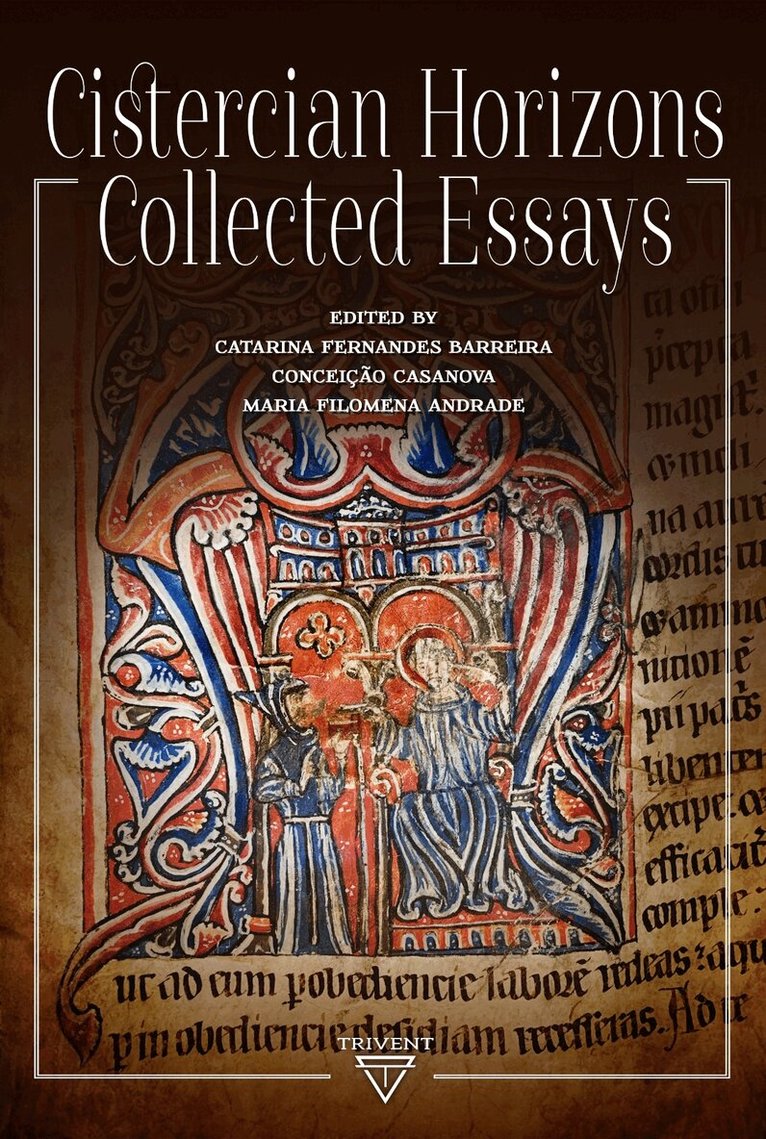
This book brings together the insights of twenty-six scholars across eighteen articles, and it delves into key themes of Cistercian Studies, including the normative frameworks, visitations, and reforms within the Cistercian Order. It explores the distinctiveness of specific communities, the interplay between Cistercian architecture and liturgical texts and practises, and the significance of Iberian Cistercian libraries and manuscripts. The book also examines the material characteristics and technical evolution of the Cistercian Order using advanced laboratory techniques, providing crucial contributions to the history of the Alcobaça scriptorium in its early centuries and continuing to influence Cistercian studies today.