Metal Ions in Life Sciences Series - Böcker
Visar alla böcker i serien Metal Ions in Life Sciences Series. Handla med fri frakt och snabb leverans.
11 produkter
11 produkter
2 113 kr
Skickas inom 10-15 vardagar
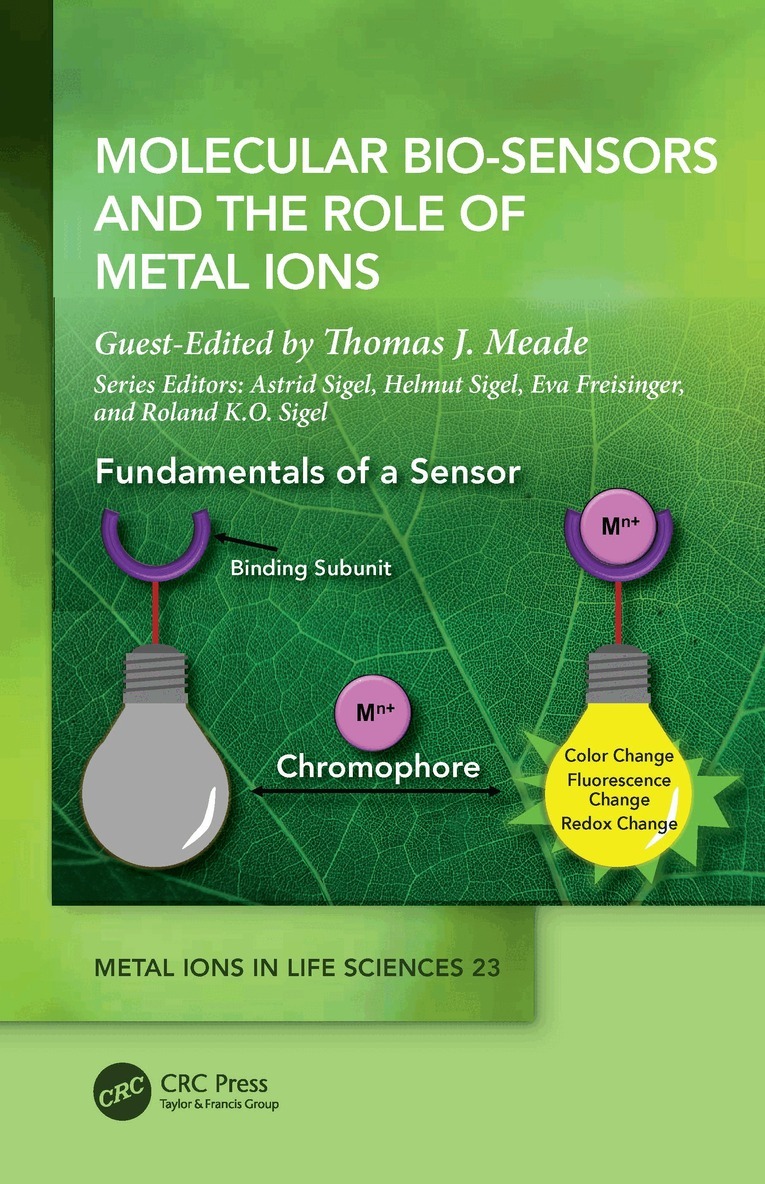
Volume 23, entitled Molecular Bio-Sensors and the Role of Metal Ions, of the series Metal Ions in Life Sciences (MILS) represents a milestone of contemporary progress and understanding of molecular bio-sensors for metal ions. It is bringing together the latest research in academia and industry, and it also emphasizes the spectrum of evolving regulations from regulatory bodies. This vibrant research area is covered by 31 internationally recognized experts. The impact of MILS-23 is manifested by more than 1300 references and close to 200 figures, more than 100 of them in color; further information is summarized in several tables. In conclusion, Volume 23 significantly advances our understanding of Molecular Bio-Sensors, it is therefore an essential resource for scientists working in the wide range from earth sciences, material sciences, physics, pharmacology, enzymology, analytical, organic, and inorganic biochemistry all the way through to medicine including the clinic. • It provides an understanding of the roles that metals play in living systems. • It offers an insight for the demands needed in the clinic. • It reveals the interplay between bio-sensors and therapies. The Series METAL IONS IN LIFE SCIENCES increases our understanding of the relationship between the chemistry of metals and life processes. The volumes reflect the interdisciplinary nature of Biological Inorganic Chemistry and coordinate the efforts of researchers in fields like biochemistry, inorganic chemistry, coordination chemistry, molecular and structural biology, enzymology, toxicology, environmental chemistry, biophysics, pharmacy, and medicine. The volumes deal with the formation, stability, structure, and reactivity of metal-containing biological compounds of low and high molecular weight. The metabolism and transport of metal ions and their complexes as well as new models of complicated natural structures and processes are in the focus. Consequently, the volumes are an essential source for researchers in the mentioned fields as well as for teachers preparing courses, e.g., in Bioinorganic Chemistry.
889 kr
Skickas inom 10-15 vardagar
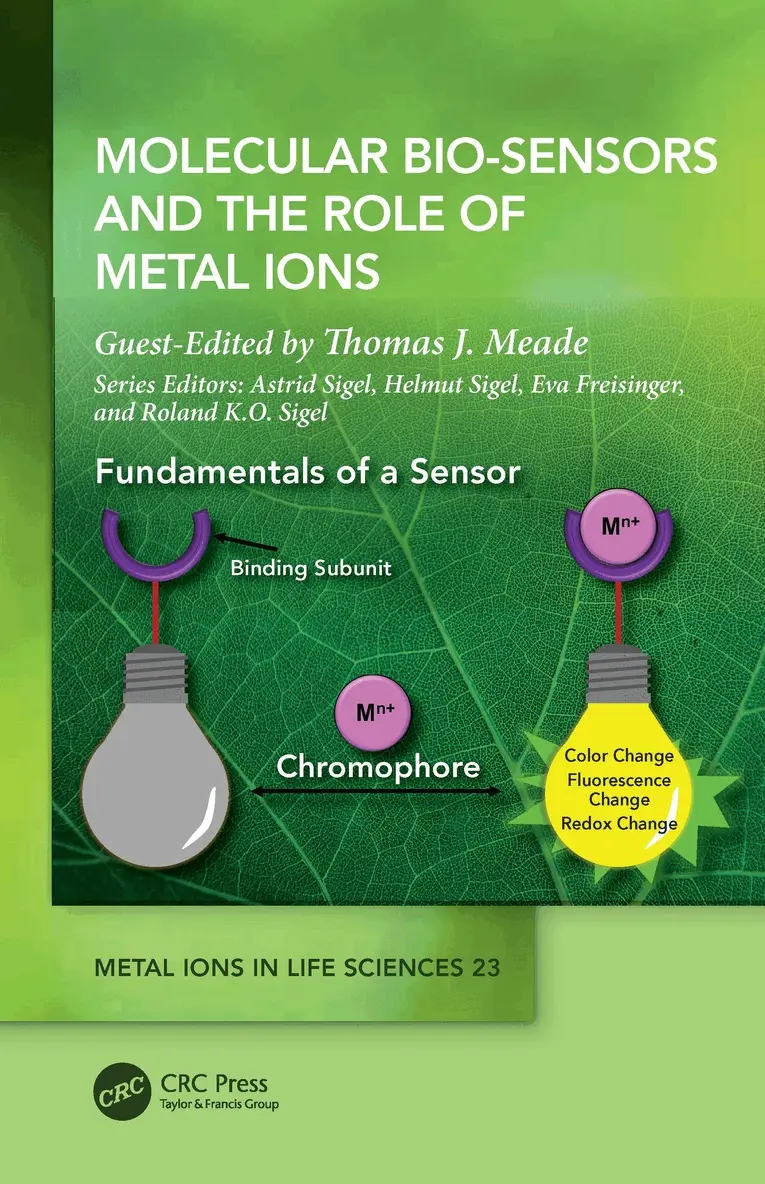
Volume 23, entitled Molecular Bio-Sensors and the Role of Metal Ions, of the series Metal Ions in Life Sciences (MILS) represents a milestone of contemporary progress and understanding of molecular bio-sensors for metal ions. It is bringing together the latest research in academia and industry, and it also emphasizes the spectrum of evolving regulations from regulatory bodies. This vibrant research area is covered by 31 internationally recognized experts. The impact of MILS-23 is manifested by more than 1300 references and close to 200 figures, more than 100 of them in color; further information is summarized in several tables. In conclusion, Volume 23 significantly advances our understanding of Molecular Bio-Sensors, it is therefore an essential resource for scientists working in the wide range from earth sciences, material sciences, physics, pharmacology, enzymology, analytical, organic, and inorganic biochemistry all the way through to medicine including the clinic. • It provides an understanding of the roles that metals play in living systems. • It offers an insight for the demands needed in the clinic. • It reveals the interplay between bio-sensors and therapies. The Series METAL IONS IN LIFE SCIENCES increases our understanding of the relationship between the chemistry of metals and life processes. The volumes reflect the interdisciplinary nature of Biological Inorganic Chemistry and coordinate the efforts of researchers in fields like biochemistry, inorganic chemistry, coordination chemistry, molecular and structural biology, enzymology, toxicology, environmental chemistry, biophysics, pharmacy, and medicine. The volumes deal with the formation, stability, structure, and reactivity of metal-containing biological compounds of low and high molecular weight. The metabolism and transport of metal ions and their complexes as well as new models of complicated natural structures and processes are in the focus. Consequently, the volumes are an essential source for researchers in the mentioned fields as well as for teachers preparing courses, e.g., in Bioinorganic Chemistry.
2 036 kr
Skickas inom 10-15 vardagar
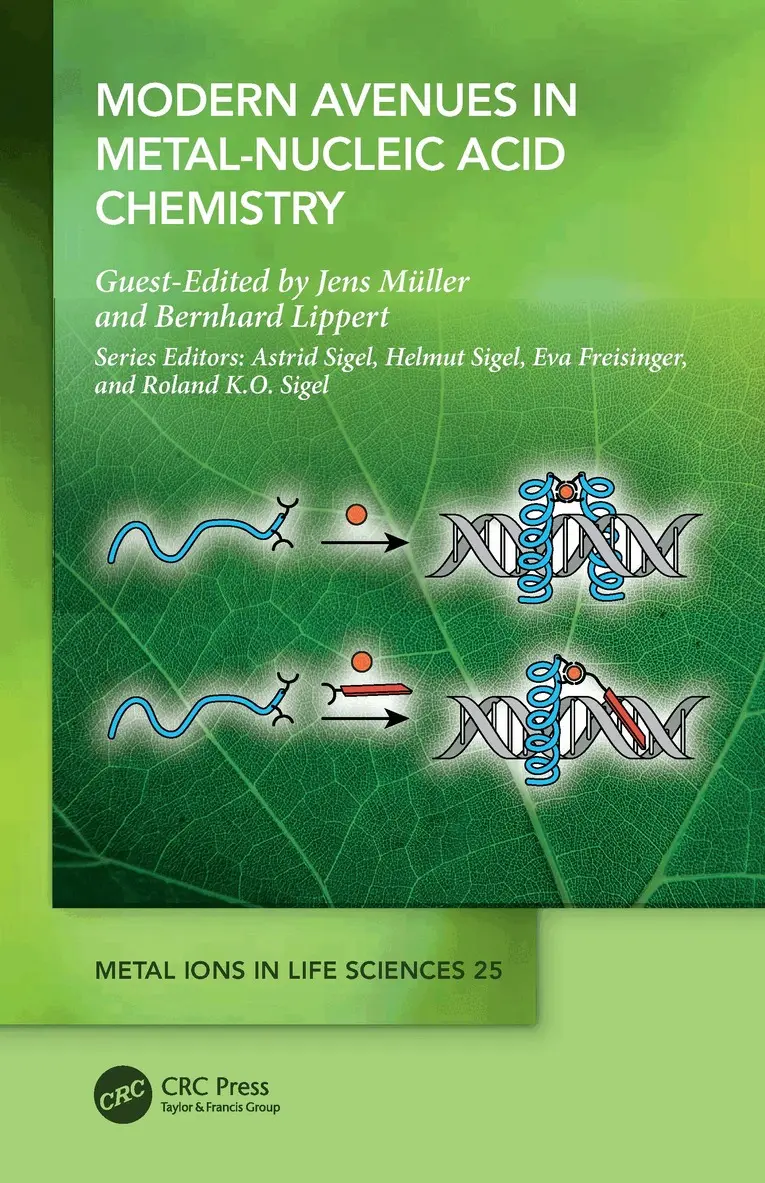
Volume 25, entitled Modern Avenues in Metal-Nucleic Acid Chemistry, of the series Metal Ions in Life Sciences (MILS), provides a timely overview of selected relevant developments in a field which previously had a pronounced focus on fundamental chemistry aspects such as coordination principles, structural chemistry, and consequences for biological processes and disease-related medicinal issues. More recently, also as a consequence of the advent of supramolecular chemistry, advancements in nanochemistry, and new bio-analytical methods, novel aspects of this field have emerged. MILS-25 gives a state-of-the-art account on the present state of research in this field, addressing, among others, porous materials, non-covalent interactions, stimuli-responsive bioconjugates, DNA-templated metal arrays and nanoclusters, genotyping, guanine quadruplexes, and riboswitches. It consists of 15 comprehensive chapters with over 1600 citations, 160 figures (90 of them in color), with key contributions from 40 international experts from Europe, Asia, and America. It is an essential resource for scientists from numerous disciplines, ranging from materials science to biochemistry, by way of classical chemistry and physics.It offers an update on nucleic acid – metal complex bioconjugates and their applicationsIt provides an insight into coordination polymers involving nucleic acid componentsIt covers a wide range of nucleic acids, from DNA duplexes, triplexes and quadruplexes to RNA
693 kr
Skickas inom 10-15 vardagar
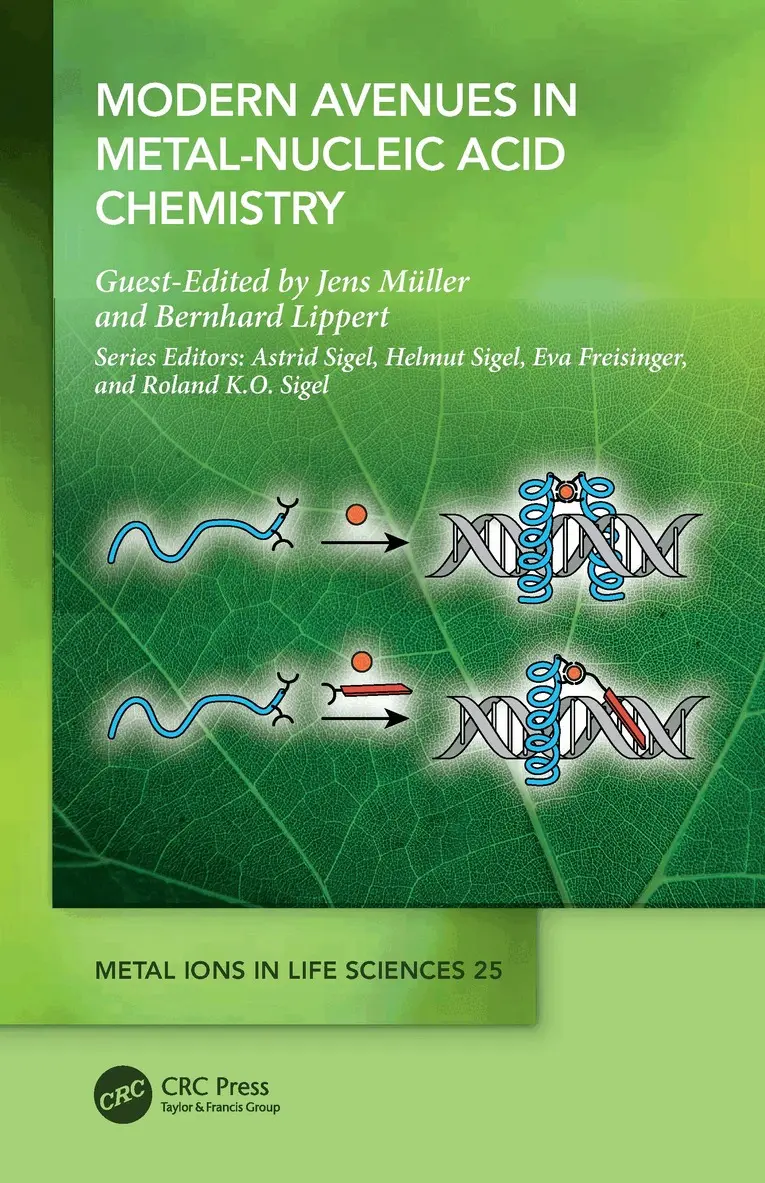
Volume 25, entitled Modern Avenues in Metal-Nucleic Acid Chemistry, of the series Metal Ions in Life Sciences (MILS), provides a timely overview of selected relevant developments in a field which previously had a pronounced focus on fundamental chemistry aspects such as coordination principles, structural chemistry, and consequences for biological processes and disease-related medicinal issues. More recently, also as a consequence of the advent of supramolecular chemistry, advancements in nanochemistry, and new bio-analytical methods, novel aspects of this field have emerged. MILS-25 gives a state-of-the-art account on the present state of research in this field, addressing, among others, porous materials, non-covalent interactions, stimuli-responsive bioconjugates, DNA-templated metal arrays and nanoclusters, genotyping, guanine quadruplexes, and riboswitches. It consists of 15 comprehensive chapters with over 1600 citations, 160 figures (90 of them in color), with key contributions from 40 international experts from Europe, Asia, and America. It is an essential resource for scientists from numerous disciplines, ranging from materials science to biochemistry, by way of classical chemistry and physics.It offers an update on nucleic acid – metal complex bioconjugates and their applicationsIt provides an insight into coordination polymers involving nucleic acid componentsIt covers a wide range of nucleic acids, from DNA duplexes, triplexes and quadruplexes to RNA
1 977 kr
Skickas inom 10-15 vardagar
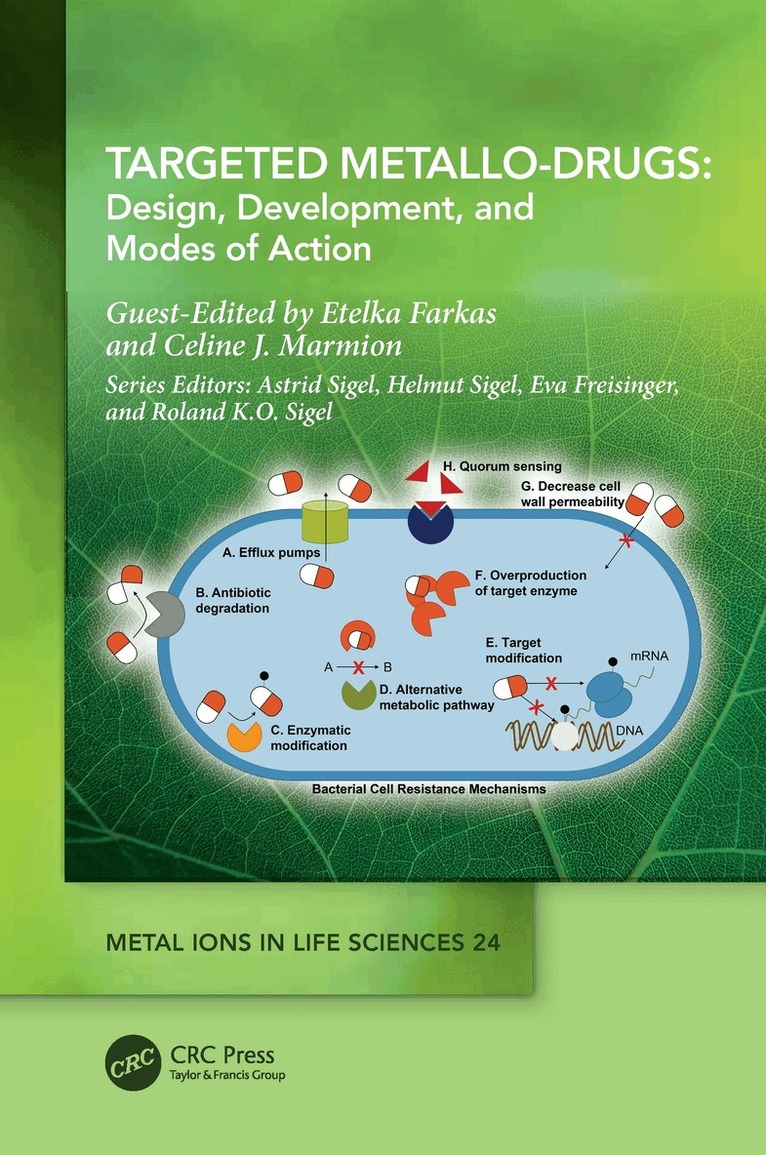
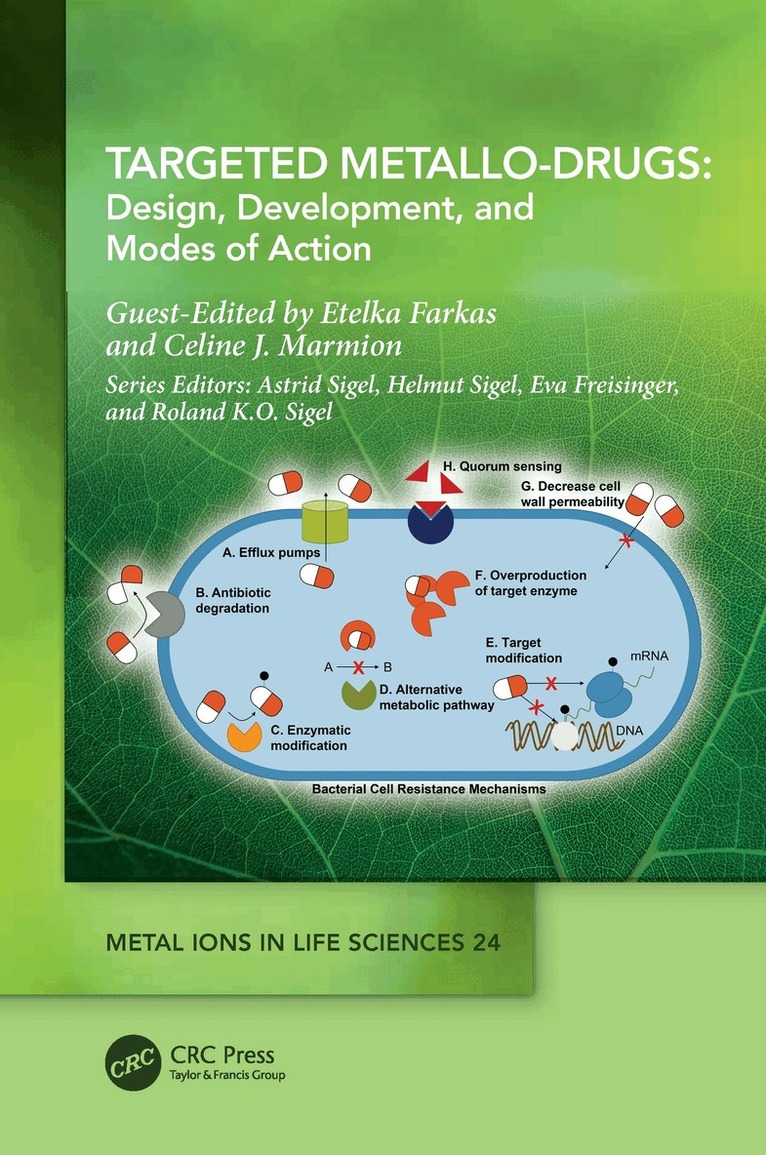
Volume 24, entitled Targeted Metallo-Drugs: Design, Development, and Modes of Action, of the series Metal Ions in Life Sciences (MILS), fosters inter-disciplinary research in the vibrant field of Biological Inorganic Chemistry. Inspired by the clinical success of cisplatin as a leading anticancer drug but mindful of the shortcomings associated with its use including dose-limiting toxic side effects and acquired or intrinsic drug resistance, scientists across the globe have been endeavoring to identify new metallo-drugs for therapeutic exploitation. This has led to innovative metallo-drug candidates that (i) enhance cancer cell selectivity, thus reducing toxic side effects, and/or (ii) possess new modes of action to improve efficacy and also target resistance pathways. This and more are captured in MILS- 24 which consists of 12 comprehensive, well-illustrated, and up to date chapters with over 1600 citations, 100 figures, and 10 tables with key contributions from 32 international experts from Europe, Asia, and North and South America. MILS- 24 not only keeps the scientific community abreast of latest developments, it also serves as an invaluable resource to stimulate further research on targeted metallo-drug design and development.It covers anticancer, antimicrobial, antiviral, and other agents, such as those targeting tropical diseases and cyanide poisoning and radiometals in molecular imaging and therapyIt highlights recent metallo-drug developments targeting COVID-19It features advanced spectroscopic methods and metallomics as important tools to elucidate the modes of actions of metallo-drugs
700 kr
Skickas inom 10-15 vardagar
Volume 24, entitled Targeted Metallo-Drugs: Design, Development, and Modes of Action, of the series Metal Ions in Life Sciences (MILS), fosters inter-disciplinary research in the vibrant field of Biological Inorganic Chemistry. Inspired by the clinical success of cisplatin as a leading anticancer drug but mindful of the shortcomings associated with its use including dose-limiting toxic side effects and acquired or intrinsic drug resistance, scientists across the globe have been endeavoring to identify new metallo-drugs for therapeutic exploitation. This has led to innovative metallo-drug candidates that (i) enhance cancer cell selectivity, thus reducing toxic side effects, and/or (ii) possess new modes of action to improve efficacy and also target resistance pathways. This and more are captured in MILS- 24 which consists of 12 comprehensive, well-illustrated, and up to date chapters with over 1600 citations, 100 figures, and 10 tables with key contributions from 32 international experts from Europe, Asia, and North and South America. MILS- 24 not only keeps the scientific community abreast of latest developments, it also serves as an invaluable resource to stimulate further research on targeted metallo-drug design and development.It covers anticancer, antimicrobial, antiviral, and other agents, such as those targeting tropical diseases and cyanide poisoning and radiometals in molecular imaging and therapyIt highlights recent metallo-drug developments targeting COVID-19It features advanced spectroscopic methods and metallomics as important tools to elucidate the modes of actions of metallo-drugs
1 966 kr
Skickas inom 10-15 vardagar
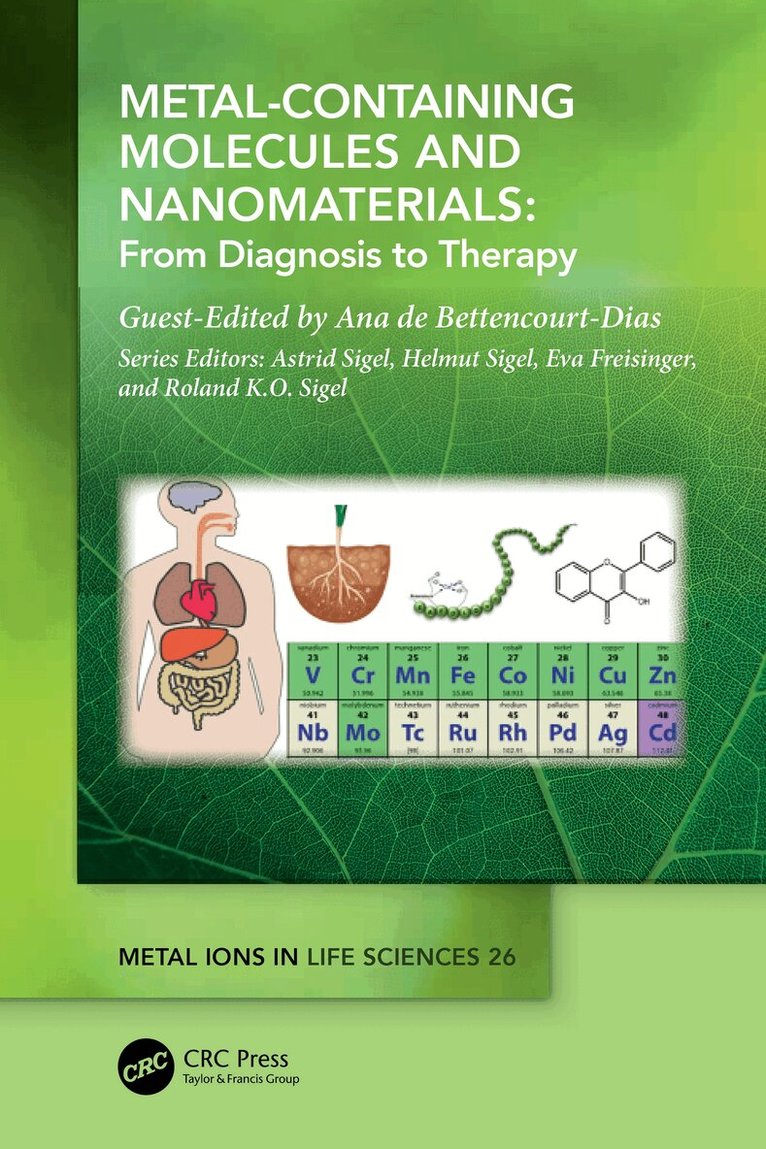
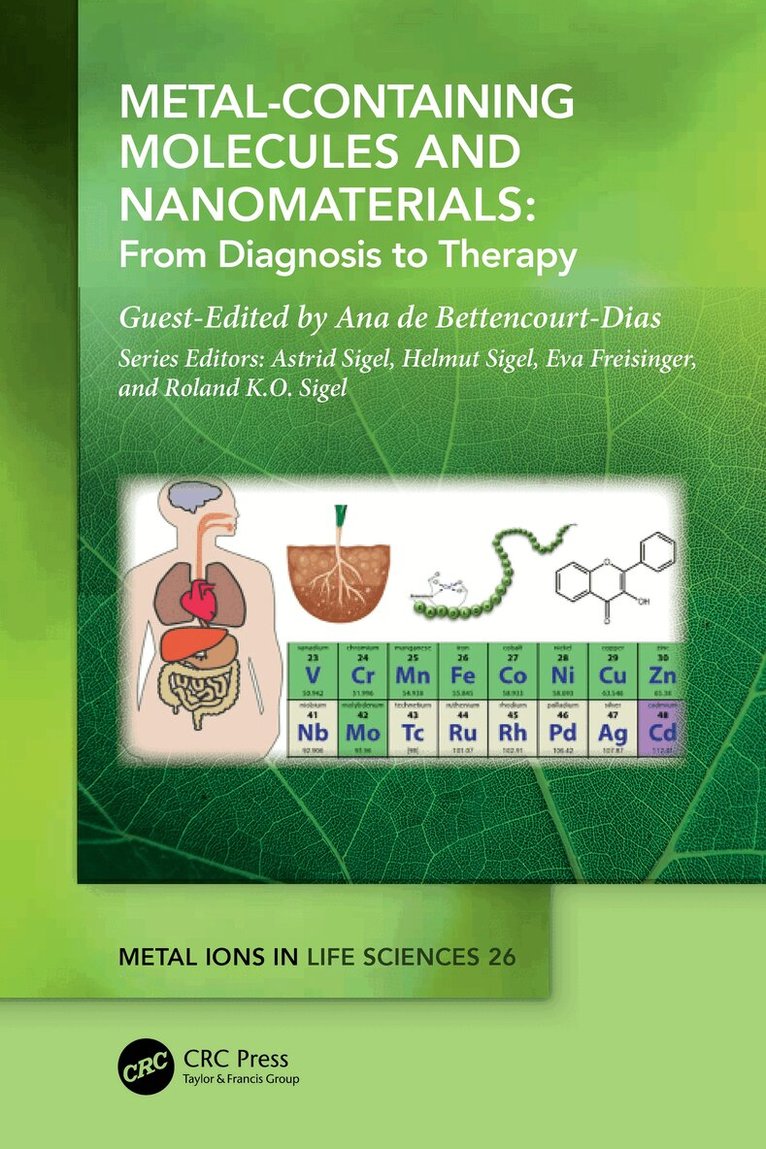
Since the discovery and successful deployment of salvarsan to treat syphilis, as well as cisplatin as a cancer drug, the field of metallodrugs has been flourishing. In addition to therapeutic applications, metals and metal-containing molecules have properties, such as an electrochemical or an optical signal, that can be used to diagnose biologically relevant molecules or unravel cellular metabolism. Moreover, metals are part of the essential elements for life, and of increased attention in nutraceuticals. Most of the current diagnosis processes, therapeutics, and nutraceuticals are based on organic molecules. MILS-26 reviews in 7 comprehensive chapters, written by 20 experienced authors, the most recent metal-containing molecules and nanomaterials for diagnosis and therapy.Features:The field of metallodrugs has been flourishing and this area of research can be used to diagnose specific biologically relevant molecules or unravel cellular metabolism. The authors are preeminent bioinorganic and medicinal inorganic chemists and review the most current research in this field. The book discusses the properties and therapeutic applications of metals and metal-containing molecules including the use of electrochemical or optical signal for diagnosis of biologically relevant molecules. It endorses and stimulates research in the vibrant field of biological inorganic chemistry. It reviews the most current research supporting the relevance of metal-containing molecules and nanomaterials for diagnosis and therapy.
749 kr
Skickas inom 10-15 vardagar
Since the discovery and successful deployment of salvarsan to treat syphilis, as well as cisplatin as a cancer drug, the field of metallodrugs has been flourishing. In addition to therapeutic applications, metals and metal-containing molecules have properties, such as an electrochemical or an optical signal, that can be used to diagnose biologically relevant molecules or unravel cellular metabolism. Moreover, metals are part of the essential elements for life, and of increased attention in nutraceuticals. Most of the current diagnosis processes, therapeutics, and nutraceuticals are based on organic molecules. MILS-26 reviews in 7 comprehensive chapters, written by 20 experienced authors, the most recent metal-containing molecules and nanomaterials for diagnosis and therapy.Features:The field of metallodrugs has been flourishing and this area of research can be used to diagnose specific biologically relevant molecules or unravel cellular metabolism. The authors are preeminent bioinorganic and medicinal inorganic chemists and review the most current research in this field. The book discusses the properties and therapeutic applications of metals and metal-containing molecules including the use of electrochemical or optical signal for diagnosis of biologically relevant molecules. It endorses and stimulates research in the vibrant field of biological inorganic chemistry. It reviews the most current research supporting the relevance of metal-containing molecules and nanomaterials for diagnosis and therapy.
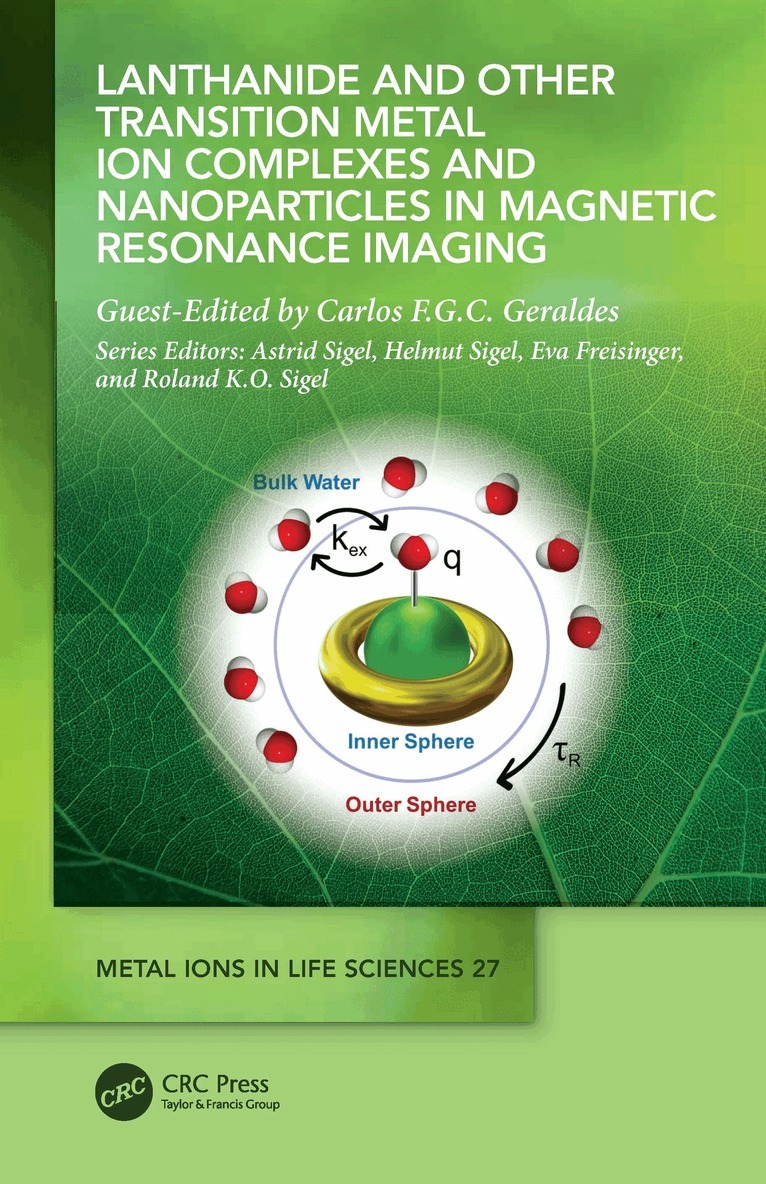
Lanthanide and Other Transition Metal Ion Complexes and Nanoparticles in Magnetic Resonance Imaging
Inbunden, Engelska, 2024
1 966 kr
Skickas inom 10-15 vardagar
Since the development of the first clinical MRI contrast agent, Gd(DTPA) (or Magnevist®) in the early 1980s, another three linear and three macrocyclic (eg. Gd(DOTA) (Dotarem®) have been introduced in the clinic and inspired a huge number of researchers worldwide to perform preclinical research to obtain contrast agents for many kinds of clinical applications, which are described in this book. The most current research has been assembled here and can be used by the scientific community to continue increasing the relevance of metal-containing molecules and nanomaterials for MRI-based diagnosis and thus increase the practical use of these systems.Presents the importance of metal-containing molecules and nanomaterials for MRI-based diagnosis and the practical use of these systems.Discusses the structure and dynamics of Ln-based contrast agents as well as computational studies related to these agents.Endorses and stimulates research in the vibrant field of biological inorganic chemistry.Reviews the most current research supporting the relevance of metal-containing molecules and nanomaterials for diagnosis and therapy.The authors are preeminent bioinorganic and medicinal inorganic chemists and review the most current research in this field.
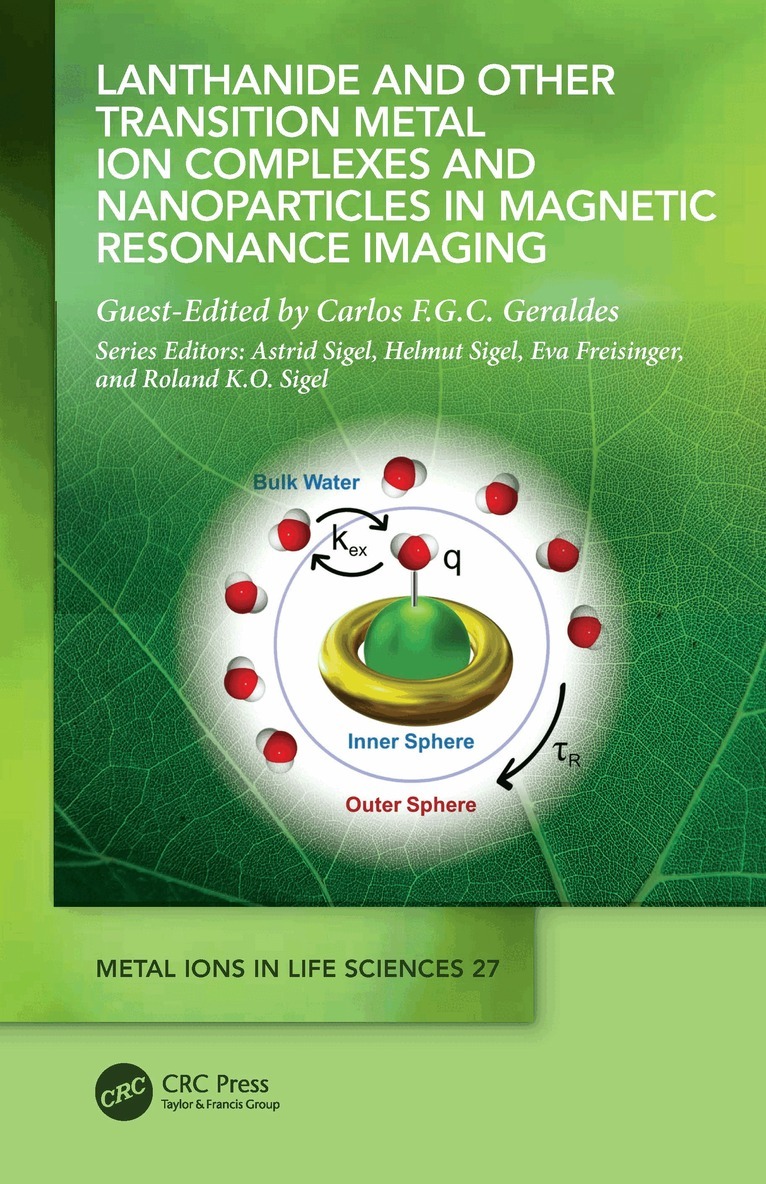
Lanthanide and Other Transition Metal Ion Complexes and Nanoparticles in Magnetic Resonance Imaging
Häftad, Engelska, 2026
800 kr
Kommande
Since the development of the first clinical MRI contrast agent, Gd(DTPA) (or Magnevist®) in the early 1980s, another three linear and three macrocyclic (eg. Gd(DOTA) (Dotarem®) have been introduced in the clinic and inspired a huge number of researchers worldwide to perform preclinical research to obtain contrast agents for many kinds of clinical applications, which are described in this book. The most current research has been assembled here and can be used by the scientific community to continue increasing the relevance of metal-containing molecules and nanomaterials for MRI-based diagnosis and thus increase the practical use of these systems.Presents the importance of metal-containing molecules and nanomaterials for MRI-based diagnosis and the practical use of these systems.Discusses the structure and dynamics of Ln-based contrast agents as well as computational studies related to these agents.Endorses and stimulates research in the vibrant field of biological inorganic chemistry.Reviews the most current research supporting the relevance of metal-containing molecules and nanomaterials for diagnosis and therapy.The authors are preeminent bioinorganic and medicinal inorganic chemists and review the most current research in this field.
2 113 kr
Skickas inom 10-15 vardagar
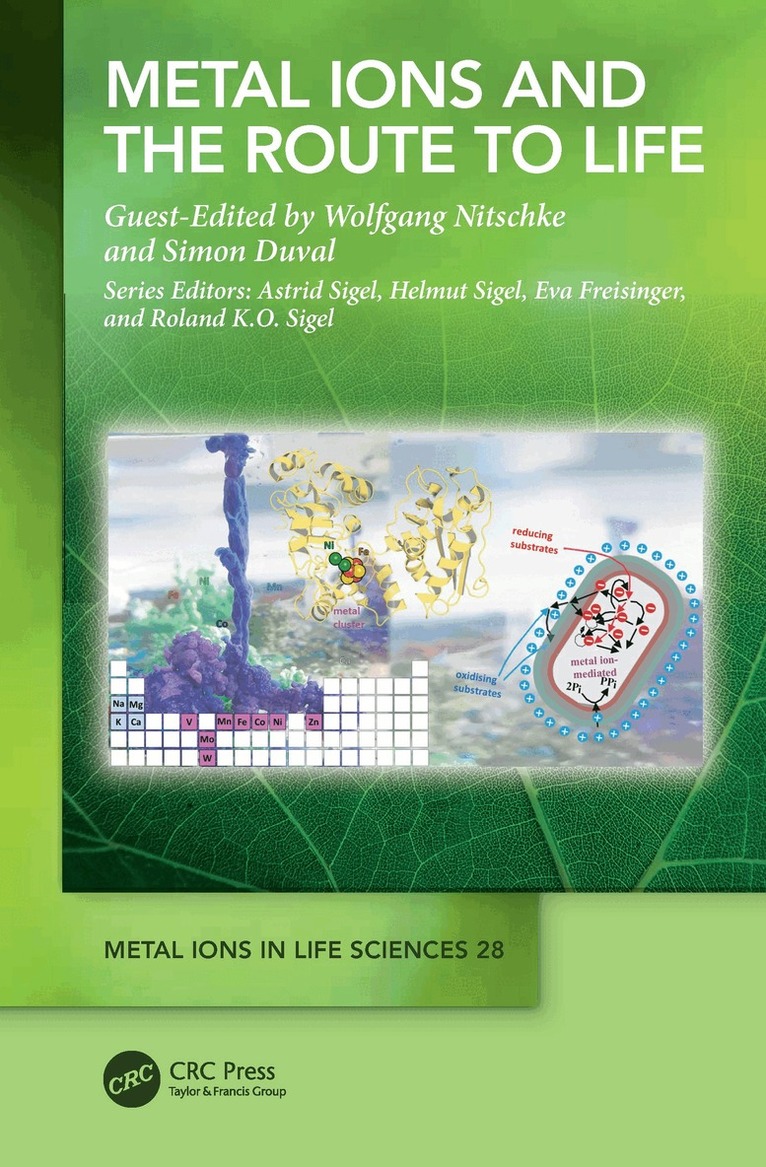
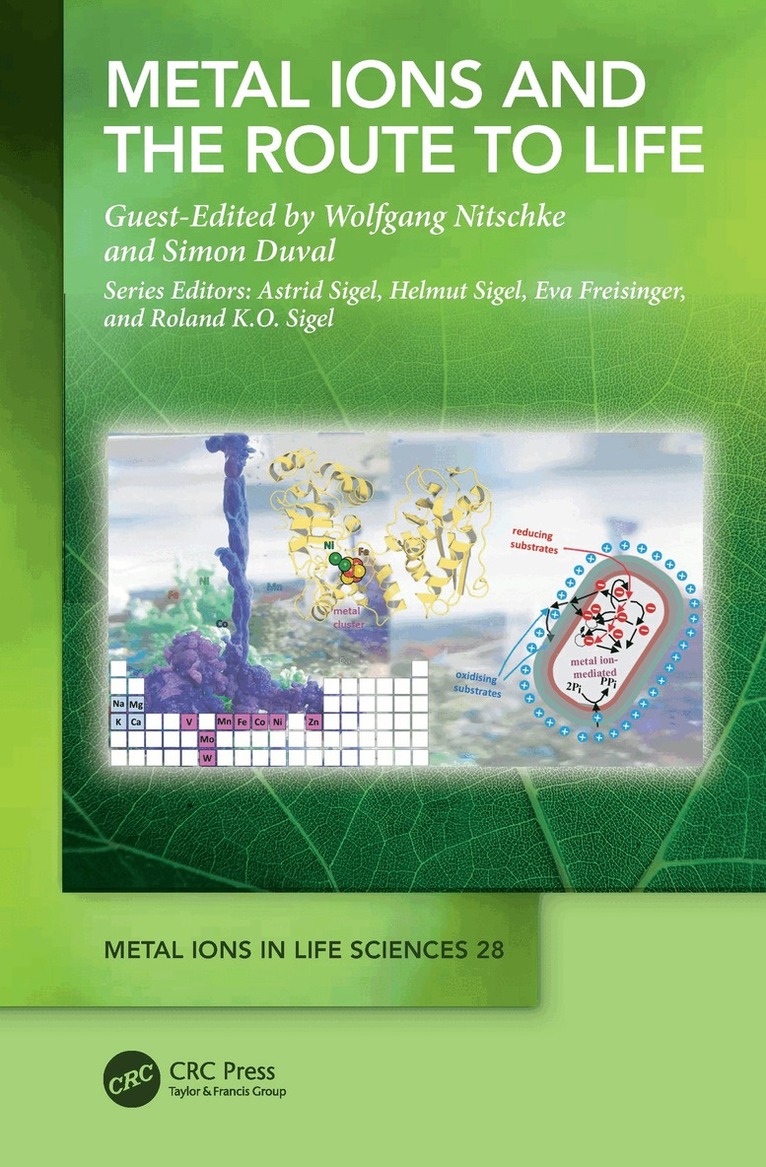
Volume 28, entitled Metal Ions and the Route to Life, of the series Metal Ions in Life Sciences, advocates for the prime importance of the recognition of metal ions and metal-bearing minerals in the transition from inanimate matter to first life on our planet. Unlike the relatively unreactive organic molecules, the traditional protagonists of orthodox origin-of-life hypotheses, metals and minerals are natural catalysts, abundantly present in the majority of settings on the early Earth considered as conducive to bringing forth life. In these palaeogeochemical settings, they may have catalyzed the anabolic conversions of inorganic precursor molecules into organics and may have converted redox disequilibria between environmental reductants and oxidants into the ordering, i.e. the lowering of entropy, of first living entities. Far-fetched? Yet, this is precisely what metal ions do in life today! An unlikely coalition of biology (biochemistry and bioenergetics) and physics (thermodynamics and condensed matter physics) is growingly questioning the plausibility of the orthodox hypotheses while putting metal ions and minerals centre-stage in their scenarios. In this volume, 29 internationally renowned experts from fields as diverse as microbiology, biochemistry, astrobiology, electrochemistry, ecology, mineralogy, geology and geochemistry shine light from their individual angles on this topic, bringing home metal ions’ primordial importance to extant life, presenting minerals with tantalizing reactivities appearing as look-alikes of life’s processes and sketching out plausible, metal-ion-based scenarios for life’s emergence on planet Earth. Metal Ions and the Route to Life provides the empirical groundwork to interested researchers and the general public for revisiting their preconceived ideas about the origin of life and for appreciating the absolute indispensability of metal ions in life – now just as at its beginnings!