Methods in Bioengineering – serie
Visar alla böcker i serien Methods in Bioengineering. Handla med fri frakt och snabb leverans.
3 produkter
3 produkter
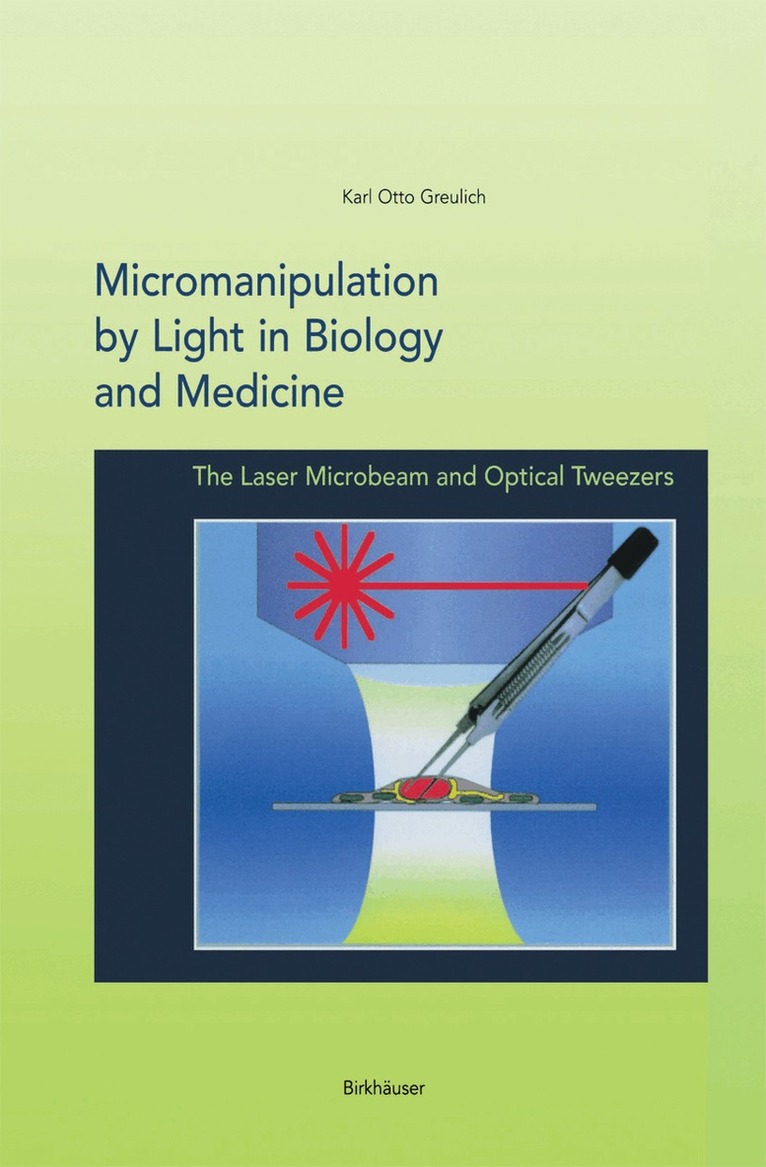
Micromanipulation by Light in Biology and Medicine
The Laser Microbeam and Optical Tweezers
Inbunden, Engelska, 1999
2 117 kr
Skickas inom 10-15 vardagar
There are probably few people who do not dream of the good old times, when do ing science often meant fascination, excitement, even adventure. In our time, do ing science involves often technology and, perhaps, even business. But there are still niches where curiosity and fascination have their place. The subject of this book, technological as its title may sound, is one of the fortunate examples. It will report on lasers generating the coldest places in the Universe, and on table top laser microtools which can produce a heat "inferno" as it prevails in the interior of the Sun, or simulate, for specific plant cells, microgravity of the space around our plan et Earth. There will be some real surprises for the reader. The applications range from basic studies of the driving forces of cell division (and thus life) via genetic modification of cells (for example, for plant breeding) to medical applications such as blood cell analysis and finally in vitro fertilization. What are these instruments: laser microbeams and optical tweezers? Both are lasers coupled with a fluorescence microscope. The laser microbeam uses a pulsed ultraviolet laser. Light is focused, as well as possible, in space and time, in order to obtain extremely high light intensities - high enough to generate, for a very short instant, extremely hot spots which can be used to cut, fuse or perforate biological material.
550 kr
Skickas inom 10-15 vardagar
This book has been written in response to the many physicians and scien tists working on the development of biological approaches to providing therapies for many orthopaedic disorders as well as to improving the healing of many tissues of the musculoskeletal system. The first goal of this book is to make the language compatible between the bench scientist and the clinician working in orthopaedic and sports medicine in order to cover specific areas of the orthopaedic discipline where the treatment can be improved and/or changed by the advancements in molecular medicine. Advancements in molecular biology, which encompass the study of the genetic basis of disease, have produced new diagnostic methods and drug therapies for genetic diseases and acquired disorders. The growth in the understanding of human genetics has also led to the initiation of many human gene therapy experiments. Although many approved therapeutic clinical trials using this new technology have been performed in the last ten years, the first clinical trial using this technology in the area of orthopaedics was performed at the University of Pittsburgh.
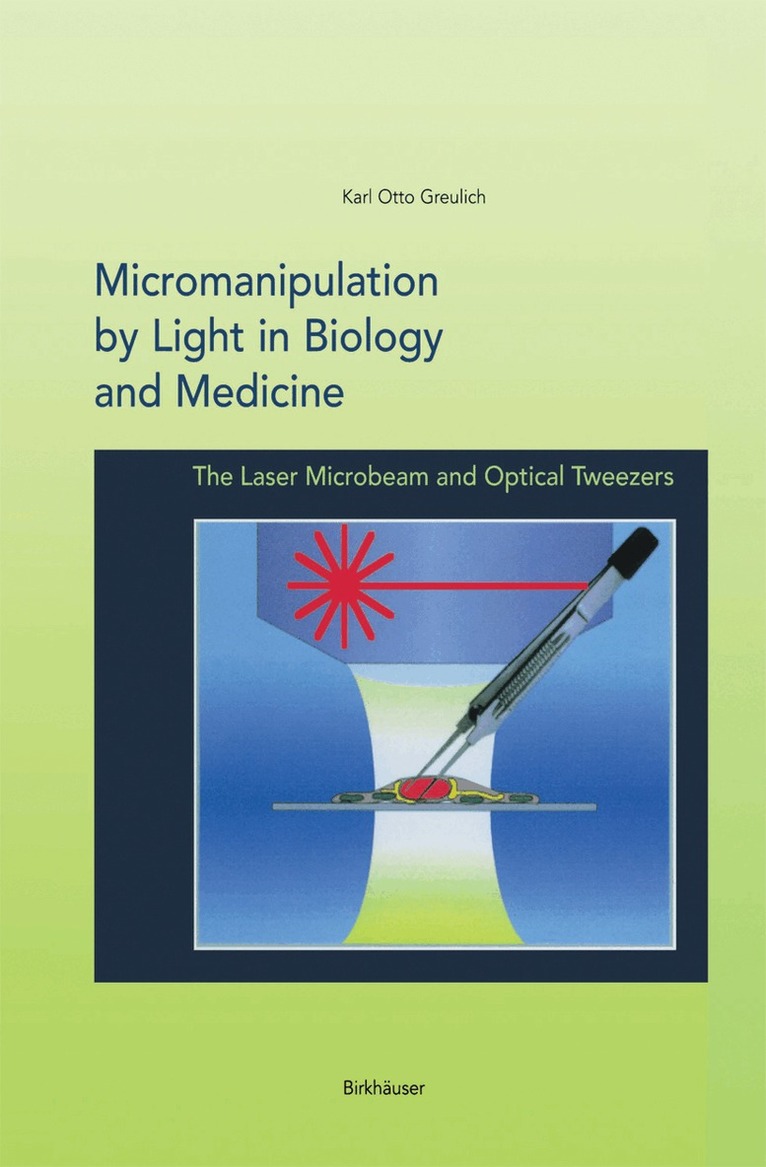
Micromanipulation by Light in Biology and Medicine
The Laser Microbeam and Optical Tweezers
Häftad, Engelska, 2011
2 180 kr
Skickas inom 10-15 vardagar
There are probably few people who do not dream of the good old times, when do ing science often meant fascination, excitement, even adventure. In our time, do ing science involves often technology and, perhaps, even business. But there are still niches where curiosity and fascination have their place. The subject of this book, technological as its title may sound, is one of the fortunate examples. It will report on lasers generating the coldest places in the Universe, and on table top laser microtools which can produce a heat "inferno" as it prevails in the interior of the Sun, or simulate, for specific plant cells, microgravity of the space around our plan et Earth. There will be some real surprises for the reader. The applications range from basic studies of the driving forces of cell division (and thus life) via genetic modification of cells (for example, for plant breeding) to medical applications such as blood cell analysis and finally in vitro fertilization. What are these instruments: laser microbeams and optical tweezers? Both are lasers coupled with a fluorescence microscope. The laser microbeam uses a pulsed ultraviolet laser. Light is focused, as well as possible, in space and time, in order to obtain extremely high light intensities - high enough to generate, for a very short instant, extremely hot spots which can be used to cut, fuse or perforate biological material.