Milestones in Business History – serie
Visar alla böcker i serien Milestones in Business History. Handla med fri frakt och snabb leverans.
2 produkter
2 produkter
Inbunden, Engelska, 2007
491 kr
Skickas inom 10-15 vardagar
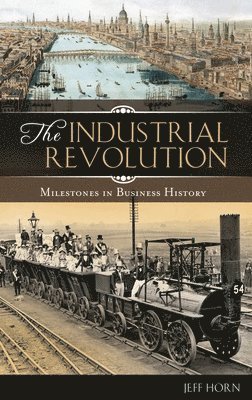
The confluence of developments in technology, labor and management practice, and market expansion in the period from 1760 to 1850 so drastically altered the context of economic relations that, taken together, these changes have earned the name, Industrial Revolution. This book, the first in a series of titles to explore turning points and important events in business history, explains the nature of these changes, how they came about, how people reacted to the new economic environment, and the direct impact that they have had on the way business is conducted today.This volume will address how the Industrial Revolution played out in Europe, the United States, and the rest of the world, emphasizing the role of the government in both promoting and regulating commerce. It will clarify the important distinctions between the original Industrial Revolution and the second Industrial Revolution (approximately 1850 to the early 20th century), which was characterized by accelerating growth, brought about the introduction of the internal combustion engine, electric power, and other technological and managerial developments. Featuring biographical sketches, photos, a timeline, a glossary of key terms, and excerpts of primary documents, The Industrial Revolution reveals the daily life of the entrepreneurs, bureaucrats, and workers who experienced the dramatic changes in technology, business, and trade, and the resulting changes in society and culture.
E-bok
PDF, Engelska, 20082 151 kr
Läs direkt efter köp
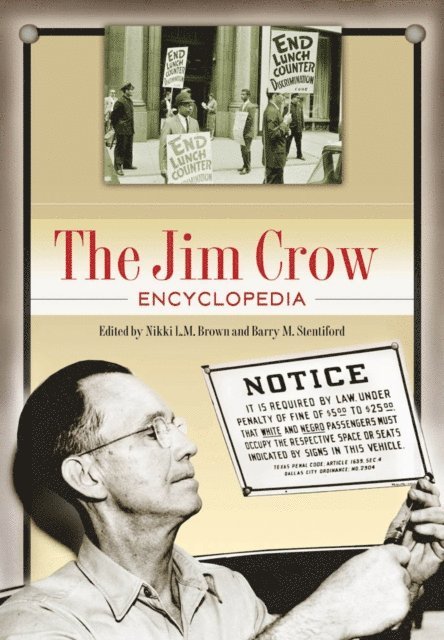
Jim Crow refers to a set of laws in many states, predominantly in the South, after the end of Reconstruction in 1877 that severely restricted the rights and privileges of African Americans. As a caste system of enormous social and economic magnitude, the institutionalization of Jim Crow was the most significant element in African American life until the 1960s Civil Rights Movement led to its dismantling. Racial segregation, as well as responses to it and resistance against it, dominated the African American consciousness and continued to oppress African Americans and other minorities, while engendering some of the most important African American contributions to society. This major encyclopedia is the first devoted to the Jim Crow era. The era is encapsulated through more than 275 essay entries on such areas as law, media, business, politics, employment, religion, education, people, events, culture, the arts, protest, the military, class, housing, sports, and violence as well as through accompanying key primary documents excerpted as side bars. This set will serve as an invaluable, definitive resource for student research and general knowledge.The authoritative entries are written by a host of historians with expertise in the Jim Crow era. The quality content comes in an easy-to-access format. Readers can quickly find topics of interest, with alphabetical and topical lists of entries in the frontmatter, along with cross-references to related entries per entry. Further reading is provided per entry. Dynamic sidebars throughout give added insight into the topics. A chronology, selected bibliography, and photos round out the coverage. Sample entries include Advertising, Affirmative Action, Armed Forces, Black Cabinet, Blues, Brooklyn Dodgers, Bolling v. Sharpe, Confederate Flag, Congress of Racial Equality (CORE), Detroit Race Riot 1943, Ralph Ellison, Eyes on the Prize, G.I. Bill, Healthcare, Homosexuality, Intelligence Testing, Japanese Internment, Liberia, Minstrelsy, Nadir of the Negro, Poll Taxes, Rhythm and Blues, Rural Segregation, Sharecropping, Sundown Towns, Booker T. Washington, Works Project Administration, World War II.