Modern Heterodox Economics – Serie
Visar alla böcker i serien Modern Heterodox Economics. Handla med fri frakt och snabb leverans.
10 produkter
10 produkter
637 kr
Skickas inom 10-15 vardagar
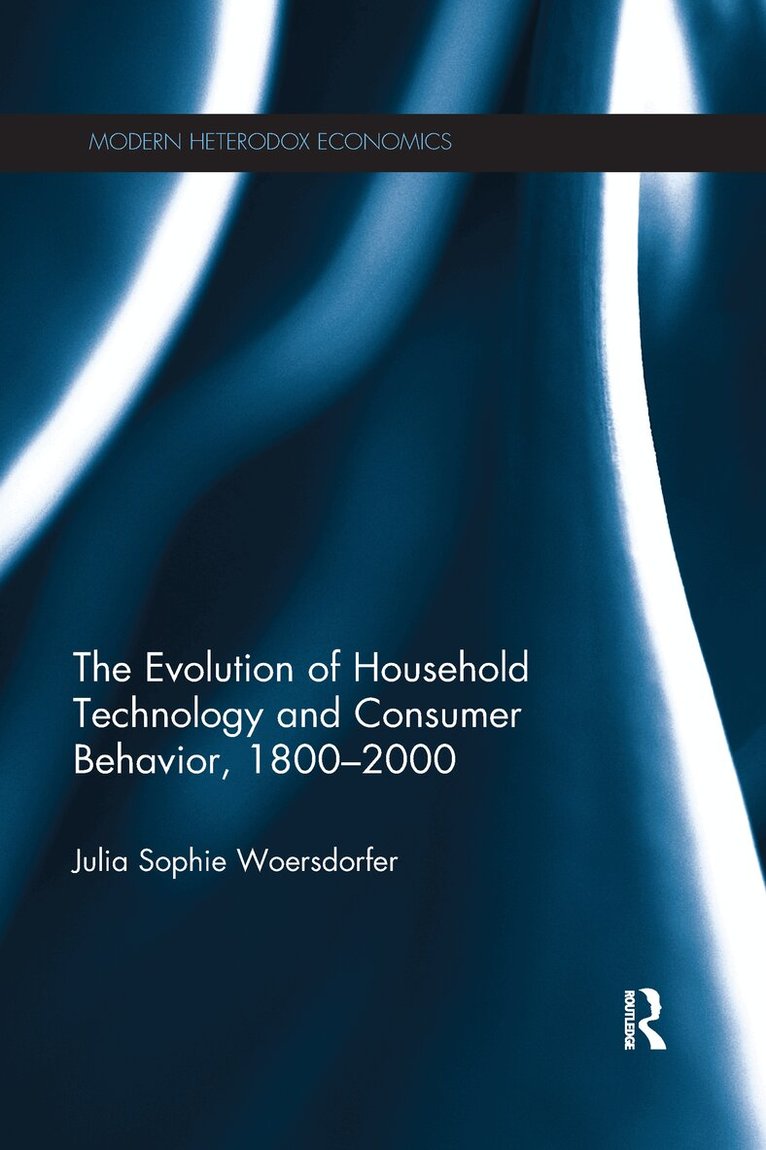
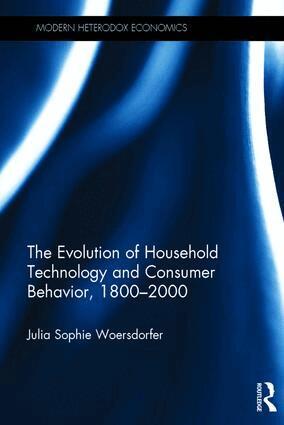
The increasing division and specialization of labor between the market and the nonmarket sector is a central stylized fact of long-run economic development. Over time, a large share of activities which had formerly been carried out by the private household itself has become replaced by market alternatives, raising at the same time the demand for consumer goods.The neoclassical economic framework of household production theory relates the increasing demand for household technology to rising wages and opportunity costs of time: the higher the wage rate, the more costly it is to spend time in unpaid housework activities. Consumer products are thus purchased to make household production processes more efficient and to substitute capital goods for the household’s time (time substitution hypothesis). Although this hypothesis sounds plausible at first sight, it cannot capture the essential phenomena underlying the complex process of the mechanization of the home over the past 200 years. Its major weakness lies in the treatment of consumer preferences, whose explanatory potential is explicitly factored out.Using the washing of clothes as a microcosm of household economics, this book examines long-term changes in cleanliness consumption patterns from the perspective of an evolutionary economic, psychologically informed consumer theory. Woersdorfer shows how the historical evolution of cleanliness consumption over the past 200 years is the result of the interplay of supply and demand side factors, namely, technical change in washing technology on one side and motivational driving forces and consumer learning capabilities on the other. Hence, not changing relative prices but innate consumer needs and consumer learning processes, leading to a growing understanding of how to satisfy those needs, are the essential driving forces behind the rising technological endowment of the home and the corresponding demand for household appliances.The Evolution of Household Technology and Consumer Behavior, 1800–2000 will be of interest to researchers in the field of evolutionary economics, history of technology, economic history, innovation economics and sociology.
637 kr
Skickas inom 10-15 vardagar
This is an innovative study of the techniques of domination, based on financial markets, judicial systems, academia and international relations, across North America and post-Soviet Russia. Ultimately, Oleinik seeks to provide an alternative to mainstream economic analyses of power.
441 kr
Skickas inom 10-15 vardagar
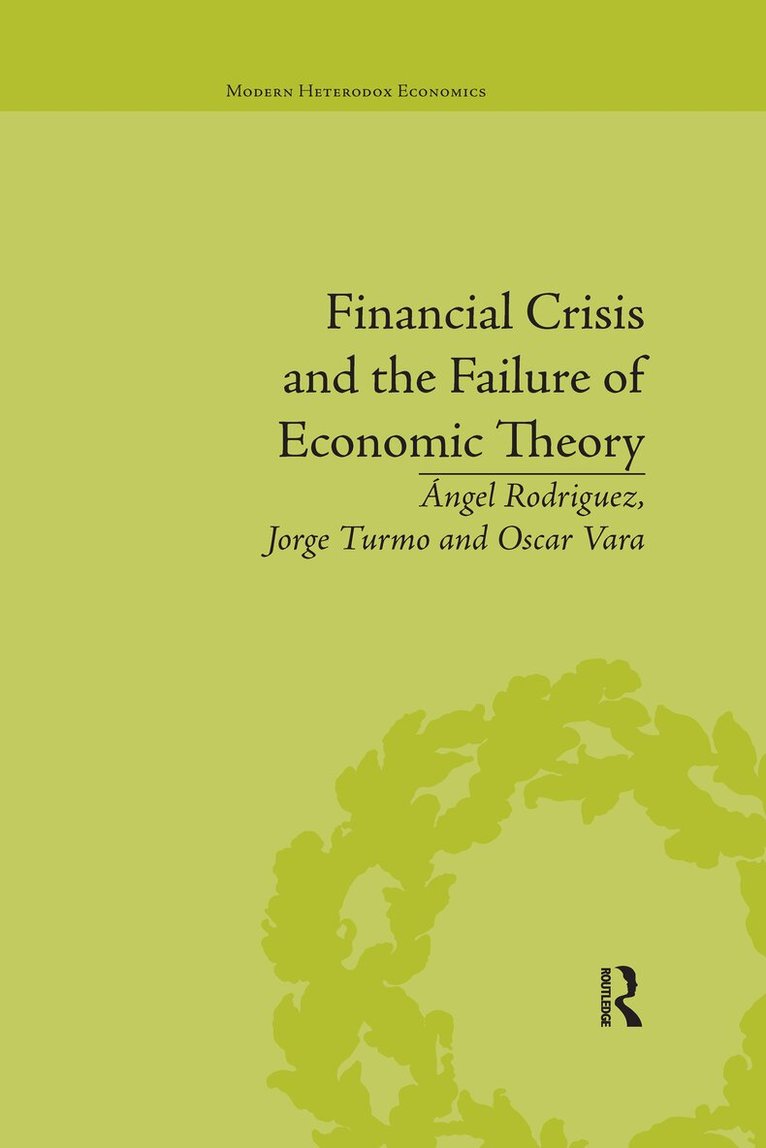
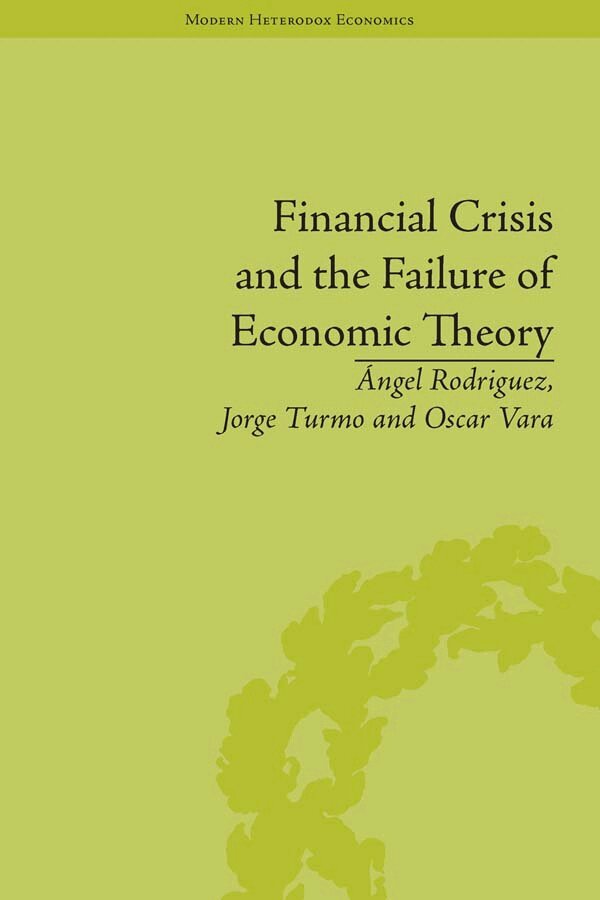
The global financial crisis of 2008 was largely unpredicted. If economic theory has a role to play in predicting future catastrophes then the methods we rely on need to change. The authors of this study propose a new theory of economics based on more detailed understanding of how and why people behave as they do within their environment. This anthropological approach uses the strengths of many existing economic theories, including Keynesian and Austrian economics, to present a new framework for anticipating and averting the financial crises of the future.
637 kr
Skickas inom 10-15 vardagar
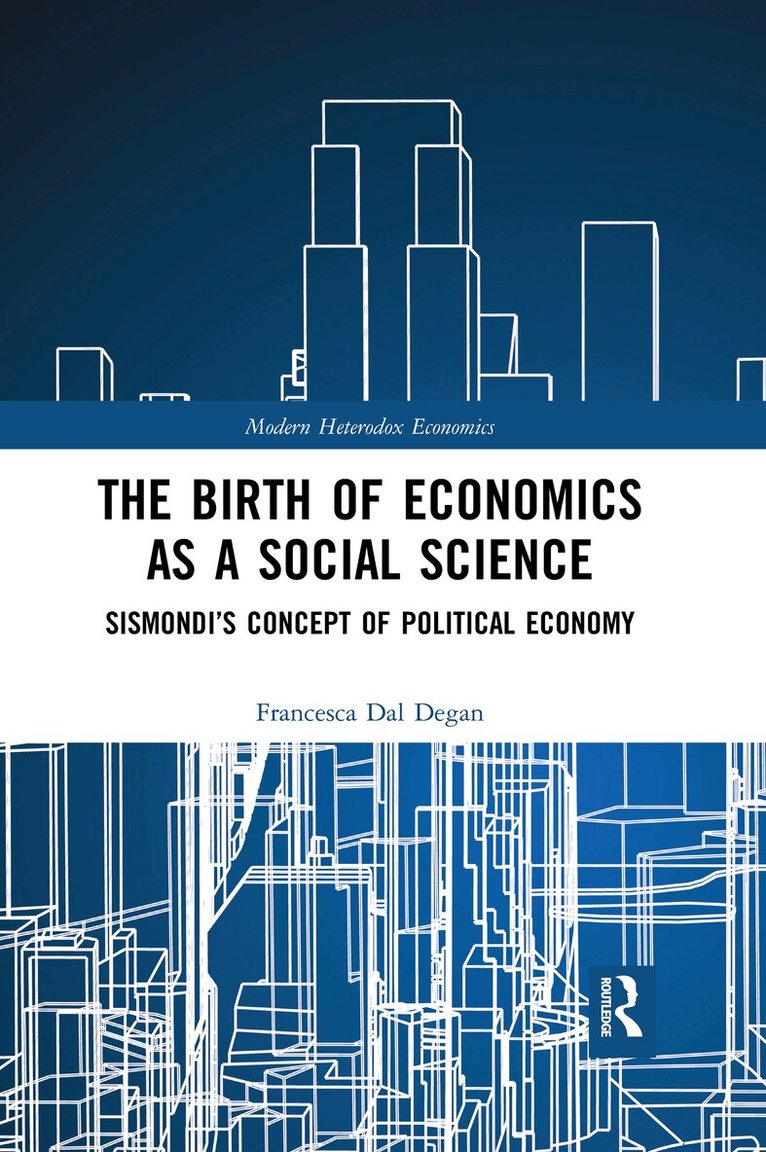
Although considered a classic thinker, Sismondi is seldom discussed, at least in English. In this context, this volume offers a key reference work on the intellectual and economic contribution of Sismondi to the economic, political, and social sciences. The book explores his works in order to rediscover the direction of a viable path to individual and public happiness.Through examining Sismondi’s work, The Birth of Economics as a Social Science contributes to the current debate on the relationships between liberty, interpersonal relations, and wealth. Moreover, Dal Degan presents an analytical and historical example of the ways in which an author from the past attempted to connect these aspects in his scientific discourse. The first part of the book focuses on Sismondi’s political thought, paying particular attention to the different cultural and political traditions that pepper the author’s reflections on the conditions for liberty. The second part analyzes the epistemological view underlying how Sismondi’s historical method and multidisciplinary approach respond to the need to base economic discourse on a contextual and causal analysis that also addresses the historical and institutional structure of social organizations. Finally, the third part of the book is dedicated to Sismondi’s economic theory.This work brings the works of Sismondi to a wider readership. It will be of great interest to those studying and researching economic theory and the connections between economics and society, as well as the broader social sciences.
2 246 kr
Skickas inom 10-15 vardagar
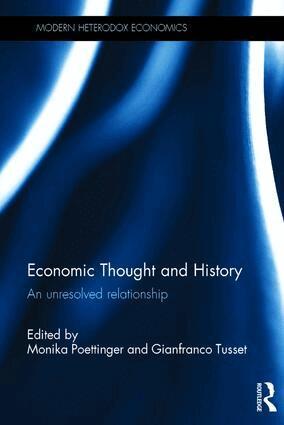
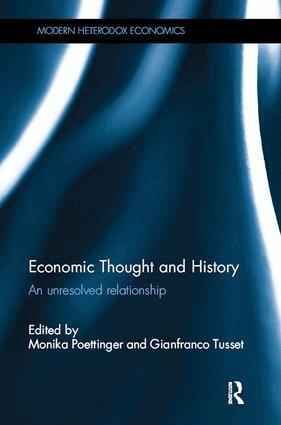
Economic Thought and History looks at the relationship between facts and thought in historical economic research, viewing it in the context of periods of economic crisis and providing detailed analyses of methods used in determining the bond between economic history and economic theory. This interdisciplinary collection brings together international researchers in the history of economic thought and economic history in order to confront varying approaches to the study of economic facts and ideas, rethinking boundaries, methodologies and the object of their disciplines. The chapters explore the relationship between economic thought and economic theory from a variety of perspectives, exploring the relationship between history and economics, and the boundaries defining the history of economic thought, in terms of both single authors and schools of thought. The book offers particular insights on the Italian tradition of thought.The uniquely interdisciplinary and analytical approach presented here bridges the methodological gap between these disciplines, unearthing a fertile common ground of research. This book is intended for Postgraduate students conducting further research into the field, or for professors and academics of economic history and history of economic thought.
721 kr
Skickas inom 10-15 vardagar
Economic Thought and History looks at the relationship between facts and thought in historical economic research, viewing it in the context of periods of economic crisis and providing detailed analyses of methods used in determining the bond between economic history and economic theory. This interdisciplinary collection brings together international researchers in the history of economic thought and economic history in order to confront varying approaches to the study of economic facts and ideas, rethinking boundaries, methodologies and the object of their disciplines. The chapters explore the relationship between economic thought and economic theory from a variety of perspectives, exploring the relationship between history and economics, and the boundaries defining the history of economic thought, in terms of both single authors and schools of thought. The book offers particular insights on the Italian tradition of thought.The uniquely interdisciplinary and analytical approach presented here bridges the methodological gap between these disciplines, unearthing a fertile common ground of research. This book is intended for Postgraduate students conducting further research into the field, or for professors and academics of economic history and history of economic thought.
1 406 kr
Skickas inom 10-15 vardagar
The global financial crisis of 2008 was largely unpredicted. If economic theory has a role to play in predicting future catastrophes then the methods we rely on need to change. The authors of this study propose a new theory of economics based on more detailed understanding of how and why people behave as they do within their environment. This anthropological approach uses the strengths of many existing economic theories, including Keynesian and Austrian economics, to present a new framework for anticipating and averting the financial crises of the future.
2 386 kr
Skickas inom 10-15 vardagar
This is an innovative study of the techniques of domination, based on financial markets, judicial systems, academia and international relations, across North America and post-Soviet Russia. Ultimately, Oleinik seeks to provide an alternative to mainstream economic analyses of power.
Birth of Economics as a Social Science
Sismondi’s Concept of Political Economy
Inbunden, Engelska, 2019
2 176 kr
Skickas inom 10-15 vardagar
Although considered a classic thinker, Sismondi is seldom discussed, at least in English. In this context, this volume offers a key reference work on the intellectual and economic contribution of Sismondi to the economic, political, and social sciences. The book explores his works in order to rediscover the direction of a viable path to individual and public happiness.Through examining Sismondi’s work, The Birth of Economics as a Social Science contributes to the current debate on the relationships between liberty, interpersonal relations, and wealth. Moreover, Dal Degan presents an analytical and historical example of the ways in which an author from the past attempted to connect these aspects in his scientific discourse. The first part of the book focuses on Sismondi’s political thought, paying particular attention to the different cultural and political traditions that pepper the author’s reflections on the conditions for liberty. The second part analyzes the epistemological view underlying how Sismondi’s historical method and multidisciplinary approach respond to the need to base economic discourse on a contextual and causal analysis that also addresses the historical and institutional structure of social organizations. Finally, the third part of the book is dedicated to Sismondi’s economic theory.This work brings the works of Sismondi to a wider readership. It will be of great interest to those studying and researching economic theory and the connections between economics and society, as well as the broader social sciences.
2 176 kr
Skickas inom 10-15 vardagar
The increasing division and specialization of labor between the market and the nonmarket sector is a central stylized fact of long-run economic development. Over time, a large share of activities which had formerly been carried out by the private household itself has become replaced by market alternatives, raising at the same time the demand for consumer goods.The neoclassical economic framework of household production theory relates the increasing demand for household technology to rising wages and opportunity costs of time: the higher the wage rate, the more costly it is to spend time in unpaid housework activities. Consumer products are thus purchased to make household production processes more efficient and to substitute capital goods for the household’s time (time substitution hypothesis). Although this hypothesis sounds plausible at first sight, it cannot capture the essential phenomena underlying the complex process of the mechanization of the home over the past 200 years. Its major weakness lies in the treatment of consumer preferences, whose explanatory potential is explicitly factored out.Using the washing of clothes as a microcosm of household economics, this book examines long-term changes in cleanliness consumption patterns from the perspective of an evolutionary economic, psychologically informed consumer theory. Woersdorfer shows how the historical evolution of cleanliness consumption over the past 200 years is the result of the interplay of supply and demand side factors, namely, technical change in washing technology on one side and motivational driving forces and consumer learning capabilities on the other. Hence, not changing relative prices but innate consumer needs and consumer learning processes, leading to a growing understanding of how to satisfy those needs, are the essential driving forces behind the rising technological endowment of the home and the corresponding demand for household appliances.The Evolution of Household Technology and Consumer Behavior, 1800–2000 will be of interest to researchers in the field of evolutionary economics, history of technology, economic history, innovation economics and sociology.