Music and Literature - Böcker
Visar alla böcker i serien Music and Literature. Handla med fri frakt och snabb leverans.
8 produkter
8 produkter
592 kr
Skickas inom 10-15 vardagar
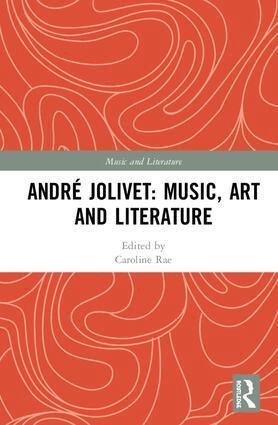
This first book in English on the French composer André Jolivet (1905–1974) investigates his music, life and influence. A pupil of Varèse and colleague of Messiaen in La Jeune France, Jolivet is a major figure in French music of the twentieth century. His music combines innovative language with spirituality, summarised in his self-declared axiom to ‘restore music’s ancient original meaning when it was the magic and incantatory expression of the sacred in human communities’. The book’s contextual introduction is followed by contributions, edited by Caroline Rae, from leading international scholars including the composer’s daughter Christine Jolivet-Erlih. These assess Jolivet’s output and activities from the 1920s through to his last works, exploring creative process, aesthetic, his relationship with the exotic and influences from literature. They also examine, for the first time, the significance of Jolivet’s involvement with the visual arts and his activities as conductor, teacher and critic. A chronology of Jolivet’s life and works with details of first performances provides valuable overview and reference. This fascinating and comprehensive volume is an indispensable source for research into French music and culture of the twentieth century.
2 376 kr
Skickas inom 10-15 vardagar
When Olivier Messiaen died in 1992, the prevailing image was of a man apart; a deeply religious man whose only sources of inspiration were God and Nature and a composer whose music progressed along an entirely individual path, artistically impervious to contemporaneous events and the whims both of his contemporaries and the critics. Whilst such a view contains a large element of truth, the past ten years has seen an explosion of interest in the composer, and the work of a diverse range of scholars has painted a much richer, more complex picture of Messiaen. This volume presents some of the fruits of this research for the first time, concentrating on three broad, interrelated areas: Messiaen's relationship with fellow artists; key developments in the composer's musical language and technique; and his influences, both sacred and secular. The volume assesses Messiaen's position as a creative artist of the twentieth century in the light of the latest research. In the process, it identifies some of the key myths, confusions and exaggerations surrounding the composer which often mask equally remarkable truths. In attempting to reveal some of those truths, the essays elucidate a little of the mystery surrounding Messiaen as a man, an artist, a believer and a musician. Specifically, the volume covers Messiaen's attitudes and associations to Cocteau, Stravinsky's Les Noces, Dutilleux and Toesca, as well as exploring his teaching techniques, the Traité de rythme, de couleur et d'ornithologie, Messiaen's harmony, performing and transcription techniques, composing for Ondes Martenot, his association with ballet, Saint François d'Assise and the influence of his faith. Messiaen himself contributes directly in the form of a speech that he gave about the tapestry-maker Jean Lurçat, and the collection also includes the first literary translation of L'âme en bourgeon; the garland of poems written by Messiaen's mother, Cécile Sauvage, when she was expecting him. The composer described these poems as 'the only influence' in his life, making L'âme en bourgeon a fascinating centrepiece to a rich and rewarding collection of essays.
843 kr
Skickas inom 10-15 vardagar
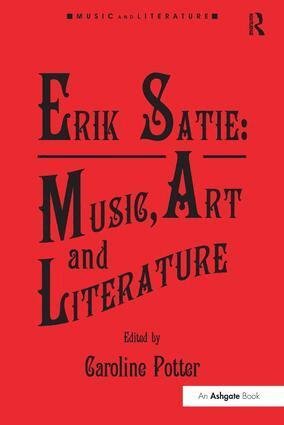
Erik Satie (1866-1925) was a quirky, innovative and enigmatic composer whose impact has spread far beyond the musical world. As an artist active in several spheres - from cabaret to religion, from calligraphy to poetry and playwriting - and collaborator with some of the leading avant-garde figures of the day, including Cocteau, Picasso, Diaghilev and René Clair, he was one of few genuinely cross-disciplinary composers. His artistic activity, during a tumultuous time in the Parisian art world, situates him in an especially exciting period, and his friendships with Debussy, Stravinsky and others place him at the centre of French musical life. He was a unique figure whose art is immediately recognisable, whatever the medium he employed. Erik Satie: Music, Art and Literature explores many aspects of Satie's creativity to give a full picture of this most multifaceted of composers. The focus is on Satie's philosophy and psychology revealed through his music; Satie's interest in and participation in artistic media other than music, and Satie's collaborations with other artists. This book is therefore essential reading for anyone interested in the French musical and cultural scene of the late nineteenth and early twentieth century.
787 kr
Skickas inom 10-15 vardagar
When Olivier Messiaen died in 1992, the prevailing image was of a man apart; a deeply religious man whose only sources of inspiration were God and Nature and a composer whose music progressed along an entirely individual path, artistically impervious to contemporaneous events and the whims both of his contemporaries and the critics. Whilst such a view contains a large element of truth, the past ten years has seen an explosion of interest in the composer, and the work of a diverse range of scholars has painted a much richer, more complex picture of Messiaen. This volume presents some of the fruits of this research for the first time, concentrating on three broad, interrelated areas: Messiaen's relationship with fellow artists; key developments in the composer's musical language and technique; and his influences, both sacred and secular. The volume assesses Messiaen's position as a creative artist of the twentieth century in the light of the latest research. In the process, it identifies some of the key myths, confusions and exaggerations surrounding the composer which often mask equally remarkable truths. In attempting to reveal some of those truths, the essays elucidate a little of the mystery surrounding Messiaen as a man, an artist, a believer and a musician. Specifically, the volume covers Messiaen's attitudes and associations to Cocteau, Stravinsky's Les Noces, Dutilleux and Toesca, as well as exploring his teaching techniques, the Traité de rythme, de couleur et d'ornithologie, Messiaen's harmony, performing and transcription techniques, composing for Ondes Martenot, his association with ballet, Saint François d'Assise and the influence of his faith. Messiaen himself contributes directly in the form of a speech that he gave about the tapestry-maker Jean Lurçat, and the collection also includes the first literary translation of L'âme en bourgeon; the garland of poems written by Messiaen's mother, Cécile Sauvage, when she was expecting him. The composer described these poems as 'the only influence' in his life, making L'âme en bourgeon a fascinating centrepiece to a rich and rewarding collection of essays.
2 498 kr
Skickas inom 10-15 vardagar
Erik Satie (1866-1925) was a quirky, innovative and enigmatic composer whose impact has spread far beyond the musical world. As an artist active in several spheres - from cabaret to religion, from calligraphy to poetry and playwriting - and collaborator with some of the leading avant-garde figures of the day, including Cocteau, Picasso, Diaghilev and René Clair, he was one of few genuinely cross-disciplinary composers. His artistic activity, during a tumultuous time in the Parisian art world, situates him in an especially exciting period, and his friendships with Debussy, Stravinsky and others place him at the centre of French musical life. He was a unique figure whose art is immediately recognisable, whatever the medium he employed. Erik Satie: Music, Art and Literature explores many aspects of Satie's creativity to give a full picture of this most multifaceted of composers. The focus is on Satie's philosophy and psychology revealed through his music; Satie's interest in and participation in artistic media other than music, and Satie's collaborations with other artists. This book is therefore essential reading for anyone interested in the French musical and cultural scene of the late nineteenth and early twentieth century.
2 167 kr
Skickas inom 10-15 vardagar
This first book in English on the French composer André Jolivet (1905–1974) investigates his music, life and influence. A pupil of Varèse and colleague of Messiaen in La Jeune France, Jolivet is a major figure in French music of the twentieth century. His music combines innovative language with spirituality, summarised in his self-declared axiom to ‘restore music’s ancient original meaning when it was the magic and incantatory expression of the sacred in human communities’. The book’s contextual introduction is followed by contributions, edited by Caroline Rae, from leading international scholars including the composer’s daughter Christine Jolivet-Erlih. These assess Jolivet’s output and activities from the 1920s through to his last works, exploring creative process, aesthetic, his relationship with the exotic and influences from literature. They also examine, for the first time, the significance of Jolivet’s involvement with the visual arts and his activities as conductor, teacher and critic. A chronology of Jolivet’s life and works with details of first performances provides valuable overview and reference. This fascinating and comprehensive volume is an indispensable source for research into French music and culture of the twentieth century.
1 331 kr
Skickas inom 10-15 vardagar
This collection of essays seeks to reflect the many aspects of the life and work of William Walton. Written by acknowledged Walton scholars they cover the literary influences in his music and the current debates that surround them. Walton’s particularly well-known compositions are examined, such as Belshazzar’s Feast, Troilus and Cressida and Façade. Also included is an overview of his 14 film scores and an analysis of his first and second symphonies and his concertos.
2 167 kr
Skickas inom 10-15 vardagar
This collection of essays provides vivid new insights into Poulenc’s world, his particular rapport with painters, writers and fellow musicians, and with the social élite who promoted his music through their salons. Contributions from international Poulenc scholars include the influence of various artists on his music, the nature of his affinity for Eluard’s poetry, his response to texts by Cocteau and Bernanos, and his constant search for suitable libretti. New light is thrown on two friendships, the first with his childhood friend Raymonde Linossier who introduced him to the world of books, the second to his teacher Charles Koechlin who greatly influenced his choral style. A detailed study is also provided of Poulenc’s four choral works with orchestra. Finally, the reader is allowed a rare view of Poulenc at the microphone, not as interviewee but as radio presenter, in his 1947-1949 series of programmes ’A bâtons rompus’.