Music Finders - Böcker
Visar alla böcker i serien Music Finders. Handla med fri frakt och snabb leverans.
13 produkter
13 produkter
1 314 kr
Skickas inom 10-15 vardagar
In Chamber Orchestra and Ensemble Repertoire, Dirk Meyer provides conductors, musicians, and librarians with all the information needed to plan their performances of modern chamber music. Meyer lists almost 4,000 works written during the 20th and 21st centuries, representing more than 1,100 composers. Entries are divided into three categories: Chamber Orchestra, String Orchestra, and Ensemble. Presented alphabetically by composer, each entry fully describes the composition, including its duration, year of composition, availability, publisher, and complete instrumentation. The comprehensive appendix allows users to search for repertoire based on a variety of criteria, such as instrumentation, duration, solo instruments, and solo voices. As a catalog of modern music, the appendix also provides categories for 21st-century repertoire as well as compositions that use electronics.
1 754 kr
Skickas inom 10-15 vardagar
Conductors John Yaffé and David Daniels have created a one-stop sourcebook for orchestras, opera companies, conductors, and librarians who research and/or prepare programs of vocal excerpts—such as solos, ensembles, and choruses—for concert performance. In this book, readers will find detailed information on a vast repertoire of vocal pieces commonly extracted from operas, operettas, musicals, and oratorios—more than 1,750 excerpts from 450 parent works. Modeled on Daniels’ Orchestral Music, Arias, Ensembles, & Choruses includes basic historical details about each parent work as well as extract titles, subtitles, voice types, keys, durations, locations in the original work (with page numbers in both full scores and piano-vocal scores), and exact instrumentation. It also lists the publishers that make available the orchestral materials for just the excerpt being programmed, independent of the full parent work.Until now, conductors and orchestra librarians commonly had to first leaf through full scores, searching for one elusive three-minute aria after another, only to then consult multiple publishers' catalogues to compile crucial information on all the excerpts proposed for a concert or recording. This book constitutes a single source for finding that information. In many cases, the individual entries include valuable insider information on common performance practice, including start- and stop-points, transpositions, and conventional cuts. Searching for repertoire is made easy with the detailed title index and appendixes devoted to ensemble excerpts, all categorized by personnel (e.g., duets, trios, quartets, quintets, sextets, choruses) and language (Czech, English, French, German, Italian, Latin, Russian).This book is the ideal tool for the working conductor and orchestral librarian, as well as music program directors at colleges and conservatories, opera companies, and symphony orchestras.As of October 2015, a new printing of this book has occurred to correct errors in the index. A PDF version of the new index is available to previous purchasers of the volume. Please contact Rowman & Littlefield's music editor for assistance.
1 520 kr
Skickas inom 10-15 vardagar
In this second edition of Orchestral “Pops” Music: A Handbook, Lucy Manning brings forward to the present her remarkable compendium of information about this form of orchestral music. Since the appearance of the first edition in 2008, this work has proven critical to successful “pops” concert programming. With changes in publishers and agents, the discontinuation of the publication of certain original material or, worst of all, presses going out of business, music directors, orchestra conductors, and professional instrumentalists face formidable challenges in tracking down accurate information about this vast repertoire. This revised handbook alleviates the time-consuming task of researching these changes by offering a list of works for orchestral “pops” concerts that is comprehensive, informative, and current. Manning’s emphasis on clarity and accuracy gives users an indispensable tool for gathering vital information on the style, instrumentation, and availability of the repertoire listed, as well as notes on its performance. The user-friendly appendices include expanded instrumentation choices, easy-to-find durations, and handy title cross-references. In addition to corrections and updates, this new edition of Orchestral “Pops” Music includes at least 1,000 new title listings. Orchestral “Pops” Music: A Handbook is the ideal tool for working conductors and orchestral librarians, as well as music program directors at colleges, conservatories, and orchestras.
1 314 kr
Skickas inom 10-15 vardagar
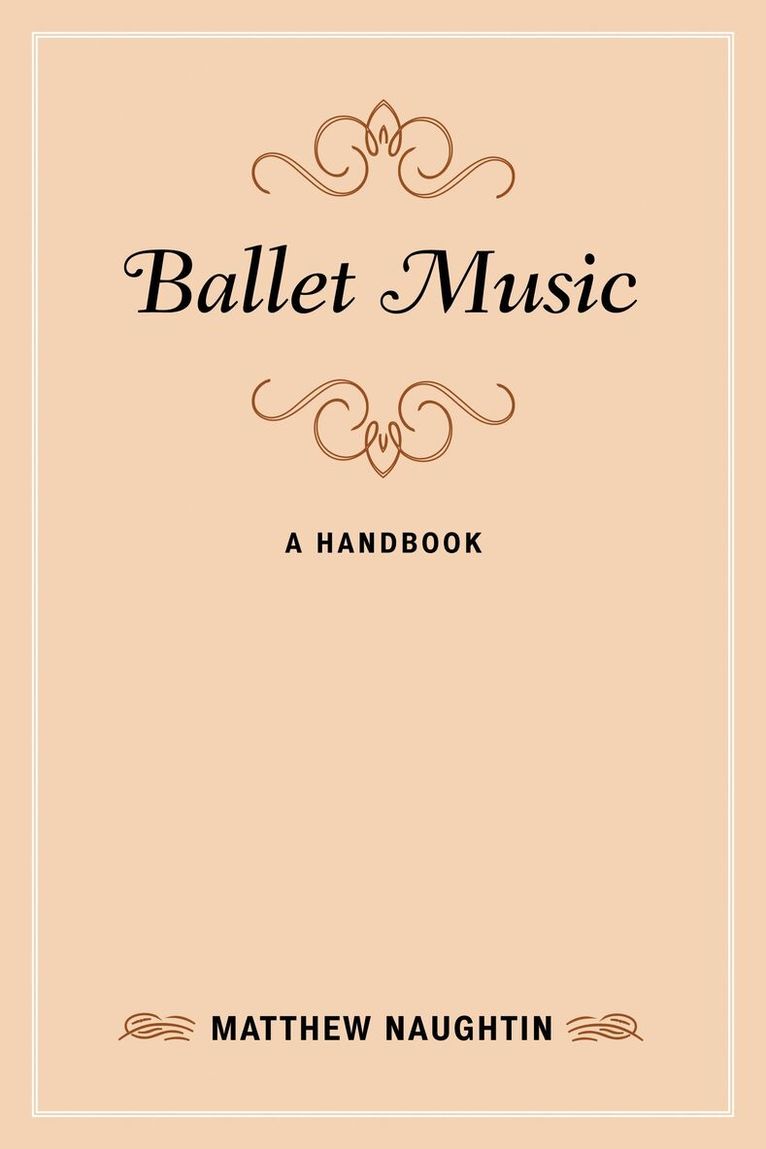
Musicians who work professionally with ballet and dance companies sometimes wonder if they haven’t entered a foreign country—a place where the language and customs seem so utterly familiar and so bafflingly strange at the same. To someone without a dance background, phrases and terms--boy’s variation, pas d’action, apothéose—simply don’t fit their standard musical vocabulary. Even a familiar term like adagio means something quite different in the world of dance. Like any working professional, those conductors, composers, rehearsal pianists, instrumentalists and even music librarians working with professional ballet and dance companies must learn what dance professionals talk about when they talk about music.In Ballet Music: A Handbook Matthew Naughtin provides a practical guide for the professional musician who works with ballet companies, whether as a full-time staff member or as an independent contractor. In this comprehensive work, he addresses the daily routine of the modern ballet company, outlines the respective roles of the conductor, company pianist and music librarian and their necessary collaboration with choreographers and ballet masters, and examines the complete process of putting a dance performance on stage, from selection or existing music to commissioning original scores to staging the final production. Because ballet companies routinely revise the great ballets to fit the needs of their staff and stage, audience and orchestra, ballet repertoire is a tangled web for the uninitiated. At the core of Ballet Music: A Handbook lies an extensive listing of classic ballets in the standard repertoire, with information on their history, versions, revisions, instrumentation, score publishers and other sources for tracking down both the original music and subsequent musical additions and adaptations.Ballet Music: A Handbook is an invaluable resource for conductors, pianists and music librarians as well as any student, scholar or fan of the ballet interested in the complex machinery that works backstage before the curtain goes up.
1 383 kr
Skickas inom 10-15 vardagar
You are getting ready for a performance of Donizetti’s L’elisir d’amore and you have a few questions. How many clarinets are in the orchestra? How many orchestra members appear onstage? How many different sets are there? How long does the opera typically run? What are the key arias? Are any special effects or ballet choreography required? Who owns the rights? Where was it premiered? What are the leading and supporting roles?The Opera Manual is the only single source for the answers to these and other important questions. It is the ultimate companion for opera lovers, professionals, scholars, and teachers, featuring comprehensive information about, and plot summaries for, more than 550 operas—including every opera that is likely to be performed today, from standard to rediscovered contemporary works. The book is invaluable, especially for opera professionals, who will find everything they need for choosing and staging operas. But it is also a treasure for listeners. Similar reference books commonly skip over scenes and supporting characters in their plot summaries, lacking even the most basic facts about staging, orchestral, and vocal requirements. The Opera Manual, based on the actual scores of the works discussed, is the only exhaustive, up-to-date opera companion—a “recipe book” that will enable its readers to explore those operas they know and discover new ones to sample and enjoy.
1 754 kr
Skickas inom 10-15 vardagar
Choral-Orchestral Repertoire: A Conductor’s Guide, Omnibus Edition offers an expansive compilation of choral-orchestral works from 1600 to the present. Synthesizing Jonathan D. Green’s earlier six volumes on this repertoire, this edition updates and adds to the over 750 oratorios, cantatas, choral symphonies, masses, secular works for large and small ensembles, and numerous settings of liturgical and biblical texts for a wide variety of vocal and instrumental combinations. Each entry includes a brief biographical sketch of the composer, approximate duration, text sources, performing forces, available editions, and locations of manuscript materials, as well as descriptive commentary, a discography, and a bibliography. Unique to this edition are practitioner’s evaluations of the performance issues presented in each score. These include the range, tessitura, and nature of each solo role and a determination of the difficulty of the choral and orchestral portions of each composition. There is also a description of the specific challenges, staffing, and rehearsal expectations related to the performance of each work. Choral-Orchestral Repertoire is an essential resource for conductors and students of conducting as they search for repertoire appropriate to their needs and the abilities of their ensembles.
1 751 kr
Skickas inom 7-10 vardagar
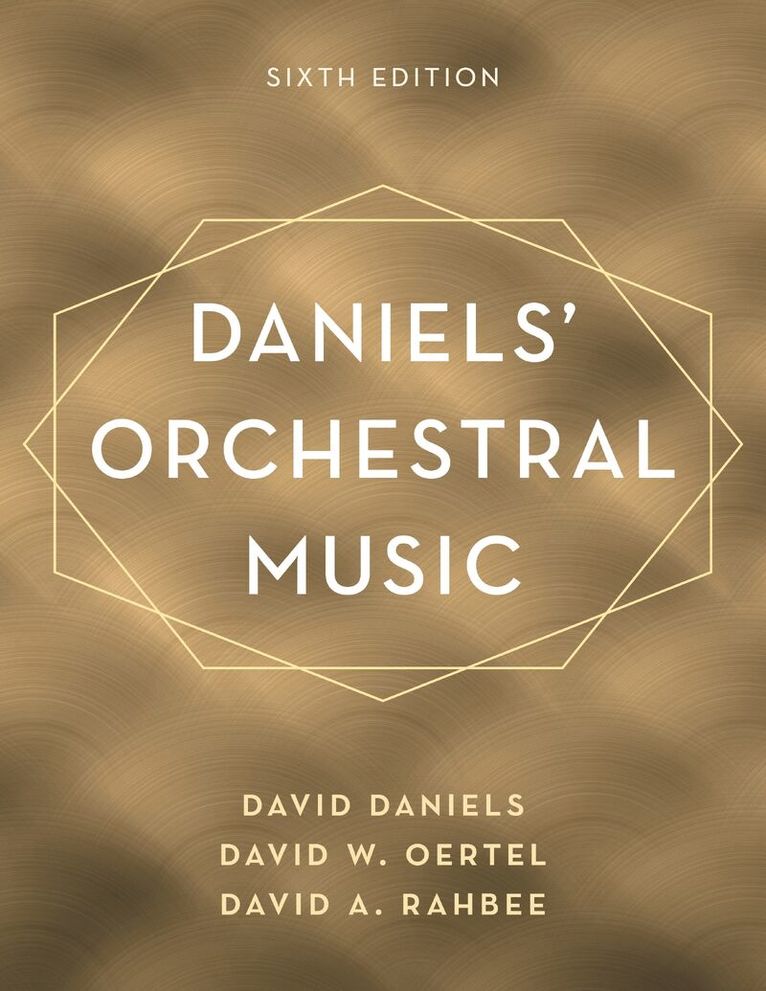
Daniels’ Orchestral Music is the gold standard for all orchestral professionals—from conductors, librarians, programmers, students, administrators, and publishers, to even instructors—seeking to research and plan an orchestral program, whether for a single concert or a full season.This sixth edition, celebrating the fiftieth anniversary of the original edition, has the largest increase in entries for a new edition of Orchestral Music: 65% more works (roughly 14,050 total) and 85% more composers (2,202 total) compared to the fifth edition. Composition details are gleaned from personal inspection of scores by orchestral conductors, making it a reliable one-stop resource for repertoire. Users will find all the familiar and useful features of the fifth edition as well as significant updates and corrections. Works are organized alphabetically by composer and title, containing information on duration, instrumentation, date of composition, publication, movements, and special accommodations if any. Individual appendices make it easy to browse works with chorus, solo voices, or solo instruments. Other appendices list orchestral works by instrumentation and duration, as well as works intended for youth concerts. Also included are significant anniversaries of composers, composer groups for thematic programming, a title index, an introduction to Nieweg charts, essential bibliography, internet sources, institutions and organizations, and a directory of publishers necessary for the orchestra professional.This trusted work used around the globe is a must-have for orchestral professionals, whether conductors or orchestra librarians, administrators involved in artistic planning, music students considering orchestral conducting, authors of program notes, publishers and music dealers, and instructors of conducting.
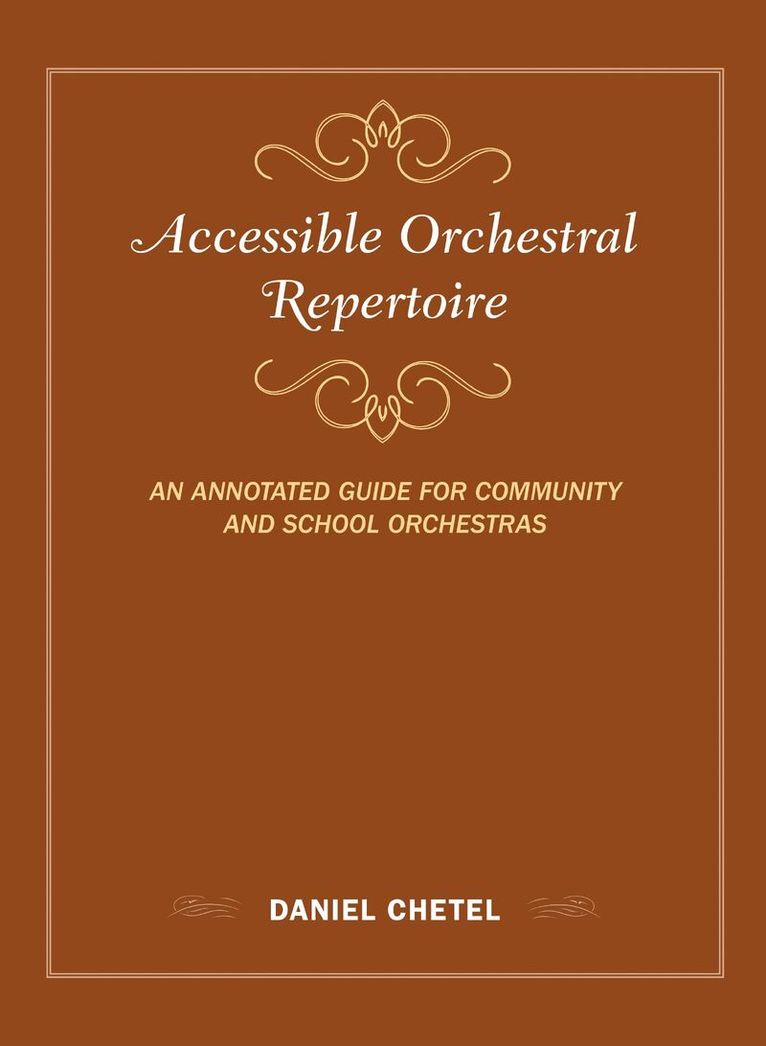
Accessible Orchestral Repertoire
An Annotated Guide for Community and School Orchestras
Inbunden, Engelska, 2020
1 177 kr
Skickas inom 10-15 vardagar
Accessible Orchestral Repertoire is a reference volume for conductors who lead non-professional symphonic orchestras, offering practical and insightful commentary on music appropriate for intermediate and advanced youth, community, and collegiate orchestras. Modeled on and complimentary to Daniels’ Orchestral Music, it is a repertoire and programming resource for youth, academic, and community orchestras.The works included in this book are a combination of well-known warhorses and lesser known gems—clear favorites for young or amateur players and as well as more challenging pieces. Functioning like an annotated bibliography, entries on individual works include information about the composer, instrumentation, movement length, and publisher. Each entry also features notes regarding the particular pedagogical, stylistic, logistical, and technical strengths and challenges of the specific work.Accessible Orchestral Repertoire will help every conductor in the process of selecting repertoire that will both feature and enrich any individual non-professional ensemble for which thoughtful and strategic programming is required.
1 251 kr
Skickas inom 10-15 vardagar
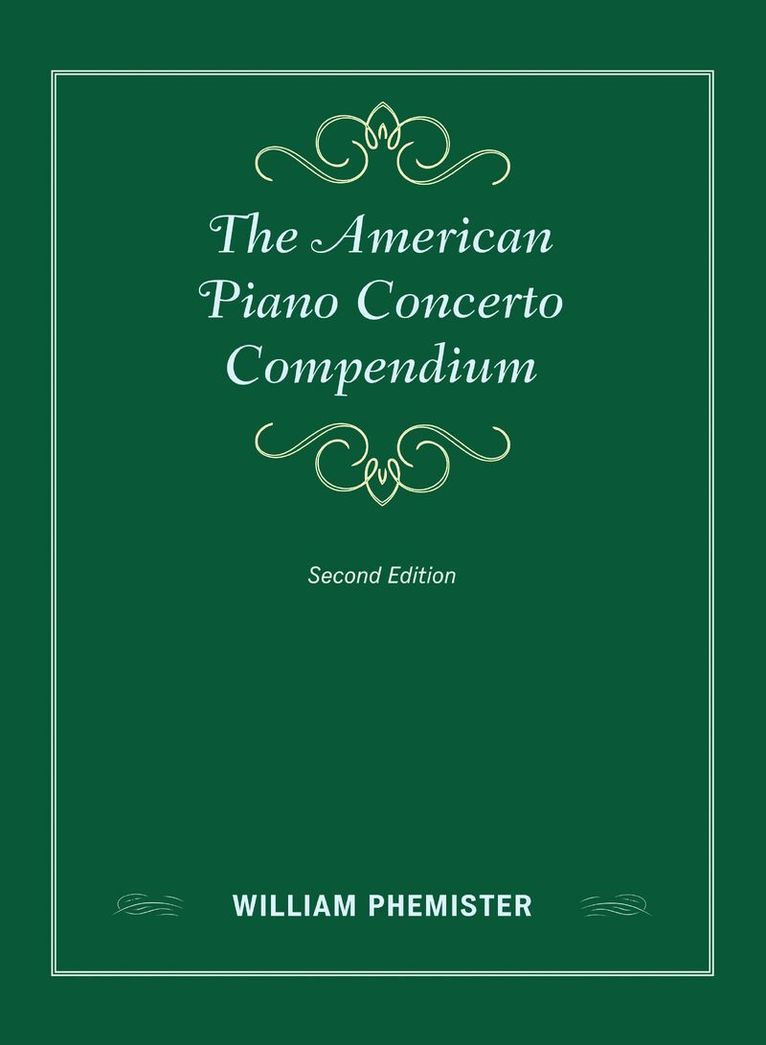
The second edition of William Phemister’s The American Piano Concerto Compendium reveals to professional and amateurs pianists alike a vast collection of available compositions by American composers. Analysis expands outside mainstream concerto styles to include those considered experimental or popular derivatives. The range of music flows from Pulitzer Prize winners like Samuel Barber, Gail Kubik, and John LaMontaine, to lesser-known multi-ethnic composers such as Tania León and Samuel Zyman, to old standards like Edward MacDowell and the first piano concerto written by an American-born composer, Otis B. Boise (1875), to the cutting-edge avant-garde of Milton Babbitt and Elliott Carter, just to name a few. These all contribute to the varied narrative that animates American piano music.With forty percent more works described, documented, and reviewed than were listed in the 1985 first edition from the College Music Society, this second edition is a valuable resource not only for pianists and conductors, but also for orchestras, teachers, students, music historians and critics, collectors, and concert attendees.
698 kr
Skickas inom 10-15 vardagar
Musicians who work professionally with ballet and dance companies sometimes wonder if they haven’t entered a foreign country—a place where the language and customs seem so utterly familiar and so bafflingly strange at the same. To someone without a dance background, phrases and terms--boy’s variation, pas d’action, apothéose—simply don’t fit their standard musical vocabulary. Even a familiar term like adagio means something quite different in the world of dance. Like any working professional, those conductors, composers, rehearsal pianists, instrumentalists and even music librarians working with professional ballet and dance companies must learn what dance professionals talk about when they talk about music.In Ballet Music: A Handbook Matthew Naughtin provides a practical guide for the professional musician who works with ballet companies, whether as a full-time staff member or as an independent contractor. In this comprehensive work, he addresses the daily routine of the modern ballet company, outlines the respective roles of the conductor, company pianist and music librarian and their necessary collaboration with choreographers and ballet masters, and examines the complete process of putting a dance performance on stage, from selection or existing music to commissioning original scores to staging the final production. Because ballet companies routinely revise the great ballets to fit the needs of their staff and stage, audience and orchestra, ballet repertoire is a tangled web for the uninitiated. At the core of Ballet Music: A Handbook lies an extensive listing of classic ballets in the standard repertoire, with information on their history, versions, revisions, instrumentation, score publishers and other sources for tracking down both the original music and subsequent musical additions and adaptations.Ballet Music: A Handbook is an invaluable resource for conductors, pianists and music librarians as well as any student, scholar or fan of the ballet interested in the complex machinery that works backstage before the curtain goes up.
836 kr
Skickas inom 10-15 vardagar
Conductors John Yaffé and David Daniels have created a one-stop sourcebook for orchestras, opera companies, conductors, and librarians who research and/or prepare programs of vocal excerpts—such as solos, ensembles, and choruses—for concert performance. In this book, readers will find detailed information on a vast repertoire of vocal pieces commonly extracted from operas, operettas, musicals, and oratorios—more than 1,750 excerpts from 450 parent works. Modeled on Daniels’ Orchestral Music, Arias, Ensembles, & Choruses includes basic historical details about each parent work as well as extract titles, subtitles, voice types, keys, durations, locations in the original work (with page numbers in both full scores and piano-vocal scores), and exact instrumentation. It also lists the publishers that make available the orchestral materials for just the excerpt being programmed, independent of the full parent work.Until now, conductors and orchestra librarians commonly had to first leaf through full scores, searching for one elusive three-minute aria after another, only to then consult multiple publishers' catalogues to compile crucial information on all the excerpts proposed for a concert or recording. This book constitutes a single source for finding that information. In many cases, the individual entries include valuable insider information on common performance practice, including start- and stop-points, transpositions, and conventional cuts. Searching for repertoire is made easy with the detailed title index and appendixes devoted to ensemble excerpts, all categorized by personnel (e.g., duets, trios, quartets, quintets, sextets, choruses) and language (Czech, English, French, German, Italian, Latin, Russian).This book is the ideal tool for the working conductor and orchestral librarian, as well as music program directors at colleges and conservatories, opera companies, and symphony orchestras.As of October 2015, a new printing of this book has occurred to correct errors in the index. A PDF version of the new index is available to previous purchasers of the volume. Please contact Rowman & Littlefield's music editor for assistance.
615 kr
Skickas inom 10-15 vardagar
As part of Scarecrow Press's Music Finders series, this go-to reference source provides pertinent information about the standard repertoire of works heard today in the great concert halls and recorded by the most prominent professionals. Drawing on extensive research of musical programs performed on the world's stages, Nardolillo selects only those works performed and recorded by great performers and regularly studied in conservatories by students of leading pedagogues.Organized alphabetically by composer, each entry in The Canon of Violin Literature includes the title, date of composition, date and performer of premiere, key, duration, instrumentation, and movements of the work. In addition, entries include brief notes offering historical, technical, and performance information crucial to study of the work. Finally, each entry offers information on the publishers, editions, and editors of the sheet music, concluding with a list of several recordings by famous artists and recommended books for further information about the piece. Appendixes include a chronological listing of the works, a grouping by genre, an index of piece titles, an index of performers, and a bibliography of other reference books for violinists. In addition to hard-to-find information on premieres, commissions, and editions, The Canon of Violin Literature supplies performers and teachers with the name of the violinist who provided fingerings and bowings for each edition, as well as accurate dates for when the work was edited.The Canon of Violin Literature is for performers of violin repertoire; private teachers and college professors in need of a guide to help them assign appropriate works for students' recitals, juries, and competitions; and chamber series directors, musicologists, and editors planning concert seasons, creating programs, and writing liner notes for recordings.
698 kr
Skickas inom 10-15 vardagar
In Chamber Orchestra and Ensemble Repertoire, Dirk Meyer provides conductors, musicians, and librarians with all the information needed to plan their performances of modern chamber music. Meyer lists almost 4,000 works written during the 20th and 21st centuries, representing more than 1,100 composers. Entries are divided into three categories: Chamber Orchestra, String Orchestra, and Ensemble. Presented alphabetically by composer, each entry fully describes the composition, including its duration, year of composition, availability, publisher, and complete instrumentation. The comprehensive appendix allows users to search for repertoire based on a variety of criteria, such as instrumentation, duration, solo instruments, and solo voices. As a catalog of modern music, the appendix also provides categories for 21st-century repertoire as well as compositions that use electronics.