Nanotechnology in the Agri-Food Industry – Serie
1 703 kr
Skickas inom 7-10 vardagar
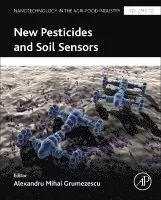
New Pesticides and Soil Sensors, a volume in the Nanotechnology in the Agri-Food Industry series, is a practical resource that demonstrates how nanotechnology is a highly attractive tool that offers new options for the formulation of 'nanopesticides'. Recent advances in nanopesticide research is reviewed and divided into several themes, including improvement of the water solubility of poorly soluble pesticide active ingredients to improve bioavailability and the encapsulation of pesticide active ingredients within permeable nanoparticles with the aim of releasing pesticide active ingredients in a controlled or targeted manner, while also protecting active ingredients from premature photo-degradation.
Provides examples of pesticide formulations that contain inorganic and organic nanoparticles Includes general principles and the most recent applications of chemical sensors and multisensory systems for the assessment of soils and main soil nutrition component detection Presents the main benefits and drawbacks of chemical sensors and their employment in soil analysis for further applications Describes current issues of pesticide use, environmental contamination, bioaccumulation, and increases in pest resistance which demands a reduction in the quantity of pesticides applied for crop and stored product protection1 703 kr
Skickas inom 7-10 vardagar
Water Purification, a volume in the Nanotechnology in the Food Industry series, provides an in-depth review of the current technologies and emerging application of nanotechnology in drinking water purification, also presenting an overview of the common drinking water contaminants, such as heavy metals, organics, microorganisms, pharmaceuticals, and their occurrences in drinking water sources.
As the global water crisis has motivated the industry to look for alternative water supplies, nanotechnology presents significant potential for utilizing previously unacceptable water sources. This books explores the practical methodologies for transforming water using nanotechnologies, and is a comprehensive reference to a wide audience of food science research professionals, professors, and students who are doing research in this field.
Includes the most up-to-date information on nanotechnology applications and research methods for water purification and treatment Presents applications of nanotechnology and engineered nanomaterials in drinking water purification to improve efficiency and reduce cost Provides water purification research methods that are important to water quality, including precipitation, adsorption, membrane separation, and ion exchange Covers the potential risks of nanotechnology, such as the toxicological effects of engineered nanomaterials in water and how to minimize risks based on research studies1 690 kr
Skickas inom 7-10 vardagar
Nanobiosensors: Nanotechnology in the Agri-Food Industry, Volume 8, provides the latest information on the increasing demand for robust, rapid, inexpensive, and safe alternative technologies that monitor, test, and detect harmful or potentially dangerous foods. Due to their high sensitivity and selectivity, nanobiosensors have attracted attention for their use in monitoring not only biological contaminants in food, but also potential chemical and physical hazards.
This book offers a broad overview regarding the current progress made in the field of nanosensors, including cutting-edge technological progress and the impact of these devices on the food industry. Special attention is given to the detection of microbial contaminants and harmful metabolotes, such as toxins and hormones, which have a great impact on both humans and animal health and feed.
Includes the most up-to-date information on nanoparticles based biosensors and quantum dots for biological detectionProvides application methods and techniques for research analysis for bacteriological detection and food testingPresents studies using analytical tools to improve food safety and quality analysis1 690 kr
Skickas inom 7-10 vardagar
Food Packaging: Nanotechnology in the Agri-Food Industry, Volume 7, focuses on the development of novel nanobiomaterials, the enhancement of barrier performance of non-degradable and biodegradable plastics, and their fabrication and application in food packaging.
The book brings together fundamental information and the most recent advances in the synthesis, design, and impact of alternative food packaging. Special attention is offered on smart materials and nanodevices that are able to detect quality parameters in packaged food, such as freshness, degradation, and contamination, etc.
In addition, ecological approaches aiming to obtain bioplastics packages from waste materials are highlighted and discussed as a novel approach in modern food packaging. Nonetheless, this volume presents the advances made in biodegradable and bioactive packaging utilized for preserving flavor, nutritious ingredients, and therapeutic food compounds.
Includes fabrication techniques, such as nanofiber films, nanocoating, nanocompositing, multi-layered structures, and layer-by-layer nanoassemblies based on synthetic and bio-based polymers Presents the latest information on new biodegradeable materials using fabrication of new high barrier plastics to enhance research Provides examples of risk assessment for nanomaterials for food safety and the benefits of antimicrobial food packaging1 690 kr
Skickas inom 7-10 vardagar
Food Preservation, Volume Six, the latest in the Nanotechnology in the Agri-Food Industry series, discusses how nanotechnology can improve and control the growth of pathogenic and spoilage compounds to improve food safety and quality. The book includes research information on nanovesicles, nanospheres, metallic nanoparticles, nanofibers, and nanotubes, and how they are capable of trapping bioactive substances to increase and maintain the stability of compounds often sensitive under typical food processing and storage conditions. This book will be useful to a wide audience of food science research professionals and professors and students doing research in the field.
Describes the effective utilization of nanostructured antimicrobials in toxicological studies and real food systems Offers research strategies for understanding opportunities in antimicrobial nanostructures and the potential challenges of their toxicity Presents diverse applications of nanostructured antimicrobials in food preservation Covers the potential benefits of nanotechnology and methods of risk assessment that ensure food safety1 690 kr
Skickas inom 7-10 vardagar
Nutrient Delivery: Nanotechnology in the Agri-Food Industry, Volume Five, discusses the fabrication, merits, demerits, applications, and bioavailability enhancement mechanisms of various nanodelivery systems. Recent developments in various nanodelivery systems are also highlighted. Volume 5 contains twenty chapters, prepared by outstanding international researchers from Argentina, Brazil, Canada, China, Croatia, India, Iran, Ireland, M�xico, Pakistan, Portugal, Serbia, Sri Lanka, and the United States.
In recent years, the delivery of micronutrients at nanoscale has been widely studied as these systems have the potential to improve bioavailability, enable controlled release and enhance stability of food bioactives to a greater extent. The nanodelivery systems typically consist of the food bioactive compound encapsulated and stabilized in food grade ingredients such as lipids, proteins or polysaccharides with diameters ranging from 10 nm to 1000 nm. Among these, the lipid based delivery systems such as nanoemulsions, solid lipid nanoparticles, nanoliposomes and micelles are widely studied for the delivery of lipophilic bioactive compounds. These delivery vehicles improve the solubility, permeability, stability and bioavailability of the lipophilic compounds thereby enhancing their potential for oral delivery and functional food development.
On the other hand, the hydrophilic bioactives are delivered through protein, polysaccharide or biopolymer based colloidal nanosystems such as hydrogels, nanogels and polymer nanoparticles. The major concern other than solubility is the intestinal permeability of the micronutrients. For instance, the delivery system for compounds with poor intestinal permeability and low solubility need to be carefully designed using suitable lipids and surfactants.
Offers updated material for undergraduate and postgraduate students in food science, biotechnology, and related engineering fields Provides a valuable resource of recent scientific progress, along with most known applications of nanomaterials in the food industry for researchers, engineers, and academics Includes novel opportunities and ideas for developing or improving technologies in the food industry1 690 kr
Skickas inom 7-10 vardagar
Nutraceuticals, the fourth volume in the Nanotechnology in the Agri-Food Industry series, is an invaluable resource for anyone in the food industry who needs the most current information about scientific advances in this field. Nutraceuticals are gaining significant attention because of their apparent safety, as well as their nutritional and therapeutic uses.
Scientific indications have reinforced dietary interposition as an effective implement for a healthy lifestyle. Bioactive components have been shown to exhibit antioxidant, anti-inflammatory, antimicrobial, hypocholesterolemic, hypoglycemic, anti-mutagenic, and anti-carcinogenic roles in the living system. Research professionals, professors, and students will all find this book useful.
Includes the most up-to-date research on nanotechniques and the applications most useful in the food industry Presents various natural and synthetic polymer-based nanoparticulate systems and their conjugates to the food industry including proteins, lipids, carbohydrates, and other biopolymers for applications Provides uses of nanoparticle uptake in ingredients as well as the potential side effects of nanoparticle carriers Covers potential benefits and methods of risk assessment for food safety1 690 kr
Skickas inom 7-10 vardagar
Emulsions, the third volume of the Nanotechnology in the Food Industry series, is an invaluable resource for anyone in the food industry who needs the most recent information about scientific advances in nanotechnology on this topic. This volume focuses on basic and advanced knowledge about nanoemulsion, and presents an overview of the production methods, materials (solvents, emulsifiers, and functional ingredients), and current analytical techniques that can be used for the identification and characterization of nanoemulsions.
The book also discusses the applications of nanoemulsion with special emphasis on systems suitable for utilization within the food industry. This book is useful to a wide audience of food science research professionals and students who are doing research in this field, as well as others interested in recent nanotechnological progress worldwide.
Presents fundamentals of nanoemulsions, methods of preparation (high-energy and low-energy techniques), and applications in the food industry Includes research studies of nanoemulsification technology to improve bioavailability of food ingredients and research analysis Offers benefits and methods of risk assessment to ensure food safety Presents cutting-edge encapsulating systems to improve the quality of functional compounds Provides a variety of methods, such as high-shear stirring, high-pressure homogenizers, self-emulsification, phase transitions and phase-inversion, to further research in this field1 690 kr
Skickas inom 7-10 vardagar
Novel Approaches of Nanotechnology in Food
1 690 kr
Skickas inom 7-10 vardagar