National Association of Manufacturers – serie
Visar alla böcker i serien National Association of Manufacturers. Handla med fri frakt och snabb leverans.
5 produkter
5 produkter
Del 2 - National Association of Manufacturers
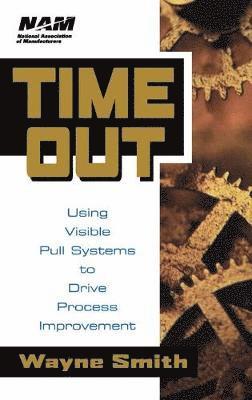
Time Out
Using Visible Pull Systems to Drive Process Improvement
Inbunden, Engelska, 1998
400 kr
Skickas inom 7-10 vardagar
Time Out introduces a revolutionary process, Visible Pull, for integrating the new world-class management tools aimed at cycle time reduction, quality improvement, and optimum customer service. Many leading companies—DuPont, Union Carbide, and International Specialty Chemicals—have seen significant benefits from its application. Typical benefits have included a 10 to 20 percent gain in capacity, a 30 to 40 percent reduction in inventory, a 50 percent reduction in cycle time, and more. In this authoritative new book, one of Visible Pull's pioneers describes the development of Visible Pull and lays out a detailed roadmap for applying it to your own unique business. With thirty years of hands-on experience, Wayne Smith knows the obstacles that can impede improvement in a plant. Here, he outlines the changes in philosophy and behavior that must take place before progress can be made. Smith differentiates between the traditional, inefficient "push" scheduling, where forecasts are made and everyone pushes material forward to meet the schedule, and the Pull Systems, which limit and control production based on downstream demand. With Visible Pull, workstations act in concert with one another, which in turn enables the company to better allocate resources, build a culture of teamwork, and link time-on-line to business goals. In a series of five logical, carefully structured segments, Smith takes you step-by-step through the entire Visible Pull process, including: Making the Decision—helps you decide if Visible Pull is appropriate for your organization through a high-level overview of its goals, resource requirements, and potential benefitsAssessing and Planning—explains how to identify and assess opportunities for improvement, choose the right tools, and develop a specific plan for changePull Systems—demonstrates how to use Pull Systems as the primary tool for managing time in a process and how to apply them to your specific environmentVisible Management and Continuous Improvement—describes how to use Pull Systems to institute an ongoing improvement process, build employee involvement, measure your organization's evolving capabilities, and guide your future growth.Replete with examples drawn from the experience of world-class manufacturers, Time Out in-cludes a full range of simulation techniques, as well as detailed, real-world application methods set within the context of an integrated enterprise.Designed for manufacturing, operations, and distribution managers, supervisors, team leaders, design engineers, and others concerned with manufacturing processes, Time Out offers an immediate and unprecedented opportunity for truly breakthrough improvement.Time Out offers a detailed roadmap for dramatically improving manufacturing cycle time in your company by using Visible Pull Systems to integrate and focus the complex array of competing management techniques. The book details how world-class businesses like DuPont, Union Carbide, and others have benefited from implementing cycle time techniques and how you can draw from the toolbox to meet your company's unique needs. With Visible Pull, companies learn how to maximize the use of their manufacturing workstations, allocate resources better, and link time-on-line to business goals. With a full range of real-world examples, simulation techniques, and application methods, Time Out offers manufacturing managers, supervisors, engineers, and others a dynamic new way of raising overall manufacturing performance."Wayne Smith has an obvious depth of technical and conceptual knowledge together with a breadth of manufacturing experience rarely found these days. Our members know the genuine article when they see it and Wayne Smith is asked back after every presentation."—William H. King, President, AME Northeast Region."The principles set forward in this book apply to every plant. Wayne Smith describes the basic principles of cycle time reduction, Visible Pull Systems, and bottleneck identification and protection, which are easily grasped from the CEO office down to the shop floor."—P. J. Boyle, Operations Manager, UOP LLC."By applying the simple, straightforward methods championed by Smith, your organization will see benefits pouring to the bottom line."—Alan Goodman, Corporate Quality Manager, ISP Company."Wayne Smith's cycle time reduction strategies and Visible Pull Systems are the glue that unifies all functions of the operation in all critical performance areas. Time is clearly the enemy of efficiency, and this is the best program I've seen to get the organization after it."—David E. Rousse, Vice President and General Manager, FiberMark, Inc.
Del 3 - National Association of Manufacturers
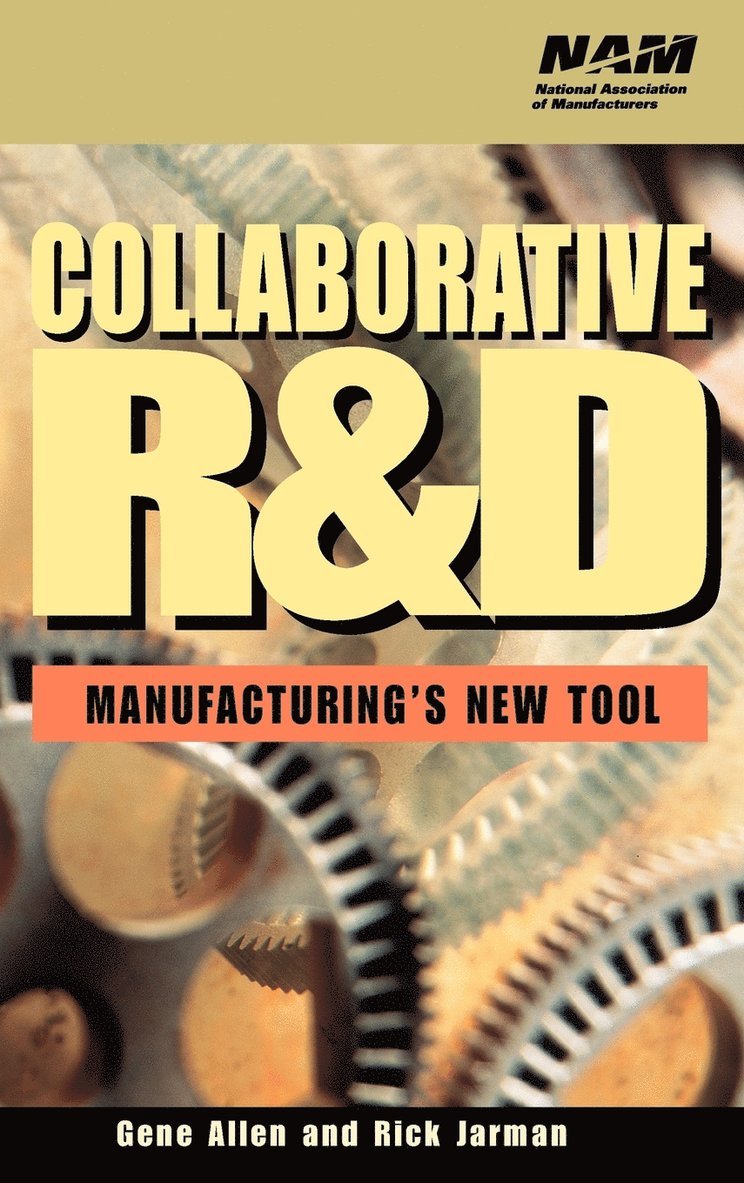
Collaborative R&D
Manufacturing's New Tool
Inbunden, Engelska, 1999
1 545 kr
Skickas inom 7-10 vardagar
The ability to collaborate, particularly in new manufacturing technology development, is becoming a corporate competence that will determine which companies survive in the next decade. With the advent of the telecommunications and information infrastructure realized in the 1990s, companies that can effectively collaborate to get new technologies applied will stand a greater chance of remaining competitive in today's market. Collaborative R&D offers the methods and metrics for developing collaborative technology programs and partnerships, both within the industry and between major competitors. R&D experts Allen and Jarman provide a complete map for collaboration, taken from their collective years of experience in creating, promoting, and managing many collaborative R&D initiatives over the past decade. They include the guidelines for determining what technology development areas are appropriate for collaboration, and what ingredients need to be in place for it to be successful. The authors' experiences are detailed in a format that walks the reader through the process of identifying, starting, and managing collaborative R&D programs. Having developed these programs with companies like Ford, Texas Instruments, Boeing, AT&T, and Kodak, Allen and Jarman include numerous real-world examples, which show how to choose collaborative partners, how to use the government in establishing R&D programs, successful management techniques, means of addressing intellectual property, and how to address accounting concerns. The book also illustrates the significant benefits of collaborative R&D, helping managers and technology professionals realize its value by enabling them to make the most knowledgeable decisions and take the best actions possible, in any given situation. Among some of the benefits that have resulted from the authors' collaborative programs:* Pratt & Whitney developed software tools that enabled them to keep one of their plants from closing.* Ford reduced a two-week design process to four hours.* An acceleration by at least a year in 32 key Printed Wiring Board research tasks resulted in research savings of about $35.5 million. Collaborative R&D is valuable reading for any business that plans to thrive in a new global economy where all available financial and human assets will need to be leveraged for the greatest return-and with minimal risk. "R&D means innovation, productivity, and growth-the three things our economy needs the most. This important new book explains how and why the R&D revolution is transforming American industry, a theme everyone who cares about the future of our economy should understand." -Jerry Jasinowski, President, National Association of Manufacturers. "Allen and Jarman provide the definitive pathway to competitive advantage through collaborative R&D, the new tool for cost-effective innovation in the twenty-first century." -Leo Reddy, President, National Coalition for Advanced Manufacturing. "Collaboration among companies is very new in American industry. Most companies are still striving to have their own employees collaborate with each other. This book portrays the strength and power of intercompany collaboration." -Jack E. Swindle, Senior Vice President, Texas Instruments. "This is a must read for any entrepreneur thinking of becoming involved in cross-organizational collaboration, for any corporate executive concerned about how cross-organizational R&D collaboration will help his company to remain competitive in the future, and for any manager who is responsible for managing people involved in cross-organizational collaborative efforts." -Dr. Ann Majchrzak, Professor of Information Systems, Marshall School of Business, University of Southern California "Collaborative R&D is mandatory reading for any enterprise leader looking to expand and leverage market influence." -Mike McEvoy, Vice President, Advanced Engineering and Design Center, Baxter Healthcare Corporation.
Del 4 - National Association of Manufacturers
Emissions Trading
Environmental Policy's New Approach
Inbunden, Engelska, 2000
1 524 kr
Skickas inom 7-10 vardagar
Authoritative, comprehensive, accessible-the definitive guide to a new approach in environmental policy Emissions Trading: Environmental Policy's New Approach presents the work of an outstanding group of contributors on the successes and limitations of this new and exciting incentive-based tool for reducing environmental pollutants. By including the comments of emitters, regulators, public interest group representatives, and academics, the book reveals the criticisms, disagreements, and growing resolution of numerous environmental questions, including:* Can markets be used to correct market environmental failure?* Will decentralized decisions by emitters produce an improvement in air quality?* Can this approach realize significant control cost savings?* Can emissions trading be monitored and enforced effectively at a reduced cost?* Will affected groups support this dramatic innovation?Supported with sound analytical thinking and careful consideration of the evidence, Emissions Trading presents an open and candid discussion of the issues and choices that lie ahead. As emissions trading is extended to air pollutants such as nitrogen oxides and carbon dioxide, the data and information contained in this book will become even more important and compelling for anyone interested in matters destined to have a profound impact on the economy, the environment, and public health.
Del 5 - National Association of Manufacturers
Next Generation Manufacturing
Methods and Techniques
Inbunden, Engelska, 2000
1 333 kr
Skickas inom 7-10 vardagar
During the 1990s, an ambitious three-year research program identified the steps manufacturing companies must take to become globally competitive. The prestigious Next Generation Manufacturing (NGM) Project combined the insights and perspectives of business and academia's most astute thinkers. It featured the cumulative experience of over thirty top global manufacturing firms, the Agility Forum, the engineering and management schools of the Massachusetts Institute of Technology, and the Oak Ridge Centers for Manufacturing Technology, as well as many other highly regarded organizations. The Project resulted in a vision for the future of manufacturing and a framework for action. Next Generation Manufacturing is the first book to cover the NGM Project and its recommendations for creating and maintaining a successful manufacturing enterprise. It describes how manufacturing is continuing to evolve and the significant changes companies must make to remain competitive in the next decade. Addressing the dilemmas faced by today's corporate management, the authors walk the reader through strategies for meeting corporate goals and the expectations of customers; the techniques and tools available to achieve them; and how to define success through measurements. They offer a comprehensive program for applying the product development techniques, metrics, and knowledge management approaches for stellar manufacturing. Vital to next generation manufacturing is understanding the roles of innovation, knowledge, and people in ensuring the competitive readiness of a company. The book identifies the strategies to achieve this, including:* Build a strong workforce* Develop and implement advanced knowledge processes* Use advanced manufacturing systems, processes, equipment, and technology* Integrate competitive strengths Included are real-world examples from participating firms in the NGM Project that have achieved NGM attributes, such as Chrysler and Boeing, as well as a full-length hypothetical case. Also provided are the methodologies for making a high-quality product at the lowest possible cost and getting it to market in the shortest possible time. The authors have extended the work of the NGM Project by developing ways to link NGM with corporate strategic goals for achieving and sustaining profitability. They expand the concepts of NGM by covering management and financial issues that, until now, have not been fully addressed. The authors also provide a glimpse into the future, examining where manufacturing may be headed beyond the next decade. For any manager or owner concerned about the long-term survival of their manufacturing enterprise, Next Generation Manufacturing provides the knowledge, strategies, and tools necessary for achieving success in the twenty-first century. Praise forNEXT GENERATION MANUFACTURING "Jordan and Michel capture the diverse and often conflicting concerns of manufacturing business leaders worldwide. . . . The lessons [in this book] have widespread application in companies of almost any size."-Professor Peter Sackett, Head of Department, Cranfield University "Throughout history, manufacturing of flint arrowheads to sophisticated computer chips has been a mainstay of societal growth. Indeed, technology epochs have been named for significant occurrences; e.g., the Industrial Revolution, manufacturing productivity fueled by mass production technology. We are now witnessing the start of one of these rare epochs, the Knowledge Age, manufacturing productivity fueled by information and knowledge technology. Next Generation Manufacturing provides an exciting insight into this emerging epoch; an easily read, accurate, and insightful book on manufacturing history in the making."-Gene Meieran, Intel Fellow, Intel Corporation
Del 6 - National Association of Manufacturers
Breaking the Cost Barrier
A Proven Approach to Managing and Implementing Lean Manufacturing
Inbunden, Engelska, 2000
1 438 kr
Skickas inom 5-8 vardagar
"Success is often the culmination of a series of lesser known accomplishments." -Stephen A. Ruffa and Michael J. Perozziello In the Muroc, California desert over fifty years ago, a team of contractors and government engineers along with a daring young test pilot named Chuck Yeager achieved the seemingly impossible and broke the sound barrier. It was a brilliant, selfless team effort; one that opened the doors for limitless advances in aviation. Yet, once again, this industry is faced with an apparently insurmountable barrier; not one of performance, but of cost. To break this barrier, a team of manufacturing professionals led by the Department of Defense's Stephen Ruffa-was given unprecedented access by the giants of military and commercial aircraft engines and avionics production. Their mission? Go beyond the age old focus on flying farther, faster, and higher to discover how to effectively and permanently slash the cost of producing aircraft to allow this industry to continue its rapid pace of advancement. The results of their study set the stage for a new approach that will again change the face of this industry. These findings lauded by leaders across the industry and comprehensively explored in Breaking the Cost Barrier prove that production variation, as opposed to more common targets like labor utilization and inventory levels, is the chief cause of escalating production costs. More importantly, they reveal how companies can control spiraling production costs by first controlling the variability that has for too long been considered a necessary evil in manufacturing circles. While much has been written about what "lean production" techniques are, Breaking the Cost Barrier is the first book to explain how to effectively put lean techniques into place. It presents the big picture on how you can understand and adopt the industry proven techniques used in the lean production environment and coordinate the best into one powerhouse variation management program. Case studies and examples showcase how these techniques can be applied to control production variability across industries and requirements. Breaking the Cost Barrier provides far more than just another plug-and-play technique for increasing efficiency. Instead, it tells the step-by-step story of how one team of professionals, guided by the belief that an answer was closer than anyone realized, broke the code on production variability problems and introduced exciting, profitable, and easily adaptable variation management methods to one of the world's most important and noteworthy industries. THE NATIONAL ASSOCIATION OF MANUFACTURERS is the nation's largest broad-based industrial trade association. The NAM is headquartered in Washington, D.C., and has regional offices across the country. For more information on the NAM, call David W. Walker, Vice President, Marketing and Member Services, at (202) 637-3186. The dramatic account of how a team of aerospace professionals attacked production variation to slash costs by 25% Variation Management the identification and control of variation in production processes-is critical to today's cost-conscious aerospace industry. Now, the story of how its underlying framework was discovered by a team of professionals in a cooperative effort with a range of organizations, from McDonnell Douglas and Pratt & Whitney to Westinghouse and even the U.S. government, is chronicled in the innovative and technique-packed Breaking the Cost Barrier. This fast-paced, highly entertaining book gives you a behind-the-scenes look at how you can design and implement a system to successfully control production variability and leverage the power of that system for your own organization. It describes what many of the components of a variability control system are and what goals they should achieve, then demonstrates from the inside out why each comprises an important part in the puzzle.