NATO Science for Peace and Security Series - E: Human and Societal Dynamics (IOS Press) – serie
Visar alla böcker i serien NATO Science for Peace and Security Series - E: Human and Societal Dynamics (IOS Press). Handla med fri frakt och snabb leverans.
54 produkter
54 produkter
Inbunden, Engelska, 2007
2 302 kr
Skickas inom 3-6 vardagar
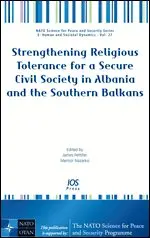
It has long been a common place of Balkan Studies and historical writing about the Balkans to state that religion is often a major factor in conflicts. Some contemporary authors have seen it as the decisive factor. In the context of the bloody debacle of the wars of the 1990’s in ex-Yugoslavia which was analysed as a conflict between Roman Catholic Croatia and Orthodox Serbia, or the Bosnian war in terms of re-emerging Islam. The longstanding reputation of Albania and Albanians for tolerance in religious matters is important, and deserves scholarly study and debate. In the period of the emergence of Albania from the chaos and turmoil of the 1989-1992 period and the end of the one-party state, the main priority for Albanians was the reestablishment of religion in Albania after the years of enforced atheism under the Hoxha regime. In the main this process went very well, with a successful programme of church and mosque construction taking place. This publication illuminates the background to this emerging and complex religious culture in Albania and also touches upon subjects of importance in relevant neighbouring nations (Greece and Montenegro). It includes papers by a number of prominent local scholars, and invited foreign experts on Albania and its history.
1 773 kr
Skickas
As we reach its 60th anniversary, NATO – a security alliance of 28 countries from North America and Europe – remains the principal security instrument of the transatlantic community and the expression of its common democratic values. However, the NATO today is no longer that of 1949.After the collapse of Communism and the Soviet Union, NATO had to reinvent itself politically for the initial challenges of the post-Cold War era. In the space of a decade NATO successfully transformed itself from a North American-Western European Alliance focused exclusively on territorial defence into a pan-European institution with new members stretching from the Baltic to the Black Sea.NATO’s missions have changed and its structures have been reformed accordingly. It has had to adapt to the changing world and changing threats such as terrorism, the proliferation of weapons of mass destruction, transnational trafficking, piracy, cyber attacks and climate change.Sixty years after its foundation NATO has not become rusty or outdated. On the contrary, in the new security environment its role has increased. NATO remains the pre-eminent institutional framework for the USA, Canada and Europe – not just to consult together, but also to act together. NATO’s key stabilising role in the Balkans and, more recently, in Afghanistan; its role in fighting terrorism; and the continuing interest on the part of several nations in joining NATO, all demonstrate that the Alliance is very much in demand. ""The Post-Cold War Enlargement and the Alliance’s Future"" reflects upon NATO’s achievements and setbacks at the time that explores the challenges that lie ahead in the future of the most successful military Alliance of the modern Euro-Atlantic history and beyond.This book is a must-have for those interested in international relations, global security and defence issues.
1 381 kr
Skickas
It has long been a common place of Balkan Studies and historical writing about the Balkans to state that religion is often a major factor in conflicts. Some contemporary authors have seen it as the decisive factor. In the context of the bloody debacle of the wars of the 1990’s in ex-Yugoslavia which was analysed as a conflict between Roman Catholic Croatia and Orthodox Serbia, or the Bosnian war in terms of re-emerging Islam. The longstanding reputation of Albania and Albanians for tolerance in religious matters is important, and deserves scholarly study and debate. In the period of the emergence of Albania from the chaos and turmoil of the 1989-1992 period and the end of the one-party state, the main priority for Albanians was the reestablishment of religion in Albania after the years of enforced atheism under the Hoxha regime. In the main this process went very well, with a successful programme of church and mosque construction taking place. This publication illuminates the background to this emerging and complex religious culture in Albania and also touches upon subjects of importance in relevant neighbouring nations (Greece and Montenegro). It includes papers by a number of prominent local scholars, and invited foreign experts on Albania and its history.
1 418 kr
Skickas
Terrorism is not the only threat that causes the emergence of crises. The so-called ‘crisification’ of our security environment also seems to be rising due to many other factors. Such an environment is generating many crises related to politico-military conflicts, natural disasters, infectious diseases, information disruptions, ethnic or religious violence and others. Many of these crises are completely or nearly completely unexpected and have a strong effect on the security of individual people, states and the international community. ‘Crisis’ has become the key word instead of ‘war’. The awareness of this is partially driven by the growing role of electronic media, bringing negative news and reports to nearly all homes, and partially by objective technical factors that allow the fast escalation of local crises to the international level. Globalization therefore has a strong subjective and objective impact on the understanding of security.
1 418 kr
Skickas
The so-called ‘hard’ or ‘exact’ sciences, with their necessary emphasis on technology and on the technical, are hardly reputed for being very human, and, conversely, the so-called ‘human’ sciences are often pronounced as ‘soft’ because they cannot be based on the certainties associated with the former. The search for truth - which is the essential dimension of the construction of a peaceful world - therefore has to navigate between considerations of a philosophical nature and the concrete data of the hard sciences. If, ever since the humanism of the Renaissance period, we have been happy to lay claim to the wisdom of one of its great writers, Rabelais, who taught a moral lesson to the young Pantagruel with the neat formula “science without conscience is the ruin of the soul”, we nonetheless stand in awe before modern scientific advances and the extraordinary achievements that they have opened up. If everything is not permissible, at least everything seems possible!
1 512 kr
Skickas
Suicide Bombers: The Psychological, Religious and Other Imperatives provides wisdom and insight in an inter-group situation characterized by huge gulfs and misperceptions. The Western media has focused on fundamentalists as the voice of Islam, and helped to shape a warped stereotype of the vast majority of Muslims –who are actually moderate in attitudes. This volume provides a ‘corrective’, by explaining how de-radicalization programs are being spearheaded by Muslims themselves, and also by exploring the best strategies for understanding and dealing with Islamic fundamentalism and suicide terrorism. The chapters reflect the international, interdisciplinary nature of the workshops that served as the launching pad from the project. This volume reflects a positive trend; it is an indication that researchers can lead societies to accurately pinpoint the nature and role of fundamentalists, and that they can differentiate between destructive elements on the one hand and the majority of moderates seeking to achieve constructive, peaceful inter-group relations on the other hand. Although there is considerable diversity among the chapters, a shared theme is the contextual approach to understanding extremism and suicide terrorism. Rather than become seduced by reductionist explanations, to do with assumed intra-personal characteristics of suicide terrorists, the authors focus on the characteristics of groups and contexts.
1 512 kr
Skickas
In the last few years, logistics has become a strategic factor for development and competition. In fact, research and development activities have traditionally faced the management of supply chain and international transport focussing on two main aspects: speed and efficiency. However, several vulnerabilities have recently been highlighted under a safety and security viewpoint. The weakness of the logistic chains has become more evident with the beginning of the new millennium. Terrorist attacks, such as the 11th of September 2001 in the USA, have caused the introduction of new rules and procedures, which affect the overall logistics showing the vulnerability of the global economy. So, nowadays, it would appear anachronistic to carry out an exhaustive research activity on the supply chain with no relation to the various typologies of risk, which may affect it. This book aims to effectively represent the current status of research on dangerous goods transport.
1 530 kr
Skickas
This book attempts to address how NATO and its mission are perceived today in the world, to assess the challenges the Organisation is facing in the near future, and to debate what could be its role in the 21st century. This is most relevant since the Organisation has just celebrated its 60th anniversary and is in the process of redefining its strategic concept to try to shape the right strategy for a safer tomorrow. This book deals with the following: How is the Organisation perceived in member and so-called partner countries such as Russia and Georgia with regards to models, policies and strategies? What do the younger generations born after the end of the Cold War think of the Atlantic Alliance in the present and its role in the future? The evolution of the Alliance towards a transatlantic ‘hub’, and last but not least an analysis on the importance of communications in NATO’s current campaign in Afghanistan. Key features: NATO’s durability;The future of the Alliance;NATO’s role as a guarantee of Peace and Security in the South Caucasus
1 605 kr
Skickas
Organized crime is not in retreat. Quite the reverse; it is spreading far and wide, and contrary to popular belief, it is much more damaging than terrorist activity. The success of any initiative to combat the wide-ranging effects of organized crime depends on a thorough understanding of its geographical, historical and political aspects. Without careful, well informed strategic planning, there is a danger that the problem will only be dealt with piecemeal; individual actors may be apprehended, but the organization as a whole will shift and mutate, never losing its criminal character. All too often, arresting only one member or branch of a criminal organization not only fails to weaken this sector, but can unwittingly strengthen it by assisting the activities of criminal competitors. This book presents the proceedings of the NATO Advanced Research Workshop: The Role of Transnational Criminal Organisations in the Management of Illegal Immigration, Human Smuggling and Trafficking in Europe, hosted by the Bulgarian Academy of Science with the aim of improving diagnosis; pooling knowledge and building a more effective strategy on the information exchanged. In this way, currently uncoordinated individual efforts, aimed at combating organized crime and human trafficking at both a national and international level, can gain momentum and be taken forward. The diverse background and geographical perspective of the authors whose work appears here throws new light on this little-studied area, and makes this book of great interest to all those involved in the trans-national struggle to identify and prevent the proliferation of the organised criminal networks.
1 773 kr
Skickas
It has been shown that those who have served in both combat missions and peacekeeping operations are at increased risk for pain syndromes. Research suggests that this may result from their “wounds of war.” Some wounds may be “invisible,” such as depression, stress, and chronic pain, while others, such as physical disabilities, are more obvious. In October 2011, twenty-seven scientists and representatives from NATO and partner countries met in Südkärnten, Austria for a three-day NATO Advanced Research Workshop entitled “Wounds of War: Pain Syndromes – From Recruitment to Returning Troops.”The aim of this publication, which presents papers from that workshop, is to critically assess the existing knowledge and to identify directions for future actions. The book addresses four key questions:1. Vulnerability to Pain syndromes: Are certain types of people at a higher risk for pain syndromes (background, ethnicity, childhood trauma, etc.)?2. Diagnosis and Assessment Issues of Pain Syndromes: Which methods are used to diagnose and assess pain?3. Treatment of Pain Syndromes: What are the latest treatment and therapy opportunities for soldiers who experience pain syndromes?4. Clinical Updates on Pain Syndromes: What can we learn from recent clinical updates on pain syndromes?
2 015 kr
Skickas
The nuclear disaster at the Chernobyl power plant, devastating floods, landslides, droughts, the erosion of tailings dams and desertification are just some of the natural and manmade disasters which have afflicted the Ukraine and neighboring countries in recent years. It is therefore entirely appropriate that the NATO Advanced Research Workshop (ARW), Correlation between Human Factors and the Prevention of Catastrophes, was held in Dnipropetrovsk, Ukraine in September 2011. This book presents the proceedings of the ARW, which analyzed accumulated European theoretical knowledge and practical experience in the field of disaster prevention, addressing a wide range of correlations between human factors and the prevention of catastrophes. Subjects covered include land-use planning and management procedures; risk assessment in emergency situations; control of polluted water; socio economic impacts from desertification; health impacts arising from nuclear facilities, flooding and tailings dam accidents; risk management systems and measures; and the protection of water resources. The presentations reflected the extensive experience of workshop participants and will be of great interest, especially to countries that are developing their legal frameworks in civil emergency planning, most particularly those who are aligning to EU directives and other international standards.
For much of history, pirates and buccaneers constituted one of the most serious threats to maritime activities all over the world. More recently, apart from adventure stories and swashbuckling films, maritime piracy was largely thought of as a thing of the past. This began to change in 1994 when an article in the Far Eastern Economic Review drew public attention to the renaissance of a phenomenon: piracy was back, and it was becoming increasingly violent, involving huge ships in international waters. This book is based on the proceedings of the NATO Advanced Research Workshop, held in 2009 in Lisbon, Portugal. Its main purpose was to promote dialogue on the phenomenon of maritime piracy between international policymakers, law enforcement officers, port authorities and other professionals, and to provide a response to the need for research and analysis at an international level on maritime piracy and its connection to terrorism. The book does not simply report on the proceedings of the workshop, but also includes some new topics not covered by the ARW, and is organized in three sections: new methodological approaches to maritime threats; new threats and new challenges in piracy and maritime terrorism and lastly; some selected case studies: different threats, different solutions. The book offers qualified ideas, opinions and talking points to the international practitioner community, will foster debate and help law enforcement agencies and policymakers to face the new world wide maritime threats of piracy and terrorism.
1 605 kr
Skickas
The threat of terrorist attack continues to feature prominently in the field of homeland security. Dealing with this issue demands a balanced strategy which will defeat the terrorist threat, whilst at the same time ensuring that vulnerable communities and individuals feel included in society and are not pushed towards radicalization and violent extremism by the very measures implemented to prevent this. This book presents the proceedings of the NATO Centre of Excellence – Defence Against Terrorism (COE-DAT) Advanced Research Workshop entitled Homeland Security Organization in Defence Against Terrorism, held in Ankara, Turkey, in November 2009. The workshop brought together participants from some 13 countries and consisted of five sessions: current threats to homeland security from terrorism; homeland security organization; legal and security responses to terrorism in homeland security; the challenge of international terrorism; other threats; and countering radicalization and the psychology of terrorism. During these sessions, presentations by thirteen expert speakers from eight countries were followed by a debate. The workshop concluded with a final discussion of all the topics reflected in the individual papers presented. Representing a significant contribution to furthering the science of counterterrorism, this book will be of interest to all those whose work involves them in aspects of homeland security and the terrorist threat.
The Handbook for Pandemic and Mass-Casualty Planning and Response offers the disaster medicine professional community the information and tools to better prepare, individually and collaboratively, to mitigate mortality and morbidity when catastrophe occurs. It captures the lectures and teachings of an extraordinary 12 day NATO Advanced Study Institute held in Croatia in late 2011: ‘Applying lessons learned and sharing best practices in addressing pandemics and catastrophic health events.’ The results of this event, held under the auspices of the NATO Science for Peace and Security Programme, are presented in three sections: The Context of Catastrophic Health Planning; Principles of Response to Catastrophes with Mass Casualties; and Communication and Information Sharing. The handbook presents rigorous, standardized cross-disciplinary training, such as Medical Response to Major Incidents; the need to guide medical and humanitarian efforts by ethical principles; the importance of risk communication and trustworthy information; treatment guidelines along with medical and surgical practices for amputation, burns, and blast injuries; triage guidelines and treatment algorithms; principles of mass-casualty planning; and the need to identify and correctly position -in advance- the networks and collaborative structures that must work together and share capabilities. Drawing on experts from Croatia, Slovenia, Ukraine, the United Kingdom, the Russian Federation, Italy, Spain, Mexico and the United States - and especially on Croatia’s experience handling mass casualties during its Homeland War in the 1990s - this handbook combines research and real-world examples to assist the disaster response community in preparing for mass-casualty incidents.
1 605 kr
Skickas
Momentous social events result from the sum of micro-level changes in daily individual life, and by observing and fusing publicly available data, such as web searches and other internet traffic, it is possible to anticipate events such as disease outbreaks. However, this ability is not without risks, and public concern about the possible consequences of improper use of this technology cannot be ignored. Opportunities for open discussion and democratic scrutiny are required.This book has its origins in the workshop Internet-Based Intelligence for Public Health Emergencies and Disease Outbreak: Technical, Medical, and Regulatory Issues, held in Haifa, Israel, in March 2011. The workshop was attended by 28 invited delegates from nine countries, representing various disciplines such as public health, ethics, sociology, informatics, policy-making, intelligence and security, and was supported by the NATO Science for Peace and Security Programme. Its starting point was the 2009 outbreak of swine flu in Mexico. The book includes both scientific contributions presented during the meeting and some additional articles that were submitted later.Interactions between public health and information and communication technologies are destined to be of great importance in the future. This book is a contribution to the ongoing dialogue between scholars and practitioners, which will be essential to public acceptance and safety as we rely more and more on the internet for predicting trends, decision-making and communication with the public.
1 773 kr
Skickas
Instability in Afghanistan has had a considerable effect on regional security in Central Asia, particularly in the aftermath of the events of 9/11, and this has meant that the importance of NATO and its contribution to security in this area has increased considerably. A detailed analysis of this topic is precisely important because it could highlight the areas where the Central Asian countries could increase their security contributions to Afghanistan’s security through enhancing their cooperation with NATO. This book presents the fully revised and updated versions of papers presented at the NATO Advanced Research Workshop (ARW), 'NATO, the Fight against International Terrorism in Afghanistan and Security Situation in Central Asia since 9/11', held in Ankara, Turkey, in April 2011. This ARW was supported by the NATO Science for Peace and Security Programme. The book takes a comprehensive approach to the regional security complex in Central Asia by emphasizing the human security, socio-political and energy dimensions in addition to the traditional military dimension of the fight against international terrorism in and around Afghanistan. The findings of the book enhance our understanding of the root causes of international terrorism and the effective ways of coping with the security challenges in this region. The book is divided into five parts: First, NATO’s Contribution to Lasting Security in Afghanistan; Second, Responses of the Central Asian States to Political Instability, Organized Crime and International Terrorism in Afghanistan; Third, Energy Security in and around Central Asia; Fourth, International Competition and Co-operation over Afghanistan and Central Asia; and Last but not least, Regional Security Organizations and the Fight against International Terrorism in Afghanistan.
1 530 kr
Skickas
The threat of terrorism has become an ever present preoccupation, necessitating the constant review and updating of defensive strategies to counter it from national governments and policymakers. This book presents selected articles based on some of the lectures delivered at the NATO Centre of Excellence – Defence against Terrorism (COE – DAT) Advanced Training Course (ATC) Future Trends and New Approaches in Defeating the Terrorism Threat, held in Algiers, Algeria, in October 2011. Subjects covered by these articles include an overview of terrorism; respecting human rights in the countering of terrorism; suicide terrorism; terrorism involving weapons of mass destruction; bioterrorism; terrorism, media and public information; strategic communications in the defence against terrorism; the challenges posed by non-state armed groups; and sources of instability. This collection of articles will be of interest to all those involved in countering the threat of terrorism worldwide.
1 530 kr
Skickas
The issue of protecting essential infrastructure against the threat of terrorist attack is one which continues to concern governments worldwide. But terrorism is not the only threat this infrastructure may face: environmental hazards, industrial accidents and sabotage are also major concerns. Protecting critical infrastructure is expensive, but many of the solutions apply whatever the cause of the problem, and in these days of scarce resources, multi-sector or multi-threat solutions are preferred. This book presents the proceedings of the NATO Centre of Excellence – Defence against Terrorism (COE-DAT) Advanced Research Workshop entitled Critical Infrastructure Protection, held in Ankara, Turkey, in May 2012. The workshop brought together 44 participants from 13 countries and consisted of five sessions: a general overview of policy, tools and techniques; the realities of implementation; protection of energy infrastructure; protection of communications and information infrastructure; and protection of transport infrastructure. The papers were presented by 16 expert speakers – military and civilian practitioners, business leaders, diplomats, and academics – from 6 countries, and each was followed by a detailed discussion and debate. The workshop concluded with a summary of all the topics reflected in the individual papers presented. This book represents a significant contribution to furthering the science of counterterrorism, and will be of interest to all whose work involves all aspects of Critical Infrastructure Protection and the terrorist threat to infrastructure.
1 605 kr
Skickas
The problem of dealing with the ongoing and constantly evolving threat of terrorism is something which continues to preoccupy governments worldwide. Has sufficient attention been paid to what happens with terrorist organizations after they change leaders? Has enough research been done on how and in what manner they are changed/replaced? This book is a collection of follow-up papers from experts who participated in the NATO Advanced Research Workshop (ARW) entitled The Perseverance of Terrorism: Focus on Leaders, held in 2013, and is the third in a series of outputs related to the approach to terrorist leadership. These papers are presented with the aim of further elaborating the challenges of contemporary terrorism and enriching the existing academic debate. The first two papers concentrate on how better to understand, define and analyze terrorism. The next two authors examine the relevance of contemporary terrorism, its approach and its significance as prevailing threat. The core of the debate is structured around the issue of terrorist leadership, and the majority of authors have explored this phenomenon. Seven different approaches are presented which demonstrate the importance of leadership for terrorist organizations. This book will serve as a guidebook on several terrorism-related issues which trigger academic debate, and which must be taken into account by practitioners in their efforts to design appropriate counter-terrorist measures.
1 568 kr
Skickas
This book contributes to a better understanding of what makes people and communities resilient in the face of disasters, violence and terrorism. This resilience is understood as a resource that facilitates recovery, effective functioning and positive outcomes in the wake of major critical events that threaten the well-being of individuals, families, communities and nations. The chapters in this publication present complementary perspectives on resilience in a variety of socially adverse settings and how to assess resilience beyond the level of an individual. The contributing authors not only consider evidence of resilience in the aftermath of mass trauma, but uniquely explore it from a developmental perspective and expand the focus from individual resilience to the broader ecological levels of community and society.The book contains 11 chapters reflecting different aspects of resilience. Presentation of these different perspectives will be helpful to scholars and students of human behavior affected by life-threatening crises. Together, the chapters present up-to-date research that affirms human strength when confronted by the extreme experiences. The book also covers the broad landscape of current knowledge and research topics on resilience that are related to mass violence and terrorism, which is one of the growing concerns of the world today.
2 015 kr
Skickas
Governments must work tirelessly to update their preparedness for dealing with natural and man-made disasters, as well as taking account of the increasingly present threat of terrorism. Efficient international cooperation is key to achieving safety and internationalizing security policy.This book presents the proceedings of the NATO Advanced Research Workshop (ARW) Engaging the Public to Fight the Consequences of Terrorism and Disasters, held in Tbilisi, Georgia, in June 2014. The purpose of the workshop was to analyze accumulated European theoretical knowledge and practical experience in the field of disaster prevention and the involvement of the public in preventing and fighting the consequences of terrorism, as well as natural and man-made disasters. There was a particular focus on the perspective of the region, especially with a view to meeting European Union standards and setting uniform and independent standards for hazard and risk assessment methods. The protection of economically critical infrastructure, such as dams, pipelines and transport and storage facilities, was addressed as were the issues of managing water and non-renewable resources, the disposal of dangerous chemicals and radioactive waste, and defensible methods of transport for fuel supplies and key personnel.Contributions reflected the extensive experience of the participating NATO and partner countries, including Armenia, Austria, Bulgaria, Georgia, Germany, Italy, Moldova, the Netherlands, Romania, Turkey and Ukraine as well as international organizations such as UNECE and NATO.
1 605 kr
Skickas
Evolving threats of chemical, biological, radiological and nuclear (CBRN) attack make it imperative to find ways to support global efforts against the proliferation of weapons of mass destruction (WMD) and terrorism.This book contains papers presented at the NATO Advanced Study Institute (ASI) on CBRN security culture, held in Yerevan, Armenia, in June 2014. The conference was timely in bringing together the various aspects of security culture in the different substantive areas from a CBRN perspective, focusing efforts to advance CBRN security culture in the everyday work of those who must deal with these ever present threats.The primary aim of the conference was to promote the concept of a CBRN security culture which recognizes synergy across the individual disciplines. As a first step in the practical application of this synergistic view, the conference introduced assessment methodologies that could be refined and customized to enhance the role of the human factor in CBRN security. This, we hope, will enable countries to fulfill their international obligations and implement United Nations Security Council Resolution 1540.The book reflects the presentations and deliberations of workshop participants and will be of interest to governments, international organizations, researchers and practitioners whose work involves the human dimension of the security of CBRN materials.
2 015 kr
Skickas
Terrorist attacks perpetrated by lone actors have already occurred in several countries, and this phenomenon is emerging as a threat to the security of both NATO members and other countries worldwide. In this context, a lone actor, or 'lone wolf’, is someone who individually prepares or commits violent acts in support of an ideology, group or movement, but who is acting outside of the command structure and without the assistance of any group. Up to now, these individual acts have been seen as almost impossible to forecast, but it is nevertheless important to develop a responsible security policy which takes them into account and incorporates planning for counteraction, prevention and response.This book presents papers, written by leading experts in the field, which reflect the subjects presented at the workshop 'Loan Actors – An Emerging Security Threat', part of the NATO Science for Peace and Security Programme, held in Jerusalem in November 2014. The papers are divided into five sections: the threat of lone actor terrorism; case studies; countering and responding to the threat; legal and ethical aspects; and foresight and policy aspects.The insights, information and recommendations shared in this book will be of interest to all those involved in developing a more efficient response policy to this emerging threat.
1 530 kr
Skickas
According to the editors of this book, North Africa has become a hotbed of terrorist activity in recent years, as demonstrated by several events in the region. Representing, as it does, a potential threat to NATO's southern flank, this area can no longer be ignored, they say.This book presents the proceedings of the NATO Centre of Excellence, Defence Against Terrorism (COE-DAT) Advanced Research Workshop entitled 'The Terrorist Threat in North Africa from a NATO Perspective', held in Ankara, Turkey, in the November 2013. Subjects covered include the changing nature of North African terrorism; the rise of Al Qaeda in North Africa; financing terrorism in North Africa; the legal framework of military operations against terrorism in North Africa and the relationship between international terrorism and terrorism in North Africa, among others. Also included in the book is the keynote address given by Prof. Yonah Alexander of the Inter-University Center for Terrorism Studies and entitled 'Terrorism in North Africa and the Sahel: Threats and Responses'The book provides insights to further the understanding of terrorism in North Africa, and will be of interest to all those involved in the development of counterterrorism policies to combat this threat.
2 015 kr
Skickas
Terrorism is not a new phenomenon, but almost all communities, regardless of ethnicity, religion, social status or location, are now increasingly facing the challenge of terrorist threat. What makes a terrorist organization attractive to some citizens? A better understanding of the reasons why individuals choose to join terror groups may well enhance efforts to disrupt the recruitment process of terrorist organizations and thereby support current and future counter-terrorism initiatives.This book presents the proceedings of the NATO Advanced Research Workshop, 'Countering Terrorist Recruitment in the Context of Armed Counter-Terrorism Operations', held in Antalya, Turkey, in May 2015. The goal of the workshop was to share existing ideas and develop new ones to tackle terrorist recruitment. The book contains 18 articles covering topics which include: the role of NATO and other international entities in counter-terrorism; understanding recruitment methods and socialization techniques of terror networks by comparing them to gangs; social media in terrorist recruitment; drug money links with terrorist financing; and counter-terrorism and human rights.The book will be of interest to all those involved in developing, planning and executing prevention programs and policies in relation to both armed and non-armed counter-terrorism operations.
1 605 kr
Skickas
Since the end of the Cold War, numerous conflicts have emerged within the Euro-Atlantic and Eurasian space which have affected international relations and highlighted the need for effective strategies for conflict resolution and management.This book presents papers delivered at the NATO Advanced Research Workshop (ARW), Best Practices and Lessons Learned in Conflict Management, held in Bratislava, Slovak Republic, in June 2015. The authors of these texts are recognized authorities within their fields of expertise. Issues raised by the conflict in Ukraine were the main focus of the workshop, as they are of this book, but it also contains valuable information about situations in other countries such as the Republic of Moldova, Afghanistan, Bosnia and Herzegovina, and Belarus. The book presents an analysis of the theoretical background of conflict management and its relevance for multilateral security institutions. It explores various approaches to conflict management, discusses possible future developments, examines new aspects of conflict resolution and outlines the role of international organizations and civil society in these processes.Providing an overview of current thought in the field, this book will be of interest to all those involved in or connected with the processes of conflict management and resolution.
2 015 kr
Skickas
The Ukrainian conflict has come to be considered as the most serious geopolitical crisis in Central and Eastern Europe since the end of the Cold War. Its implications extend well beyond the borders of Ukraine, and its impact on the security of the wider Black Sea region is, as yet, neither contained nor fully understood.This book contains 28 articles on the topic of hybrid warfare and related threats, delivered at the NATO Advanced Research Workshop (ARW) 'Countering Hybrid Threats: Lessons Learned from Ukraine', held in Bucharest, Romania, in September 2015. This event brought together 50 experts from different fields and perspectives, including policymakers, security and intelligence practitioners, and academics. The presentations explored the nature of the Ukrainian conflict and the dynamic evolution of current security threats in Central and Eastern Europe and the Black Sea region with the aim of identifying the key drivers of the conflict and exploring the most efficient instruments and methods for conflict resolution. The book is divided into four sections entitled: challenges of hybrid warfare: multiple perspectives; hybrid war – an old concept with an extensive dimension; counteracting hybrid threats: lessons learned from Ukraine; and finally, the implications of the Ukrainian conflict for regional and Euro-Atlantic security.The book provides a timely reflection on recent events and will be of interest to all those wishing to improve their understanding of hybrid warfare and conflict resolution.
1 568 kr
Skickas
In the aftermath of a disaster, medical infrastructure is often significantly impacted or destroyed in the affected zone. Recognizing the need for an effective system for deployment in disaster zones, the Emerging Security Challenges Division within NATO's Science for Peace and Security Program (SPS) initiated the development of a multinational telemedicine system (MnTS). Such a system can improve access to health services and increase survival rates in emergency situations spanning both geographical and time zones.This book presents a review of this NATO-funded MnTS, and follows the thematic approach to its development. The book is divided into 14 chapters; Chapter 1 includes a historical review of telemedicine and disasters and Chapter 2 provides a historical perspective of NATO's efforts in the field of telemedicine, while Chapters 3 – 12 summarize the development of the MnTS. Critical components of the MnTS are addressed, such as overall organizational structure, the integration of information technology, legal and regulatory considerations, and outreach and public awareness. The evaluation of the MnTS in a field exercise is described, and the book closes with a final summary of the MnTS.The book addresses the challenges faced in deploying telemedicine following a disaster, such as IT, language, culture and legal issues, and provides a template for making telemedicine part of international disaster response.
1 530 kr
Skickas
In common with many other parts of the world, the region of South Eastern Europe (SEE) faces a significant terrorist threat. Countering this threat represents a major security challenge for government agencies in the region and their partners, and although important counterterrorism advances have been made by NATO nations over the past decade, the complex history, geography, culture, socio-economic and political dynamics of the area mean that these advances need to be contextualized and modified to suit the regional situation.This book presents the contributions to the NATO Advanced Training Course (ATC) 'Countering Terrorism in South Eastern Europe' held over five days at Lake Ohrid, Macedonia, in February 2016. The conference hosted presenters from 15 different countries, and government representatives from the nations of the Balkan region, including Macedonia, Slovenia, Bosnia and Herzegovina, Montenegro, Albania, Bulgaria, Croatia, and Kosovo. The course consisted of five central priorities: contemporary global terrorist practices, radicalization processes and recruitment techniques; terrorist use of cyberspace; legal aspects of countering terrorism; building resilient societies; with the final priority concentrating on SEE counterterrorism. Presenters discussed a wide range of topics, including radicalization and cyberterrorism, all aimed at countering the real and evolving threat of terrorism in the region.
1 568 kr
Skickas
Never before have technological advances had so great an impact on security—not only increasing the nature and level of threats, but also for the possibility of providing the means to address the threats. Technologies that could increase security include ubiquitous and omnipresent surveillance systems, the use of new algorithms for big data, improving bio- and psycho-metrics, and artificial intelligence and robotics. Yet trustworthy and reliable partners and an active and alert society remain sine qua non to reduce terrorism. “To my mind, this publication is one of the best studies of modern terrorism and what to do about it that we have at our disposal. So I am confident that it will find a wide readership, not only in academic or think tank circles, but even more importantly, among policy makers and government officials. They stand to benefit most and they can afford least of all to ignore the important conclusions and recommendations that this wise publication has provided.”Jamie SHEADeputy Assistant Secretary General, Emerging Security Challenges Division, NATO