Neutron Scattering Applications and Techniques - Böcker
Visar alla böcker i serien Neutron Scattering Applications and Techniques. Handla med fri frakt och snabb leverans.
12 produkter
12 produkter
1 589 kr
Skickas inom 10-15 vardagar
Neutron Applications in Earth, Energy and Environmental Sciences offers a comprehensive overview of the wide ranging applications of neutron scattering techniques to elucidate the fundamental materials properties at the nano-, micro- and meso-scale, which underpin research in the related fields of Earth, Energy and Environmental Sciences. Introductions to neutron scattering fundamentals and instrumentation are paired with a thorough review of the applications to a large variety of scientific and technological problems, written through the direct experience of leading scientists in each field. Tailored to a wide audience, this volume provides the novice with an inspiring introduction and stimulates the expert to consider these non-conventional problem solving techniques in his/her field of interest. Earth and environmental scientists, engineers, researchers and graduate students involved with materials science will find Neutron Applications in Earth, Energy and Environmental Sciences a valuable ready-to-use reference.
1 589 kr
Skickas inom 10-15 vardagar
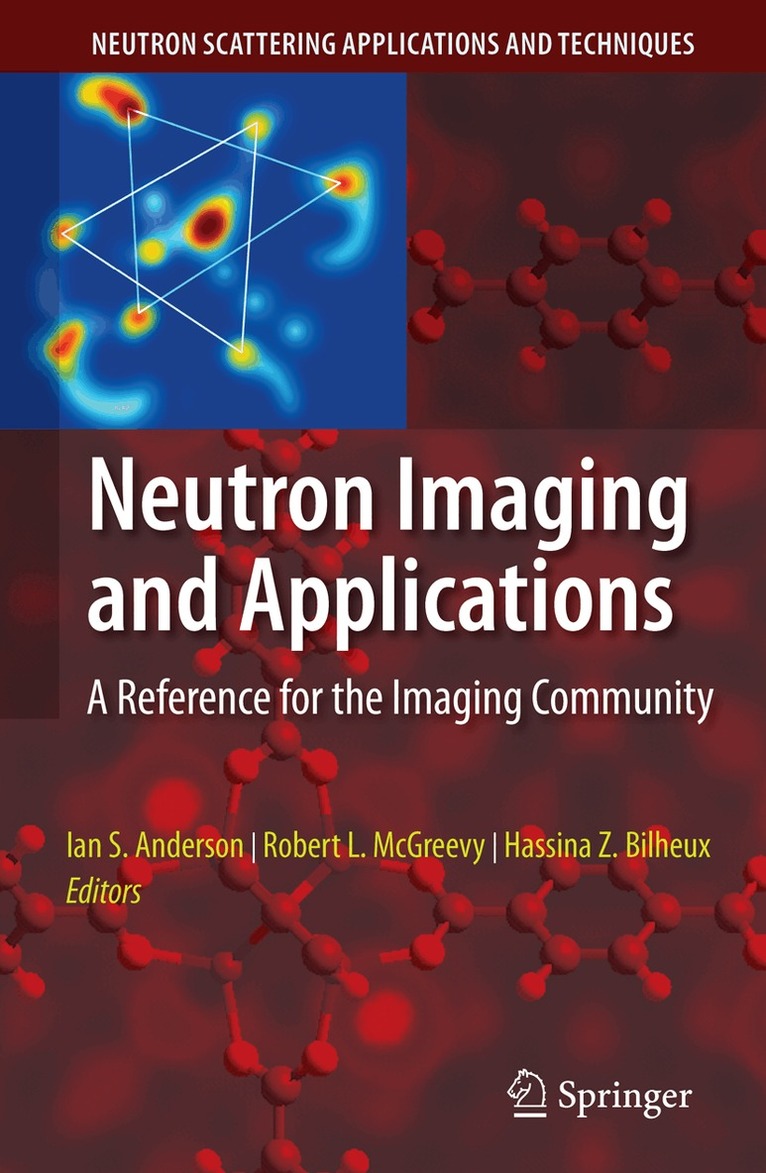
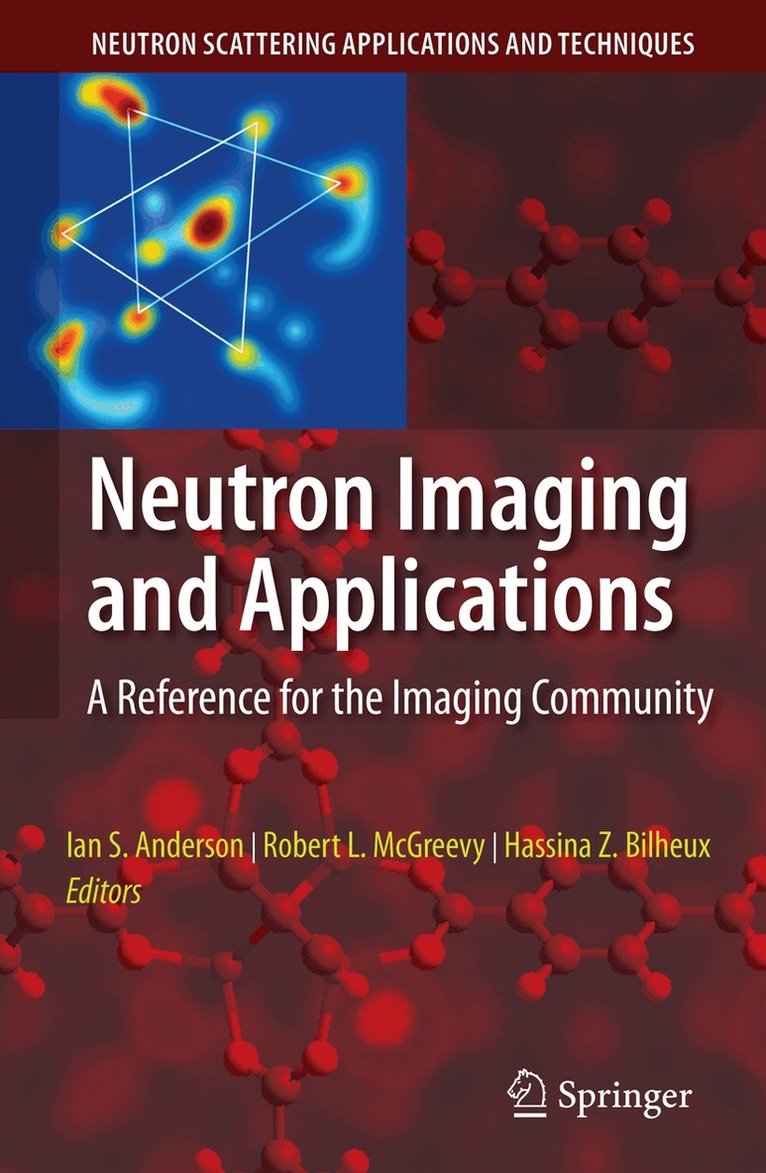
Neutron Imaging and Applications offers an introduction to the basics of neutron beam production in addition to the wide scope of techniques that enhance imaging application capabilities. An instructional overview of neutron sources, detectors, optics and spin-filters allows readers to delve more deeply into the discussions of radiography, tomography and prospective applications available in neutron holography techniques. A section devoted to current applications describes imaging single grains in polycrystalline materials, neutron imaging of geological materials and other materials science and engineering areas. Coverage of thermal neutron imaging of biological tissues, plant physiology, Homeland Security and contraband detection explore the future prospects of this cutting-edge research.Written by key experts in the field, researchers and engineers involved with imaging technologies will find Neutron Imaging and Applications a valuable reference.
1 589 kr
Skickas inom 10-15 vardagar
Neutron Applications in Earth, Energy and Environmental Sciences offers a comprehensive overview of the wide ranging applications of neutron scattering techniques to elucidate the fundamental materials properties at the nano-, micro- and meso-scale, which underpin research in the related fields of Earth, Energy and Environmental Sciences. Introductions to neutron scattering fundamentals and instrumentation are paired with a thorough review of the applications to a large variety of scientific and technological problems, written through the direct experience of leading scientists in each field. Tailored to a wide audience, this volume provides the novice with an inspiring introduction and stimulates the expert to consider these non-conventional problem solving techniques in his/her field of interest. Earth and environmental scientists, engineers, researchers and graduate students involved with materials science will find Neutron Applications in Earth, Energy and Environmental Sciences a valuable ready-to-use reference.
1 637 kr
Skickas inom 10-15 vardagar
Neutron Imaging and Applications offers an introduction to the basics of neutron beam production in addition to the wide scope of techniques that enhance imaging application capabilities.
2 117 kr
Skickas inom 10-15 vardagar
Dynamics of Soft Matter: Neutron Applications provides an overview of neutron scattering techniques that measure temporal and spatial correlations simultaneously, at the microscopic and/or mesoscopic scale. These techniques offer answers to new questions arising at the interface of physics, chemistry, and biology. Knowledge of the dynamics at these levels is crucial to understanding the soft matter field, which includes colloids, polymers, membranes, biological macromolecules, foams, emulsions towards biological & biomimetic systems, and phenomena involving wetting, friction, adhesion, or microfluidics.Emphasizing the complementarities of scattering techniques with other spectroscopic ones, this volume also highlights the potential gain in combining techniques such as rheology, NMR, light scattering, dielectric spectroscopy, as well as synchrotron radiation experiments. Key areas covered include polymer science, biological materials, complex fluids and surface science.
2 117 kr
Skickas inom 10-15 vardagar
Dynamics of Soft Matter: Neutron Applications provides an overview of neutron scattering techniques that measure temporal and spatial correlations simultaneously, at the microscopic and/or mesoscopic scale. These techniques offer answers to new questions arising at the interface of physics, chemistry, and biology. Knowledge of the dynamics at these levels is crucial to understanding the soft matter field, which includes colloids, polymers, membranes, biological macromolecules, foams, emulsions towards biological & biomimetic systems, and phenomena involving wetting, friction, adhesion, or microfluidics.Emphasizing the complementarities of scattering techniques with other spectroscopic ones, this volume also highlights the potential gain in combining techniques such as rheology, NMR, light scattering, dielectric spectroscopy, as well as synchrotron radiation experiments. Key areas covered include polymer science, biological materials, complex fluids and surface science.
1 062 kr
Skickas inom 10-15 vardagar
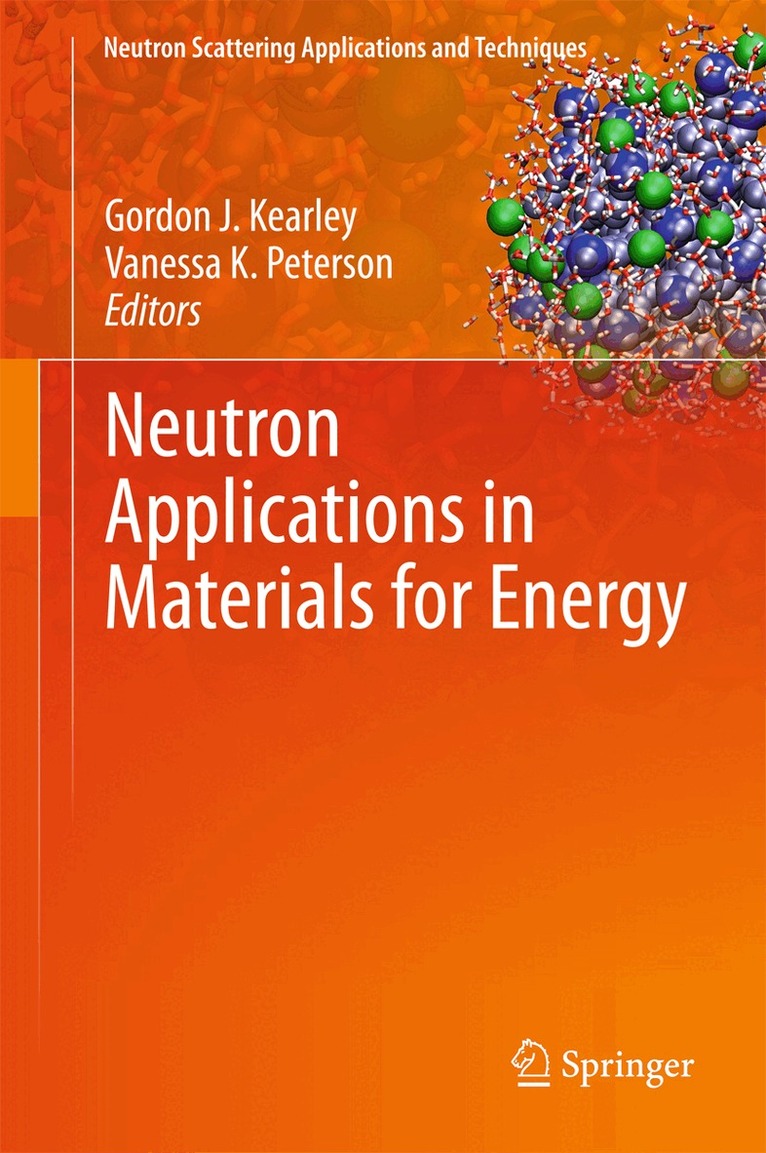
Neutron Applications in Materials for Energy collects results and conclusions of recent neutron-based investigations of materials that are important in the development of sustainable energy. Chapters are authored by leading scientists with hands-on experience in the field, providing overviews, recent highlights, and case-studies to illustrate the applicability of one or more neutron-based techniques of analysis. The theme follows energy production, storage, and use, but each chapter, or section, can also be read independently, with basic theory and instrumentation for neutron scattering being outlined in the introductory chapter.Whilst neutron scattering is extensively used to understand properties of condensed matter, neutron techniques are exceptionally-well suited to studying how the transport and binding of energy and charge-carrying molecules and ions are related to their dynamics and the material’s crystal structure. These studies extend to in situ and in operando in some cases. The species of interest in leading energy-technologies include H2, H+, and Li+ which have particularly favourable neutron-scattering properties that render these techniques of analysis ideal for such studies and consequently, neutron-based analysis is common-place for hydrogen storage, fuel-cell, catalysis, and battery materials. Similar research into the functionality of solar cell, nuclear, and CO2 capture/storage materials rely on other unique aspects of neutron scattering and again show how structure and dynamics provide an understanding of the material stability and the binding and mobility of species of interest within these materials.Scientists and students looking for methods to help them understand the atomic-level mechanisms and behaviour underpinning the performance characteristics of energy materials will find Neutron Applications in Materials for Energy a valuable resource,whilst the wider audience of sustainable energy scientists, and newcomers to neutron scattering should find this a useful reference.
1 062 kr
Skickas inom 10-15 vardagar
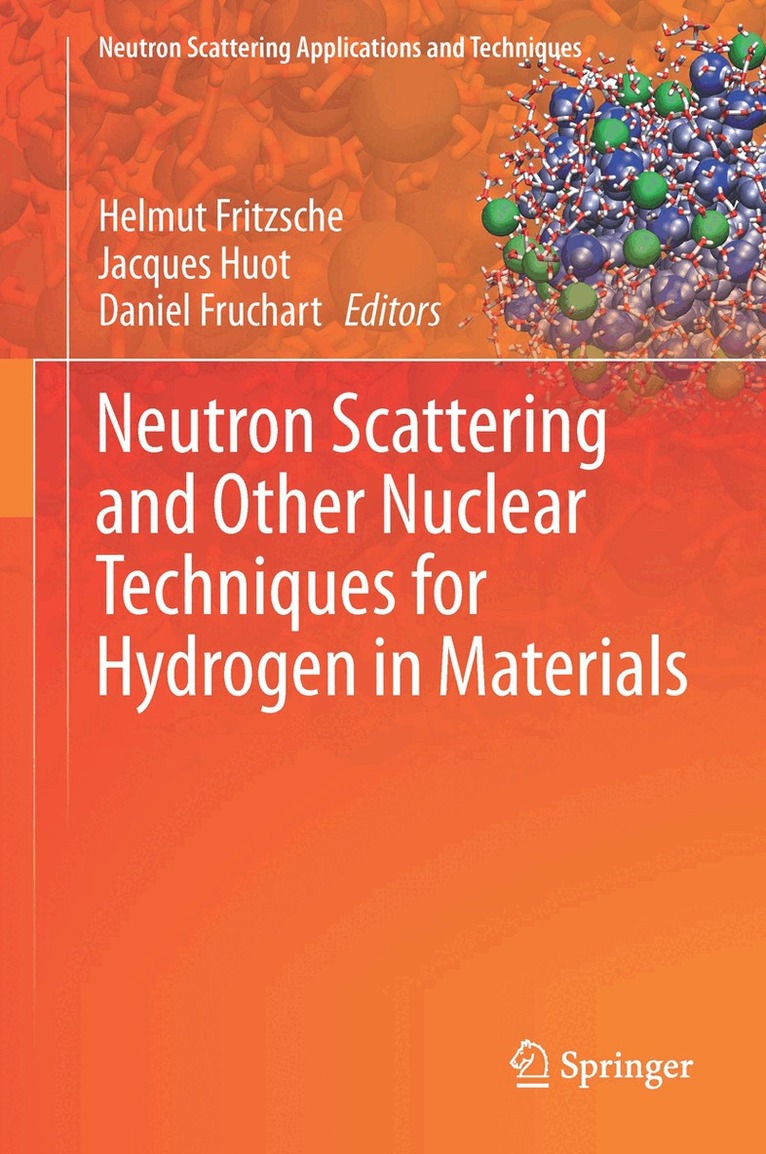
This book provides a comprehensive overview of the main nuclear characterization techniques used to study hydrogen absorption and desorption in materials. The various techniques (neutron scattering, nuclear magnetic resonance, ion-beams, positron annihilation spectroscopy) are explained in detail, and a variety of examples of recent research projects are given to show the unique advantage of these techniques to study hydrogen in materials. Most of these nuclear techniques require very specialized instrumentation, and there are only a handful of these instruments available worldwide. Therefore, the aim of this book is to reach out to a readership with a very diverse background in the physical sciences and engineering and a broad range of hydrogen-related research interests. The same technique can be used by researchers interested in the improvement of the performance of hydrogen storage materials and by those focused on hydrogen ingress causing embrittlement of metals. The emphasis of this book is to provide tutorial material on how to use nuclear characterization techniques for the investigation of hydrogen in materials – information that cannot readily be found in conference and regular research papers.Provides a comprehensive overview of nuclear techniques used for hydrogen-related researchExplains all nuclear techniques in detail for the non-expertCovers the whole range of hydrogen-related researchFeatures chapters written by world-renowned experts in nuclear technique and hydrogen-related research
2 397 kr
Skickas inom 10-15 vardagar
This book provides an extensive overview of the application of neutron characterization techniques in cultural heritage to a broad audience and will be of interest to both scientists and non-scientists in the field. Archaeologists, paleontologists, restaurateurs and conservators, historians and collectors will be fascinated by the wealth of information that can be obtained using neutron techniques, while material scientists and engineers will find details of the experimental techniques and materials properties that can be determined. Neutrons, due to their weak interactions with materials, provide a penetrating, but non-invasive probe of bulk properties. They allow the characterization of the composition and mechanical properties of materials, helping to answer questions related to the dating, the manufacturing process or the state of degradation of artefacts. They allow detailed interrogation of the internal structures of objects that may be otherwise hidden from view.The first section of the book is dedicated to stories describing spectacular discoveries brought about by the use of neutron techniques in a range of applications. The second section covers the experimental techniques in appropriate detail: basic principles, limitations and fields of application.
1 062 kr
Skickas inom 10-15 vardagar
Neutron Applications in Materials for Energy collects results and conclusions of recent neutron-based investigations of materials that are important in the development of sustainable energy. Chapters are authored by leading scientists with hands-on experience in the field, providing overviews, recent highlights, and case-studies to illustrate the applicability of one or more neutron-based techniques of analysis. The theme follows energy production, storage, and use, but each chapter, or section, can also be read independently, with basic theory and instrumentation for neutron scattering being outlined in the introductory chapter.Whilst neutron scattering is extensively used to understand properties of condensed matter, neutron techniques are exceptionally-well suited to studying how the transport and binding of energy and charge-carrying molecules and ions are related to their dynamics and the material’s crystal structure. These studies extend to in situ and in operando in some cases. The species of interest in leading energy-technologies include H2, H+, and Li+ which have particularly favourable neutron-scattering properties that render these techniques of analysis ideal for such studies and consequently, neutron-based analysis is common-place for hydrogen storage, fuel-cell, catalysis, and battery materials. Similar research into the functionality of solar cell, nuclear, and CO2 capture/storage materials rely on other unique aspects of neutron scattering and again show how structure and dynamics provide an understanding of the material stability and the binding and mobility of species of interest within these materials.Scientists and students looking for methods to help them understand the atomic-level mechanisms and behaviour underpinning the performance characteristics of energy materials will find Neutron Applications in Materials for Energy a valuable resource,whilst the wider audience of sustainable energy scientists, and newcomers to neutron scattering should find this a useful reference.
1 062 kr
Skickas inom 10-15 vardagar
This book provides a comprehensive overview of the main nuclear characterization techniques used to study hydrogen absorption and desorption in materials. The various techniques (neutron scattering, nuclear magnetic resonance, ion-beams, positron annihilation spectroscopy) are explained in detail, and a variety of examples of recent research projects are given to show the unique advantage of these techniques to study hydrogen in materials. Most of these nuclear techniques require very specialized instrumentation, and there are only a handful of these instruments available worldwide. Therefore, the aim of this book is to reach out to a readership with a very diverse background in the physical sciences and engineering and a broad range of hydrogen-related research interests. The same technique can be used by researchers interested in the improvement of the performance of hydrogen storage materials and by those focused on hydrogen ingress causing embrittlement of metals. The emphasis of this book is to provide tutorial material on how to use nuclear characterization techniques for the investigation of hydrogen in materials – information that cannot readily be found in conference and regular research papers.Provides a comprehensive overview of nuclear techniques used for hydrogen-related researchExplains all nuclear techniques in detail for the non-expertCovers the whole range of hydrogen-related researchFeatures chapters written by world-renowned experts in nuclear technique and hydrogen-related research
2 328 kr
Skickas inom 10-15 vardagar
Archaeologists, paleontologists, restaurateurs and conservators, historians and collectors will be fascinated by the wealth of information that can be obtained using neutron techniques, while material scientists and engineers will find details of the experimental techniques and materials properties that can be determined.