New Directions in Planning Theory - Böcker
Visar alla böcker i serien New Directions in Planning Theory. Handla med fri frakt och snabb leverans.
8 produkter
8 produkter
633 kr
Skickas inom 10-15 vardagar
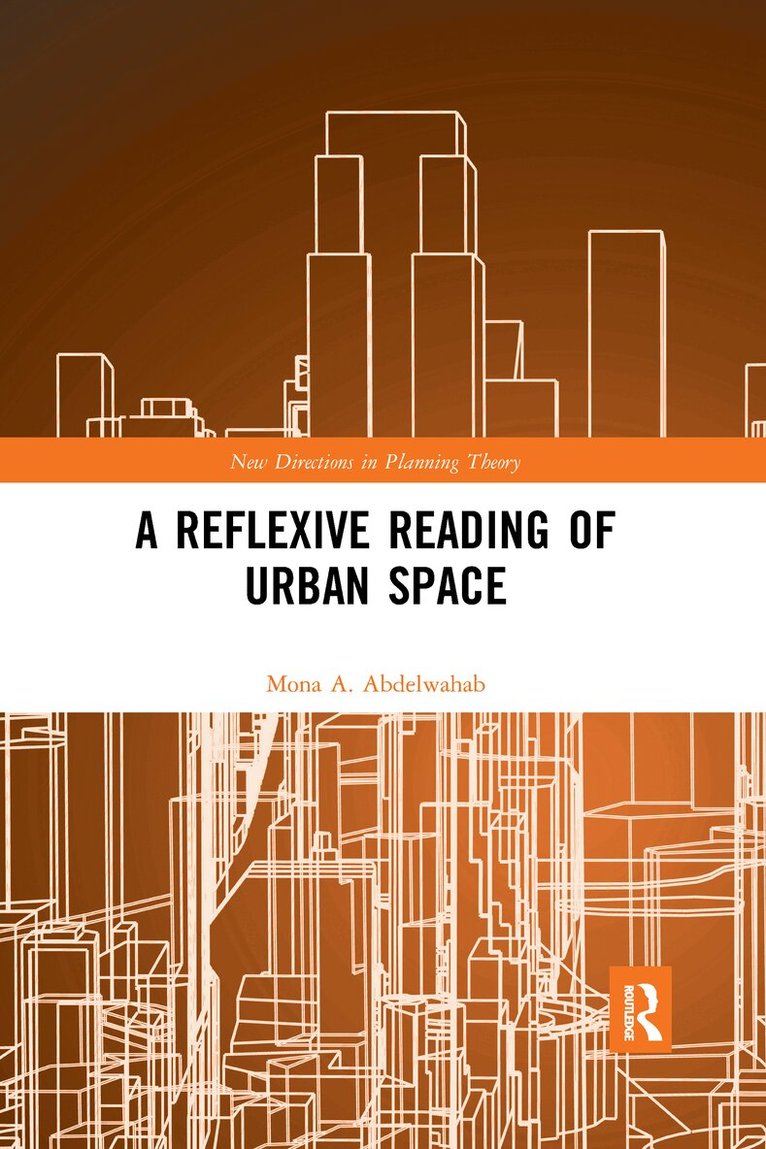
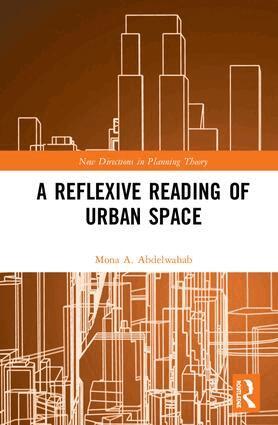
Providing a critique of the concepts attached to the representation of urban space, this ground-breaking book formulates a new theory of space, which understands the dynamic interrelations between physical and social spaces while tracing the wider urban context. It offers a new tool to approach the reading of these interrelations through reflexive reading strategies that identify singular reading fragments of the different spaces through multiple reader-time-space relations. The strategies proposed in the volume seek to develop an integrative reading of urban space through recognition of the singular (influenced by discourse, institution, etc.); and temporal (influenced by reading perspective in space and time), thereby providing a relational perspective that goes beyond the paradox of place in between social and physical space, identifying each in terms of relationships oscillating between the conceptual, the physical and social content, and the context. In conclusion, the book suggests that space/place can be read through sequential fragments of people, place, context, mind, and author/reader. Operating at different scales between conceptual space and reality, the sequential reading helps the recognition of multiplicity and the dynamics of place as a transformational process without hierarchy or classification.
748 kr
Skickas inom 10-15 vardagar
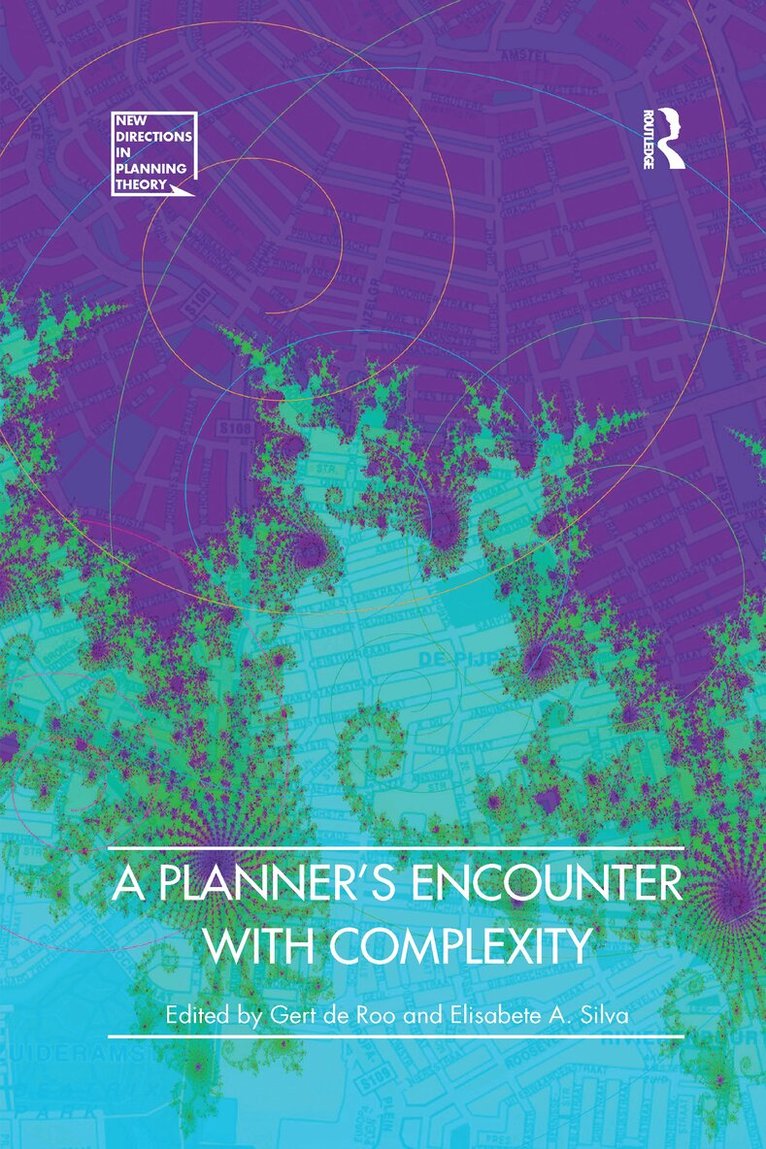
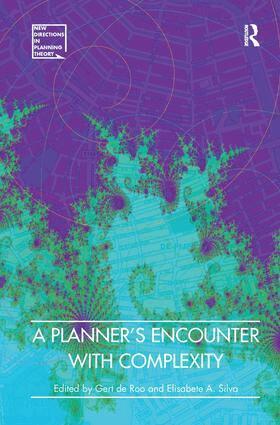
Spatial planning is about dealing with our 'everyday' environment. In A Planner's Encounter with Complexity we present various understandings of complexity and how the environment is considered accordingly. One of these considerations is the environment as subject to processes of continuous change, being either progressive or destructive, evolving non-linearly and alternating between stable and dynamic periods. If the environment that is subject to change is adaptive, self-organizing, robust and flexible in relation to this change, a process of evolution and co-evolution can be expected. This understanding of an evolving environment is not mainstream to every planner. However, in A Planner's Encounter with Complexity, we argue that environments confronted with discontinuous, non-linear evolving processes might be more real than the idea that an environment is simply a planner's creation. Above all, we argue that recognizing the 'complexity' of our environment offers an entirely new perspective on our world and our environment, on planning theory and practice, and on the raison d'être of the planners that we are. A Planner's Encounter with Complexity is organized into 17 chapters. It begins with the interplay of planning and complexity from the perspective of contemporary planning theory. It continues by critically assessing planning theory and practice in the light of the interdisciplinary debate regarding complexity thinking. As the book progresses, it positions itself ever closer to the perspective of complexity thinking, looking at the planning discipline 'from the outside in', clarifying the facets of complexity and its importance in planning. Finally, conceptual and theoretical developments towards more applied examples are identified in order to see the interplay of planning and complexity in practice. This book emphasizes the importance of complexity in planning, clarifies many of the concepts and theories, presents examples on planning and complexity, and proposes new ideas and methods for planning.
Making Use of Deleuze in Planning
Proposals for a speculative and immanent assessment method
Häftad, Engelska, 2018
667 kr
Skickas inom 10-15 vardagar
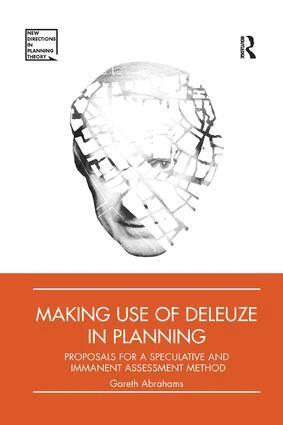
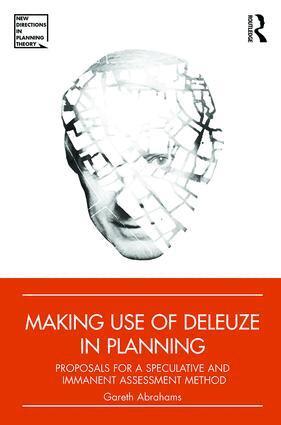
Making Use of Deleuze in Planning translates and re-creates some of Gilles Deleuze’s most abstract philosophical concepts to form a new, practicable planning assessment tool. It shows what his philosophy can do for planning theory as well as planning assessment practice and, in doing so, sets out a pragmatic approach to Deleuzian studies: one that helps form bridges between ontological problems and the problems found in professional practice. It also breaks new ground in assessment methodology by challenging the essentialist ideas underpinning assessment methods like BREEAM and setting out and testing a new form of non-essentialist assessment named SIAM. The book argues that Deleuze’s philosophy can be made useful to planning as long as one is prepared to adapt and re-create his key ontological concepts to respond to the specific demands of the field.
667 kr
Skickas inom 10-15 vardagar
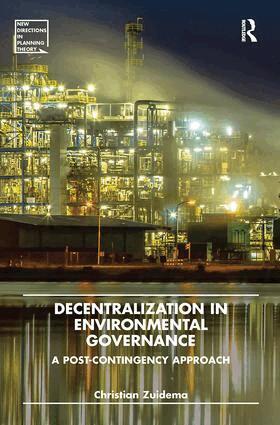
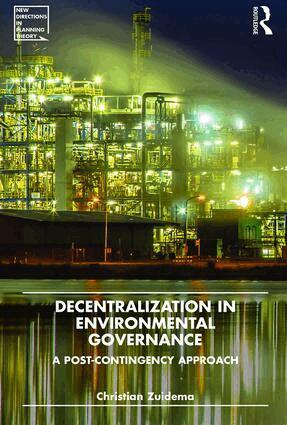
Decentralization in Environmental Governance is a critical reflection on the dangers and risks of governance renewal; warning against one-sided criticism on traditional command and control approaches to planning. The book formulates the arguments that support when and how governance renewable might be pursued, but this attempt is not just meant for practitioners and scholars interested in governance renewal. It is also useful for those interested in the challenge of navigating a plural landscape of diverse planning approaches, which are each rooted in contrasting theoretical and philosophical positions.The book develops a strategy for making argued choices between alternative planning approaches, despite their theoretical and philosophical positions. It does so by revitalizing the idea that we can contingently relate alternative planning approaches to the circumstances encountered. It is an idea traced to contingency studies of the mid and late 20th century, reinterpreted here within a planning landscape dominated by notions of uncertainty, complexity and socially constructed knowledge. This approach, called ‘Post-contingency’, is both a theoretical investigation of arguments for navigating the theoretical plurality we face and an empirical study into renewing environmental governance. Next to its theoretical ambitions, Decentralization in Environmental Governance is practical in offering a constructive critique on current processes of governance renewal in European environmental governance.
2 096 kr
Skickas inom 10-15 vardagar
Spatial planning is about dealing with our 'everyday' environment. In A Planner's Encounter with Complexity we present various understandings of complexity and how the environment is considered accordingly. One of these considerations is the environment as subject to processes of continuous change, being either progressive or destructive, evolving non-linearly and alternating between stable and dynamic periods. If the environment that is subject to change is adaptive, self-organizing, robust and flexible in relation to this change, a process of evolution and co-evolution can be expected. This understanding of an evolving environment is not mainstream to every planner. However, in A Planner's Encounter with Complexity, we argue that environments confronted with discontinuous, non-linear evolving processes might be more real than the idea that an environment is simply a planner's creation. Above all, we argue that recognizing the 'complexity' of our environment offers an entirely new perspective on our world and our environment, on planning theory and practice, and on the raison d'être of the planners that we are. A Planner's Encounter with Complexity is organized into 17 chapters. It begins with the interplay of planning and complexity from the perspective of contemporary planning theory. It continues by critically assessing planning theory and practice in the light of the interdisciplinary debate regarding complexity thinking. As the book progresses, it positions itself ever closer to the perspective of complexity thinking, looking at the planning discipline 'from the outside in', clarifying the facets of complexity and its importance in planning. Finally, conceptual and theoretical developments towards more applied examples are identified in order to see the interplay of planning and complexity in practice. This book emphasizes the importance of complexity in planning, clarifies many of the concepts and theories, presents examples on planning and complexity, and proposes new ideas and methods for planning.
2 228 kr
Skickas inom 10-15 vardagar
Providing a critique of the concepts attached to the representation of urban space, this ground-breaking book formulates a new theory of space, which understands the dynamic interrelations between physical and social spaces while tracing the wider urban context. It offers a new tool to approach the reading of these interrelations through reflexive reading strategies that identify singular reading fragments of the different spaces through multiple reader-time-space relations. The strategies proposed in the volume seek to develop an integrative reading of urban space through recognition of the singular (influenced by discourse, institution, etc.); and temporal (influenced by reading perspective in space and time), thereby providing a relational perspective that goes beyond the paradox of place in between social and physical space, identifying each in terms of relationships oscillating between the conceptual, the physical and social content, and the context. In conclusion, the book suggests that space/place can be read through sequential fragments of people, place, context, mind, and author/reader. Operating at different scales between conceptual space and reality, the sequential reading helps the recognition of multiplicity and the dynamics of place as a transformational process without hierarchy or classification.
2 298 kr
Skickas inom 10-15 vardagar
Decentralization in Environmental Governance is a critical reflection on the dangers and risks of governance renewal; warning against one-sided criticism on traditional command and control approaches to planning. The book formulates the arguments that support when and how governance renewable might be pursued, but this attempt is not just meant for practitioners and scholars interested in governance renewal. It is also useful for those interested in the challenge of navigating a plural landscape of diverse planning approaches, which are each rooted in contrasting theoretical and philosophical positions.The book develops a strategy for making argued choices between alternative planning approaches, despite their theoretical and philosophical positions. It does so by revitalizing the idea that we can contingently relate alternative planning approaches to the circumstances encountered. It is an idea traced to contingency studies of the mid and late 20th century, reinterpreted here within a planning landscape dominated by notions of uncertainty, complexity and socially constructed knowledge. This approach, called ‘Post-contingency’, is both a theoretical investigation of arguments for navigating the theoretical plurality we face and an empirical study into renewing environmental governance. Next to its theoretical ambitions, Decentralization in Environmental Governance is practical in offering a constructive critique on current processes of governance renewal in European environmental governance.
Making Use of Deleuze in Planning
Proposals for a speculative and immanent assessment method
Inbunden, Engelska, 2016
2 231 kr
Skickas inom 10-15 vardagar
Making Use of Deleuze in Planning translates and re-creates some of Gilles Deleuze’s most abstract philosophical concepts to form a new, practicable planning assessment tool. It shows what his philosophy can do for planning theory as well as planning assessment practice and, in doing so, sets out a pragmatic approach to Deleuzian studies: one that helps form bridges between ontological problems and the problems found in professional practice. It also breaks new ground in assessment methodology by challenging the essentialist ideas underpinning assessment methods like BREEAM and setting out and testing a new form of non-essentialist assessment named SIAM. The book argues that Deleuze’s philosophy can be made useful to planning as long as one is prepared to adapt and re-create his key ontological concepts to respond to the specific demands of the field.