Niels Bohr Professorship Lectures in Cultural Psychology – serie
Visar alla böcker i serien Niels Bohr Professorship Lectures in Cultural Psychology. Handla med fri frakt och snabb leverans.
12 produkter
12 produkter
519 kr
Skickas inom 7-10 vardagar
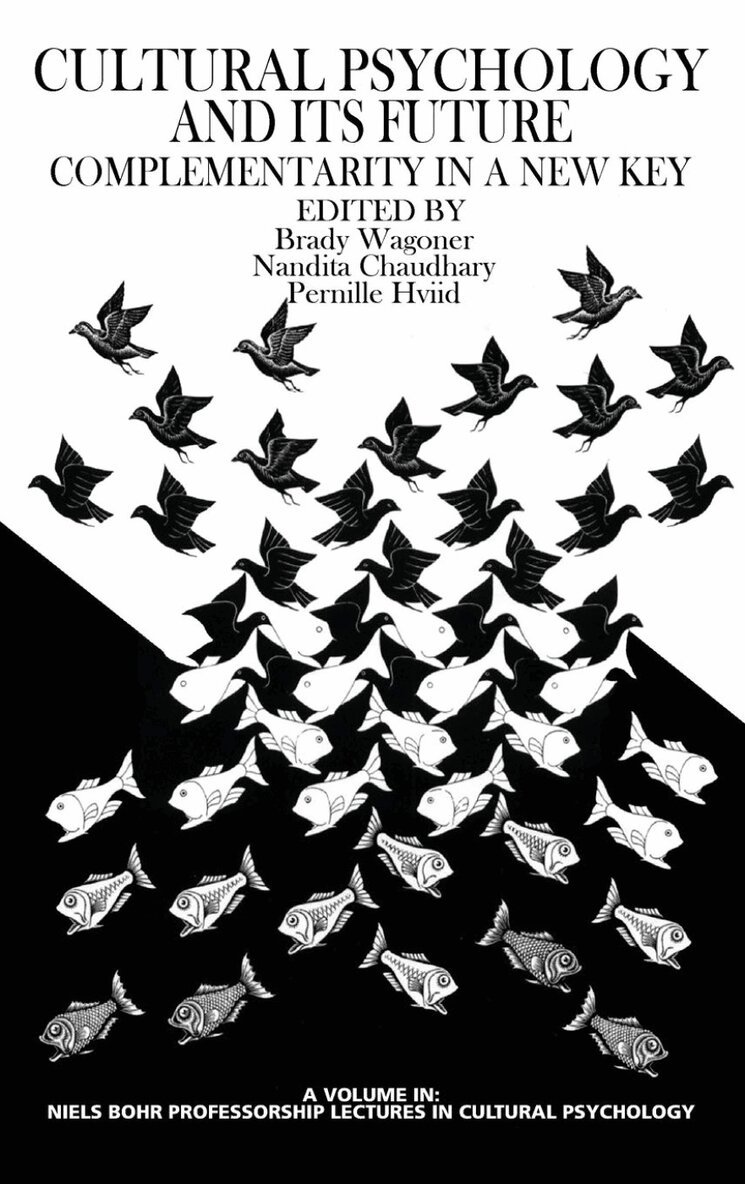
Cultural Psychology is a radical new look in psychology that studies how persons and social-cultural worlds mutually constitute one another. With the increase of globalization and multicultural exchanges, cultural psychology becomes the psychological science for the 21st century. Encounters with others fundamentally transform the way we understand ourselves. No longer can we ignore questions about how our cultural traditions, practices, beliefs, artifacts and other people constitute how we approach, understand, imagine and remember the world. The Niels Bohr Professorship Lectures in Cultural Psychology series aims to highlight and develop new ideas that advance our understanding of these issues.This first volume in the series features an address by Prof. Jaan Valsiner, which is followed by ten commentary chapters and his response to them. In his lecture, Valsiner explores what Niels Bohr’s revolutionary principle of ‘complementarity’ can contribute to the development of a cultural psychology that takes time, semiotics, and human feeling seriously. Commentators further discuss how complementarity can act as an epistemology for psychology; a number of new methodological strategies for incorporating culture and time into investigations; and what cultural psychology can contribute to our understanding of imagination, art, language and self-other relations.
958 kr
Skickas inom 7-10 vardagar
Cultural Psychology is a radical new look in psychology that studies how persons and social-cultural worlds mutually constitute one another. With the increase of globalization and multicultural exchanges, cultural psychology becomes the psychological science for the 21st century. Encounters with others fundamentally transform the way we understand ourselves. No longer can we ignore questions about how our cultural traditions, practices, beliefs, artifacts and other people constitute how we approach, understand, imagine and remember the world. The Niels Bohr Professorship Lectures in Cultural Psychology series aims to highlight and develop new ideas that advance our understanding of these issues.This first volume in the series features an address by Prof. Jaan Valsiner, which is followed by ten commentary chapters and his response to them. In his lecture, Valsiner explores what Niels Bohr’s revolutionary principle of ‘complementarity’ can contribute to the development of a cultural psychology that takes time, semiotics, and human feeling seriously. Commentators further discuss how complementarity can act as an epistemology for psychology; a number of new methodological strategies for incorporating culture and time into investigations; and what cultural psychology can contribute to our understanding of imagination, art, language and self-other relations.
583 kr
Skickas inom 7-10 vardagar
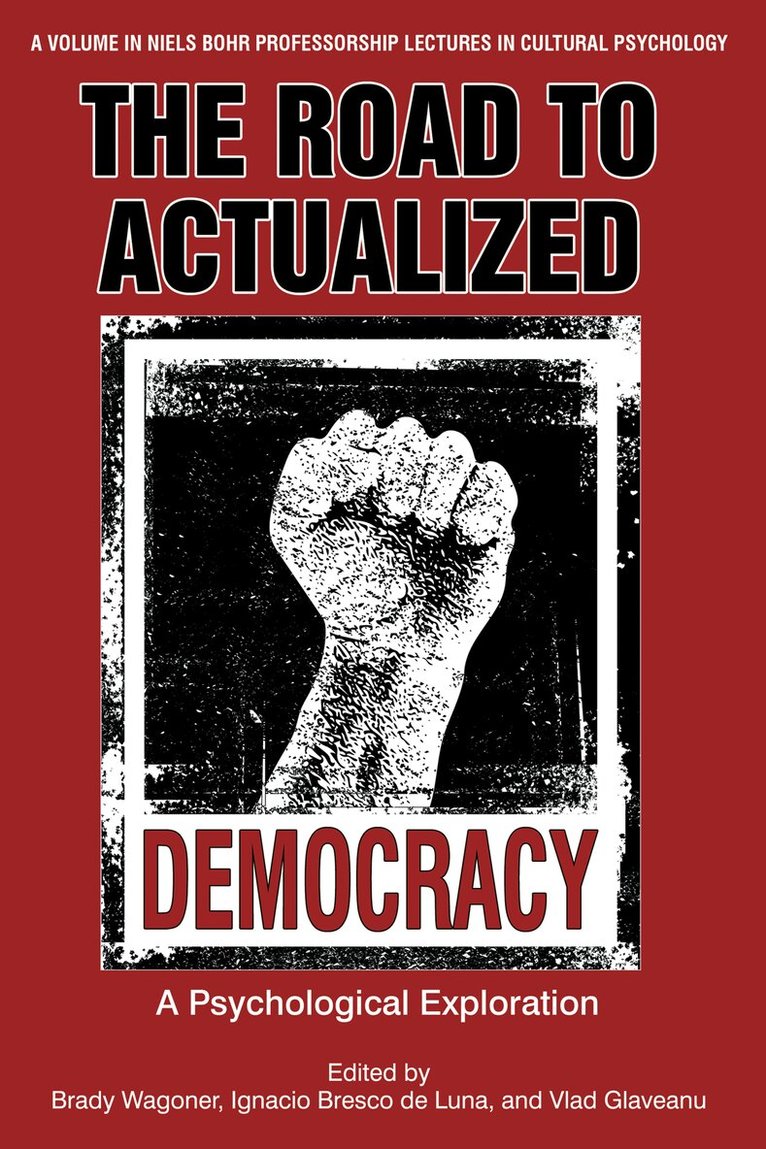
“Democracy is the worst form of government, except for all the others” once remarked Winston Churchill. In this day and age this quotation resonates more than ever. This book explores democracy from the perspective of social and cultural psychology, highlighting the importance of the everyday basis of democratic practices. This approach takes us beyond the simple understanding of democracy in its institutional guise of free elections and public accountability, and towards a focus on group dynamics and personal characteristics of the democratic citizen, including their mentalities, habits and ways of relating to others. The book features discussions of the two-way street between democracy and dictatorship; conflicts within protests, ideology and public debate; and the psychological profile of a democratic citizen and its critique. While acknowledging the limitations of today’s democratic systems, this volume aims to re-invigorate democracy by bringing psychology to the table of current debates on social change and citizenship.
1 032 kr
Skickas inom 7-10 vardagar
“Democracy is the worst form of government, except for all the others” once remarked Winston Churchill. In this day and age this quotation resonates more than ever. This book explores democracy from the perspective of social and cultural psychology, highlighting the importance of the everyday basis of democratic practices. This approach takes us beyond the simple understanding of democracy in its institutional guise of free elections and public accountability, and towards a focus on group dynamics and personal characteristics of the democratic citizen, including their mentalities, habits and ways of relating to others. The book features discussions of the two-way street between democracy and dictatorship; conflicts within protests, ideology and public debate; and the psychological profile of a democratic citizen and its critique. While acknowledging the limitations of today’s democratic systems, this volume aims to re-invigorate democracy by bringing psychology to the table of current debates on social change and citizenship.
583 kr
Skickas inom 7-10 vardagar
Venturing out of the laboratory into the wild of natural settings, it becomes untenable to locate memory strictly in the head. Instead, memory appears as a materially extended and socially distributed process, embedded within culture and history. This book explores the complex relations between practices of remembering and the settings in which they are enacted. It advances a novel set of concepts developed from ecological, cognitive, cultural and narrative currents in psychology and further afield to analyze (1) trajectories of autobiographical remembering, (2) the relation between individual and collective memory, (3) memory and cultural transmission, as well as (4) various methodological techniques to investigate memory in the wild.
1 032 kr
Skickas inom 7-10 vardagar
Venturing out of the laboratory into the wild of natural settings, it becomes untenable to locate memory strictly in the head. Instead, memory appears as a materially extended and socially distributed process, embedded within culture and history. This book explores the complex relations between practices of remembering and the settings in which they are enacted. It advances a novel set of concepts developed from ecological, cognitive, cultural and narrative currents in psychology and further afield to analyze (1) trajectories of autobiographical remembering, (2) the relation between individual and collective memory, (3) memory and cultural transmission, as well as (4) various methodological techniques to investigate memory in the wild.
583 kr
Skickas inom 7-10 vardagar
Cultural psychology explores the mutual constitution of persons-minds and socialcultural worlds. It aims to be both transdisciplinary and international in its approach, and to develop theoretical models that remain faithful to people’s lived experiences.This volume further advances these objectives through an exploration of core concepts (especially, normativity, liminality, and resistance), cultural psychology’s foundations in philosophy, and the translation of theory into a methodology for investigating distinctly human ways of relating to the world.
1 032 kr
Skickas inom 7-10 vardagar
Cultural psychology explores the mutual constitution of persons-minds and socialcultural worlds. It aims to be both transdisciplinary and international in its approach, and to develop theoretical models that remain faithful to people’s lived experiences.This volume further advances these objectives through an exploration of core concepts (especially, normativity, liminality, and resistance), cultural psychology’s foundations in philosophy, and the translation of theory into a methodology for investigating distinctly human ways of relating to the world.
583 kr
Skickas inom 7-10 vardagar
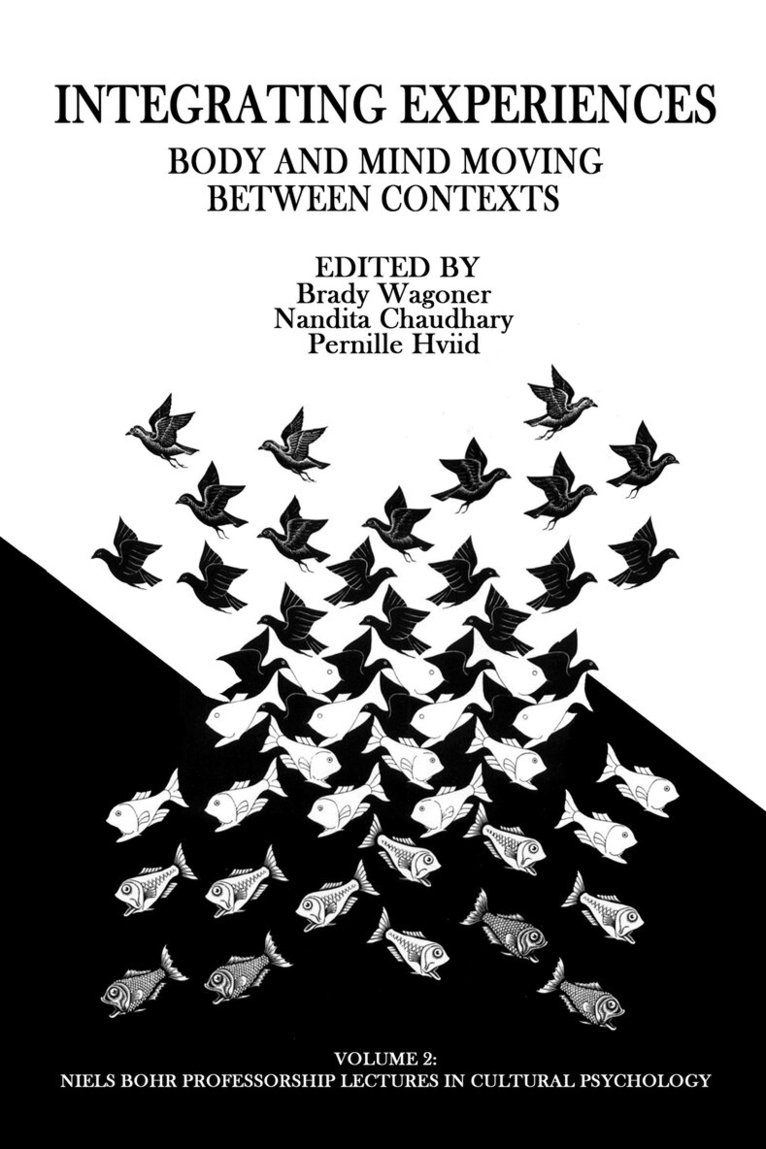
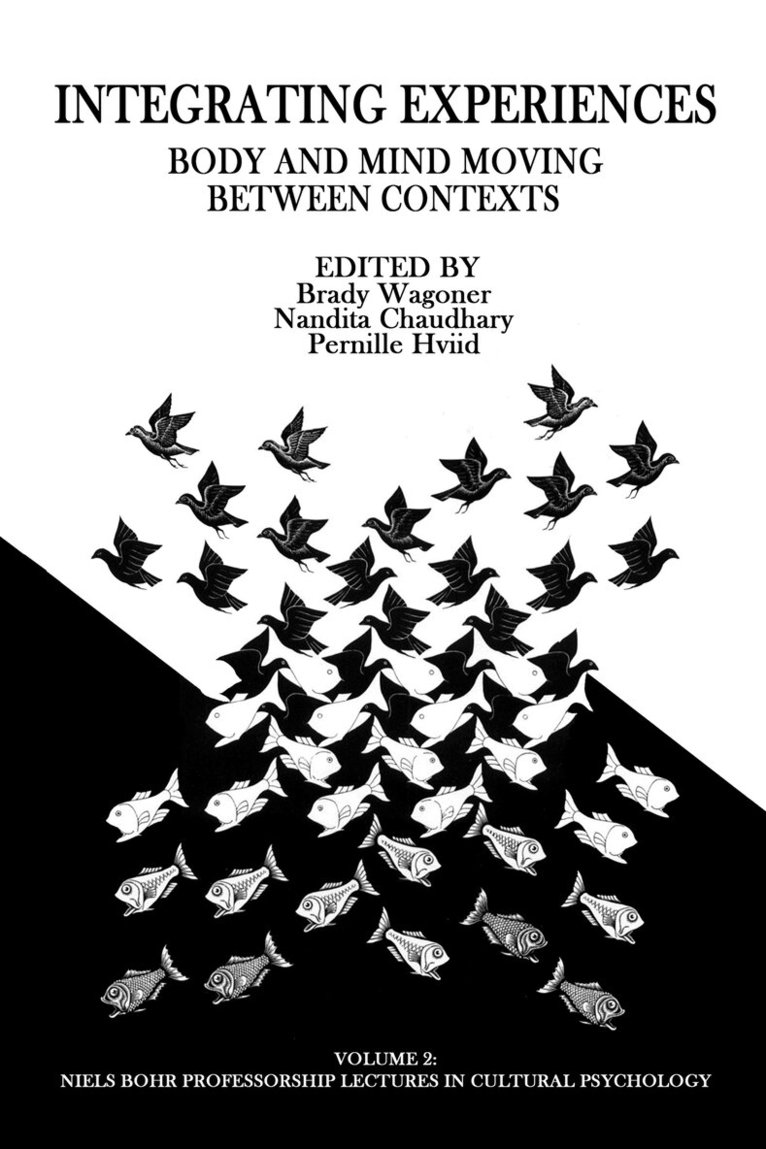
Cultural Psychology studies how persons and social-cultural worlds mutually constitute one another. It is premised on the idea that culture is within us—in every moment in which we live our human lives, in the meaningful worlds we have created ourselves. In this perspective, encounters with others fundamentally transform the way we understand ourselves. With the increase of globalization and multicultural exchanges, cultural psychology becomes the psychological science for the 21st century. No longer can we ignore questions about how our cultural traditions, practices, beliefs, artifacts and other people constitute how we approach, understand, imagine and remember the world. The Niels Bohr Professorship Lectures in Cultural Psychology series aims to highlight and develop new ideas that advance our understanding of these issues.This second volume in the series features an address by Tania Zittoun and Alex Gillespie, which is followed by commentary chapters and their response to them. In their lecture, Zittoun and Gillespie propose a model of the relation between mind and society, specifically the way in which individuals develop and gain agency through society. They theorise and demonstrate a two-way interaction: bodies moving through society accumulate differentiated experiences, which become integrated at the level of mind, enabling psychological movement between experiences, which in turn mediates how people move through society. The model is illustrated with a longitudinal analysis of diaries written by a woman leading up to and through the Second World War. Commentators further elaborate on the issues of (1) context and history, (2) experience, time and movement, and (3) methodologies for cultural psychology.
1 032 kr
Skickas inom 7-10 vardagar
Cultural Psychology studies how persons and social-cultural worlds mutually constitute one another. It is premised on the idea that culture is within us—in every moment in which we live our human lives, in the meaningful worlds we have created ourselves. In this perspective, encounters with others fundamentally transform the way we understand ourselves. With the increase of globalization and multicultural exchanges, cultural psychology becomes the psychological science for the 21st century. No longer can we ignore questions about how our cultural traditions, practices, beliefs, artifacts and other people constitute how we approach, understand, imagine and remember the world. The Niels Bohr Professorship Lectures in Cultural Psychology series aims to highlight and develop new ideas that advance our understanding of these issues.This second volume in the series features an address by Tania Zittoun and Alex Gillespie, which is followed by commentary chapters and their response to them. In their lecture, Zittoun and Gillespie propose a model of the relation between mind and society, specifically the way in which individuals develop and gain agency through society. They theorise and demonstrate a two-way interaction: bodies moving through society accumulate differentiated experiences, which become integrated at the level of mind, enabling psychological movement between experiences, which in turn mediates how people move through society. The model is illustrated with a longitudinal analysis of diaries written by a woman leading up to and through the Second World War. Commentators further elaborate on the issues of (1) context and history, (2) experience, time and movement, and (3) methodologies for cultural psychology.
583 kr
Skickas inom 7-10 vardagar
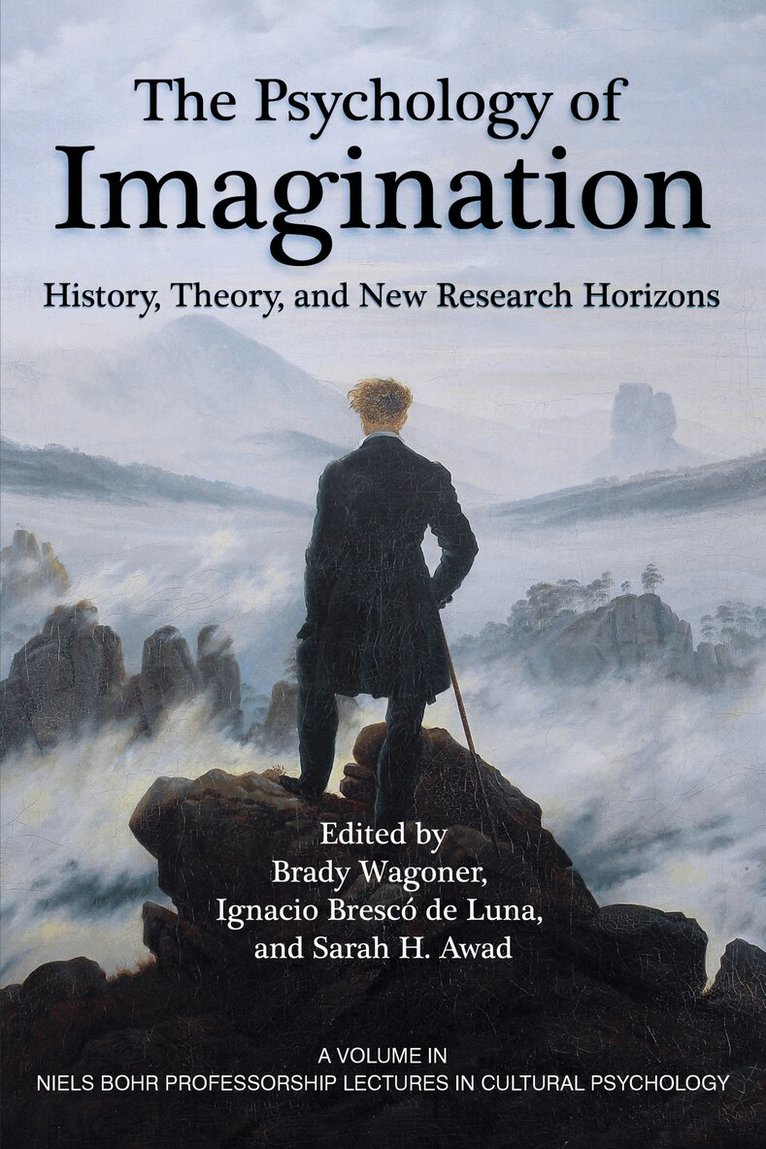
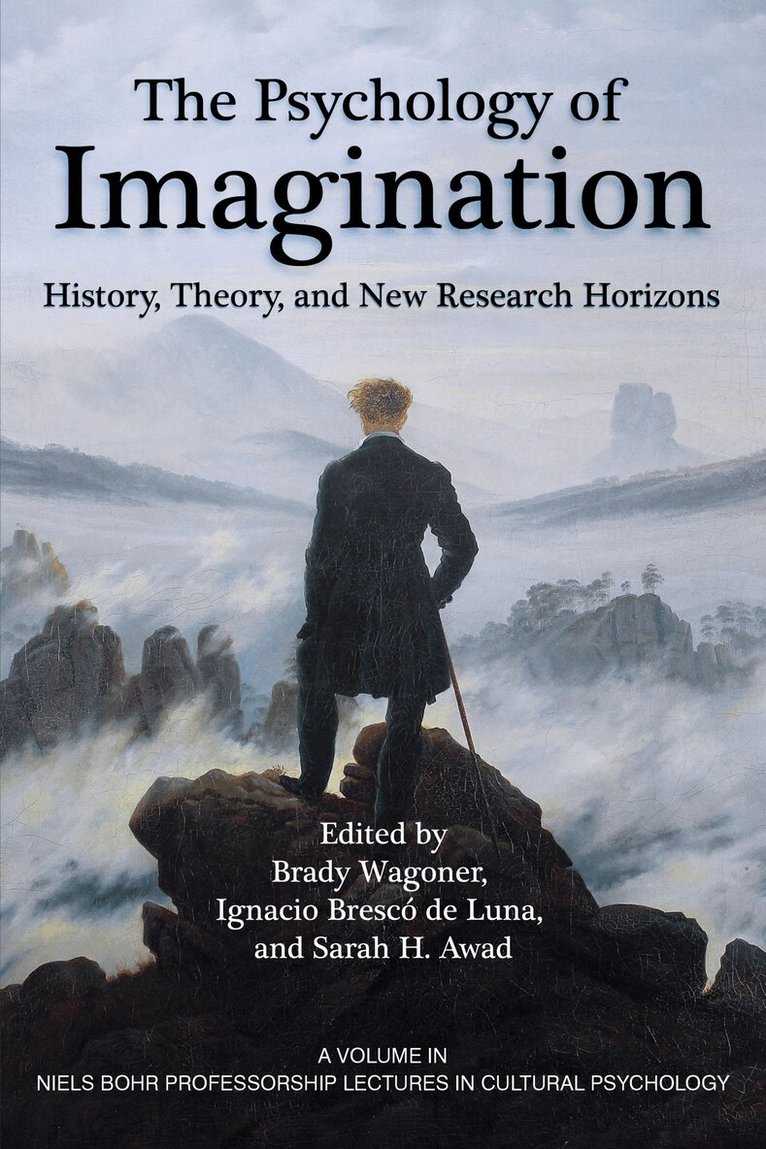
This book offers a new approach to imagination which brings its emotional, social, cultural, contextual and existential characteristics to the fore. Fantasy and imagination are understood as the human capacity to distance oneself from the here-and-now situation in order to return to it with new possibilities. To do this we use social-cultural means (e.g. language, stories, art, images, etc.) to conceive of imaginary scenarios, some of which may become real.Imagination is involved in every situation of our lives, though to different degrees. Sometimes this process can lead to concrete products (e.g., artistic works) that can be picked up and used by others for the purposes of their imagining. Imagination is not seen here as an isolated cognitive faculty but as the means by which people anticipate and constructively move towards an indeterminate future. It is in this process of living forward with the help of imagination that novelty appears and social change becomes possible.This book offers a conceptual history of imagination, an array of theoretical approaches, imagination’s use in psychologist’s thinking and a number of new research areas. Its aim is to offer a re-enchantment of the concept of imagination and the discipline of psychology more generally.
1 032 kr
Skickas inom 7-10 vardagar
This book offers a new approach to imagination which brings its emotional, social, cultural, contextual and existential characteristics to the fore. Fantasy and imagination are understood as the human capacity to distance oneself from the here-and-now situation in order to return to it with new possibilities. To do this we use social-cultural means (e.g. language, stories, art, images, etc.) to conceive of imaginary scenarios, some of which may become real.Imagination is involved in every situation of our lives, though to different degrees. Sometimes this process can lead to concrete products (e.g., artistic works) that can be picked up and used by others for the purposes of their imagining. Imagination is not seen here as an isolated cognitive faculty but as the means by which people anticipate and constructively move towards an indeterminate future. It is in this process of living forward with the help of imagination that novelty appears and social change becomes possible.This book offers a conceptual history of imagination, an array of theoretical approaches, imagination’s use in psychologist’s thinking and a number of new research areas. Its aim is to offer a re-enchantment of the concept of imagination and the discipline of psychology more generally.