Numerical Insights - Böcker
Visar alla böcker i serien Numerical Insights. Handla med fri frakt och snabb leverans.
6 produkter
6 produkter
1 886 kr
Skickas inom 10-15 vardagar
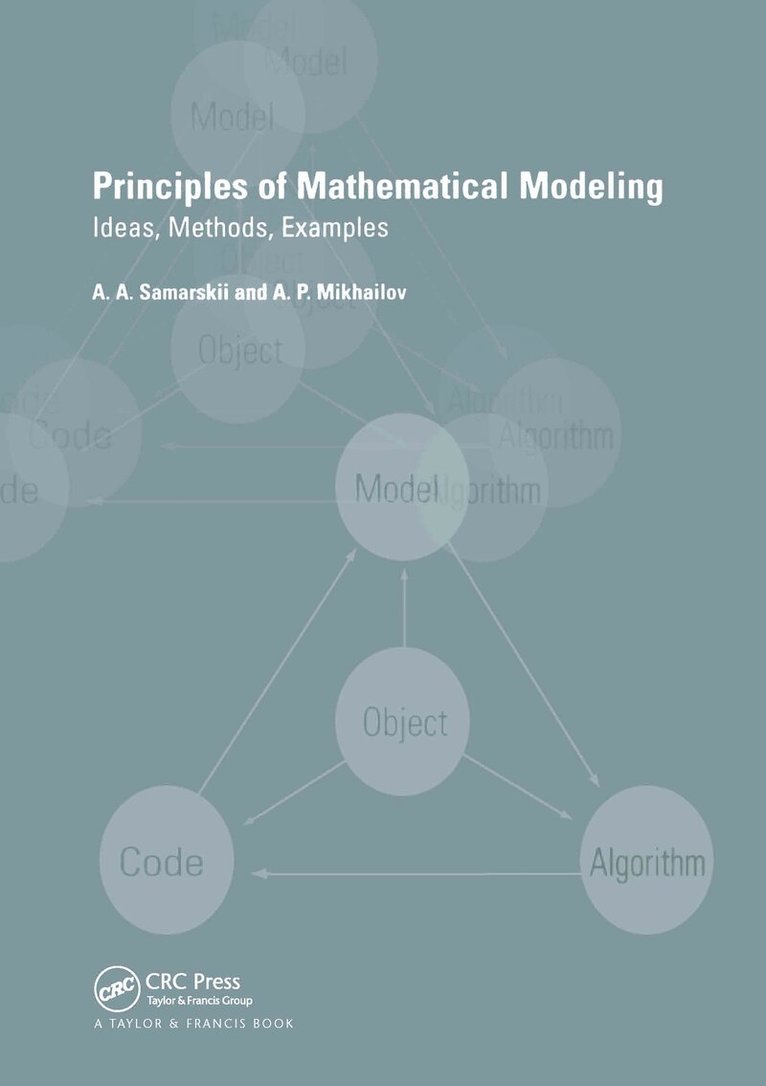
Mathematical modeling is becoming increasingly versatile and multi-disciplinary. This text demonstrates the broadness of this field as the authors consider the principles of model construction and use common approaches to build models from a range of subject areas. The book reflects the interests and experiences of the authors, but it explores mathematical modeling across a wide range of applications, from mechanics to social science. A general approach is adopted, where ideas and examples are favored over rigorous mathematical procedures. This insightful book will be of interest to specialists, teachers, and students across a wide range of disciplines..
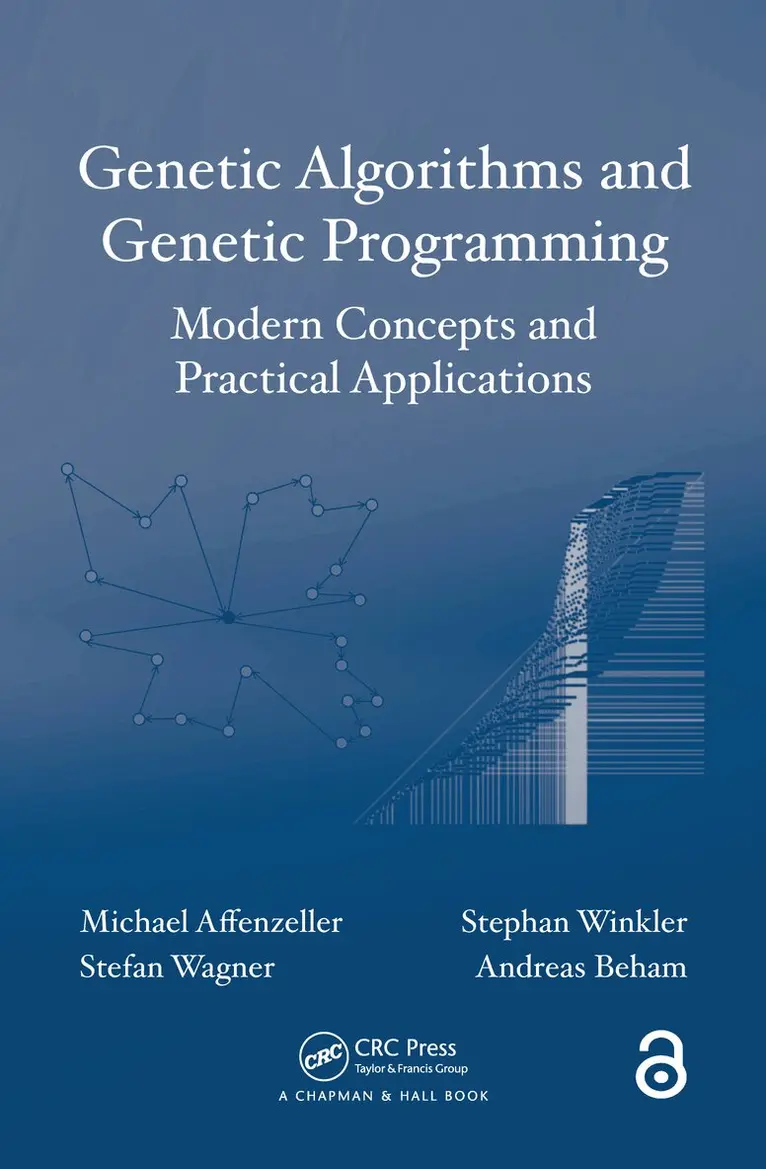
Genetic Algorithms and Genetic Programming
Modern Concepts and Practical Applications
Häftad, Engelska, 2018
1 082 kr
Skickas inom 10-15 vardagar
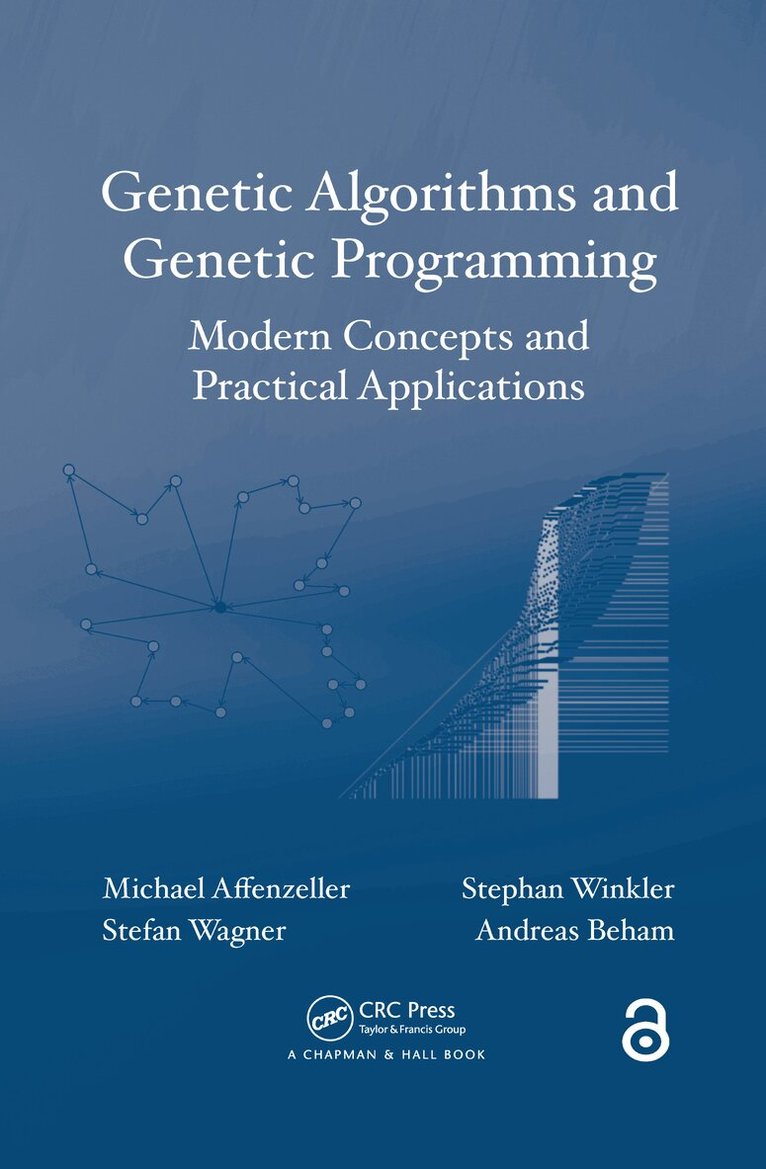
Genetic Algorithms and Genetic Programming: Modern Concepts and Practical Applications discusses algorithmic developments in the context of genetic algorithms (GAs) and genetic programming (GP). It applies the algorithms to significant combinatorial optimization problems and describes structure identification using HeuristicLab as a platform for algorithm development.The book focuses on both theoretical and empirical aspects. The theoretical sections explore the important and characteristic properties of the basic GA as well as main characteristics of the selected algorithmic extensions developed by the authors. In the empirical parts of the text, the authors apply GAs to two combinatorial optimization problems: the traveling salesman and capacitated vehicle routing problems. To highlight the properties of the algorithmic measures in the field of GP, they analyze GP-based nonlinear structure identification applied to time series and classification problems. Written by core members of the HeuristicLab team, this book provides a better understanding of the basic workflow of GAs and GP, encouraging readers to establish new bionic, problem-independent theoretical concepts. By comparing the results of standard GA and GP implementation with several algorithmic extensions, it also shows how to substantially increase achievable solution quality.
1 145 kr
Skickas inom 10-15 vardagar
Showing you how to use personal computers for modeling and simulation, Interactive Dynamic-System Simulation, Second Edition provides a practical tutorial on interactive dynamic-system modeling and simulation. It discusses how to effectively simulate dynamical systems, such as aerospace vehicles, power plants, chemical processes, control systems, and physiological systems.Written by a pioneer in simulation, the book introduces dynamic-system models and explains how software for solving differential equations works. After demonstrating real simulation programs with simple examples, the author integrates a new treatment of the difference equation programs needed to model sampled-data control systems with digital controllers. Subsequent chapters provide detailed programming know-how. These chapters cover library, table-lookup, user-definable, limiter, switching, and noise functions; an experiment-protocol scripting language; powerful vector and matrix operations; and classical simulation programs that illustrate a number of useful programming tricks. The final chapter shows how experiment-protocol scripts and compiled DYNAMIC program segments can quickly solve mathematical problems, including fast graph plotting, Fourier transforms, and complex-number plots.Downloadable ResourcesThe accompanying downloadable resources contain a complete, industrial-strength simulation program package. To install the ready-to-run simulation system, simply copy a single Windows or Linux folder from the downloadable resources. You can then run and modify every program example in the text or try your own projects. For truly interactive modeling, screen-edited programs are run-time compiled and immediately produce solution displays on a typed run command.
2 960 kr
Skickas inom 10-15 vardagar
Showing you how to use personal computers for modeling and simulation, Interactive Dynamic-System Simulation, Second Edition provides a practical tutorial on interactive dynamic-system modeling and simulation. It discusses how to effectively simulate dynamical systems, such as aerospace vehicles, power plants, chemical processes, control systems, and physiological systems.Written by a pioneer in simulation, the book introduces dynamic-system models and explains how software for solving differential equations works. After demonstrating real simulation programs with simple examples, the author integrates a new treatment of the difference equation programs needed to model sampled-data control systems with digital controllers. Subsequent chapters provide detailed programming know-how. These chapters cover library, table-lookup, user-definable, limiter, switching, and noise functions; an experiment-protocol scripting language; powerful vector and matrix operations; and classical simulation programs that illustrate a number of useful programming tricks. The final chapter shows how experiment-protocol scripts and compiled DYNAMIC program segments can quickly solve mathematical problems, including fast graph plotting, Fourier transforms, and complex-number plots.Downloadable ResourcesThe accompanying downloadable resources contain a complete, industrial-strength simulation program package. To install the ready-to-run simulation system, simply copy a single Windows or Linux folder from the downloadable resources. You can then run and modify every program example in the text or try your own projects. For truly interactive modeling, screen-edited programs are run-time compiled and immediately produce solution displays on a typed run command.
1 327 kr
Tillfälligt slut
Before applying multigrid methods to a project, mathematicians, scientists, and engineers need to answer questions related to the quality of convergence, whether a development will pay out, whether multigrid will work for a particular application, and what the numerical properties are. Practical Fourier Analysis for Multigrid Methods uses a detailed and systematic description of local Fourier k-grid (k=1,2,3) analysis for general systems of partial differential equations to provide a framework that answers these questions.This volume contains software that confirms written statements about convergence and efficiency of algorithms and is easily adapted to new applications. Providing theoretical background and the linkage between theory and practice, the text and software quickly combine learning by reading and learning by doing. The book enables understanding of basic principles of multigrid and local Fourier analysis, and also describes the theory important to those who need to delve deeper into the details of the subject.The first chapter delivers an explanation of concepts, including Fourier components and multigrid principles. Chapter 2 highlights the basic elements of local Fourier analysis and the limits to this approach. Chapter 3 examines multigrid methods and components, supported by a user-friendly GUI. Chapter 4 provides case studies for two- and three-dimensional problems. Chapters 5 and 6 detail the mathematics embedded within the software system. Chapter 7 presents recent developments and further applications of local Fourier analysis for multigrid methods.
Genetic Algorithms and Genetic Programming
Modern Concepts and Practical Applications
Inbunden, Engelska, 2009
2 910 kr
Skickas inom 10-15 vardagar
Genetic Algorithms and Genetic Programming: Modern Concepts and Practical Applications discusses algorithmic developments in the context of genetic algorithms (GAs) and genetic programming (GP). It applies the algorithms to significant combinatorial optimization problems and describes structure identification using HeuristicLab as a platform for algorithm development.The book focuses on both theoretical and empirical aspects. The theoretical sections explore the important and characteristic properties of the basic GA as well as main characteristics of the selected algorithmic extensions developed by the authors. In the empirical parts of the text, the authors apply GAs to two combinatorial optimization problems: the traveling salesman and capacitated vehicle routing problems. To highlight the properties of the algorithmic measures in the field of GP, they analyze GP-based nonlinear structure identification applied to time series and classification problems. Written by core members of the HeuristicLab team, this book provides a better understanding of the basic workflow of GAs and GP, encouraging readers to establish new bionic, problem-independent theoretical concepts. By comparing the results of standard GA and GP implementation with several algorithmic extensions, it also shows how to substantially increase achievable solution quality.