On Decoloniality - Böcker
Visar alla böcker i serien On Decoloniality. Handla med fri frakt och snabb leverans.
12 produkter
12 produkter
305 kr
Skickas inom 7-10 vardagar
In On Decoloniality Walter D. Mignolo and Catherine E. Walsh explore the hidden forces of the colonial matrix of power, its origination, transformation, and current presence, while asking the crucial questions of decoloniality's how, what, why, with whom, and what for. Interweaving theory-praxis with local histories and perspectives of struggle, they illustrate the conceptual and analytic dynamism of decolonial ways of living and thinking, as well as the creative force of resistance and re-existence. This book speaks to the urgency of these times, encourages delinkings from the colonial matrix of power and its "universals" of Western modernity and global capitalism, and engages with arguments and struggles for dignity and life against death, destruction, and civilizational despair.
415 kr
Skickas inom 7-10 vardagar
In The Politics of Decolonial Investigations Walter D. Mignolo provides a sweeping examination of how coloniality has operated around the world in its myriad forms from the sixteenth century to the twenty-first. Decolonial border thinking allows Mignolo to outline how the combination of the self-fashioned narratives of Western civilization and the hegemony of Eurocentric thought served to eradicate all knowledges in non-European languages and praxes of living and being. Mignolo also traces the geopolitical origins of racialized and gendered classifications, modernity, globalization, and cosmopolitanism, placing them all within the framework of coloniality. Drawing on the work of theorists and decolonial practitioners from the Global South and the Global East, Mignolo shows how coloniality has provoked the emergence of decolonial politics initiated by delinking from all forms of Western knowledge and subjectivities. The urgent task, Mignolo stresses, is the epistemic reconstitution of categories of thought and praxes of living destituted in the very process of building Western civilization and the idea of modernity. The overcoming of the long-lasting hegemony of the West and its distorted legacies is already underway in all areas of human existence. Mignolo underscores the relevance of the politics of decolonial investigations, in and outside the academy, to liberate ourselves from canonized knowledge, ways of knowing, and praxes of living.
1 172 kr
Skickas inom 7-10 vardagar
In On Decoloniality Walter D. Mignolo and Catherine E. Walsh explore the hidden forces of the colonial matrix of power, its origination, transformation, and current presence, while asking the crucial questions of decoloniality's how, what, why, with whom, and what for. Interweaving theory-praxis with local histories and perspectives of struggle, they illustrate the conceptual and analytic dynamism of decolonial ways of living and thinking, as well as the creative force of resistance and re-existence. This book speaks to the urgency of these times, encourages delinkings from the colonial matrix of power and its "universals" of Western modernity and global capitalism, and engages with arguments and struggles for dignity and life against death, destruction, and civilizational despair.
What Does It Mean to Be Post-Soviet?
Decolonial Art from the Ruins of the Soviet Empire
Häftad, Engelska, 2018
318 kr
Skickas
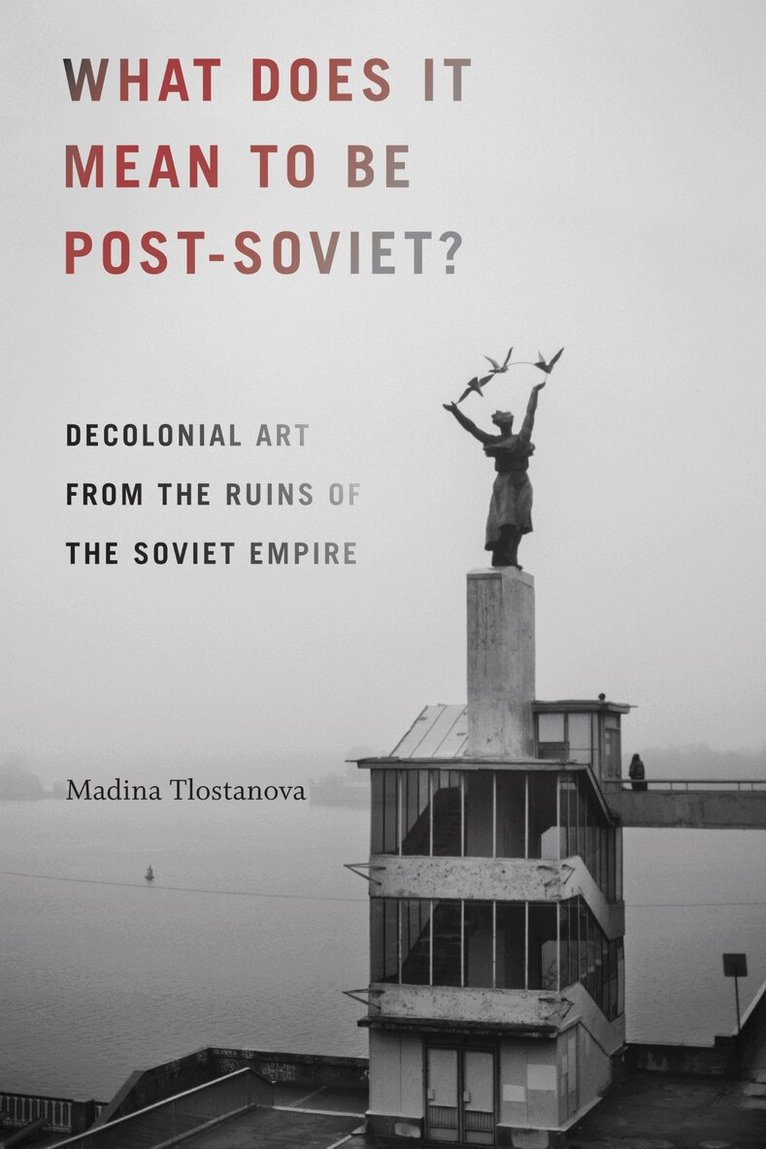
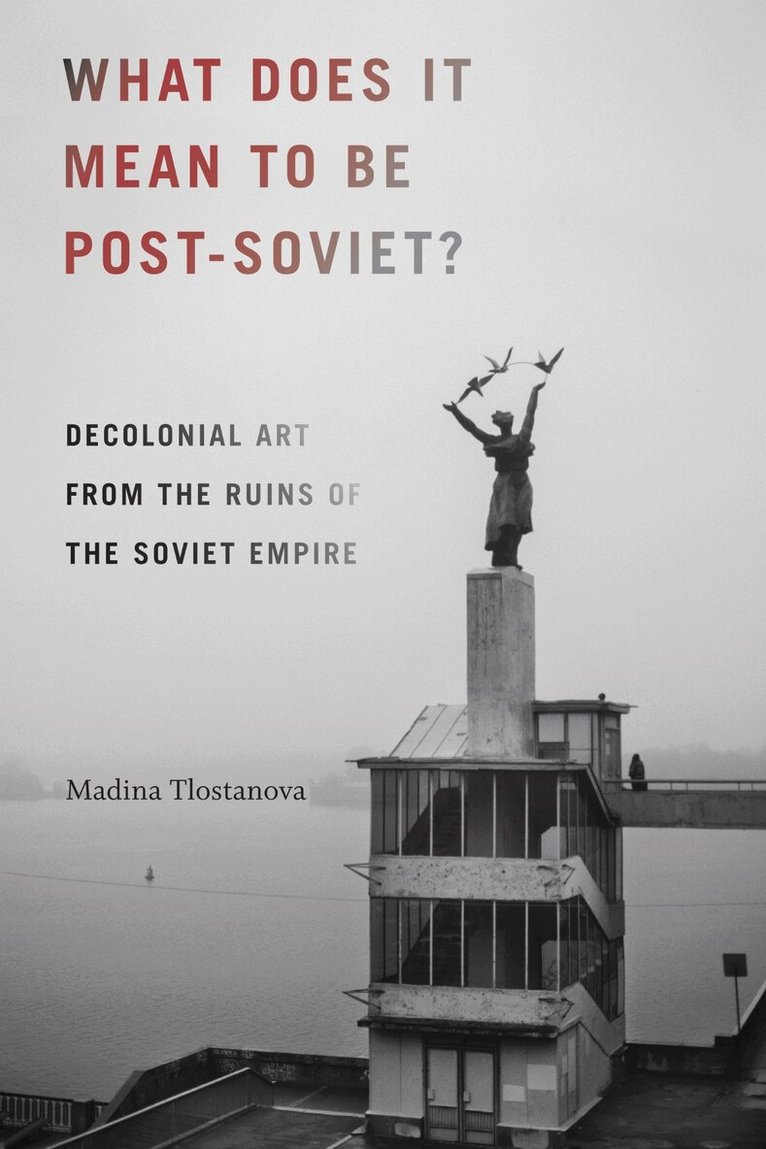
In What Does It Mean to Be Post-Soviet? Madina Tlostanova traces how contemporary post-Soviet art mediates this human condition. Observing how the concept of the happy future-which was at the core of the project of Soviet modernity-has lapsed from the post-Soviet imagination, Tlostanova shows how the possible way out of such a sense of futurelessness lies in the engagement with activist art. She interviews artists, art collectives, and writers such as Estonian artist Liina Siib, Uzbek artist Vyacheslav Akhunov, and Azerbaijani writer Afanassy Mamedov who frame the post-Soviet condition through the experience and expression of community, space, temporality, gender, and negotiating the demands of the state and the market. In foregrounding the unfolding aesthesis and activism in the post-Soviet space, Tlostanova emphasizes the important role that decolonial art plays in providing the foundation upon which to build new modes of thought and a decolonial future.
What Does It Mean to Be Post-Soviet?
Decolonial Art from the Ruins of the Soviet Empire
Inbunden, Engelska, 2018
1 161 kr
Skickas inom 10-15 vardagar
In What Does It Mean to Be Post-Soviet? Madina Tlostanova traces how contemporary post-Soviet art mediates this human condition. Observing how the concept of the happy future-which was at the core of the project of Soviet modernity-has lapsed from the post-Soviet imagination, Tlostanova shows how the possible way out of such a sense of futurelessness lies in the engagement with activist art. She interviews artists, art collectives, and writers such as Estonian artist Liina Siib, Uzbek artist Vyacheslav Akhunov, and Azerbaijani writer Afanassy Mamedov who frame the post-Soviet condition through the experience and expression of community, space, temporality, gender, and negotiating the demands of the state and the market. In foregrounding the unfolding aesthesis and activism in the post-Soviet space, Tlostanova emphasizes the important role that decolonial art plays in providing the foundation upon which to build new modes of thought and a decolonial future.
1 518 kr
Skickas inom 7-10 vardagar
In The Politics of Decolonial Investigations Walter D. Mignolo provides a sweeping examination of how coloniality has operated around the world in its myriad forms from the sixteenth century to the twenty-first. Decolonial border thinking allows Mignolo to outline how the combination of the self-fashioned narratives of Western civilization and the hegemony of Eurocentric thought served to eradicate all knowledges in non-European languages and praxes of living and being. Mignolo also traces the geopolitical origins of racialized and gendered classifications, modernity, globalization, and cosmopolitanism, placing them all within the framework of coloniality. Drawing on the work of theorists and decolonial practitioners from the Global South and the Global East, Mignolo shows how coloniality has provoked the emergence of decolonial politics initiated by delinking from all forms of Western knowledge and subjectivities. The urgent task, Mignolo stresses, is the epistemic reconstitution of categories of thought and praxes of living destituted in the very process of building Western civilization and the idea of modernity. The overcoming of the long-lasting hegemony of the West and its distorted legacies is already underway in all areas of human existence. Mignolo underscores the relevance of the politics of decolonial investigations, in and outside the academy, to liberate ourselves from canonized knowledge, ways of knowing, and praxes of living.
859 kr
Skickas
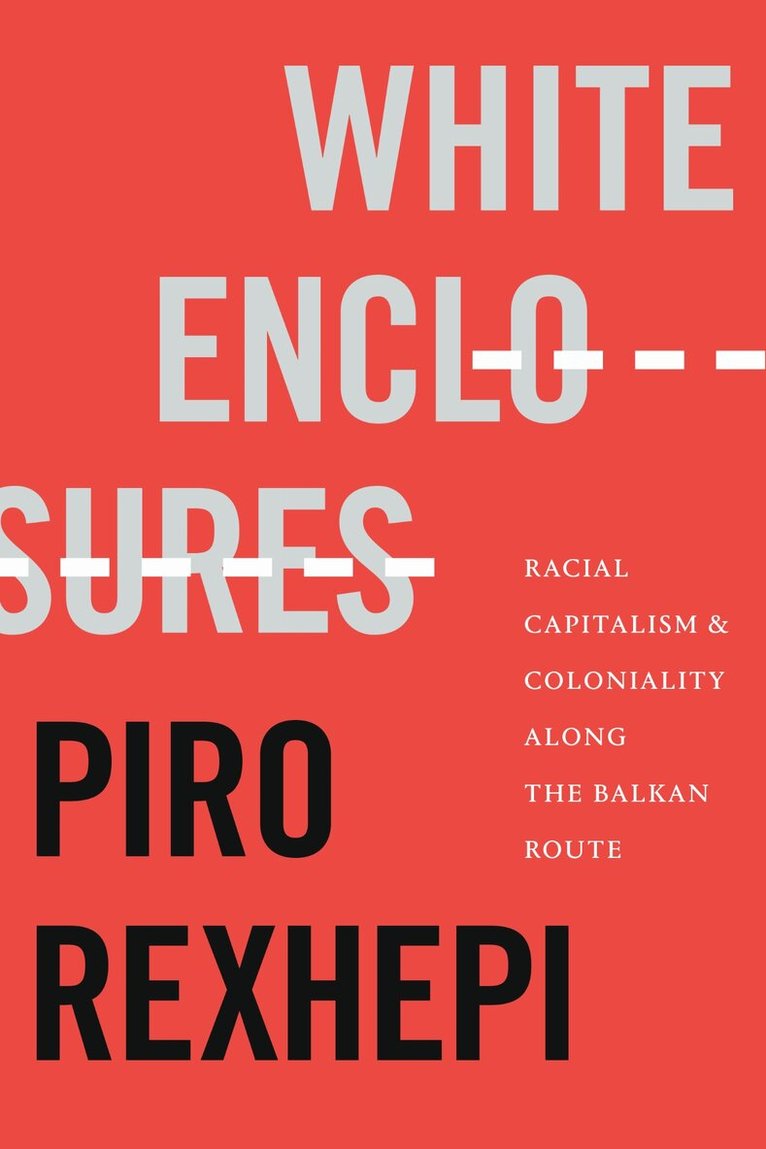
For all its history of intersecting empires, the Balkans has been rarely framed as a global site of race and coloniality. This, as Piro Rexhepi argues in White Enclosures is not surprising, given the perception of the Balkans as colorblind and raceless, a project that spans post-Ottoman racial formations, transverses Socialist modernity and is negotiated anew in the process of postsocialist Euro-Atlantic integration. Connecting severed colonial histories from the vantage point of body politic, Rexhepi turns to the borderland zones of the Balkans to trace past and present geopolitical attempts of walling whiteness. From efforts to straighten the sexualities of post-Ottoman Muslim subjects, to Yugoslav nonaligned solidarities between Muslims of the second and third world, to Roma displacement and contemporary emergence of refugee carceral technologies along the Balkan Route, Rexhepi points not only to the epistemic erasures that maintain the fantasy of whiteness but also to the disruption emanating from the solidarities between queer- and transpeople that fold the Balkans back into global efforts to resist the politics of racial capitalism.
1 145 kr
Skickas inom 7-10 vardagar
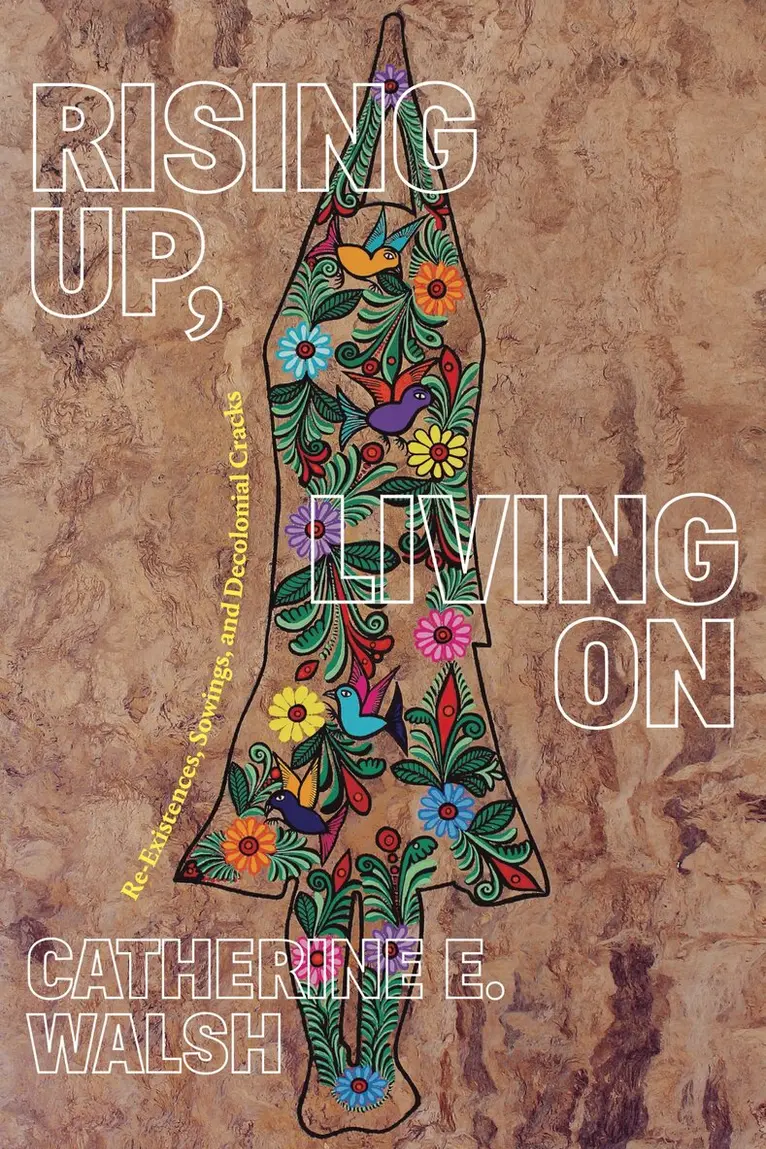
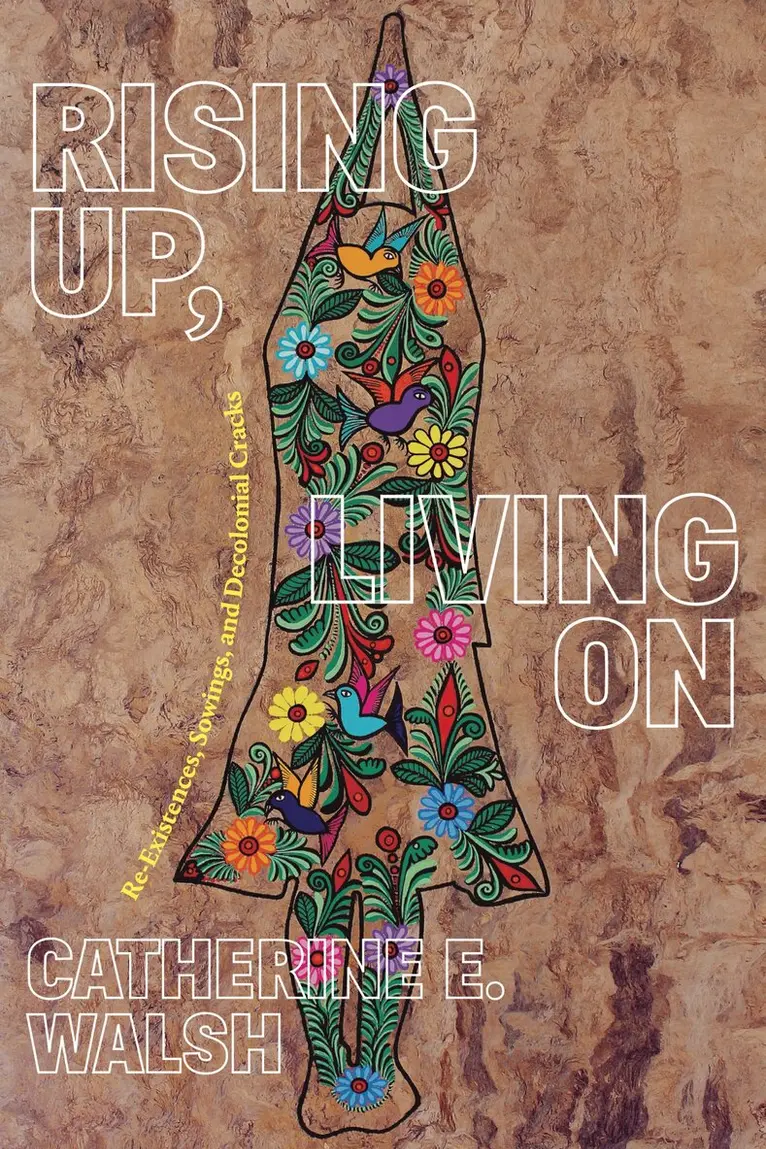
In Rising Up, Living On, Catherine E. Walsh examines struggles for existence in societies deeply marked by the systemic violences and entwinements of coloniality, capitalism, Christianity, racism, gendering, heteropatriarchy, and the continual dispossession of bodies, land, knowledge, and life, while revealing practices that contest and live in the cracks of these matrices of power. Through stories, narrations, personal letters, conversations, lived accounts, and weaving together the thought of many-including ancestors, artists, students, activists, feminists, collectives, and Indigenous and Africana peoples-in the Americas, the Global South, and beyond, Walsh takes readers on a journey of decolonial praxis. Here, Walsh outlines individual and collective paths that cry out and crack, ask and walk, deschool, undo the nation-state, and break down boundaries of gender, race, and nature. Rising Up, Living On is a book that sows re-existences, nurtures relationality, and cultivates the sense, hope, and possibility of life otherwise in these desperate times.
264 kr
Skickas inom 7-10 vardagar
For all its history of intersecting empires, the Balkans has been rarely framed as a global site of race and coloniality. This, as Piro Rexhepi argues in White Enclosures is not surprising, given the perception of the Balkans as colorblind and raceless, a project that spans post-Ottoman racial formations, transverses Socialist modernity and is negotiated anew in the process of postsocialist Euro-Atlantic integration. Connecting severed colonial histories from the vantage point of body politic, Rexhepi turns to the borderland zones of the Balkans to trace past and present geopolitical attempts of walling whiteness. From efforts to straighten the sexualities of post-Ottoman Muslim subjects, to Yugoslav nonaligned solidarities between Muslims of the second and third world, to Roma displacement and contemporary emergence of refugee carceral technologies along the Balkan Route, Rexhepi points not only to the epistemic erasures that maintain the fantasy of whiteness but also to the disruption emanating from the solidarities between queer- and transpeople that fold the Balkans back into global efforts to resist the politics of racial capitalism.
305 kr
Skickas inom 7-10 vardagar
In Rising Up, Living On, Catherine E. Walsh examines struggles for existence in societies deeply marked by the systemic violences and entwinements of coloniality, capitalism, Christianity, racism, gendering, heteropatriarchy, and the continual dispossession of bodies, land, knowledge, and life, while revealing practices that contest and live in the cracks of these matrices of power. Through stories, narrations, personal letters, conversations, lived accounts, and weaving together the thought of many-including ancestors, artists, students, activists, feminists, collectives, and Indigenous and Africana peoples-in the Americas, the Global South, and beyond, Walsh takes readers on a journey of decolonial praxis. Here, Walsh outlines individual and collective paths that cry out and crack, ask and walk, deschool, undo the nation-state, and break down boundaries of gender, race, and nature. Rising Up, Living On is a book that sows re-existences, nurtures relationality, and cultivates the sense, hope, and possibility of life otherwise in these desperate times.
1 269 kr
Skickas inom 7-10 vardagar
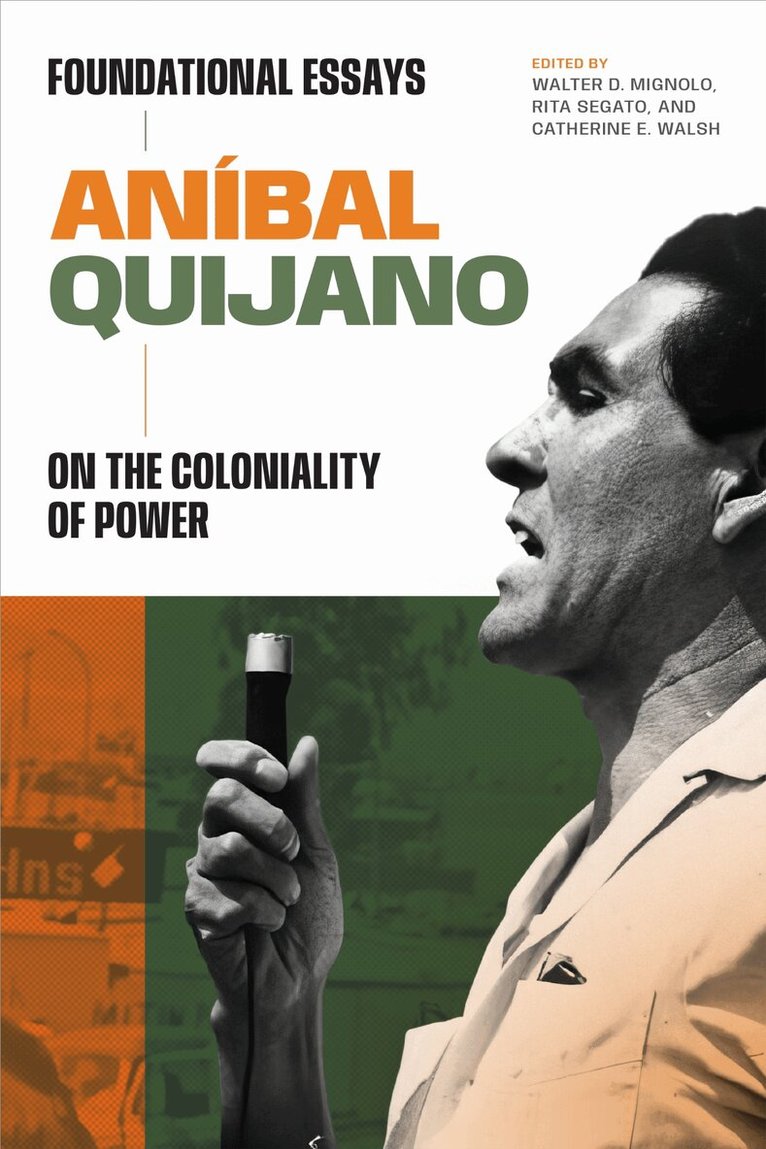
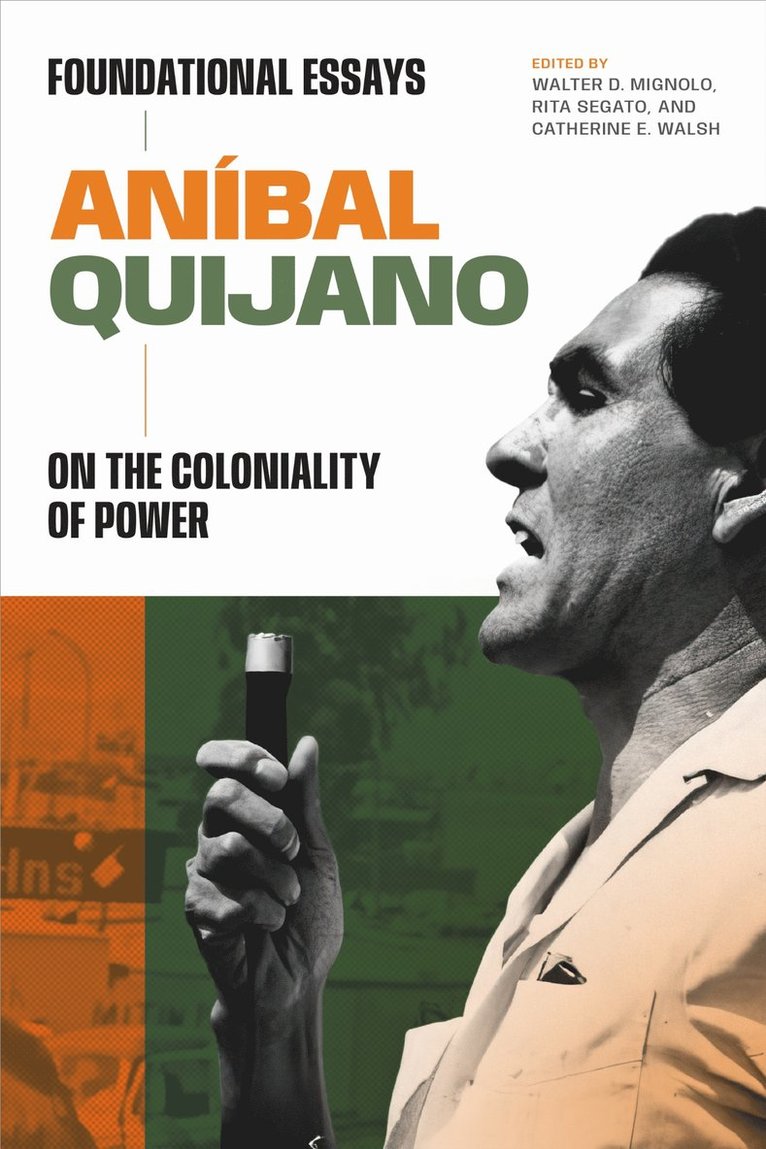
The Peruvian sociologist AnÍbal Quijano is widely considered to be a foundational figure of the decolonial perspective grounded in three basic concepts: coloniality, coloniality of power, and the colonial matrix of power. His decolonial theorizations of these three concepts have transformed the principles and assumptions of the very idea of knowledge, impacted the social sciences and humanities, and questioned the myth of rationality in natural sciences. The essays in this volume encompass nearly thirty years of Quijano’s work, bringing them to an English-reading audience for the first time. This volume is not simply an introduction to Quijano’s work; it achieves one of his unfulfilled goals: to write a book that contains his main hypotheses, concepts, and arguments. In this regard, the collection encourages a fuller understanding and broader implementation of the analyses and concepts that he developed over the course of his long career. Moreover, it demonstrates that the tools for reading and dismantling coloniality originated outside the academy in Latin America and the former Third World.
336 kr
Skickas inom 7-10 vardagar
The Peruvian sociologist AnÍbal Quijano is widely considered to be a foundational figure of the decolonial perspective grounded in three basic concepts: coloniality, coloniality of power, and the colonial matrix of power. His decolonial theorizations of these three concepts have transformed the principles and assumptions of the very idea of knowledge, impacted the social sciences and humanities, and questioned the myth of rationality in natural sciences. The essays in this volume encompass nearly thirty years of Quijano’s work, bringing them to an English-reading audience for the first time. This volume is not simply an introduction to Quijano’s work; it achieves one of his unfulfilled goals: to write a book that contains his main hypotheses, concepts, and arguments. In this regard, the collection encourages a fuller understanding and broader implementation of the analyses and concepts that he developed over the course of his long career. Moreover, it demonstrates that the tools for reading and dismantling coloniality originated outside the academy in Latin America and the former Third World.